
Agentic AI for marketing is a goal-driven use of artificial intelligence where autonomous agents plan, act, measure results, and improve over time. It focuses on outcomes like revenue, trust, and compliance, not just content or clicks. For regulated US industries, including healthcare and retail, this approach cuts waste while keeping risk in check.
Marketing teams are dealing with rising costs, tighter rules, and a lot of noisy AI hype. Many leaders want proof, not big promises. That’s where agentic AI fits, especially for organizations exploring smarter marketing automation, complex marketing campaigns, and real ai marketing outcomes. In our work with US medical groups and multi-location retailers, the pattern is consistent: the teams that win define one measurable goal first, then let agents optimize toward it.
Introduction
Marketing costs keep climbing. US healthcare providers now spend a meaningful share of budget just to stay visible, and cost per click for competitive medical terms in Google Ads regularly runs from $8 to $40 depending on specialty and metro. Trust in AI claims keeps dropping. And for healthcare and retail, rules around privacy, accessibility, and data security keep getting stricter. Between HIPAA, the ADA, the TCPA for patient texting, and CAN-SPAM for email, a single sloppy campaign can carry real legal exposure. Sound familiar?
Here’s the thing. Most marketers don’t need more tools. They need systems that actually help customer engagement and improve the customer experience without adding risk. Agentic AI offers a different path. No flashy dashboards. No disconnected features. Just systems that act, learn, and adjust with intent.
At SIAGB, this problem-first approach isn’t theory. It’s how teams use agentic ai marketing models to support real marketing strategy decisions, from healthcare website redesign to retail ai marketing programs. We built AI-powered patient scheduling for US medical groups on exactly this logic: the agent handles the repetitive slotting work, a human owns the exceptions. The focus stays on outcomes, not hype.
This guide is for US marketers, doctors, retailers, and CTOs who want practical answers. You’ll see how agentic AI works inside real marketing operations, where automation often breaks, and why compliance-first design matters more than ever.
What Is Agentic AI for Marketing?
Agentic AI is a form of artificial intelligence where agents work toward a defined goal. An agent plans actions, takes steps, checks results, then improves. In marketing, that goal could be qualified leads, stronger customer relationships, or lower campaign waste. A useful mental model is the OODA loop, observe, orient, decide, act, run continuously by software instead of a weekly human meeting.
This goes beyond traditional AI. Traditional AI responds to prompts or runs fixed models. An agentic AI system makes decisions inside a defined agentic workflow. It reacts to customer behavior, adjusts timing, and changes channels without waiting for manual input. In practice we wire these agents to real signals: Google Analytics 4 events, Google Search Console impressions, ad platform APIs, and a CRM, so the decisions reflect what customers actually did.
Generative AI creates text or images. An ai assistant answers questions. An intelligent agent decides what to do next based on feedback, analytics, and business rules. That difference matters. A ChatGPT prompt can draft a landing page in seconds, but only an agent will notice that page’s conversion rate dropped from 4.1 percent to 2.6 percent and route traffic away from it.
Agentic marketing works because it links action to outcome. And it keeps learning. That’s the real shift behind agentic marketing and modern ai marketing systems.
Agentic AI vs Traditional Marketing Automation
Traditional marketing automation runs on rules. If a user clicks, send an email. If they don’t, wait three days. This worked when customer interaction was simple.
Marketing isn’t simple anymore. Customer journeys zigzag across an average of 6 to 8 touchpoints before a booking or purchase. Platforms shift fast. Search intent changes weekly. Rule-based systems struggle to keep up, especially when customer data lives across a website CMS, an EHR, an email tool, and three ad accounts.
Agentic AI systems adapt. Autonomous AI agents watch performance data and change actions in real time. They improve engagement without constant oversight from a marketing team. Over time, this reduces effort and sharpens marketing efforts. We track a simple before-and-after: hours of manual campaign babysitting per week, and cost per acquisition. Both should fall.
But control still matters. Especially in healthcare. So this comparison isn’t just about speed. It’s about learning, governance, and trust.
Comparison Framework: Automation vs Agentic Systems
| Area | Traditional Automation | Agentic AI Tool |
|---|---|---|
| Human effort | High over time | Drops as agents learn |
| Learning ability | Fixed rules | Learns from data |
| Customer engagement | Limited | Improves over time |
| Risk control | Manual checks | Built-in governance |
| Regulated fit | Limited | Designed for healthcare |
This framework helps marketers choose the right system, not the loudest one.
Where Each Approach Fits: A Deeper Comparison
| Dimension | Rule-Based Automation | Agentic AI System | Why It Matters in US Healthcare and Retail |
|---|---|---|---|
| Decision trigger | Fixed if-then rules | Real-time signals from GA4, Search Console, CRM | Patient intent shifts faster than static rules |
| Response to change | Manual edits by staff | Self-adjusts channel, timing, budget | Search updates and ad costs move weekly |
| Compliance handling | Bolted on after the fact | Governance and audit logs built in | HIPAA, ADA, TCPA, CAN-SPAM exposure |
| Typical setup time | Days to weeks | 2 to 6 weeks with clean data | Faster payback when data is ready |
| Best use case | Simple drip email | Multi-channel, regulated campaigns | Retail promos plus patient recalls |
Agentic SEO and AI Agents for SEO
Agentic SEO isn’t about publishing more blogs. It’s about continuous optimization tied to real business goals.
An ai agent monitors rankings, search intent, accessibility, and conversions. Then another ai agent tests changes. A third ai agent measures results. Together, these agents form an agentic system that improves campaign performance over time. A practical setup watches Core Web Vitals directly, keeping Largest Contentful Paint under 2.5 seconds, Interaction to Next Paint under 200 milliseconds, and Cumulative Layout Shift under 0.1, because a slow page quietly caps every ranking gain.
Many marketers assume AI content equals SEO wins. Honestly? That rarely works. Without agents tracking outcomes, content turns into noise.
AI agents for SEO connect content to results. They show which pages support a campaign and which hurt it. They also support google ads performance by aligning landing pages with intent. This is ai marketing done properly. We’ve seen a single set of striking-distance keywords, terms already ranking on positions 8 through 15, deliver the fastest wins when an agent flags them and a writer strengthens the page.
For healthcare and retail, this matters. Search updates are frequent. Patient questions evolve. Agentic SEO keeps pace without burning out teams.
Answer Engine Optimization and AI SEO in Healthcare
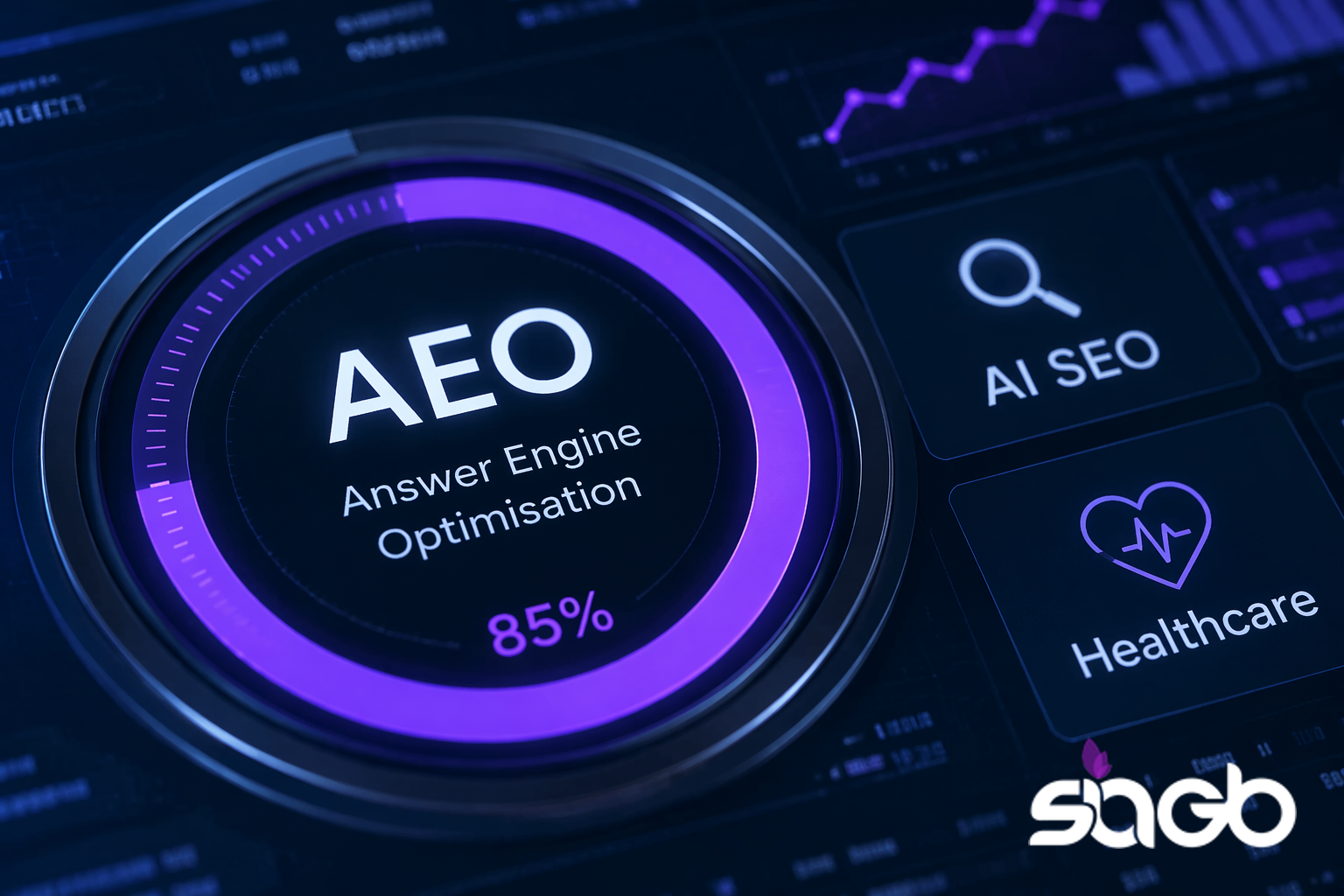
Patients now ask AI assistants questions. Not just Google. They ask ChatGPT, Perplexity, and Google AI Overviews things like “urgent care near me open now” or “is a telehealth visit covered by my plan.” That’s why answer engine optimization is becoming essential for healthcare ai marketing.
AEO focuses on clear, structured answers that AI systems trust. Structured data does the heavy lifting here: schema.org types like MedicalOrganization, Physician, FAQPage, and MedicalWebPage tell an answer engine exactly what your page means. An insights agent tests how content performs in AI-driven search. It tracks engagement, accuracy, and customer interaction across channels. In our work, pages with clean FAQPage markup and a plain-language answer in the first 40 words show up far more often in AI-generated summaries.
AI SEO healthcare strategies need care. Wrong answers damage trust. Misinformation breaks customer relationships, and in healthcare it can cross into regulatory territory. Agentic AI systems manage this with human agent review baked in.
The goal stays simple.
- Be the best answer for patient questions.
- Support the full customer journey.
- Keep checking accuracy and trust.
Healthcare Website Accessibility and Compliance
Healthcare website accessibility isn’t optional. The ADA and WCAG standards protect both patients and providers. In the US, ADA Title III lawsuits over inaccessible websites have run into the thousands each year, and a 2024 Department of Justice rule tied many public-sector sites to WCAG 2.1 Level AA. WCAG 2.2 AA is now the practical target.
Accessibility also improves engagement and customer experience. Patients stay longer on usable pages. Search engines reward accessible sites. Legal exposure drops when issues get fixed early. Concrete thresholds help: WCAG 2.2 AA requires a color contrast ratio of at least 4.5 to 1 for normal text, keyboard access for every control, and alt text on informative images.
Agentic AI helps here. An autonomous agent scans pages for contrast issues, missing labels, and broken navigation. It tracks fixes over time across healthcare websites and marketing cloud integrations. We treat accessibility as a recurring scan, not a one-time audit, because a single new landing page can reintroduce failures.
This supports:
- Better customer interaction.
- Lower compliance risk.
- Stronger long-term marketing strategy.
HIPAA, Cybersecurity, and Data Protection Risks
A HIPAA compliant website protects patient data, which HIPAA defines as protected health information, or PHI. That includes forms, portals, recalls, and review systems tied to customer data. It also means real controls: a signed Business Associate Agreement with any vendor touching PHI, encryption in transit and at rest, and no PHI leaking into analytics or ad pixels.
Autonomous agents can add risk if poorly designed. Healthcare cybersecurity threats are real. The HHS Office for Civil Rights breach portal, the so-called wall of shame, lists breaches affecting 500 or more individuals, and healthcare remains one of the most-targeted US sectors. Trust erodes fast after a breach.
Cybersecurity for doctors needs security-by-design. Agentic AI systems must log actions, limit access with role-based permissions, and encrypt data. Human agent oversight stays critical here. We keep agents scoped to the narrowest data they need, so an SEO agent never sees PHI in the first place.
SIAGB builds with this mindset. Agents work inside boundaries. Humans stay accountable. That balance matters.
Reputation Management and Patient Engagement
Online reputation shapes growth. Reviews influence trust, and US patients lean on Google Business Profile, Healthgrades, and Zocdoc before booking. Response time affects engagement more than people realize; replying to a review within 24 hours signals a practice that listens.
Agentic AI supports review workflows. An ai agent monitors feedback. Another suggests responses. A human agent approves sensitive replies, which matters because a HIPAA rule means you can never confirm someone was a patient in a public reply. This improves customer engagement without sounding robotic.
Patient recall programs benefit too. Agents test timing, channels, and messaging. They adapt based on customer behavior, improving engagement without spamming. Text-based recalls also fall under the TCPA, so consent tracking is part of the workflow, not an afterthought.
Done right, automation strengthens trust. Push it too far, and patients notice. Balance matters.
Retail and Healthcare Use Cases with Measurable ROI
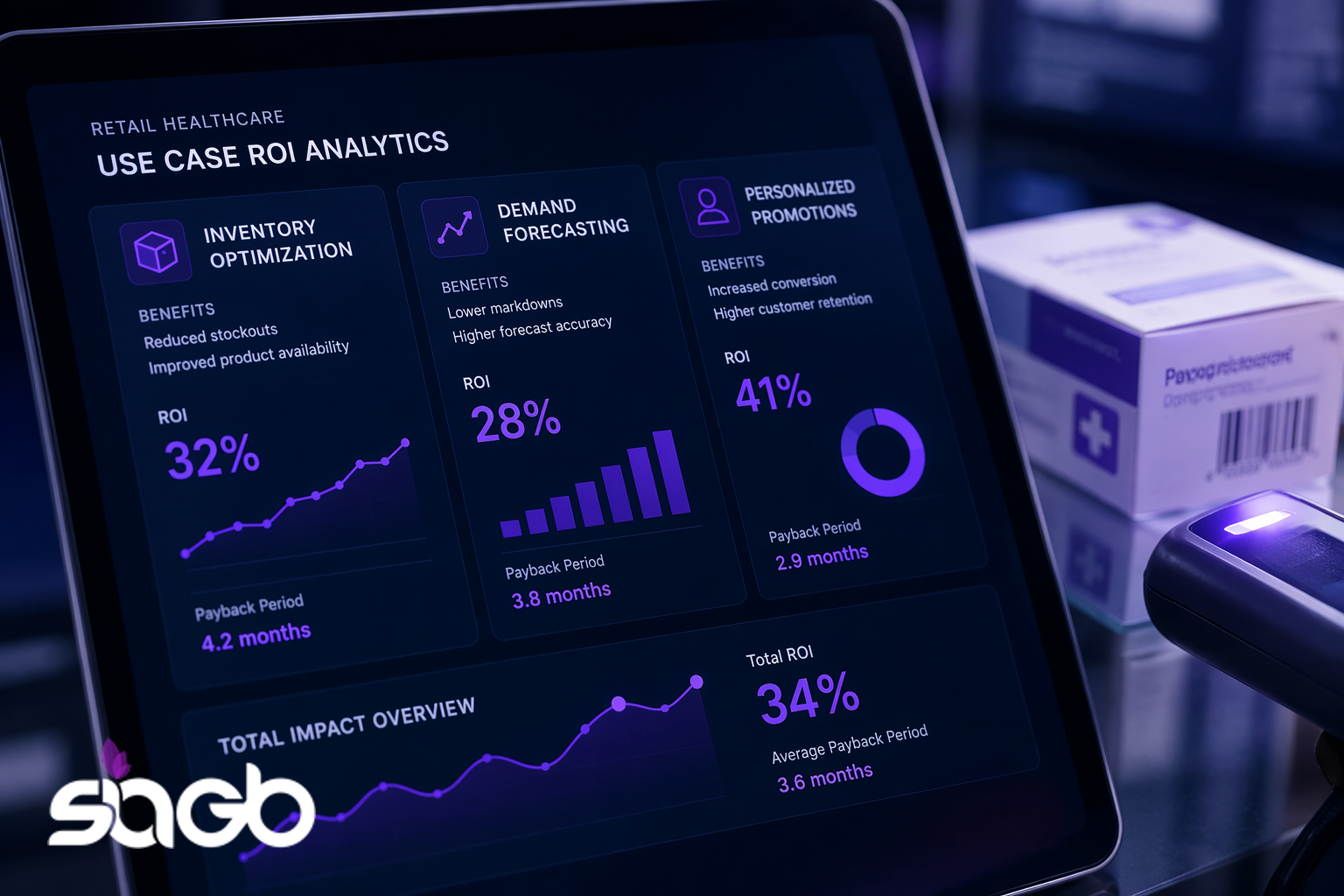
In retail, ai marketing often starts with wasted spend. One US client cut campaign waste by 28 percent using agents that paused low-performing google ads within hours instead of at the end of a monthly review. That single change moved budget from a $2.40 cost per click term to one converting at half the price.
In healthcare, ai marketing paired with reviews and recalls delivered strong results. One clinic saved 12 hours a week on marketing tasks and increased bookings by 18 percent, while its no-show rate dropped as automated reminders went out at the times patients actually responded.
Scale changes what these numbers mean. Marvel PTE, a platform SIAGB works with, serves more than 85,000 users across 900-plus institutes, and at that volume even a one-point lift in engagement touches hundreds of people a day. Across sectors, agentic ai marketing delivers value when teams track:
- Time saved through automation.
- Costs reduced from wasted spend.
- Revenue gained across the customer journey.
Agentic AI earns its place when metrics move.
Governance and Human-in-the-Loop Models
Full autonomy sounds appealing. It’s risky.
Agentic systems work best with humans in the loop. Agents act within rules. Humans approve sensitive changes. Audit trails stay clear. We tend to set explicit guardrails: a daily budget ceiling an agent cannot cross, a list of claims it may never make, and a required human sign-off for anything patient-facing.
This matters for marketing workflow design, especially when sales team data and marketing cloud tools connect. Governance protects customer relationships and brand trust. This is where 20-plus years of IT and AI leadership behind SIAGB shows up, alongside Certified Scrum Master and AgilePM discipline, because governance is as much process as technology.
This model fits regulated industries. It keeps control while letting autonomous AI agents handle the heavy lifting.
When Agentic AI Is Not the Right Fit
Sometimes, agentic AI isn’t the answer.
If customer data is poor, agents learn the wrong lessons. If goals are vague, optimization fails. High legal exposure without controls is a warning sign. A practice with under 200 monthly conversions may not have enough signal for an agent to learn from, and a plain rules engine will serve it better and cheaper.
Readiness comes first. Clear goals. Clean data. Defined marketing workflow. If those pieces aren’t ready, waiting is smarter.
That patience usually saves money later.
Infographic: How Agentic AI Operates in Marketing
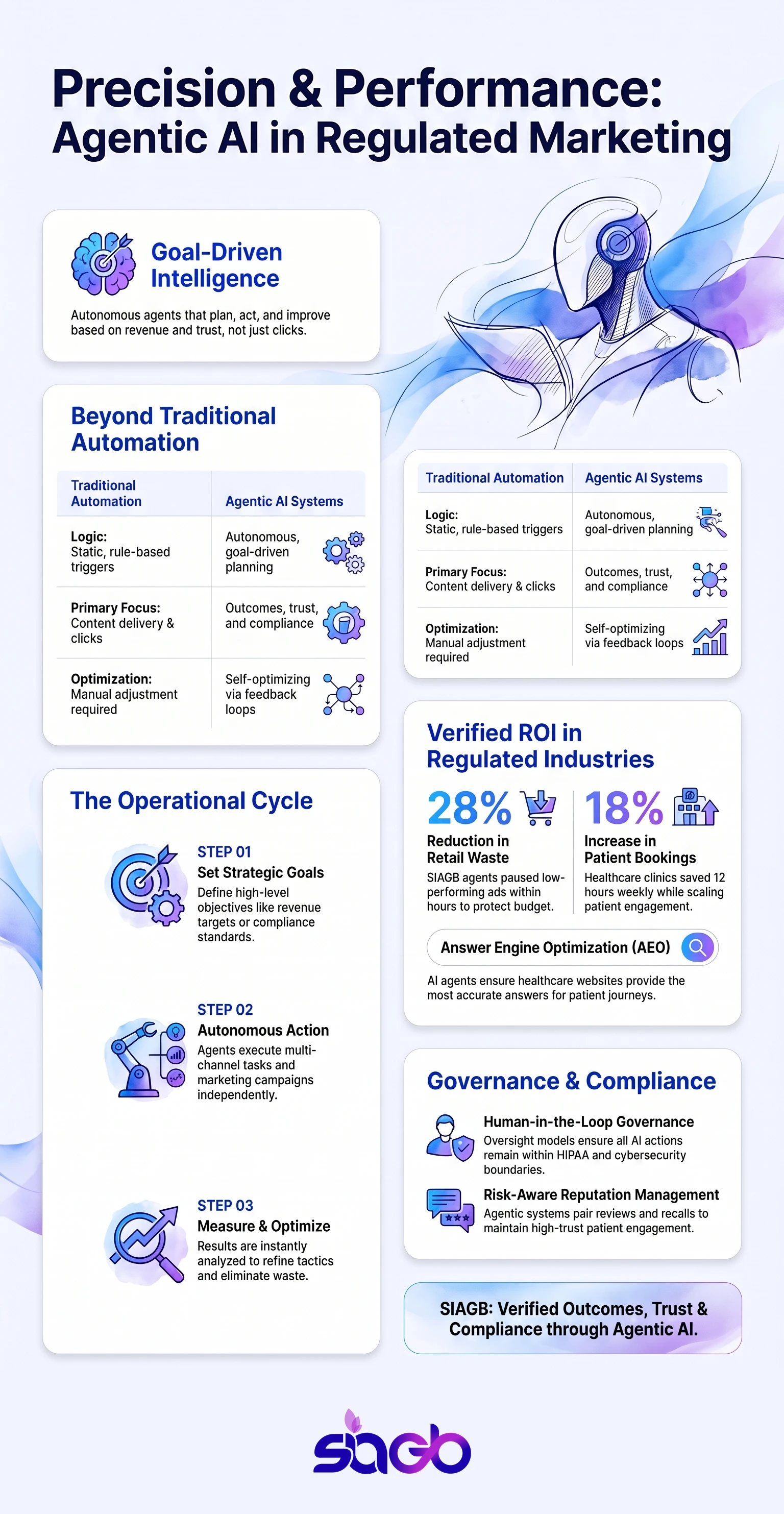
The loop is simple.
- Set a goal.
- Agents act.
- Results get measured.
- Systems optimize.
Insights agents generate actionable insight. Human agents review risk. The agentic workflow stays balanced.
Frequently Asked Questions
What makes agentic AI different from generative AI?
Agentic AI takes action toward goals and learns from results. Generative AI only creates content when prompted and doesn’t optimize outcomes. A generative tool writes the email; an agentic system decides who gets it, when, and whether to send it at all.
Is agentic AI safe for healthcare marketing?
Yes, when it includes governance, human oversight, and compliance-first rules. This protects customer experience and data. That means a Business Associate Agreement with any vendor touching PHI, role-based access, and human sign-off on patient-facing replies.
Can agentic AI help with customer engagement?
Yes. Agents adapt messaging based on customer behavior and improve engagement over time. They learn which send times and channels each segment responds to, then shift budget accordingly.
Can agentic AI replace marketers?
No. It supports marketers by handling repetitive marketing tasks. Strategy and judgment stay human, and in regulated US markets a person still owns the compliance call.
How long does it take to see ROI?
Efficiency gains often appear within weeks. Revenue impact follows as agents learn patterns. With clean data, most teams stand up a first agent workflow in 2 to 6 weeks.
Do agentic systems work for small teams?
They can, if goals are clear and data is clean. Scale matters less than readiness. A two-person practice with tidy analytics often outperforms a large team drowning in disconnected tools.
Key Takeaways and Final Thoughts
Agentic AI is about outcomes, not tools. It’s ai marketing focused on real goals, better engagement, and measurable results like the 28 percent waste cut and 18 percent booking lift above.
Compliance-first design separates real systems from hype. This matters most in healthcare and retail, where HIPAA, the ADA, WCAG 2.2 AA, and the TCPA all apply at once.
Choosing the right partner matters more than any platform. SIAGB, based in Sydney (ABN 16 659 507 178) and led by founder Sheetal Dhadial, builds agentic AI systems with governance, experience, and scale in mind.
AI will keep changing. The focus shouldn’t. Solve real problems. Measure results. Keep trust at the center.
Sources
- MIT Technology Review (technologyreview.com)
- Stanford HAI - Human-Centered AI (hai.stanford.edu)

Thinking about how this applies to your business?
Start a Conversation