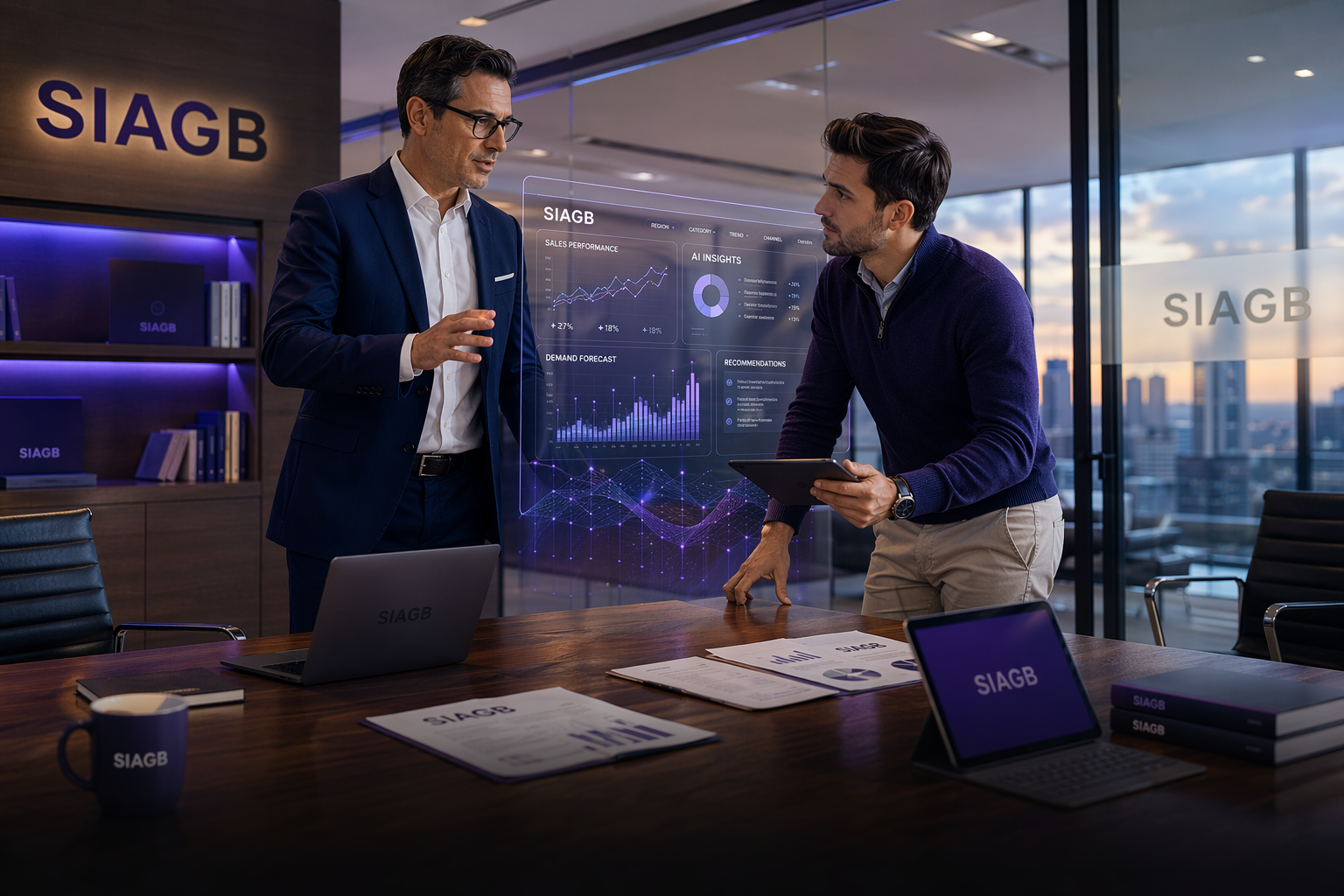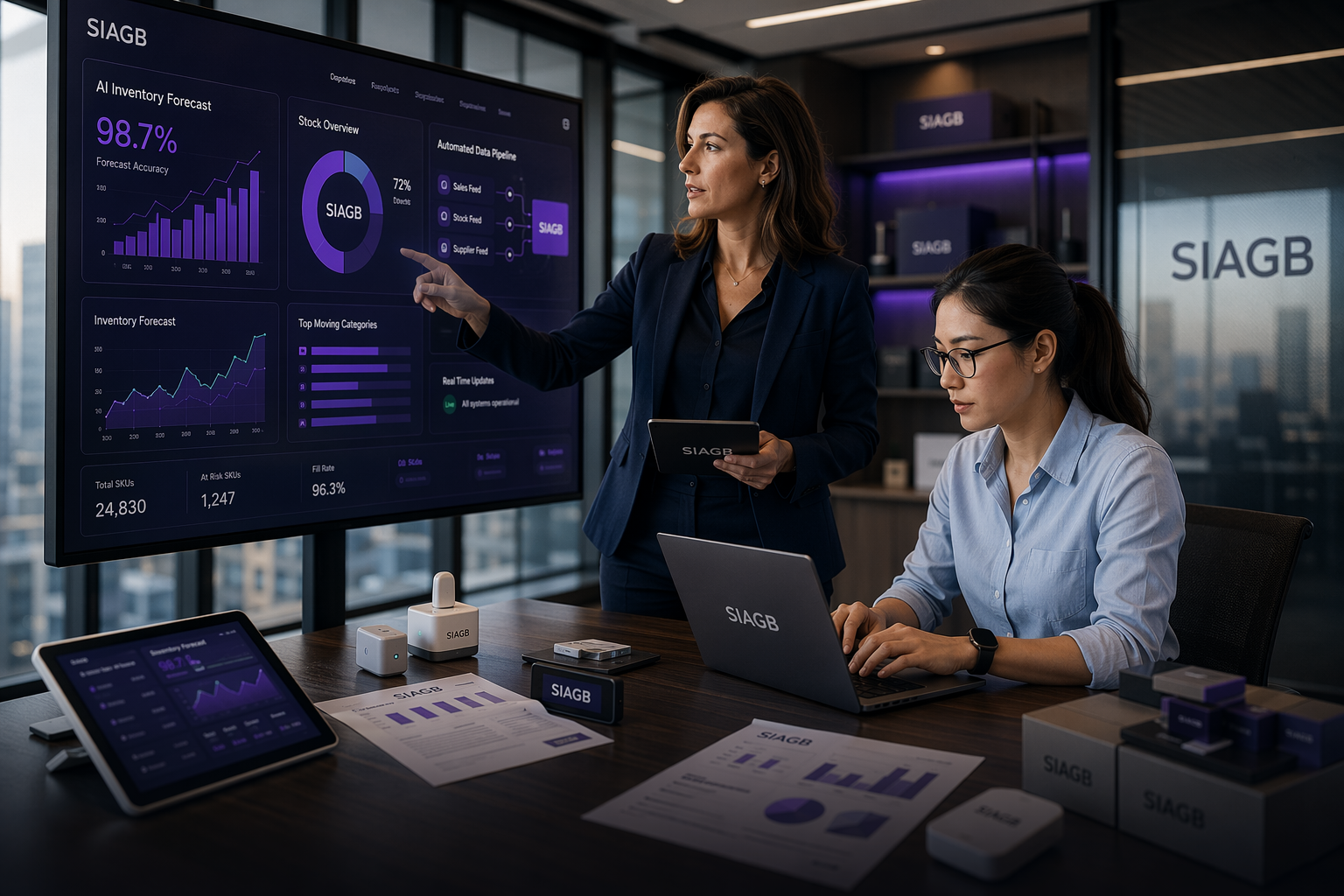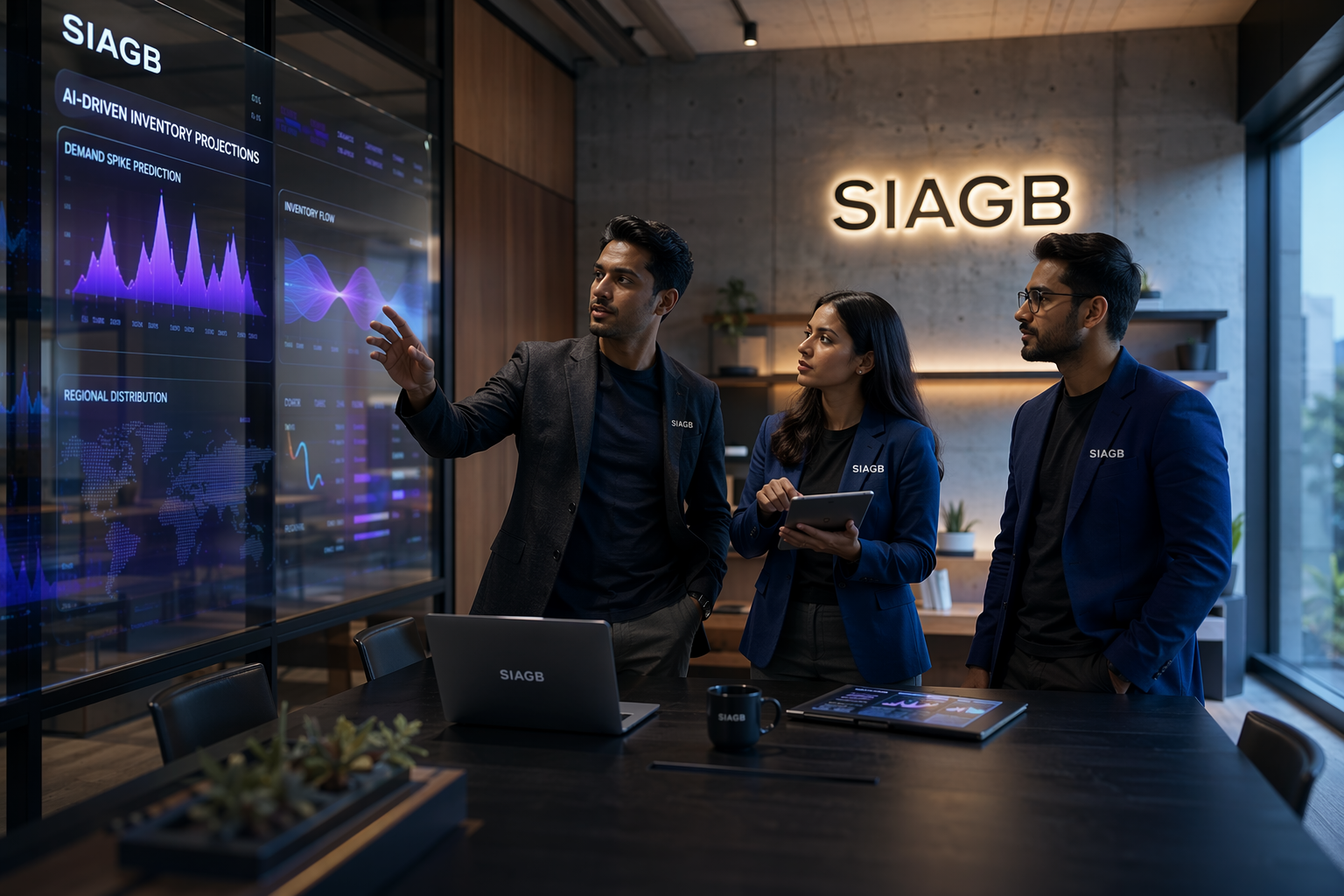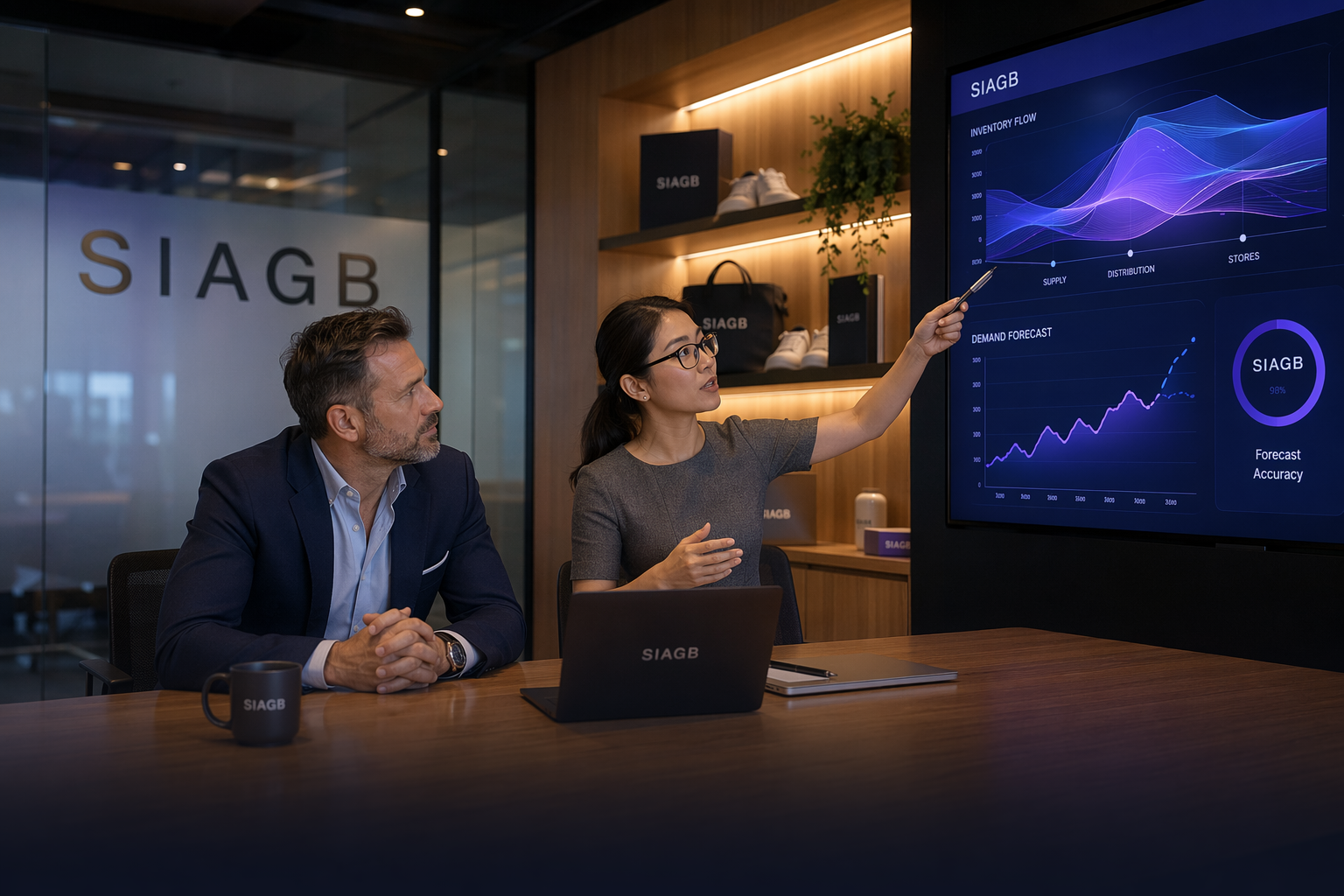
AI consulting for retail businesses uses artificial intelligence to cut costs, improve decisions, and lift revenue for a retail business. The focus is measurable ROI, not hype. US retailers apply generative ai to reduce waste, speed up planning, and improve customer satisfaction across channels.
Retail is under pressure. Costs rise. Margins stay thin. Systems don’t talk to each other. Many leaders in the retail industry hear about new ai tools and feel skeptical. Fair enough. This guide explains how consulting services work in practice, where automation delivers value, and how to avoid failed pilots. No fluff. Just what works in the retail sector.
Introduction
Retailers deal with complex operations every day. Stock moves across stores. Prices change fast. Customers expect smooth service online and in-store. Meanwhile, labor and rent costs keep climbing.
AI consulting for retail businesses focuses on these real problems. It starts with waste, delays, and missed sales inside a retail business. Not shiny ai technology. Retail ai solutions work when they fit how people already work. This article shows how US retailers use ai services to reduce cost, improve customer engagement, and get clear ROI. We’ll also cover automation, ai integration, and risk, because that’s where projects often stumble.
This problem-first strategy mirrors how SIAGB works across industries like retail, healthcare, education, and even financial services. The goal stays the same. Solve the business issue first, then apply artificial intelligence where it makes sense.
What AI Consulting for Retail Businesses Means in Practice
AI consulting for retail businesses starts with a business problem. Excess stock. Poor forecasts. Slow reporting. A good ai consultant looks at data, systems, and people before suggesting any ai solution.
Consultants review sales data, inventory management, and retail operations. They check data quality and gaps. Then they design an artificial intelligence approach that fits real workflows. End-to-end delivery matters. Strategy alone won’t change outcomes. Build, ai implementation, testing, and ongoing optimization all count.
In practice, this means automation that supports staff, not replaces them. It means advanced analytics that update daily, not quarterly. And it means clear ownership from idea to results. Retailers get more value when consultants stay accountable after go-live. I’ve seen projects stall when that doesn’t happen. Frustrating stuff.
Common Retail Problems AI Solves
Retail ai works best on repeat problems. Ones that drain time and money. Demand swings. Manual pricing. Limited insight into customer behavior.
Poor forecasts lead to excess stock and markdowns. Manual promotions slow response to competitors. Siloed customer data hides patterns across channels. Generative ai and automation help by spotting trends early and producing actionable insights teams can actually use.
Retailers also struggle with reporting. Teams spend hours pulling data from POS, supply chain tools, and spreadsheets. AI automation reduces this effort. Staff get time back. Decisions improve. That’s often where early ROI shows up.
Retail AI commonly delivers value in three areas:
- Demand forecasting and supply chain optimization to cut waste and stockouts
- Customer support and service improvements across online and in-store channels
- Automation of reporting and planning tasks that drain staff time
Inventory and Demand Forecasting
Inventory forecasting is a common starting point for retail ai solutions. Artificial intelligence models use sales history, seasonality, promotions, and local factors to predict demand.
Retailers reduce waste and stockouts. Shelf availability improves. Automation helps planners focus on exceptions instead of chasing numbers. These ai tools work across multi-store and multi-region setups. Even with messy data. Well, messy but usable.
Customer Experience Across Channels
Customer experience breaks when systems don’t connect. AI unifies data from POS, ecommerce, and CRM platforms. That creates a single view of customer engagement.
Retailers use this to personalize offers and timing. Conversion rates improve. Repeat visits increase. Customer support teams also benefit. They see context fast, which lifts customer satisfaction. That matters.
AI Consulting vs Off-the-Shelf AI Tools for Retailers
Off-the-shelf ai tools look appealing. Quick to buy. Easy to demo. But many retailers hit limits fast. Data doesn’t fit. Workflows don’t match. Results stall.
An ai consulting service adapts models to real retail constraints. Consultants tune automation to store formats, product mixes, and supply chain realities. Long-term ROI tends to be higher, even if setup takes longer. Best ai services for small businesses balance speed with fit. There’s no magic switch. Sorry.
Here’s a simple comparison.
| Approach | Speed | Fit to Retail | Long-term ROI |
|---|---|---|---|
| Off-the-shelf ai tools | Fast | Limited | Often low |
| AI consulting service | Moderate | High | Higher |
In-House AI Builds vs End-to-End AI Services
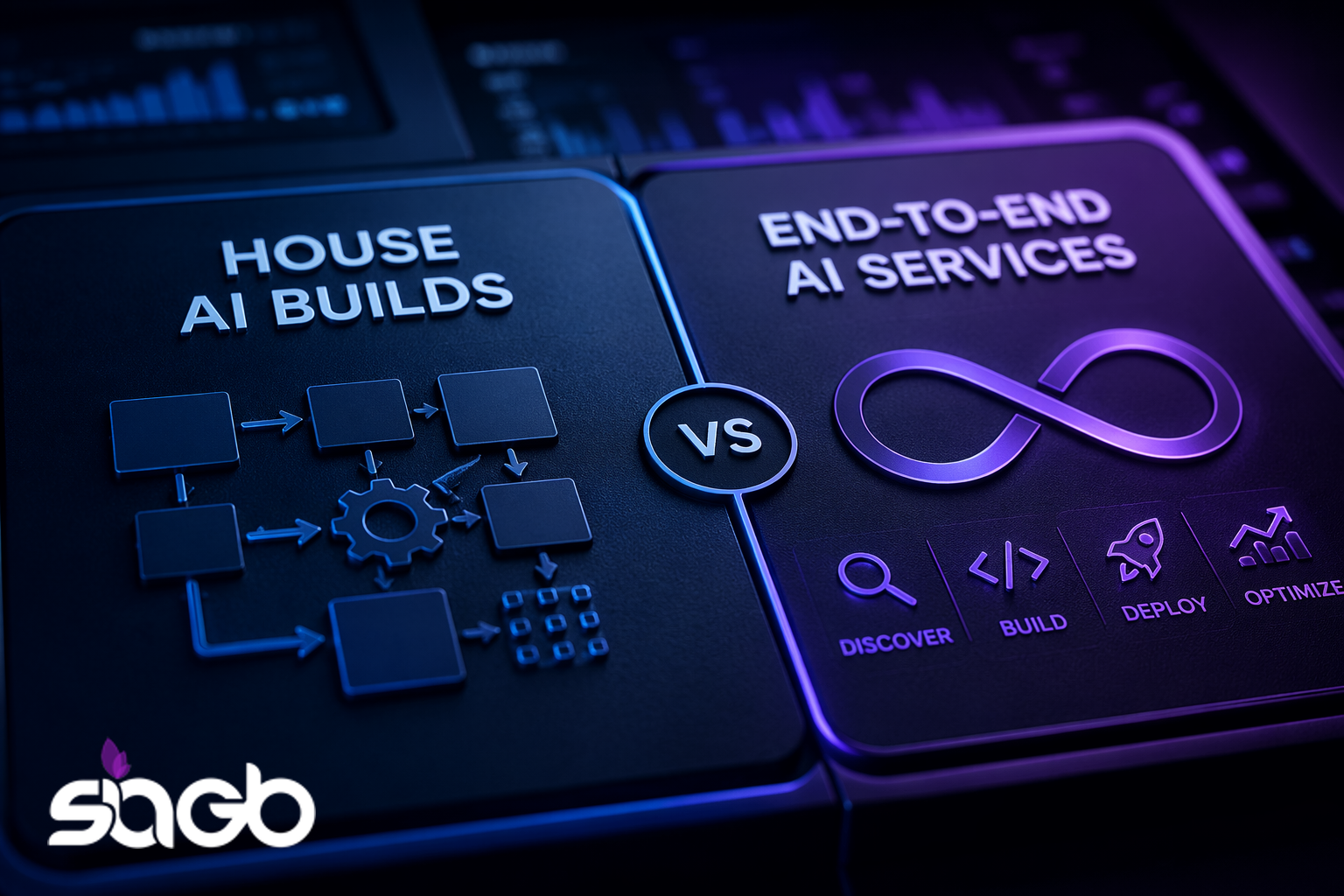
Some retailers try in-house builds. Sounds sensible. Control stays internal. Costs feel lower. But skill gaps appear fast. Data science, ai integration, and governance all matter.
End-to-end ai consulting services reduce handoffs. One team owns outcomes. No stalled pilots. AI-native consultants bring proven frameworks and accelerators. That shortens timelines. Retailers see value sooner. In most cases.
I’ve seen both approaches work. Depends on scale and maturity. But for many retail businesses, end-to-end professional services reduce risk.
Real-World Retail AI Examples with Measurable Outcomes
Retail ai succeeds when outcomes are clear. Here are common examples.
- Forecasting models cut excess stock by double digits
- AI-driven promotions lift average order value by mid single digits
- Automation in reporting saves dozens of staff hours each week
Retailers also use artificial intelligence to flag pricing errors early. Revenue leakage drops. Planning cycles shrink from weeks to days. These gains add up. They’re not flashy. They’re useful.
Integrating AI with Legacy POS, Inventory, and CRM Systems
Most retailers can’t replace core systems quickly. Legacy POS, inventory, and CRM platforms stick around. AI consulting layers on top.
Integration uses APIs, data warehouses, or secure exports. Planning matters. Without it, data silos grow. Automation breaks. Consultants map data flows early. They test often. And they plan for change.
AI systems must respect retail operations. Store downtime isn’t an option. Integration done right keeps systems stable while adding intelligence.
Measuring ROI and Avoiding Failed AI Pilots
AI projects fail when success isn’t defined. Simple as that. Retailers should agree on metrics before building any ai system.
Track cost reduction, revenue uplift, and time saved. Automation should show value within months, not years. Start small. Pilot in a few stores. Then scale.
Online discussions around consulting services for small businesses show the same pattern. Clear goals win. Vague goals don’t.
Risk Management, Data Privacy, and Security in Retail AI
Retail AI handles sensitive data. Customer data. Pricing. Transactions. Governance matters.
Responsible ai reduces bias and errors. Access controls limit misuse. Security practices protect against breaches. Retail faces similar risks to financial services and healthcare. Lessons from cybersecurity for doctors apply here too. Controls matter.
Why AI-Native, End-to-End Delivery Matters
AI-native teams design systems with artificial intelligence at the core. Not bolted on later. That changes outcomes.
End-to-end delivery creates accountability. One partner owns the ai initiative from idea to ROI. Experience across industries helps. Agentic ai brings automation that acts, not just reports. An ai agent can monitor trends, trigger alerts, or adjust decisions in real time. That’s powerful when used carefully.
SIAGB brings this mindset. Founded in 2022, with 20 plus years of IT leadership behind it. And real products at scale. That matters.
How US Retailers Can Start with a Problem-First AI Strategy
Start with pain points. High costs. Slow processes. Missed sales. Then assess data readiness. Don’t buy ai tools first.
Retailers should work with consultants who focus on measurable ROI. Ask for examples. Ask for numbers. If you’re comparing ai services, look for partners who stay after go-live and support ongoing ai implementation.
Small steps beat big promises. Every time.
Infographic: Retail AI Consulting Journey
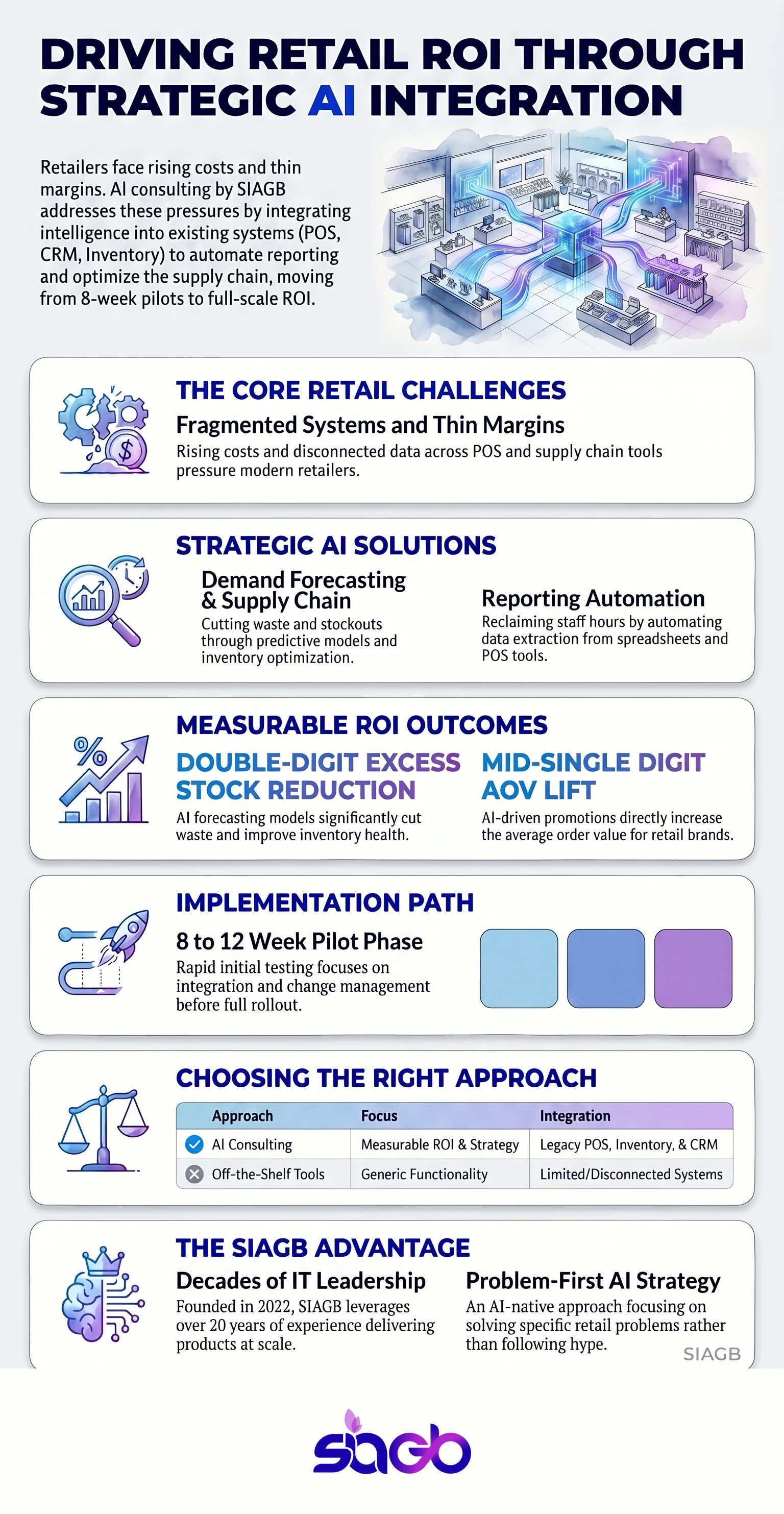
The retail ai journey follows clear stages:
- Define the problem and ROI goals
- Assess data, security, and integration needs
- Build, deploy, measure, and optimize
Automation improves at each step when done right.
Frequently Asked Questions
How much does ai consulting cost for retailers?
Costs vary by scope and data readiness. Small pilots often start in the tens of thousands. Larger retail enterprises invest more for broader automation.
How long does a retail ai project take?
Most pilots run 8 to 12 weeks. Full rollouts take longer. Timelines depend on integration and change management.
Do small retailers benefit from ai services?
Yes. Small retailers often see faster ROI because manual work is high. Practical ai services focus on quick, useful wins.
Is generative ai useful in retail?
Generative ai helps with content, planning, and insights. It works best when guided by clear rules and strong data.
How risky is retail ai?
Risk comes from poor governance and security. Responsible ai practices and strong controls reduce this.
Key Takeaways and Final Thoughts
AI consulting for retail businesses works when it stays grounded in reality. Focus on problems. Demand evidence. Measure outcomes.
End-to-end, AI-native delivery improves success rates. Automation should save time and money, not create new work. A retail business deserves clarity, not hype.
SIAGB takes this problem-first strategy. If you’re exploring retail ai solutions, start small, ask hard questions, and insist on ROI. That’s the difference.
Sources
- MIT Technology Review (technologyreview.com)
- Stanford HAI - Human-Centered AI (hai.stanford.edu)

Want to explore this further?
Book a Free Consultation