
AI content in a medical practice is the safe use of automation to educate patients, improve discovery, and support bookings without giving clinical advice. When it’s done properly, it builds patient trust, strengthens healthcare compliance, and drives measurable growth across websites, search, and recall systems.
Introduction: Why AI Content Matters in Medical Practices
Running a medical practice today isn’t just about providing good care. Patient expectations are higher than ever. Compliance pressure keeps increasing. And competition is real, even in local suburbs. Sound familiar?
AI content strategies for a medical practice can help close that gap. But only when patients come first, not rankings. Many practitioners are wary of healthcare AI hype. Fair enough. I’ve seen tools promise big results, then completely miss consent, tone, or clinical risk.
Here’s the thing. AI content should explain services, guide patient choices, and make care easier to access. It should never replace a general practitioner or offer treatment advice. This guide shows how medical practices can use generative AI safely, with boundaries, audit trails, and human review built in. No fluff. Just what works in real clinics.
What AI Content Means in a Medical Practice Context

AI content in healthcare supports education, recall, and discovery. It doesn’t diagnose. It doesn’t replace clinical judgement. That line really matters.
In a medical practice, AI content includes service pages, FAQs, recall messages, and website copy created or assisted by systems. It helps patients understand what a clinic offers and how to book. Medical AI used this way sits outside clinical notes and treatment decisions.
This is different from an AI scribe. An AI medical scribe or ambient AI scribe helps clinicians by drafting notes during consultations. That falls under clinical documentation and clinical AI use. Public facing AI content must stay separate. Different tools. Different controls.
Clear separation protects patient data, supports consent, and lowers risk. It also lets healthcare professionals focus on care, not marketing tech.
Here’s a simple way to see where the line sits:
| AI content use | Safe in healthcare? | Why |
|---|---|---|
| Service pages and patient FAQs | Safe, with human review | Educates patients without giving clinical advice |
| Metadata, schema and accessibility checks | Safe | Technical updates that never touch clinical claims |
| Recall and booking reminders | Safe, with consent | Improves attendance, contains no treatment content |
| Diagnosis or treatment advice | Not safe | Clinical decisions belong to practitioners |
| Therapeutic goods claims | Not safe | Regulated claims carry serious legal risk |
| Training AI on patient data | Not safe | Breaches privacy and consent obligations |
AI Content vs Generic Medical SEO
Generic medical practice SEO focuses on keywords and rankings. It often misses patient intent. Worse, it can create tone problems or risky claims.
AI driven healthcare SEO strategy adapts content to real patient questions. It looks at how people search, read, and ask follow up questions. Accuracy matters. Tone matters. Audit trails matter too.
Healthcare content needs more than optimisation. It needs review, context, and clear controls. That’s where AI content moves beyond old SEO playbooks.
How Does Answer Engine Optimisation Work in Healthcare?
Patients don’t just Google anymore. They ask AI tools before they book. That shift changes discovery.
Answer engine optimisation medical content structures pages so AI systems can summarise them correctly. This includes clear definitions, structured FAQs, and schema that signals authority. AI SEO healthcare is about being the source, not just another link.
In Australia, AEO services in Australia are still early. But the results are already clear. Practices that structure content for AI answers appear more often in summaries, voice tools, and local recommendations. According to Google Search data from 2024, over 60 percent of health related searches now end without a click. That surprised me, honestly.
AEO helps make sure your healthcare information is what gets quoted. Right?
Beyond Google: Where Medical Answers Appear
AI assistants now summarise healthcare websites directly. They pull from pages, reviews, and listings.
Local trust signals matter a lot. Consistent services, clear credentials, and strong online reputation healthcare signals all influence AI answers. Reviews, website tone, and accuracy need to line up. Otherwise, AI fills the gaps with other sources. Which is frustrating.
Agentic SEO and Automated AI Agents for Medical Websites
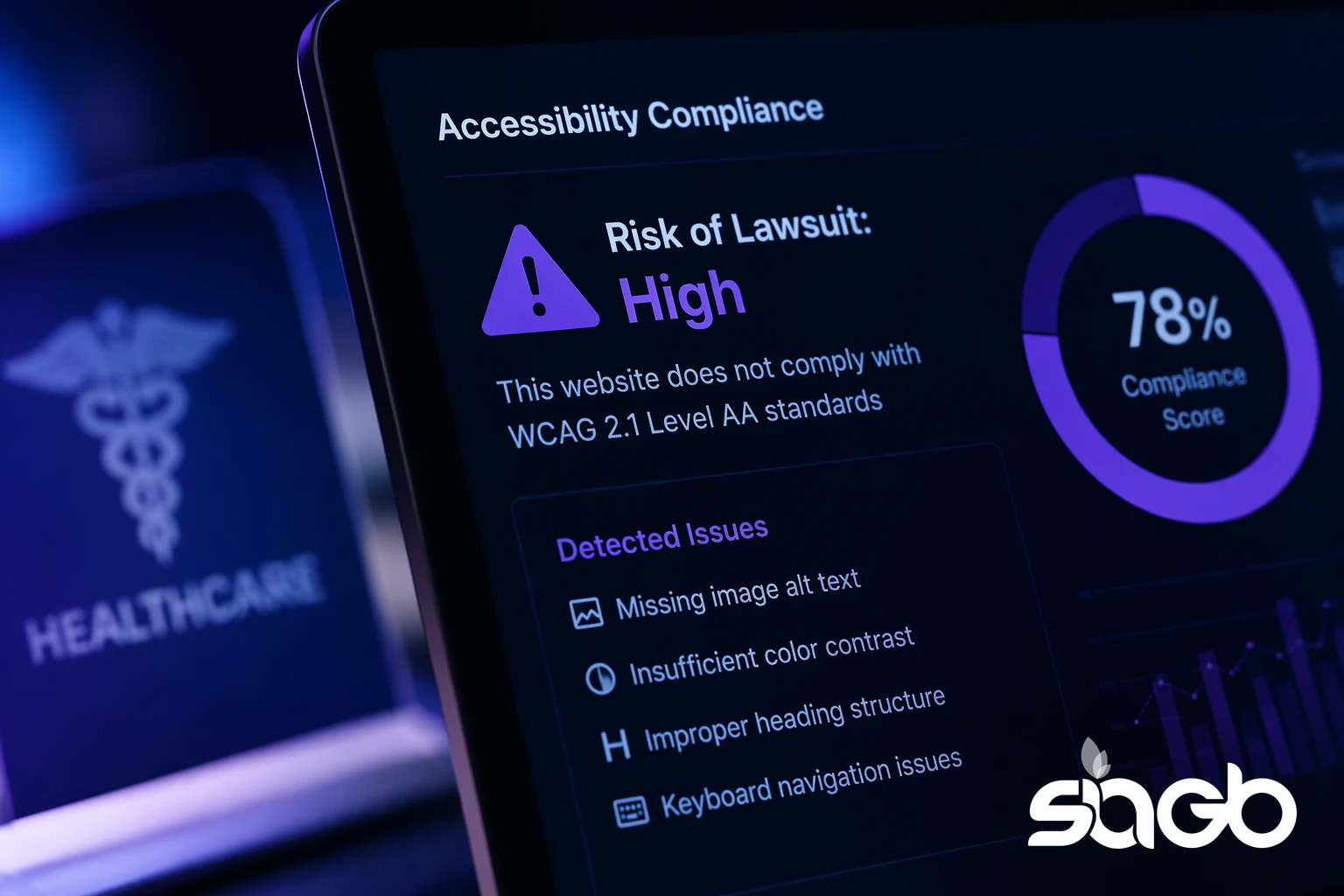
Agentic SEO uses AI agents to monitor and improve content over time. Think ongoing optimisation, not a one off job.
AI agents for SEO can track page performance, update FAQs, improve internal links, and flag content gaps. Automated SEO agents handle repetitive tasks quickly. That saves time.
But healthcare isn’t retail. AI SEO automation needs guardrails. Human oversight is still essential. Clinical claims, service descriptions, and compliance checks must be reviewed by practitioners or managers. From what I’ve seen, this balance works best.
A simple review matrix keeps everyone honest:
| Content type | Who reviews it | How often |
|---|---|---|
| Service descriptions | Practitioner or practice manager | Before publishing, then quarterly |
| Patient FAQs | Clinical staff | Before publishing and after guideline changes |
| Recall and reminder messages | Practice manager | Before each campaign |
| Metadata and schema | Marketing lead | Automated checks, monthly spot check |
Where Automation Helps and Where It Must Stop
Automation works well for metadata, schema updates, accessibility checks, and performance tracking.
It must stop at treatment advice, therapeutic goods claims, and anything that affects patient outcomes. Agentic AI for marketing needs governance. Clear rules help prevent mistakes that lead to complaints or worse.
Why Does Healthcare Website Accessibility Reduce Lawsuit Risk?
Healthcare website accessibility isn’t optional. Accessibility gaps expose practices to complaints and legal risk.
In the US, ADA website lawsuit doctors cases continue to rise. In Australia, WCAG is the benchmark. A WCAG healthcare website lowers risk and improves access for every patient. According to the W3C, accessible sites improve task success by up to 35 percent. That’s significant.
Accessibility also improves SEO and AEO. Clear structure helps both patients and AI systems. Win win.
What ADA and WCAG Compliance Look Like in Practice
Compliance includes readable fonts, strong colour contrast, keyboard navigation, and captions on media.
Forms must work with screen readers. An ADA compliant patient portal allows secure and accessible access to patient information. Monitoring matters. Accessibility is ongoing, not a one time fix. Trust me on this.
Medical Practice Website Design and Redesign with AI

Medical practice website design needs balance. Trust. Speed. Compliance.
AI helps test layouts, refine copy, and improve patient journeys. A healthcare website redesign should support bookings, recall, and education. Not just look modern.
The best medical website design supports SEO, accessibility, and recall systems together. Medical web design choices shape how patients feel. And how AI reads your site. Subtle, but real.
HIPAA-Style Compliance and Healthcare Data Security
Australian practices often face HIPAA style expectations from partners and platforms. A HIPAA compliant website approach focuses on data minimisation, encryption, and access control.
AI tools must respect patient data boundaries. No scraping. No training on personal information. Medical practice data security is part of AI content strategy, not an afterthought.
HIPAA cybersecurity principles reduce breach impact. According to IBM’s 2024 report, healthcare breaches cost an average of USD 10.9 million. Planning matters.
Common Healthcare Cybersecurity Threats
Healthcare cybersecurity threats include phishing, ransomware, and insecure plugins.
Patient portals are common targets. Cybersecurity for doctors now includes monitoring and response. AI monitoring can shorten response time when something looks off. Not perfect. But helpful.
AI-Driven Patient Recall and Review Systems
AI driven patient recall system tools automate follow ups without spamming patients. Timing matters. Tone matters too.
Messages sent at the right moment improve attendance and patient satisfaction. These systems support care by reducing missed appointments. They also support practice growth.
Recall connects closely with patient review management. After visits, AI can prompt feedback in a polite way. Online reputation healthcare grows when this is handled well.
Google Reviews and Reputation Management for Doctors
Google reviews medical practice visibility affects both patient choice and AI summaries.
AI helps request reviews at the right time. Sentiment analysis flags service issues early. Reputation management doctors depend on data, not guesswork. Reviews influence trust. And AI answers as well.
How Do You Measure ROI from AI Consulting in Healthcare?
ROI shows up in time saved, bookings gained, and risk reduced. Vanity metrics don’t help anyone.
SIAGB focuses on end to end delivery. That avoids tool sprawl and half finished projects. Whether it’s healthcare or AI consulting for retail businesses, the approach stays problem first.
Chatbot analytics consultants Australia teams track what patients ask, where they drop off, and what converts. Clear benchmarks beat hype every time.
Infographic: How AI Content Flows Through a Medical Practice
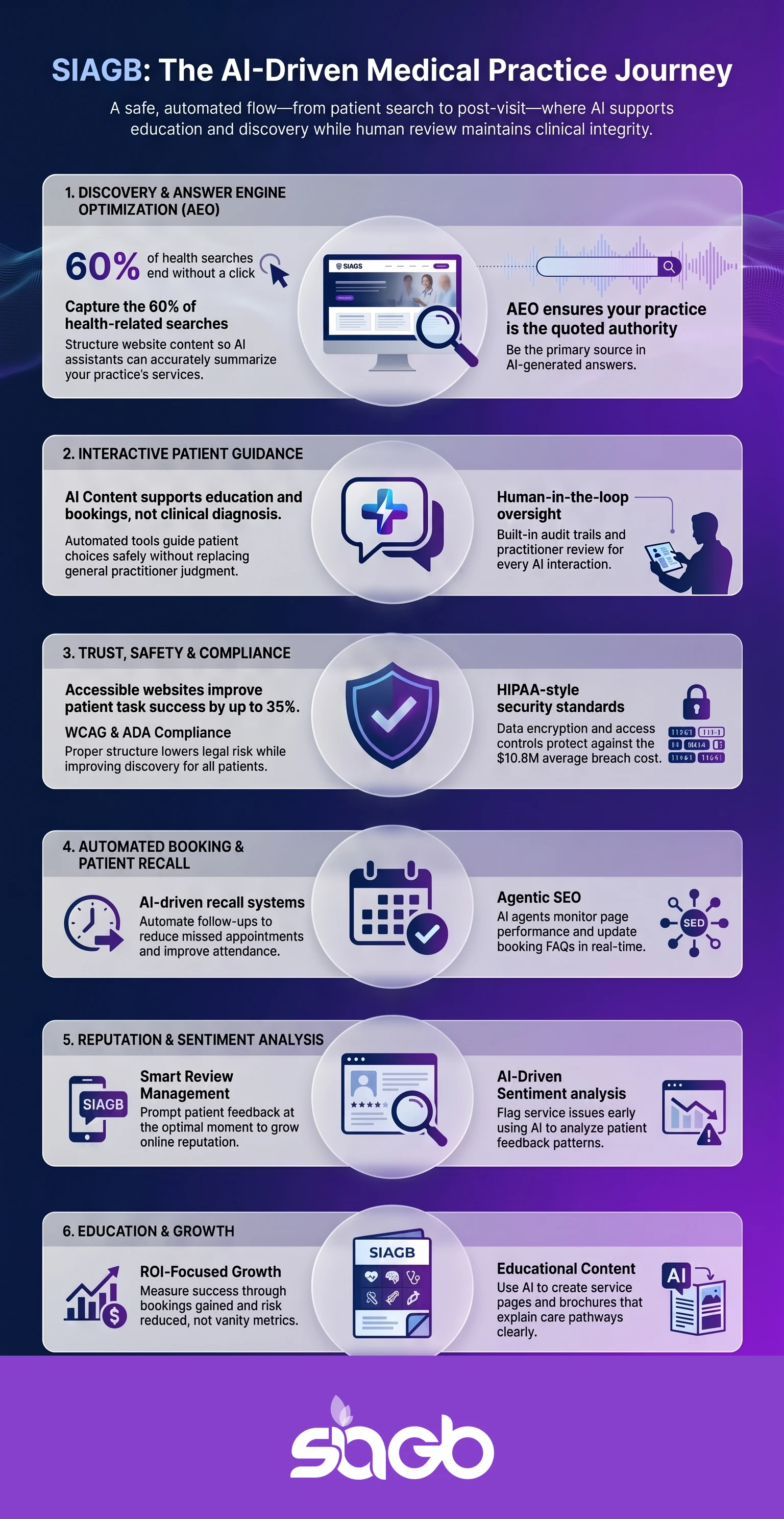
The flow starts with patient search. Then AI answers. Then booking.
Website content, recall systems, reviews, and security layers support that journey. Human oversight sits at key checkpoints. That’s how an AI optimised website healthcare system stays safe.
Frequently Asked Questions
Is AI content safe for a medical practice?
Yes, when it’s limited to education and discovery. A practical safety test: would you happily show the content to a regulator or a patient’s family? If it edges into diagnosis or treatment advice, it fails that test.
How does AI content differ from an AI scribe?
AI content lives on your website and in your marketing. An AI scribe sits inside the consultation room, drafting clinical notes. Keep them on separate tools with separate access, so marketing systems never touch clinical documentation.
Can AI help with healthcare website accessibility?
Yes. AI can scan for WCAG issues and flag changes as your site evolves. Still, a scanner can confirm contrast ratios, but only a person can confirm a real patient can complete a booking.
Does answer engine optimisation replace medical practice SEO?
No. AEO is the next layer on top of solid SEO foundations. Fix weak basics first, then structure your content so AI assistants quote your practice accurately instead of paraphrasing a competitor.
What should practices avoid with generative AI?
Three things above all: clinical advice, training on patient data, and publishing unchecked claims. Write these limits into a short AI use policy so staff know the rules before a complaint lands.
Key Takeaways for Medical Practice Owners
AI content works best when it’s tied to trust, compliance, and real patient needs. Accessibility and security reduce risk while supporting growth. Measured automation through healthcare SEO strategy and agentic tools outperforms generic SEO. Done well, AI content strategies in a medical practice support patients, practitioners, and long term healthcare outcomes.
Sources
- MIT Technology Review (technologyreview.com)
- Stanford HAI - Human-Centred AI (hai.stanford.edu)
- W3C Web Accessibility Initiative, WCAG standards (w3.org/WAI/standards-guidelines/wcag/)

Want to explore this further?
Book a Free Consultation