
An ai optimised website healthcare platform is a connected system that uses artificial intelligence to improve patient acquisition, compliance, trust, and performance. It brings healthcare SEO, accessibility, security, and automation into one measurable setup. For modern healthcare, this approach replaces disconnected tools with outcomes you can actually track against a handful of numbers that matter: Core Web Vitals, WCAG 2.2 AA conformance, and how often a clinic is named inside ChatGPT, Perplexity, and Google AI Overviews.
Introduction
Healthcare websites do a lot more than list opening hours. They attract new patients, shape first impressions, and support daily operations. Yet many clinics still handle SEO, accessibility, and compliance as separate tasks. That split creates risk, extra cost, and weaker search results.
An ai optimised website healthcare approach fixes that problem. It connects medical practice website design, ai search visibility, accessibility standards, and security into one platform. So instead of guessing what’s working, healthcare leaders can see it. And just as clearly, see what isn’t.
The timing matters too. The Australian Digital Health Agency has made connected, person-centred digital health a national priority, and patients now expect the same from their local clinic. In our work building AI-powered patient scheduling for medical groups, we track three numbers on every project: page speed against the Core Web Vitals thresholds (Largest Contentful Paint under 2.5 seconds, Interaction to Next Paint under 200 milliseconds, Cumulative Layout Shift under 0.1), accessibility against WCAG 2.2 Level AA, and citation share inside AI answer engines. When those three move together, bookings follow.
What Is an AI Optimised Healthcare Website?
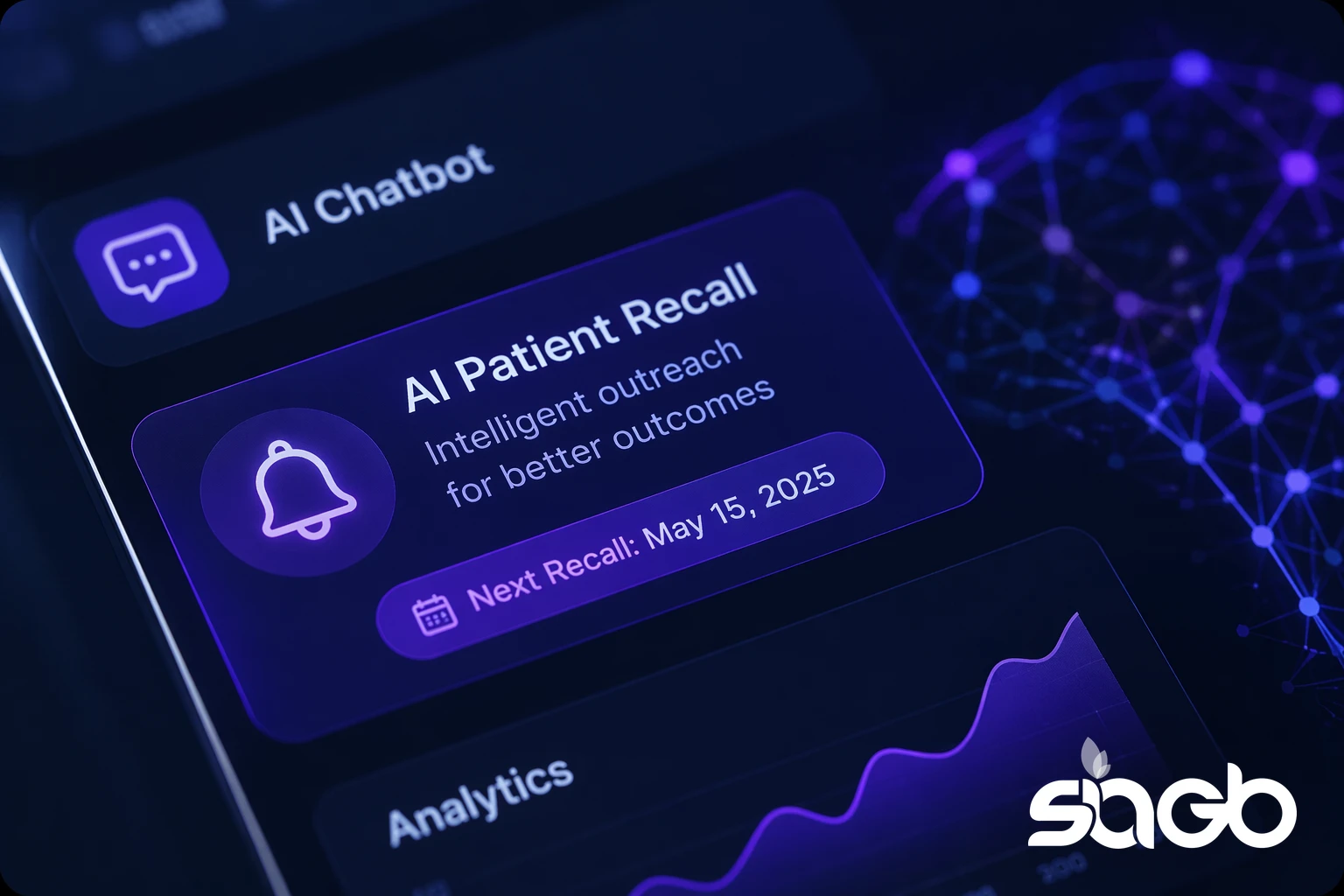
An ai optimised website healthcare platform is a medical website built as a system, not a brochure. It uses ai systems to understand patient questions, track search performance, and improve over time. The aim is simple. Give clear, safe answers while meeting healthcare rules.
Traditional healthcare websites rely on static pages and manual updates. They focus on keywords and hope traffic shows up. A modern medical website uses ai search data, automation, and analytics to adapt. It tracks how patients find care, what content they trust, and where they drop off. Underneath, it publishes structured data using schema.org types such as MedicalOrganization, Physician, LocalBusiness, and FAQPage, so tools like Gemini and Claude can read a clinic’s services, hours, and location without guessing.
Here’s how the two compare:
| Area | Traditional website | AI optimised website |
|---|---|---|
| Content updates | Manual and infrequent | Guided by ai search data, updated continuously |
| Search focus | Keywords and rankings | Answers, AEO, and ai driven search |
| Accessibility | Checked once, then forgotten | Built in and monitored against WCAG |
| Security | Basic hosting and SSL | Encryption, access controls, threat monitoring |
| Reporting | Static monthly PDFs | Live dashboards tied to bookings and ROI |
This setup supports compliance, faster updates, and real ROI. It also helps healthcare brands appear in ai driven search, not only a traditional search engine. Stanford HAI has tracked a sharp rise in healthcare AI adoption, so practices that build for this shift early hold a real advantage.
Why Does Healthcare Website Accessibility and ADA Compliance Matter?
Healthcare website accessibility is both a legal and ethical requirement. An ADA compliance medical website makes sure people with vision, hearing, or motor challenges can access care online. In Australia, the relevant law is the Disability Discrimination Act 1992 (Cth), and the Australian Human Rights Commission points providers to WCAG as the practical benchmark. So while ADA is US based, Australian clinics carry their own local obligation, plus global risk when serving international patients.
WCAG healthcare website standards, published by the W3C, guide how content, forms, and patient portals should work. WCAG 2.2 AA sets concrete targets: a colour contrast ratio of at least 4.5:1 for normal text, full keyboard navigation, visible focus indicators, and touch targets of at least 24 by 24 CSS pixels. These rules also help older patients and people using mobile devices.
The problem is bigger than most clinics realise. WebAIM’s Million report, an annual audit of the top one million home pages, found detectable WCAG failures on 95.9% of them, averaging 56.8 errors per page in its 2024 run. Healthcare is no exception. When we audit a clinic site, low-contrast text and unlabelled form fields are almost always the first two things we find.
Doctors face real exposure here. ADA website lawsuit doctors see often begin with missing labels or broken forms. Fixing problems after a claim costs far more than building things correctly from day one. Accessibility needs to live inside the healthcare website, not beside it.
AI SEO and Answer Engine Optimisation for Medical Practices
AI SEO healthcare works differently to old keyword tactics. Instead of chasing rankings, it focuses on answers. AI search tools look for clear medical information that solves patient questions quickly. That includes symptoms, services, and next steps.
Answer engine optimisation medical strategies prepare content for google ai overviews, ChatGPT, Perplexity, and Gemini. Structured data, clear headings, and trusted sources help healthcare websites appear in ai recommendations. This is how clinics show up in ai search and future search results. MIT Technology Review has reported extensively on how AI assistants are reshaping search, and health queries are a big part of that shift. We have seen the scale of this ourselves: our language-learning platform Marvel PTE now serves 85,000+ users across 900+ institutes, and the clinics we advise are learning that being the answer inside an AI engine beats ranking tenth on a results page.
Local SEO still matters. Reviews, location signals, and consistent data help a medical practice appear nearby. Combined with technical SEO, this approach supports both search engine visibility and ai driven search.
How Does Agentic SEO Use Automated AI Agents for Growth?
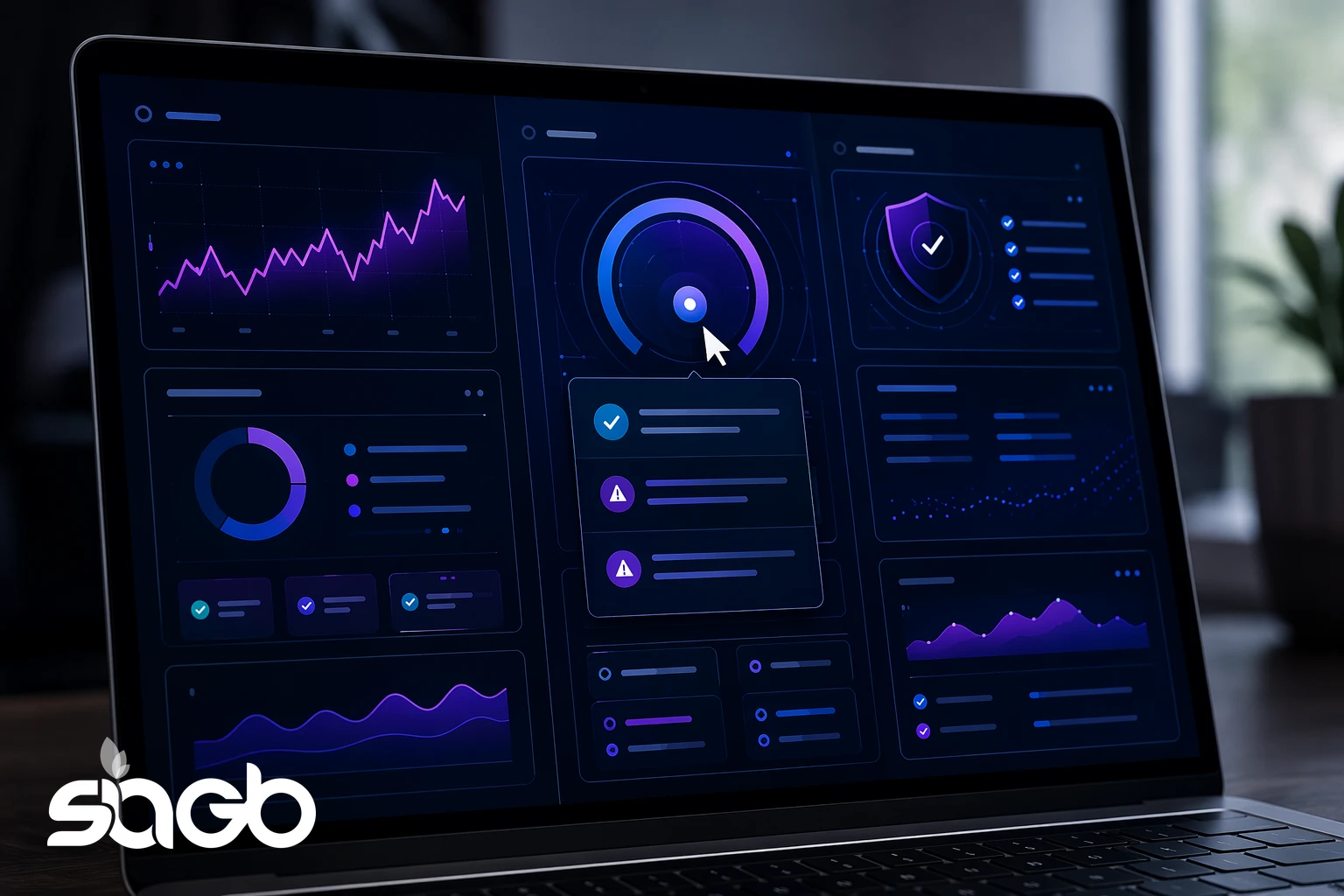
Agentic SEO uses automated SEO agents to watch, test, and improve your healthcare website. These ai agents for seo monitor search results, content gaps, and site health every day. No manual checks. No waiting months for reports.
AI SEO automation lets clinics grow without adding staff. Agents test page speed, update schema, and track ai search changes. If rankings drop, the system responds.
This is agentic AI for marketing in action. It supports healthcare SEO, local SEO, and answer visibility while teams stay focused on patient care.
Healthcare Website Redesign for Trust and Conversion
A healthcare website redesign is often needed when sites feel slow, confusing, or outdated. Patients judge trust in seconds. If pages load slowly or feel unsafe, they leave.
Good medical practice website design focuses on clarity and speed. Navigation is simple. Content answers real questions. Forms work for everyone. Behind the scenes, ai systems track behaviour and improve flows.
This approach connects UX, performance, and compliance. The healthcare website becomes a growth asset, not a liability.
How Do HIPAA Compliance and Healthcare Cybersecurity Protect Patients?
A HIPAA compliant website protects medical information at every step. For an Australian clinic, the binding rules are the Privacy Act 1988 and the 13 Australian Privacy Principles, backed by the Notifiable Data Breaches scheme that requires reporting eligible breaches to the OAIC. Encryption in transit (TLS 1.3) and at rest, role-based access controls, and secure hosting are the baseline. For any healthcare provider handling data, this is non negotiable.
Healthcare cybersecurity threats often target small clinics. Phishing, ransomware, and weak portals are common entry points. Cybersecurity for doctors must cover websites, patient portals, and third party tools. Before we connect any AI chatbot to a booking flow, we ask one blunt question: where does this tool send patient data, and does that leave Australian jurisdiction.
Medical practice data security builds trust. Patients expect safe systems. Regulators demand them. AI systems can also monitor threats and flag issues early.
Online Reputation and Patient Review Management
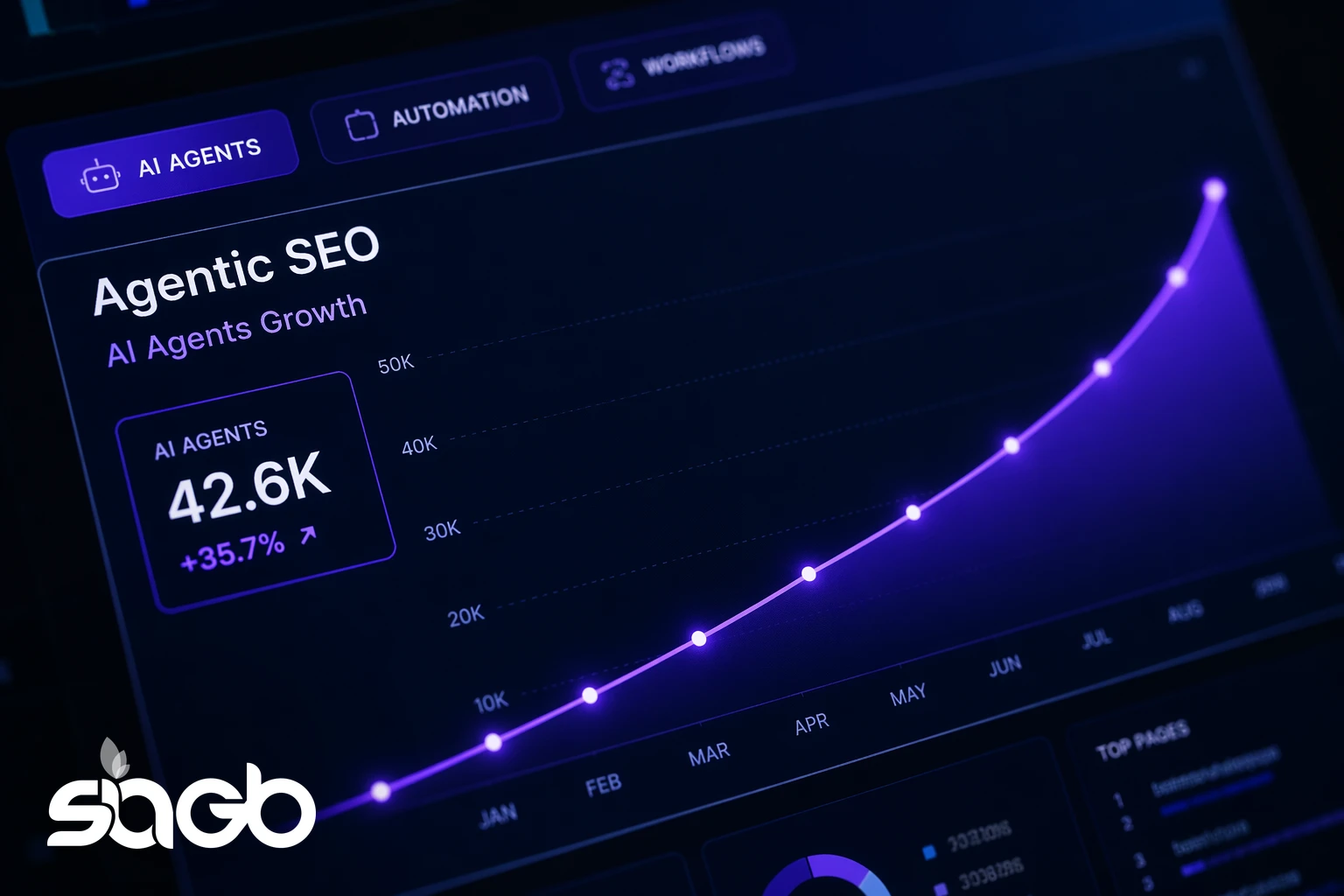
Google reviews medical practice visibility has a direct impact on trust. Patients read reviews before booking. AI search tools also factor sentiment into rankings.
Patient review management systems help clinics collect feedback safely. Automation ensures compliance while responding on time. Reputation management doctors rely on must always protect privacy.
A strong online reputation healthcare strategy supports patient acquisition and local SEO. It also strengthens healthcare brands in ai search.
AI Powered Patient Recall, Chatbots, and Analytics
An AI driven patient recall system reduces missed appointments. It sends reminders at the right time, using the right channel. That improves outcomes and revenue.
An ADA compliant patient portal and chatbot improve access for all users. These tools answer common questions and guide bookings. Chatbot analytics consultants Australia use data to improve responses and user flows.
That insight feeds back into ai systems. The healthcare website keeps learning and improving.
Common Mistakes Clinics Make with AI and SEO
Many clinics adopt ai tools without planning for compliance or security. Others treat healthcare SEO, accessibility, and cybersecurity as separate projects. That creates gaps.
Another common mistake is choosing vendors who deliver reports, not outcomes. This happens across industries, including ai consulting for retail businesses. Healthcare needs integrated systems, not PDFs that gather dust.
| Common mistake | What it leads to | Better approach |
|---|---|---|
| Adopting ai tools without compliance planning | Privacy and legal exposure | Build compliance into the platform from day one |
| Treating SEO, accessibility, and security separately | Gaps, duplicated cost | One connected system with shared data |
| Paying for reports instead of outcomes | PDFs, no growth | Vendors accountable for bookings and ROI |
Infographic: AI Optimised Healthcare Website System
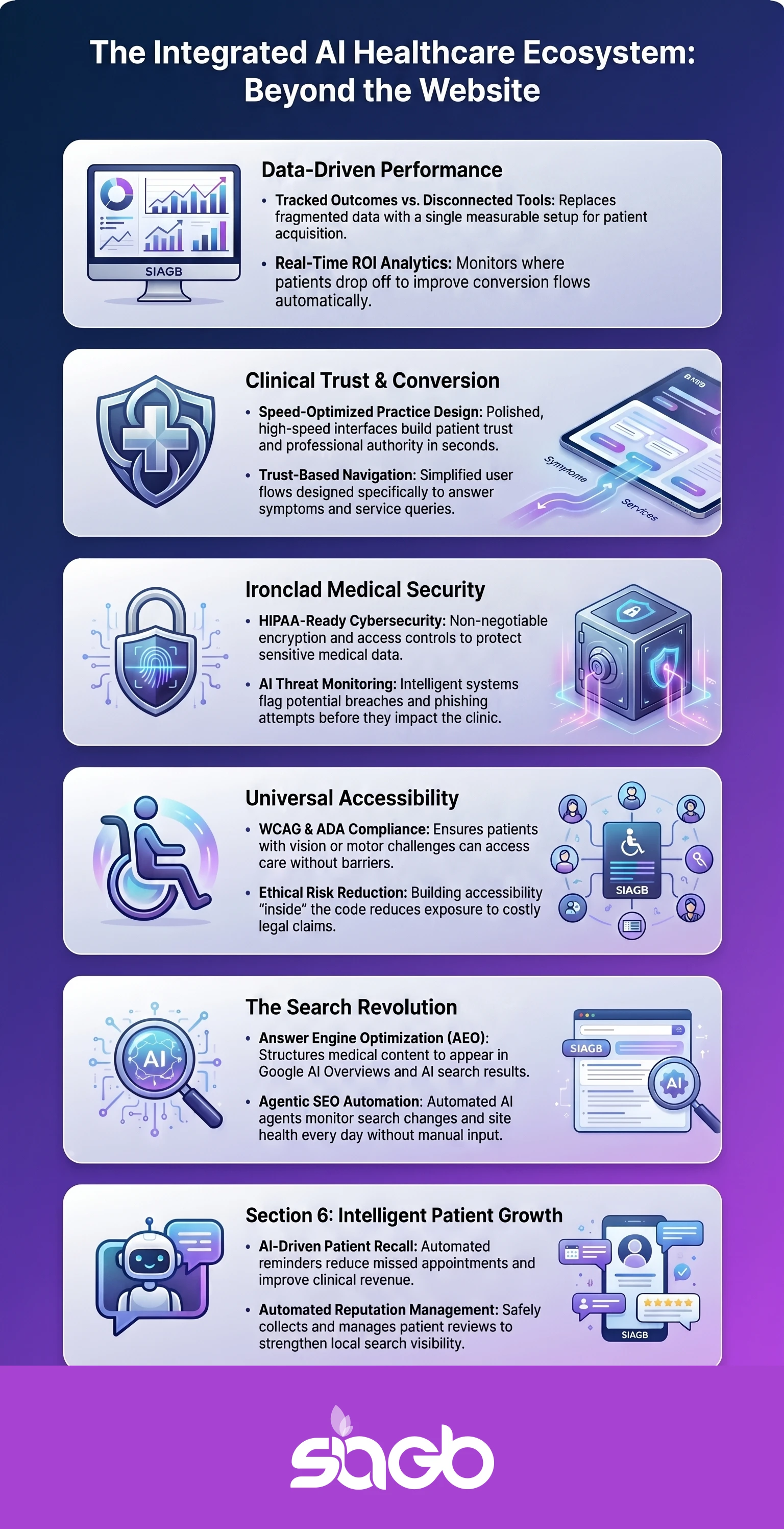
A visual overview shows how SEO, AEO, accessibility, and security connect. It maps the patient journey from ai search to booking and follow up. AI systems optimise each step.
Frequently Asked Questions
What makes an AI optimised healthcare website different?
The biggest difference is feedback. Every part of the site reports back on what patients actually do, and that data drives the next round of improvements automatically. A static brochure site can’t do that.
Do Australian clinics need ADA and WCAG compliance?
ADA is US law, but Australia has its own obligations under the Disability Discrimination Act, and WCAG is the standard regulators look to. Meeting it also widens your patient base, since accessible sites work better for older patients and mobile users.
How does AI SEO affect local search?
AI tools answering “physio near me” style questions pull from reviews, location data, and structured content. If those signals disagree, you get skipped. Keeping them consistent is what gets a clinic recommended.
Is patient data safe on AI powered websites?
It can be, if security is designed in rather than bolted on. Look for encryption, role-based access, and a clear answer on where any ai tool sends its data before you sign anything.
How long does it take to see results?
Quick wins like fixing broken forms or schema show within weeks. Rankings and ai search visibility build over a few months, and agentic SEO keeps compounding those gains.
Key Takeaways and Final Thoughts
AI optimised healthcare websites reduce risk and support growth. Compliance, ai search visibility, and automation need to work together. Healthcare leaders who treat their website as a system tend to win long term.
Choosing an AI native partner like siagb helps clinics move beyond tools to outcomes. Our founder, Sheetal Dhadial, brings 20+ years of IT and AI leadership as a Certified Scrum Master and AgilePM practitioner, and the team works out of Sydney (ABN 16 659 507 178). An ai optimised website healthcare strategy delivers measurable ROI, now and into the future.
Sources
- MIT Technology Review - AI search and healthcare technology reporting
- Stanford HAI - Human-Centred AI - AI adoption research
- W3C WCAG - international accessibility standard
- WebAIM Million report - annual accessibility audit of one million home pages
- Australian Digital Health Agency - national digital health strategy

Want to explore this further?
Book a Free Consultation