
AI SEO automation is the use of controlled AI systems to run SEO tasks at scale, while people set goals and manage risk. For healthcare and retail, it lowers acquisition costs, improves search visibility, and protects trust across modern medical website and retail platforms. When it’s done well, automation supports growth without cutting corners, even in highly regulated healthcare website accessibility environments.
So, why does this matter now? Many US businesses are paying more for ads but are still hard to find in a crowded search engine landscape. I’ve seen this happen. A lot. Especially in healthcare. Trust, accuracy, and compliance slow things down, and they should. This guide breaks down what actually works, what doesn’t, and where automated SEO needs a human in the loop. And yes, it’s based on real delivery at SIAGB, the Sydney consultancy (ABN 16 659 507 178) led by Sheetal Dhadial, who brings 20-plus years in IT and AI leadership as a Certified Scrum Master and AgilePM practitioner.
Introduction
AI SEO automation helps businesses fix real problems like low search visibility, rising marketing costs, and fragmented optimization workflows. It matters most in industries where trust and accuracy are non negotiable, such as medical practice SEO and regulated retail. Healthcare and retail teams feel this pressure every day, especially as search engines evolve and generative answers from Google AI Overviews, ChatGPT, Perplexity, and Gemini reshape how patients and shoppers find services.
At SIAGB, we see plenty of skepticism around hype driven AI tools. Fair enough. In our work building an AI-powered patient scheduling system for US medical groups, and running the Marvel PTE platform that now serves 85,000-plus users across 900-plus institutes, we learned one thing fast: automation only earns trust when it is measured. This article explains how AI driven SEO fits into real workflows, where it helps, and where it can cause harm if left unmanaged. No fluff. Just practical optimization for regulated industries, including ai seo healthcare and answer engine optimization medical use cases that actually work.
What Is AI SEO Automation in Plain Language

AI SEO automation is software driven automation that handles repeatable SEO tasks. This includes keyword research, content optimization, site audit checks, and technical seo reviews across medical practice website design and retail ecommerce platforms. The goal is speed and consistency, not shortcuts or risky claims. In practice, we track three Core Web Vitals thresholds on every page we ship: Largest Contentful Paint under 2.5 seconds, Interaction to Next Paint under 200 milliseconds, and Cumulative Layout Shift under 0.1.
Agentic SEO goes a step further. It uses an ai agent that can plan actions, run them, then review results. It works in a loop, with guardrails in place. Think of it as a workflow engine powered by a specialized ai seo tool, not a magic ai assistant or empty promise. The agent reads structured signals from Google Search Console, Google Analytics 4, and schema.org markup, then proposes changes a human approves before anything goes live.
Here’s the thing. Automation supports people, it doesn’t replace them. Strategy, approvals, and accountability stay human. In healthcare and retail, that line matters. A lot. Without it, automated SEO systems can drift, break compliance like WCAG 2.2 AA standards, or damage trust with search engines and patients.
How Agentic SEO Works in Healthcare and Retail
Agentic AI for marketing works in cycles. The system analyzes data from tools like Google Search Console and Google Analytics 4, takes action, measures outcomes, then adjusts optimization rules. This loop might run daily or weekly, depending on risk and governance requirements. For a multi-location medical group, we typically cap automated edits at title tags, meta descriptions, FAQPage schema, and internal links, and we route any clinical copy to a human reviewer first.
In healthcare and retail, the workflow needs tighter rules. Content changes must follow guidelines. Product or service pages must stay accurate. Brand voice can’t drift. This is where many ai seo tools fall over, they automate without enough controls.
End to end systems matter. Good automation links SEO actions to bookings, leads, or sales. For retail, that’s purchases. For clinics, it’s appointments. This is where ai consulting for retail businesses and healthcare providers adds real value, tying optimization to outcomes, not vanity metrics. In our patient scheduling build, the SEO layer connects a search visit straight to a booked slot, so we can attribute revenue instead of guessing.
What AI Agents Actually Automate
AI agents for SEO handle tasks that humans shouldn’t repeat by hand, especially at scale.
They automate keyword research based on real search intent and questions. That includes how people phrase problems in ai search, voice queries, and answer engine optimization medical results, for example a query like “urgent care near me open now” versus “is a telehealth visit covered by Medicare”.
They manage content optimization by refreshing pages when guidelines change or demand shifts. Seasonal demand in retail and service updates in healthcare website redesign projects are classic cases of ongoing content optimization.
They run technical seo checks across hipaa compliant website infrastructure, schema, indexing, and crawl errors. Automated SEO agents don’t get tired. But they still need rules and regular review by SEO professionals.
Key tasks commonly automated include:
- Keyword and question discovery for ai optimized website healthcare content
- Technical site audit checks for WCAG 2.2 AA accessibility and Core Web Vitals performance
- SEO content creation and refreshes aligned to healthcare seo strategy, using schema.org types like MedicalOrganization, Physician, and FAQPage
Key Point: Automation works best when tasks are clear, optimization goals are defined, and risk is set upfront.
AI SEO vs Traditional SEO vs Answer Engine Optimization
Traditional seo relies on manual updates and slower feedback. It focuses on rankings in search engines. That still matters, but it’s not enough on its own for modern medical practice seo or complex retail SEO efforts.
AI SEO uses automation tools to scale faster. Workflows run daily. Optimization reacts to data, not guesswork. Automated SEO shines when content libraries grow large or span multiple locations and services.
Answer engine optimization medical strategies go further. AEO targets answers shown in AI assistants, voice tools, and Google AI Overviews. It’s about being the cited answer, not just another blue link in a search engine result. To earn a citation from ChatGPT, Perplexity, or Gemini, your pages need clean structure, verifiable claims, and schema that machines can parse.
Here is how the three approaches compare in practice:
| Dimension | Traditional SEO | AI SEO Automation | Answer Engine Optimization |
|---|---|---|---|
| Primary target | Blue links on Google | Rankings plus workflow scale | Cited answers in AI Overviews, ChatGPT, Perplexity |
| Update cadence | Monthly, manual | Daily or weekly, agent-driven | Continuous, structure-led |
| Key signals | Keywords, backlinks | GSC and GA4 data, Core Web Vitals | Schema.org, entities, factual clarity |
| Healthcare guardrail | Human edits every page | Human approves clinical copy | Human verifies every claim cited |
| Best measure of success | Ranking position | Bookings and leads attributed | Share of AI answers won |
Healthcare seo strategy now spans search engines and answer engines. If your content can’t be trusted or understood by generative AI systems, it won’t surface. Sound familiar?
AI SEO for Healthcare Websites and Accessibility
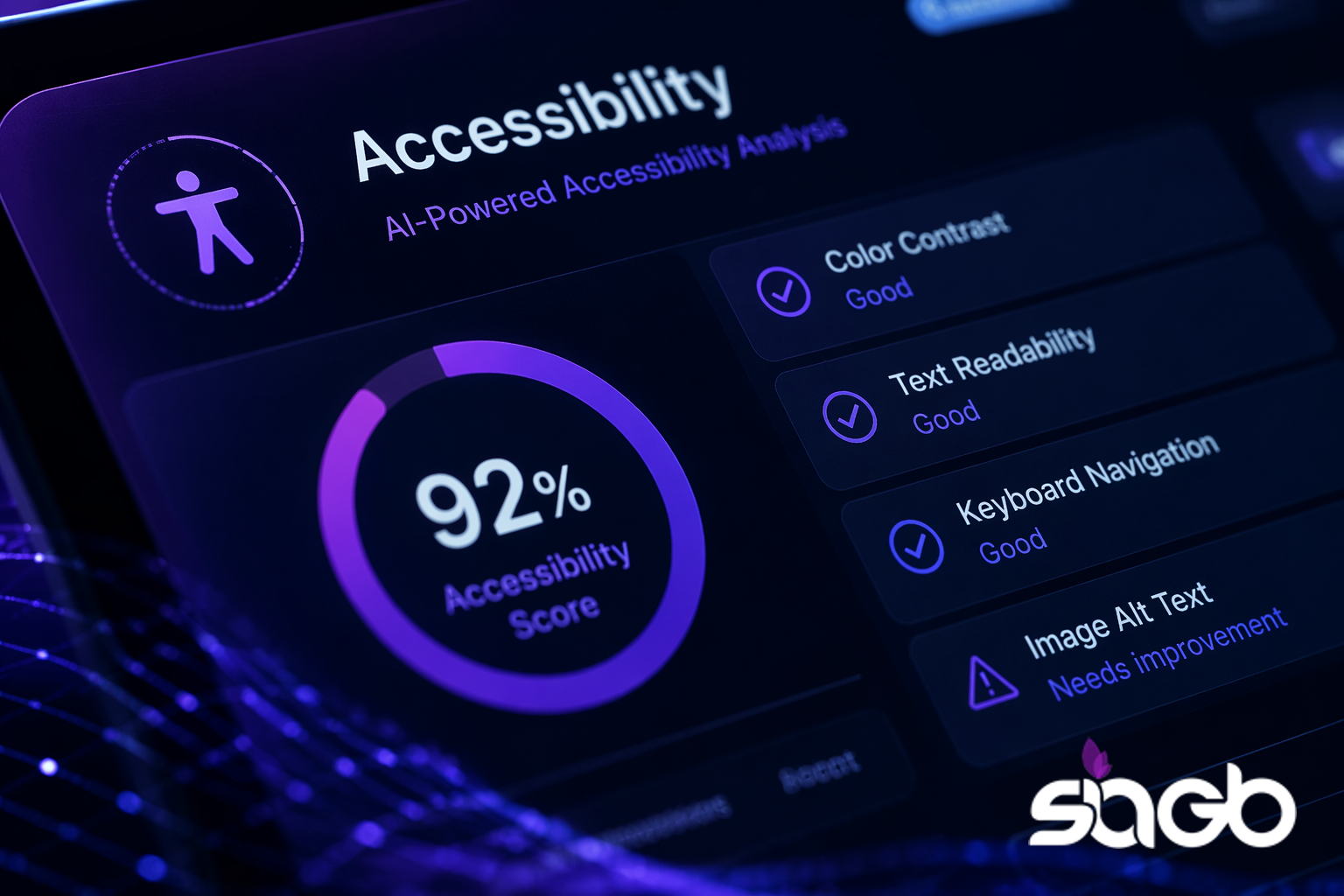
Healthcare website accessibility is no longer optional. In the US, courts increasingly read ADA Title III to cover websites, and the Department of Justice ties compliance to WCAG 2.1 AA as the practical benchmark. AI can scan pages for WCAG gaps and flag risks early across a wcag healthcare website build. Color contrast below the 4.5:1 ratio for normal text, missing headings, unlabeled form fields. All checkable with the right ai powered tool.
Reducing ada website lawsuit doctors face starts with structure and clarity. An ada compliant patient portal supports access, usability, and trust for all patients while improving overall optimization. We track every fix against a WCAG 2.2 AA checklist so nothing gets marked done on faith.
Accessible sites also perform better in optimization. Search engines favor clarity. So do ai search systems. A healthcare website accessibility focus often improves conversion and reduces bounce rates. Weird, right?
Pro Tip: Accessibility fixes often improve seo performance within weeks when tracked in Google Search Console.
Medical Practice SEO, Content, and Website Redesign
Medical practice seo works best when it’s baked into the design. Retrofitting later costs more. Trust me on this.
AI supports consistent service pages and patient focused seo content. It helps with seo content creation and ongoing content optimization, not clinical judgement. That distinction matters in ai content medical practice workflows.
A modern medical website balances speed, trust signals, and compliance. Medical practice website design should support local seo, booking flows, and clear information, with LocalBusiness and Physician schema on every location page. AI content medical practice systems help scale, but humans on the SEO team still approve what patients read.
Compliance, Data Security, and Cyber Risk
AI SEO automation must never expose patient data. Ever. A hipaa compliant website mindset still applies, and in the US the HIPAA Privacy and Security Rules make it a legal requirement, with civil penalties that can reach into the millions per violation category each year.
Poorly governed automation tools can increase healthcare cybersecurity threats. Logs, analytics, and integrations need controls. Medical practice data security isn’t just IT’s job anymore, it’s part of the SEO stack. We keep any tool that touches PHI out of the SEO pipeline entirely, and we scrub identifiers before analytics events ever reach GA4.
Cybersecurity for doctors now includes marketing systems. Seo tools, chatbots, and analytics platforms touch sensitive systems. I don’t like loose setups. Never have.
Warning: Never connect automation to live patient data without strict isolation.
Using AI for Reviews, Reputation, and Patient Recall
Google reviews medical practice profiles shape trust and rankings. AI helps monitor sentiment, flag issues, and draft responses, but humans approve tone and accuracy. We mark up approved testimonials with Review and AggregateRating schema so ratings can show in search.
Online reputation healthcare signals influence search engines and ai overview results. Consistency matters here, especially for reputation management doctors rely on.
Automation can also link SEO to patient recall system workflow improvements. Follow ups, reminders, and content updates connect visibility to lifetime value. That’s where optimization turns into growth, slowly but reliably. In our scheduling work, a recall reminder that lands the week before a due checkup routinely outperforms a fresh cold search visit on cost per booking.
Limits of AI SEO Automation and Where Humans Step In
Automation can’t judge clinical accuracy or legal nuance. It just can’t. Not reliably.
Unchecked agents can damage rankings or trigger compliance issues like ada website lawsuit doctors want to avoid. I’ve seen rankings drop fast after a poorly set SEO task. Human oversight sets strategy, reviews outputs, and controls risk.
AI seo tools and ai seo services should clearly show where automation stops. If they don’t, walk away.
How US Businesses Should Evaluate AI SEO Partners
Look for problem first consulting, not a shiny seo tool demo running on a Google Sheet. Ask how workflows tie to revenue, bookings, and patient outcomes.
Demand measurable ROI. Leads, bookings, sales. Not just dashboards pulled from Google Analytics 4. Experience in regulated industries and healthcare website redesign matters to any serious SEO team. Ask a prospective partner to name the schema types, the WCAG level, and the Core Web Vitals targets they hold every page to. Vague answers are a tell.
AEO services in the USA should reflect local rules like HIPAA and ADA Title III alongside global platforms like Google AI Overviews and ChatGPT. SIAGB focuses on end to end delivery, with accountability built in across the full SEO stack. That’s the difference.
Infographic: How AI SEO Automation Connects to Patient Growth
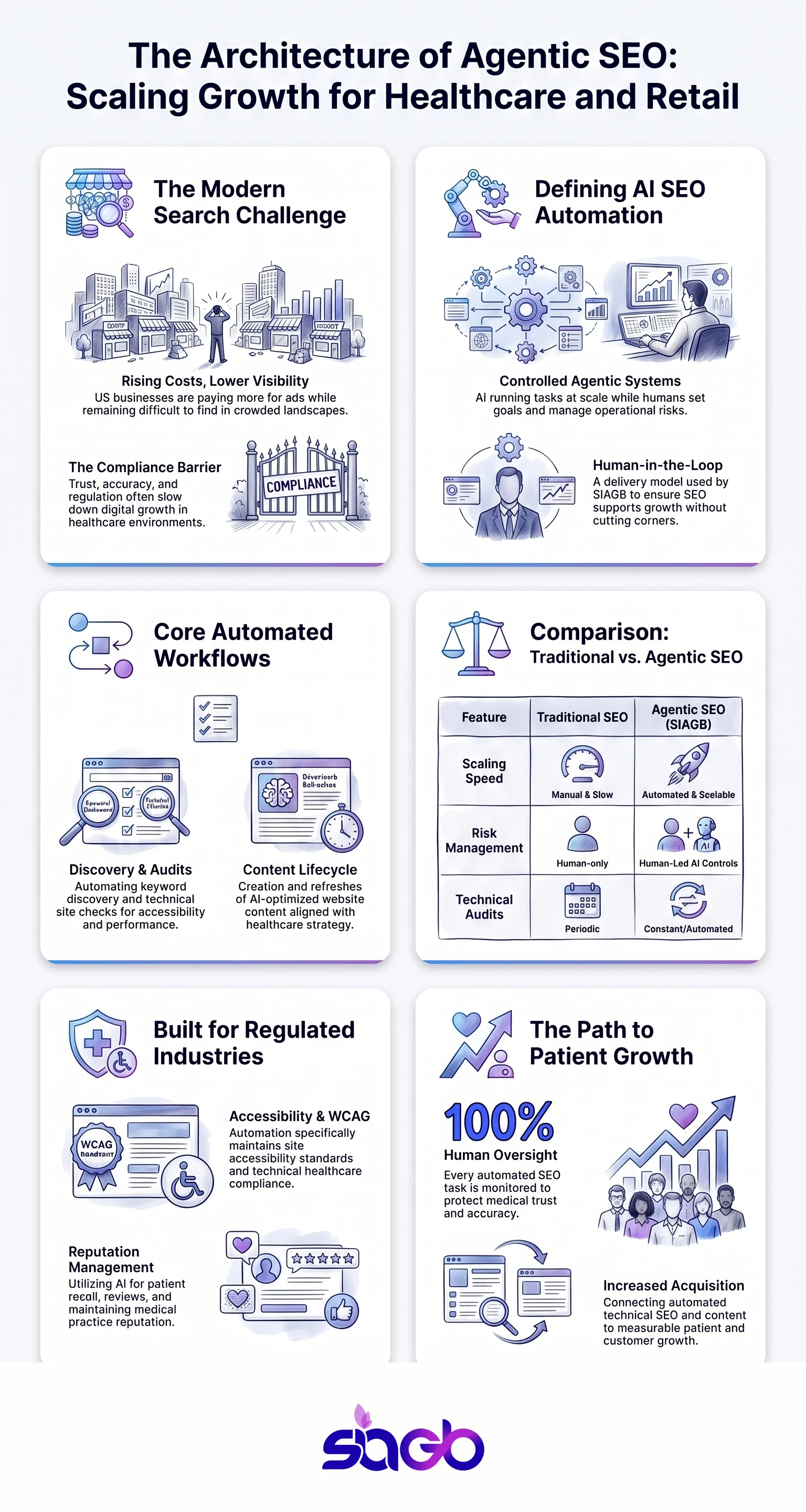
A visual flow showing how an ai optimized website healthcare journey moves from search and answers to trust, reviews, recall, and conversion through structured optimization steps.
Frequently Asked Questions
What is ai seo automation in healthcare?
AI SEO automation uses controlled automation to handle SEO tasks like content optimization, monitoring, and accessibility checks. In healthcare, it runs with strict rules to protect accuracy, privacy, and compliance.
Is automated seo safe for medical websites?
Automated SEO can be safe if workflows exclude patient data and include human review. Unchecked automation increases risk to compliance and trust.
How does agentic SEO differ from normal seo tools?
Agentic SEO uses an ai agent that plans, acts, measures, and adjusts. Normal seo tools report data but don’t run workflows or closed loop optimization.
Does AI SEO help with accessibility and WCAG?
Yes. AI can flag accessibility gaps and track fixes as part of a structured site audit. Humans still approve changes to meet wcag healthcare website requirements.
Can AI SEO improve patient bookings and recall?
When tied to recall systems, reviews, and reputation management doctors rely on, automation supports long term growth. It’s not instant, but it’s measurable.
Key Takeaways and Final Thoughts
AI SEO automation works when it’s tied to real outcomes, not hype. Healthcare and retail need stricter controls, clearer goals, and strong governance across every optimization layer.
Automation improves optimization speed, consistency, and scale. Humans bring judgement, ethics, and accountability to SEO efforts.
If you want to use AI to support search engine optimization responsibly, choose partners who understand risk as well as growth. That balance is what actually scales.
Sources
- MIT Technology Review (technologyreview.com)
- Stanford HAI - Human-Centered AI (hai.stanford.edu)

Want to explore this further?
Book a Free Consultation