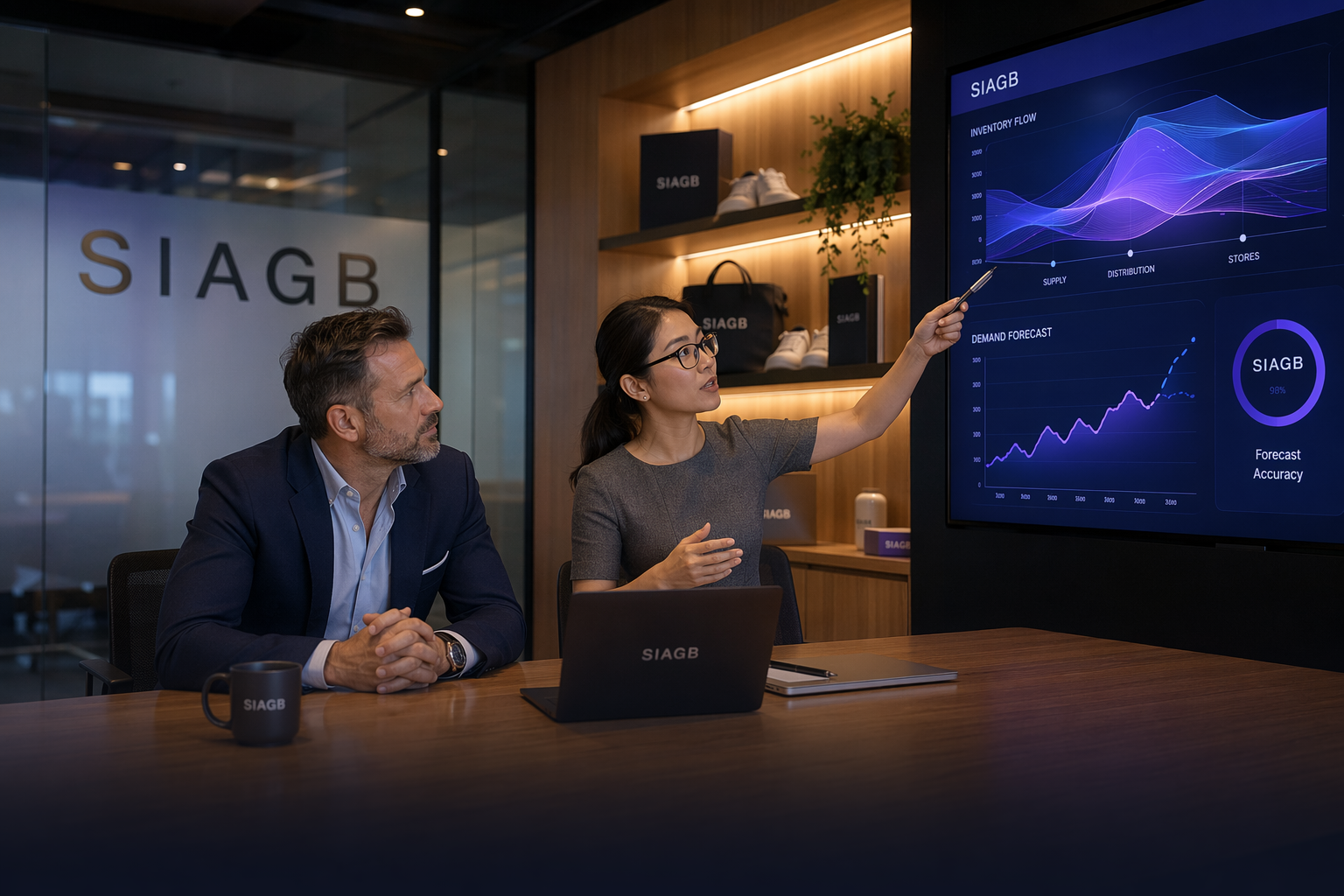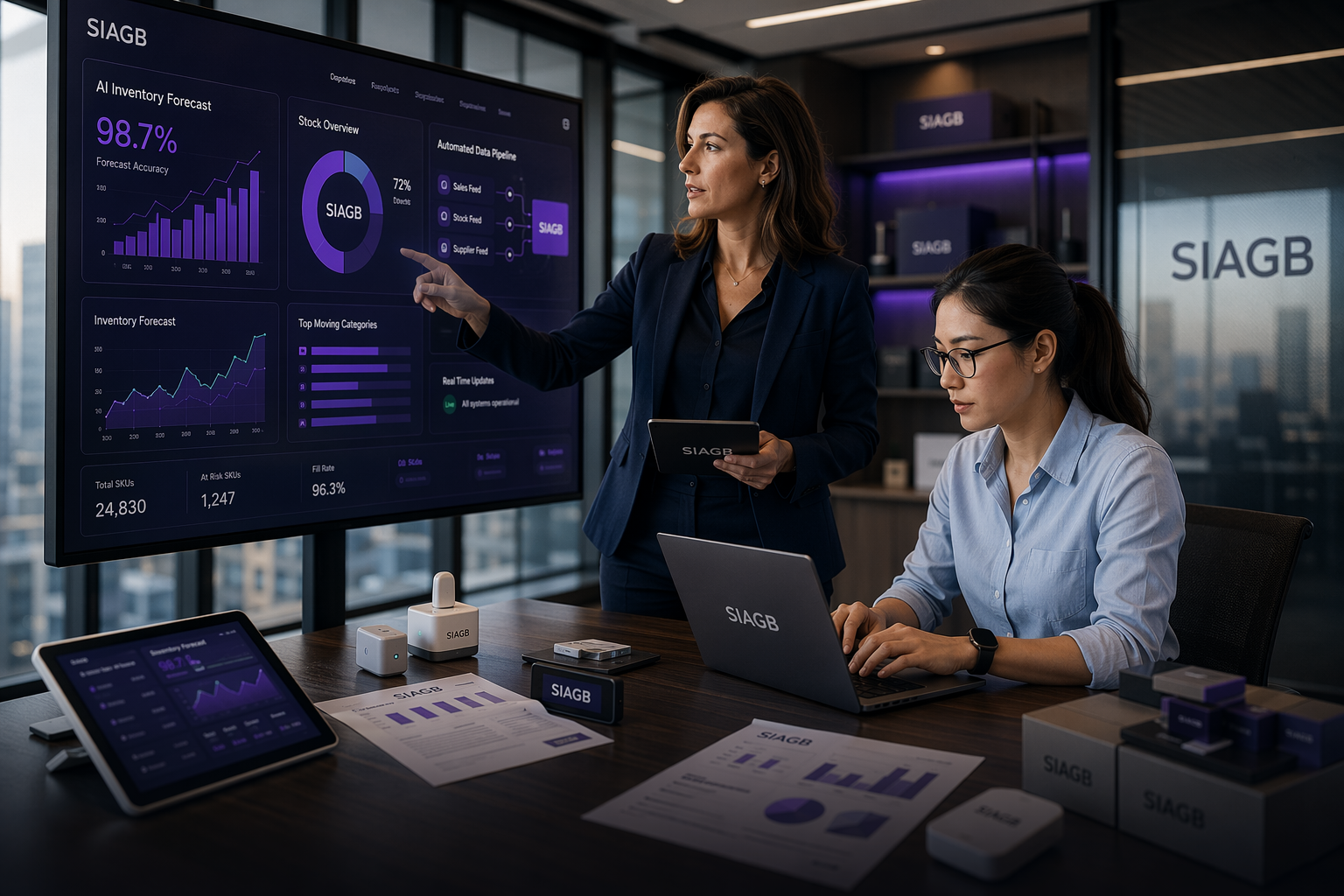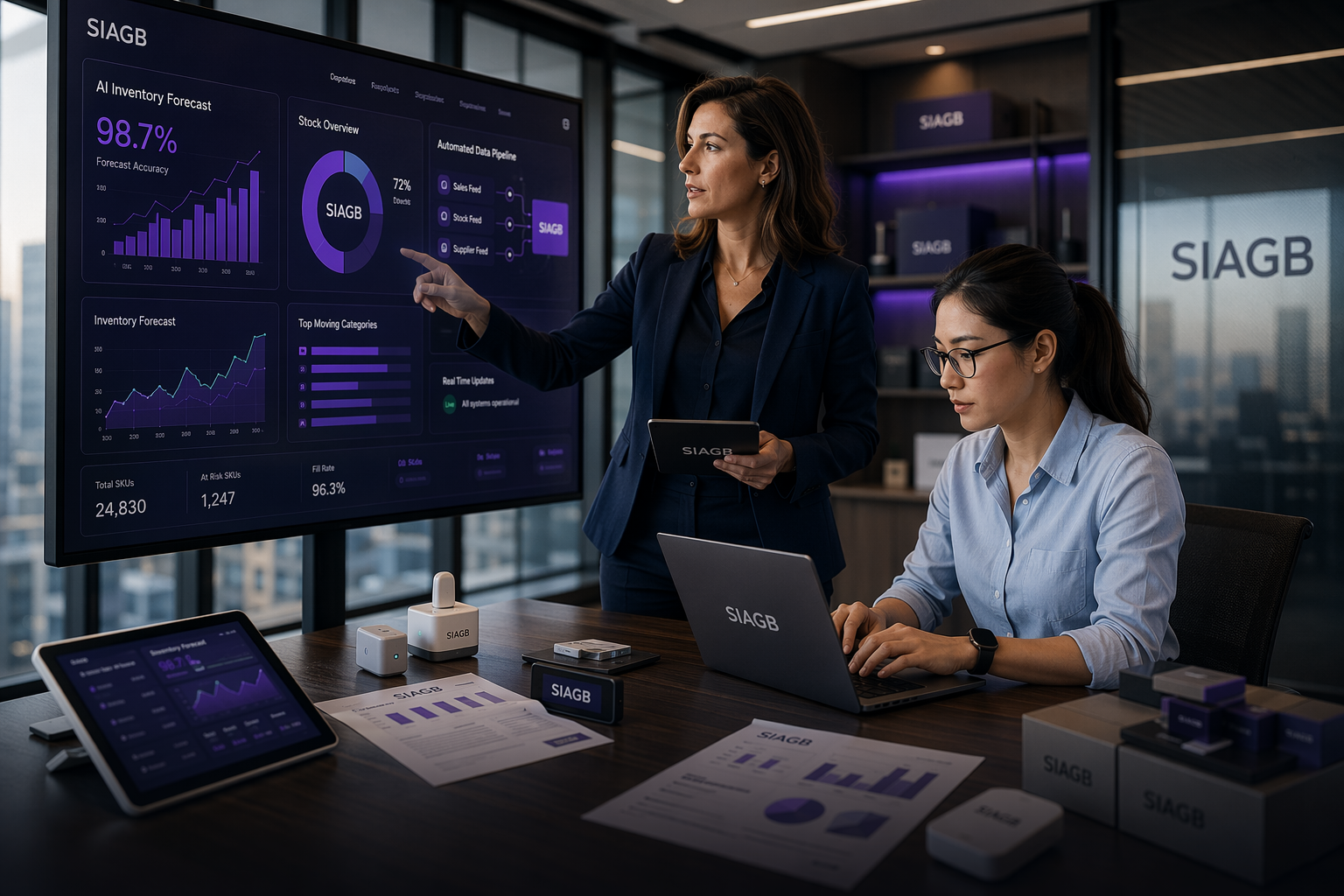
A retail data management AI solution helps retailers collect, clean, and use information automatically so decisions happen faster. It tackles real problems like stock gaps, slow reporting, and rising costs. Unlike bolt-on tools, AI-native platforms learn over time and improve how a retail business runs day to day.
Retail leaders want straight answers. Not another dashboard. This guide breaks down how AI fits into retail data management, where it actually works, and what results you can expect. The same problem-first thinking underpins SIAGB projects across education, healthcare, and retail. Our founder, Sheetal Dhadial, has spent more than 20 years in IT and AI leadership as a Certified Scrum Master and AgilePM practitioner, and we build from Sydney (ABN 16 659 507 178) for the Australian market. In our work on Marvel PTE, the same data foundations now serve 85,000-plus users across 900-plus institutes, which is where a lot of our thinking on clean pipelines started.
Introduction: Why Retail Data Is Hard to Manage at Scale
Retail information gets messy quickly. Sales flow in from POS, ERP, inventory systems, eCommerce platforms, and suppliers. Each speaks a different language. Teams then spend hours fixing spreadsheets just to work out what happened yesterday.
Sound familiar?
Manual reporting slows everything down and increases errors. By the time numbers are ready, the moment has passed. Pricing decisions lag. Inventory drifts. Customers feel it through poor availability and patchy customer service. Australian retail turnover runs above 36 billion dollars in a single month, according to the Australian Bureau of Statistics, so even a one percent forecasting error against that base is a large number. When we scope a retail engagement, we usually find between five and eight disconnected sources feeding one weekly report, and that fragmentation is where the delay and the error creep in. Similar delays affect healthcare SEO strategy and medical practice SEO when reporting pipelines break.
An AI-native retail data management AI solution starts with the business problem. It looks at where decisions break down across the retail operation. Then it uses analytics, predictive analytics, and automation to fix the root cause, not just show charts. That shift matters. More than most people expect.
What Is Retail Data Management and Where Does AI Fit?
Retail data management is how a retailer collects, cleans, stores, and uses information in daily operations. This includes sales, inventory, supply chain feeds, and customer data from many touchpoints. When it works, it supports planning, pricing strategy, and customer experience.
AI changes how this work gets done. An AI solution adds automation, prediction, and learning into the flow. Instead of waiting for reports, AI systems watch signals in near real time. They spot patterns, flag issues, and update forecasts as conditions change. This relies on modern AI technology and well-designed AI algorithms, and increasingly on structured data too: marking up product pages with schema.org Product, Offer, and AggregateRating types is now what lets tools like ChatGPT, Perplexity, and Google AI Overviews read a catalogue accurately. We treat that machine-readable layer as part of retail data management, not a separate SEO afterthought.
Traditional retail analytics tools sit on top of legacy platforms. They rely on fixed rules and manual updates. AI-native platforms work differently. They build intelligence into the pipeline itself using predictive analytics and adaptive models. Algorithms learn from demand shifts, customer behaviour, and supply chain noise. Over time, the system gets better at supporting retail decisions. That’s the idea. And in practice, it usually holds up.
Which Common Retail Data Problems Is AI Built to Solve?
Most retail teams face the same problems, big or small.
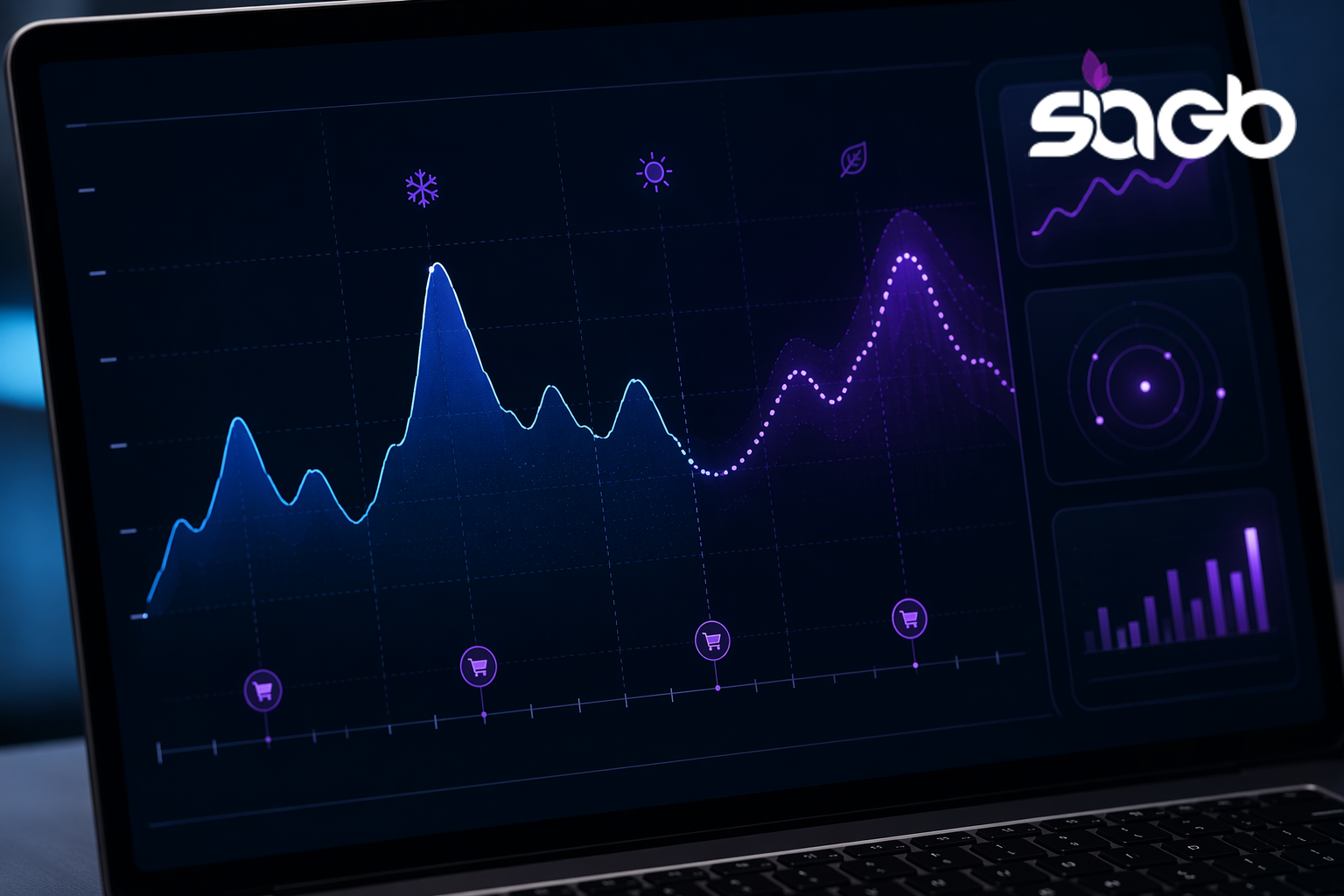
First, silos. Store information, online feeds, and supplier inputs rarely line up. That limits visibility across the retail business. Second, accuracy issues. Late or broken feeds lead to weak demand forecasting and poor inventory management. Third, heavy manual effort. Analysts still reconcile numbers by hand, often under pressure.
These issues hit consumer goods retailers hard. A small error can ripple through pricing strategy, promotions, and supply chain planning. Customer experience suffers. Customer satisfaction drops. And teams start to mistrust the numbers. Healthcare organisations see similar patterns across WCAG healthcare website reporting and patient scheduling systems.
AI is built for this kind of complexity. It connects fragmented sources through data integration, checks quality automatically, and learns what normal looks like. When something breaks, it flags it early. Sometimes earlier than people expect.
Here is how the common pain points map to a practical AI fix.
| Data management challenge | How AI fixes it |
|---|---|
| Siloed store, online, and supplier feeds | Unifies sources through automated data integration |
| Late or broken feeds weakening forecasts | Monitors quality in near real time and flags gaps early |
| Manual reconciliation under pressure | Automates cleaning and matching so analysts decide, not tidy |
| Errors rippling into pricing and promotions | Detects anomalies before they reach the shelf |
Coverage like this echoes MIT Technology Review reporting on how data quality, not model size, tends to decide whether AI projects actually pay off.
AI Use Cases in Retail Data Management
AI use cases in retail data management focus on decisions that affect cost, service, and growth. Here are three that tend to deliver real value.
Demand forecasting
AI uses historical sales, promotions, seasonality, and external signals to improve demand forecasting. Predictive analytics adjust as customer behaviour changes. We usually start with 24 to 36 months of transaction history so the model can learn a full seasonal cycle plus events like end-of-financial-year in June and Boxing Day trade. This reduces guesswork and supports better supply chain planning.Inventory optimisation
AI tracks inventory levels across stores and warehouses. It supports inventory optimisation by balancing stockouts and overstock. Retailers often see lower holding costs and better availability. We tend to watch three numbers together: sell-through rate, weeks of cover, and stockout frequency, because optimising one in isolation just pushes the problem sideways. Inventory management becomes proactive, not reactive.Automated anomaly detection
AI monitors pricing, sales, and shrinkage patterns. When something looks off, it alerts teams. This protects margin and improves retail intelligence. A price feed that drops a decimal place, or a single SKU selling at ten times its usual velocity, gets flagged in minutes rather than surfacing in next week’s report. Problems get fixed faster, often before customers notice.
These use cases work best with experienced AI consulting for retail businesses. Context matters. Strong data engineering matters too. Skip either, and results suffer.
Agentic AI and Automated Data Agents in Retail
Agentic AI takes automation a step further. Instead of waiting for instructions, autonomous agents monitor activity, analyse changes, and act within set guardrails. Think of them as digital team members for retail analytics.
Automated agents can refresh demand forecasts daily using predictive analytics. They watch supply chain feeds for delays. They notify teams when inventory risk rises. Some even trigger workflows across systems. Similar agentic models power AI applications in marketing, education, and healthcare.
This reduces reliance on static dashboards and manual checks. Operations move faster. Customer engagement improves through more consistent customer interaction. Honestly? Once teams see this in action, it’s hard to go back.
Manual vs Rules-Based vs Agentic AI Approaches
Retail work usually falls into three models.
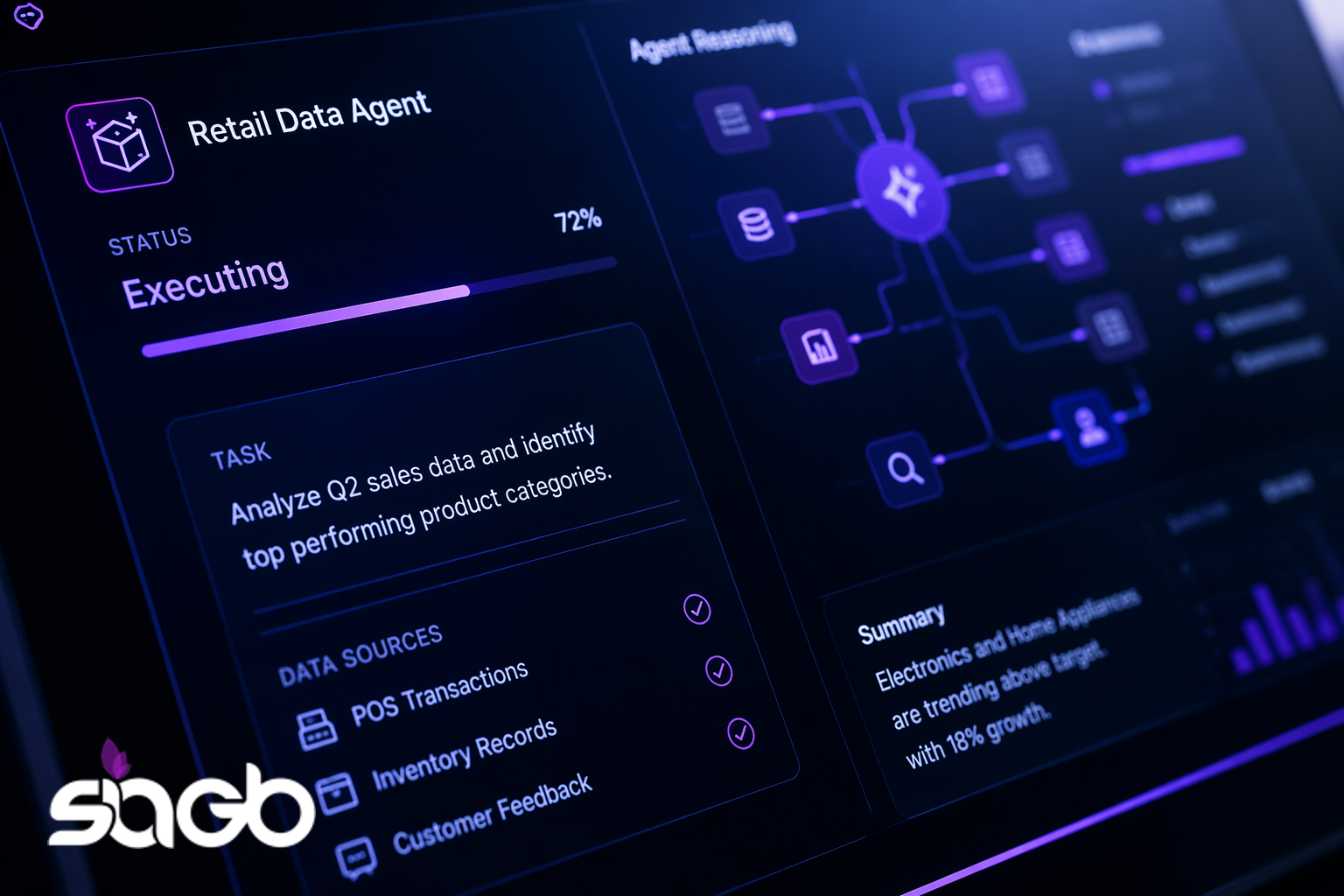
Manual analysis relies on people and spreadsheets. It’s slow, inconsistent, and tough to scale. Rules-based systems automate known patterns, but they break when demand shifts or supply chain issues appear.
Agentic AI adapts. It learns from new inputs and changing retail conditions. It supports better category management, pricing strategy, and inventory decisions. Because it reasons over live signals rather than a fixed rulebook, it handles uncertainty better.
Here’s a simple comparison.
| Approach | Speed | Flexibility | Scale |
|---|---|---|---|
| Manual | Slow | Low | Poor |
| Rules-based | Medium | Limited | Medium |
| Agentic AI | Fast | High | Strong |
Integrating AI With POS, ERP, and Legacy Retail Systems
Most retailers can’t replace core platforms overnight. POS and ERP tools are deeply embedded in daily work. The good news? AI layers can connect to what’s already there.
At SIAGB, integration is a core risk area. AI should sit alongside existing systems, pulling signals securely and pushing insights back. This often includes cloud environments like Microsoft Azure or Amazon Web Services, depending on client needs. End-to-end delivery matters. Strategy without build creates gaps. Build without context creates waste.
AI consulting for retail businesses works best when one team owns the outcome. Data integration, governance, and adoption all count. And yes, experience makes a difference here.
Data Security, Privacy, and Compliance for Retail AI
Retail operations include sensitive customer information and payment details. Breaches damage trust fast. Strong data governance isn’t optional. Australian retailers handling personal data sit squarely within the Privacy Act 1988 obligations explained by the Office of the Australian Information Commissioner, and the 2022 amendments lifted serious-breach penalties to the greater of 50 million dollars or 30 percent of adjusted turnover. Anyone touching card data also carries PCI DSS 4.0 requirements. We bake both into the design rather than bolting them on later.
Retail can learn from healthcare. When we build systems like AI-powered patient scheduling for medical groups, the same discipline applies: role-based access, encryption in transit and at rest, and audit trails on every read. Medical practice data security and cybersecurity frameworks show how high-risk information should be handled. Threats like ransomware, credential theft, and API misuse affect retailers too.
AI systems must be designed with security in mind. Access controls, audit logs, and encryption are basics. Planning for cybersecurity threats matters just as much. Good governance protects the customer and the brand. Simple as that.
How Do You Measure ROI From AI Data Management Projects?
Retail AI projects need to show value quickly. Clear metrics matter.
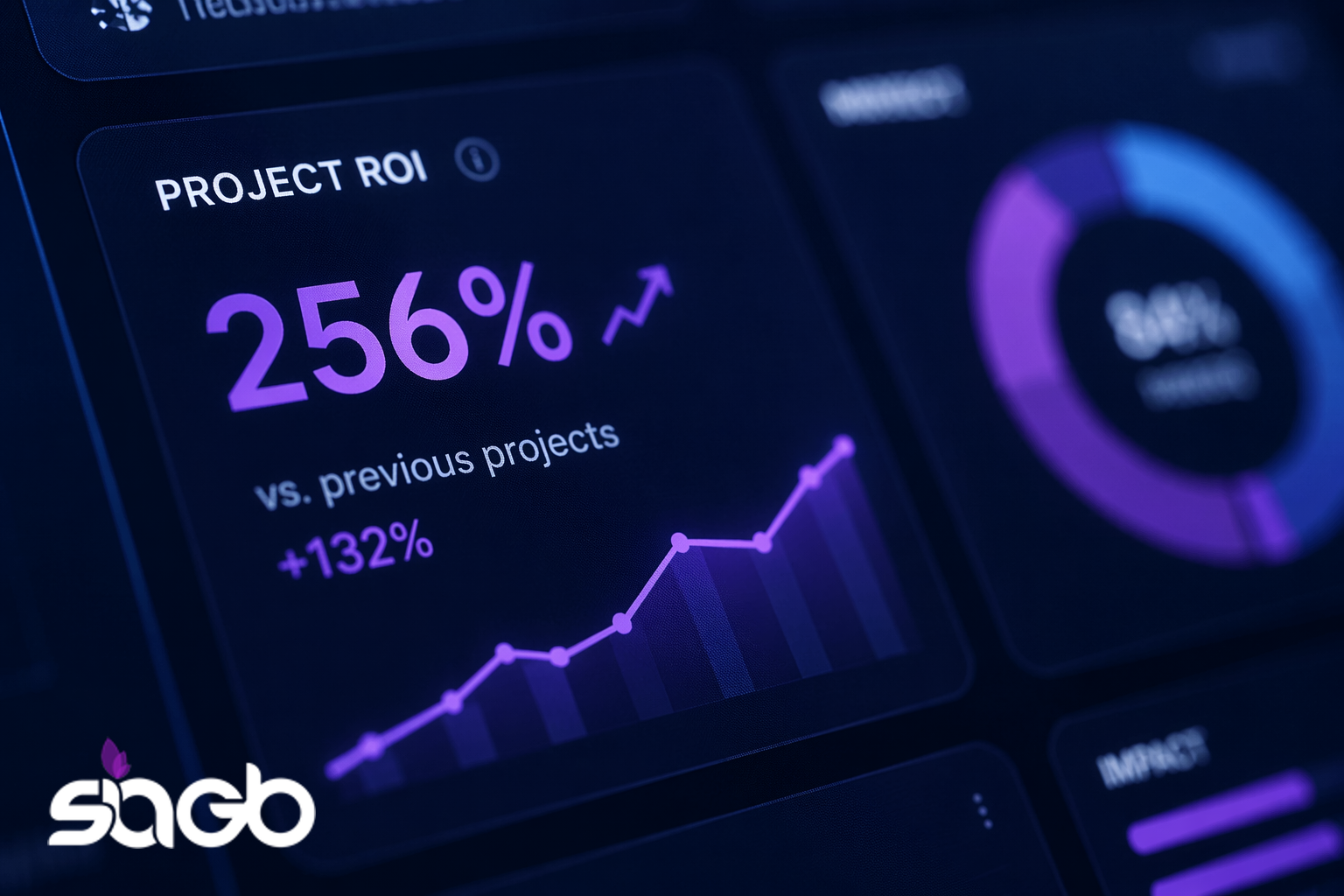
Common ROI measures include reduced labour hours, lower inventory holding costs, better inventory optimisation, and improved operational efficiency. Many retailers see impact within three to six months when projects are scoped well and supported by strong data engineering.
The key is problem-first thinking. Avoid vague AI initiatives labelled as transformation. Focus on specific decisions. Pricing. Inventory. Supply chain planning. Analytics should support action, not theory.
Real-World Examples From Retail and Adjacent Industries
In our engagements we’ve seen retailers cut reporting time by more than 50 percent using AI automation, turning a two-day manual close into an afternoon. Teams move from cleaning information to making decisions that improve the retail experience. That’s real change, and it is the kind of before-and-after we insist on measuring.
In education, Marvel PTE operates at scale with more than 85,000 users across 900-plus institutes and millions of records. The same principles apply. Clean pipelines. Automated checks. Continuous learning. SIAGB brings these lessons into the retail industry and consumer goods environments.
Healthcare offers another parallel. Complex reporting. High compliance. Real consequences. In our AI-powered patient scheduling work for medical groups, we hold customer-facing screens to WCAG 2.1 and 2.2 AA and keep Core Web Vitals inside Google’s thresholds (Largest Contentful Paint under 2.5 seconds, Interaction to Next Paint under 200 milliseconds, Cumulative Layout Shift under 0.1). Those same accessibility and performance standards translate directly into retail storefront and dashboard governance.
How Better Data Supports Marketing and Customer Experience
Better retail insight improves more than operations. It supports smarter marketing campaigns and pricing. Promotions align with demand. Personalisation feels relevant, not random.
Clean product information also enables better product recommendations across channels. Customer interactions feel smoother. Customer satisfaction rises. And the overall retail experience improves.
When signals flow well, customer behaviour becomes easier to understand. And the brand feels more responsive. Which customers notice.
Infographic: From Raw Retail Data to AI-Driven Decisions
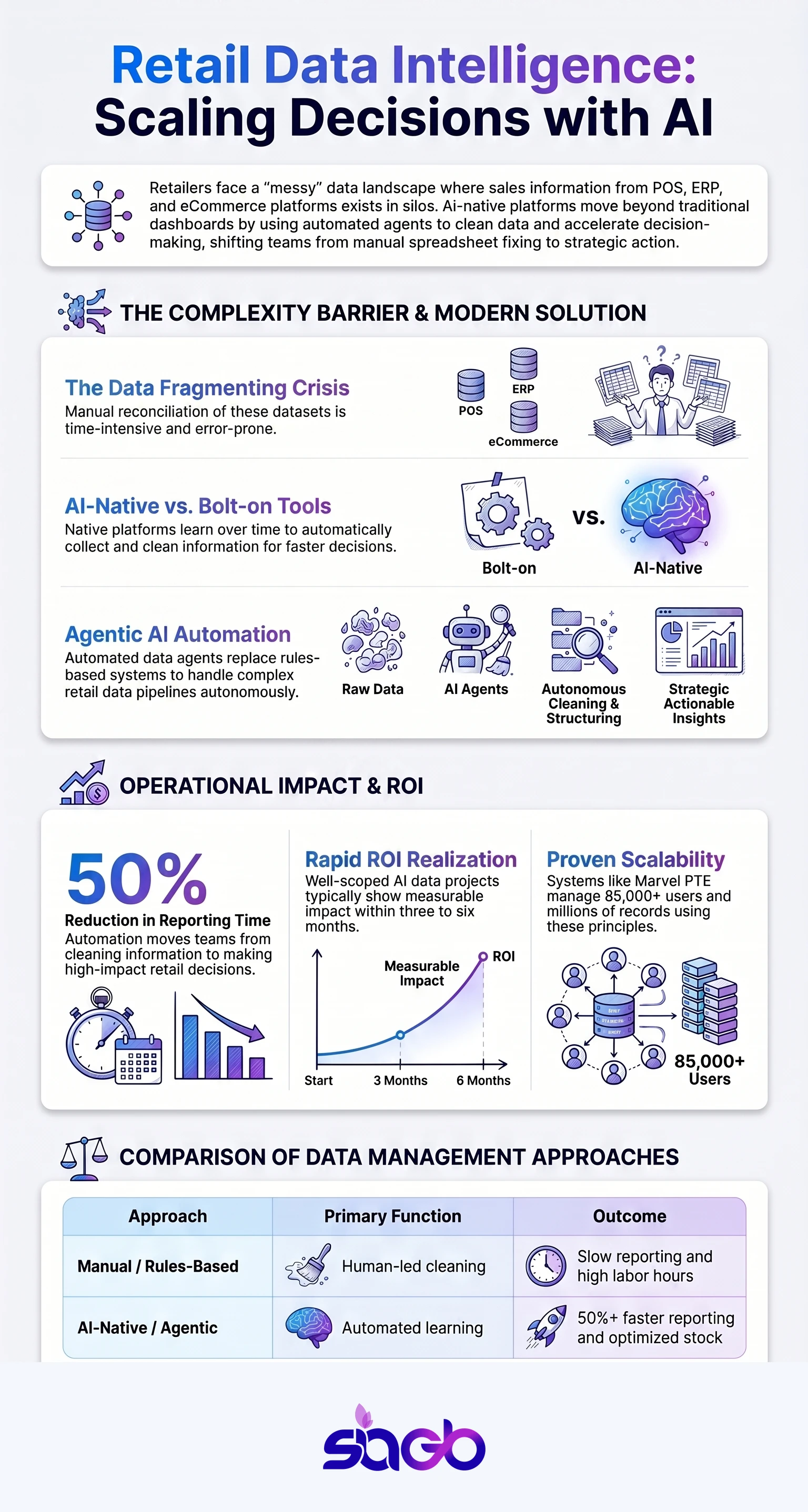
This infographic shows how retail signals move from POS, inventory, and supply chain systems into AI agents. It compares manual workflows with AI-native automation. Key decision points highlight where predictive analytics and AI applications create value.
Frequently Asked Questions
What is a retail data management AI solution?
A retail data management AI solution uses AI technology to collect, clean, and analyse retail information automatically. It supports faster, more accurate decisions across inventory, pricing, and operations.
How is AI-native data management different from traditional analytics?
AI-native platforms embed intelligence into the pipeline itself using AI algorithms. Traditional analytics tools sit on top and rely on manual updates and fixed rules.
Can AI integrate with existing POS and ERP systems?
Yes. Most AI systems connect to current POS and ERP platforms through secure layers, often using Microsoft Azure or Amazon Web Services. This avoids replacing core retail systems.
How long does it take to see ROI from retail AI?
Timelines vary, but agreeing a baseline before launch makes the gains easier to prove. Track a few concrete measures such as labour hours saved, holding costs, and forecast accuracy, then compare against that starting point. A tightly scoped first project usually beats a broad transformation programme on time to value.
Is retail AI data secure?
It can be, if it’s designed properly. Strong governance, access controls, and cybersecurity practices are essential to protect customer information.
Do these AI approaches apply to healthcare websites and medical practices?
Yes. The same foundations support healthcare website accessibility, medical practice website design, AI SEO healthcare, and answer engine optimisation medical initiatives when compliance is handled correctly.
Key Takeaways and Final Thoughts
Retail data management works best when it focuses on outcomes, not tools. AI-native approaches support better decisions across inventory, supply chain, category management, and customer experience. Agentic AI delivers ongoing value through automation and learning.
Retail leaders should prioritise integration, security, and ROI. Hype fades fast. Results don’t.
SIAGB delivers problem-first AI consulting for retail businesses, healthcare, and education, grounded in real delivery experience. That difference tends to last.
Sources
- MIT Technology Review (technologyreview.com)
- Stanford HAI - Human-Centred AI (hai.stanford.edu)

Want to explore this further?
Book a Free Consultation