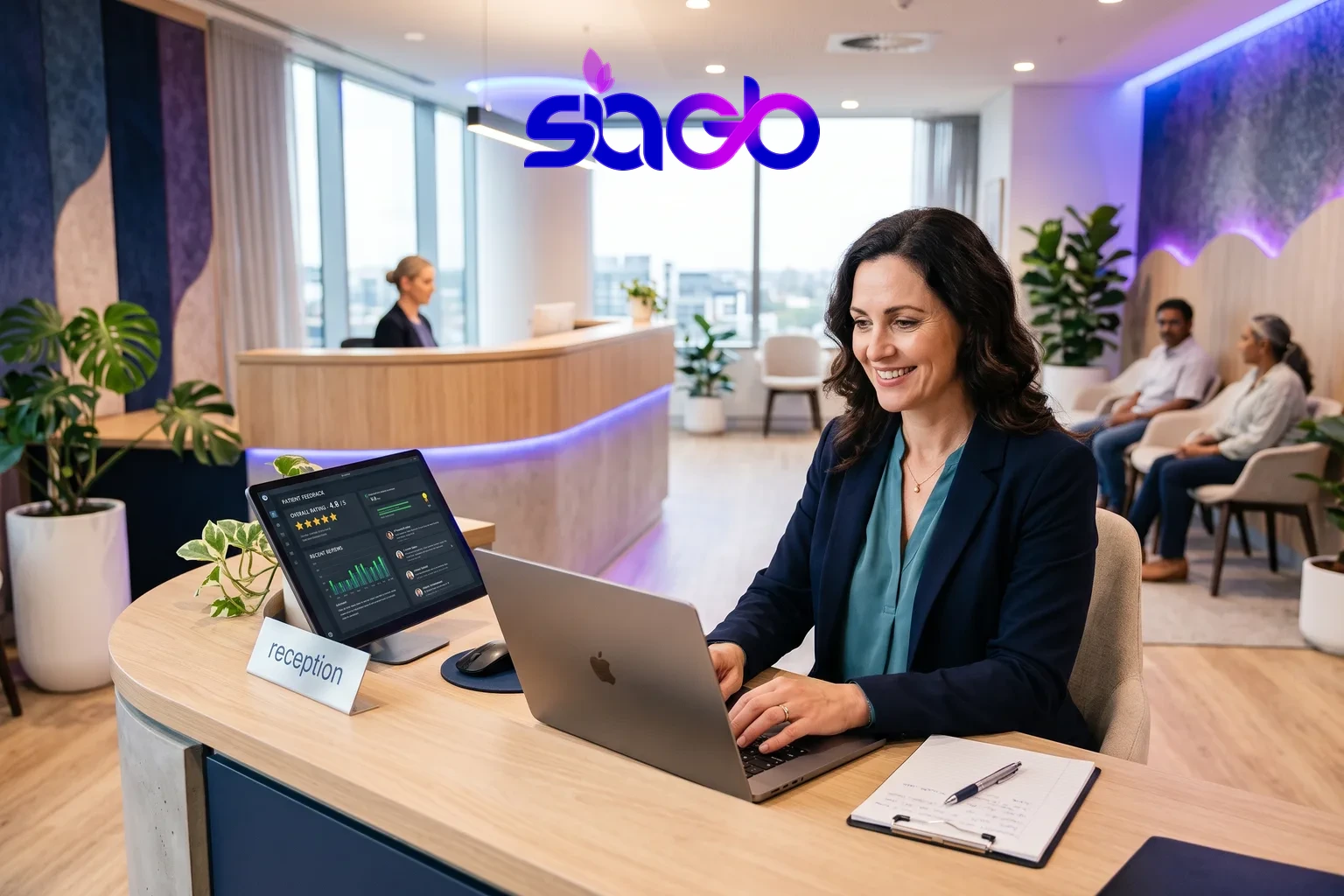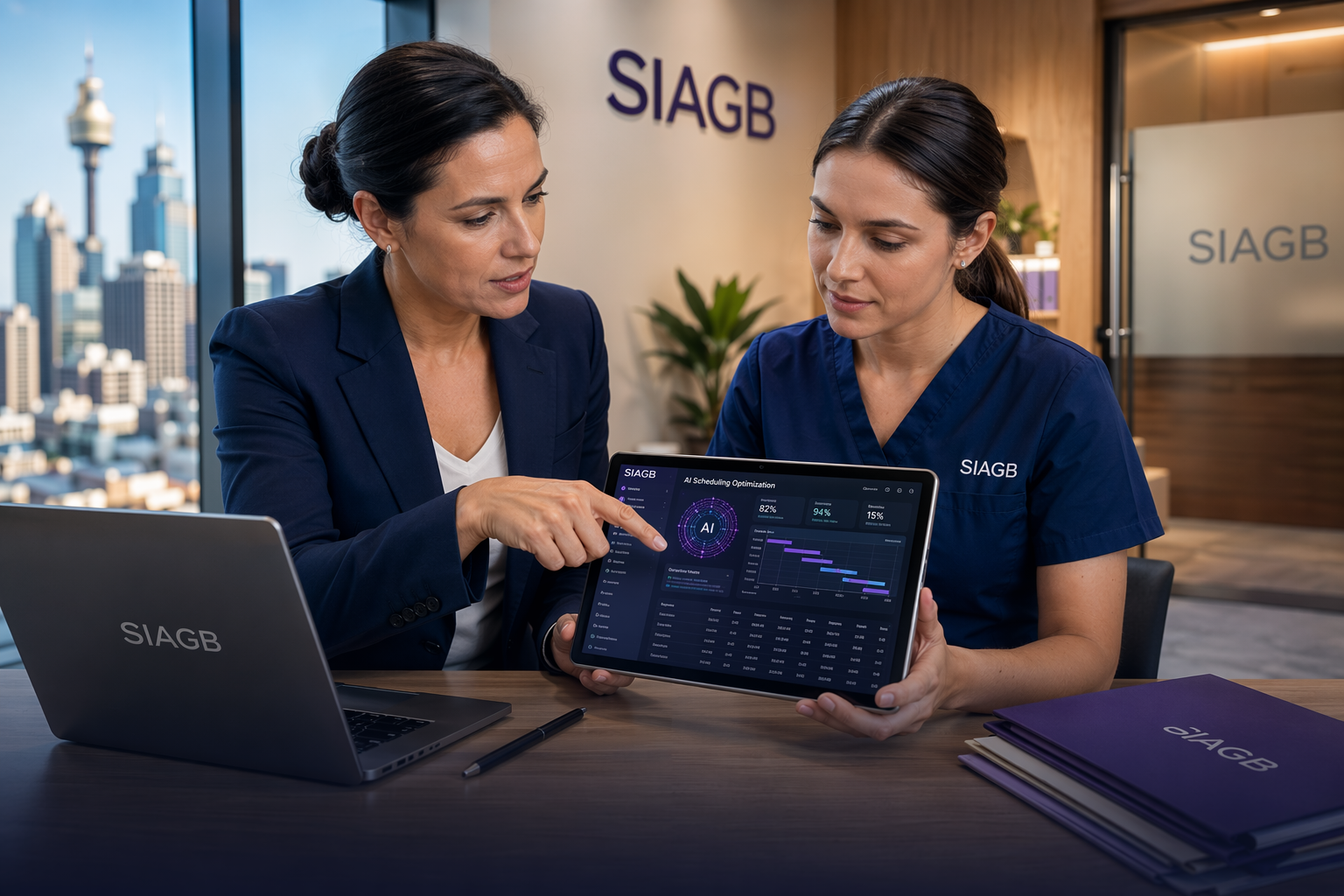
AI solutions US healthcare providers use work best when they solve real problems first. These solutions cut admin time, improve patient access, and lower compliance risk. In the US, clinics need practical AI services that deliver clear outcomes, not hype, and that support long term business operations. In our work with regulated firms, the projects that stick start with one measurable bottleneck, not a platform demo.
US healthcare faces rising costs, tighter rules, and real digital competition. AI solutions should improve care and workflows, not add noise. Local expertise matters because rules, systems, and patient needs vary across states. New York and California enforce accessibility differently from Texas or Florida, and a clinic in one state can face exposure another does not. That’s where focused AI automation, analytics, and end to end delivery make a difference for US business leaders.
Introduction: Why US Healthcare Needs Practical AI
Healthcare providers across the US are under pressure. Costs keep rising. Staff are stretched thin. And patients expect simple online access. AI solutions US clinics choose must support care, not get in the way. Technology alone won’t fix broken workflows or fragmented systems.
Many clinics try tools that promise quick wins. But without context, those tools stall. AI services US practices trust start with the problem. Long wait times. Missed recalls. Compliance gaps. Then automation and analytics follow, guided by a clear ai strategy.
US business leaders also face legal and security risks. Accessibility laws such as the ADA and Section 508, privacy rules under HIPAA, and cyber threats are real. In 2024 alone, federal courts and demand letters over inaccessible websites topped 4,000 filings, and healthcare sites are a repeat target. Clinics need tailored solutions that fit state and federal standards and global best practice. And they need an ai consultant who stays after launch. Sound familiar?
What AI Solutions Mean for US Healthcare Businesses
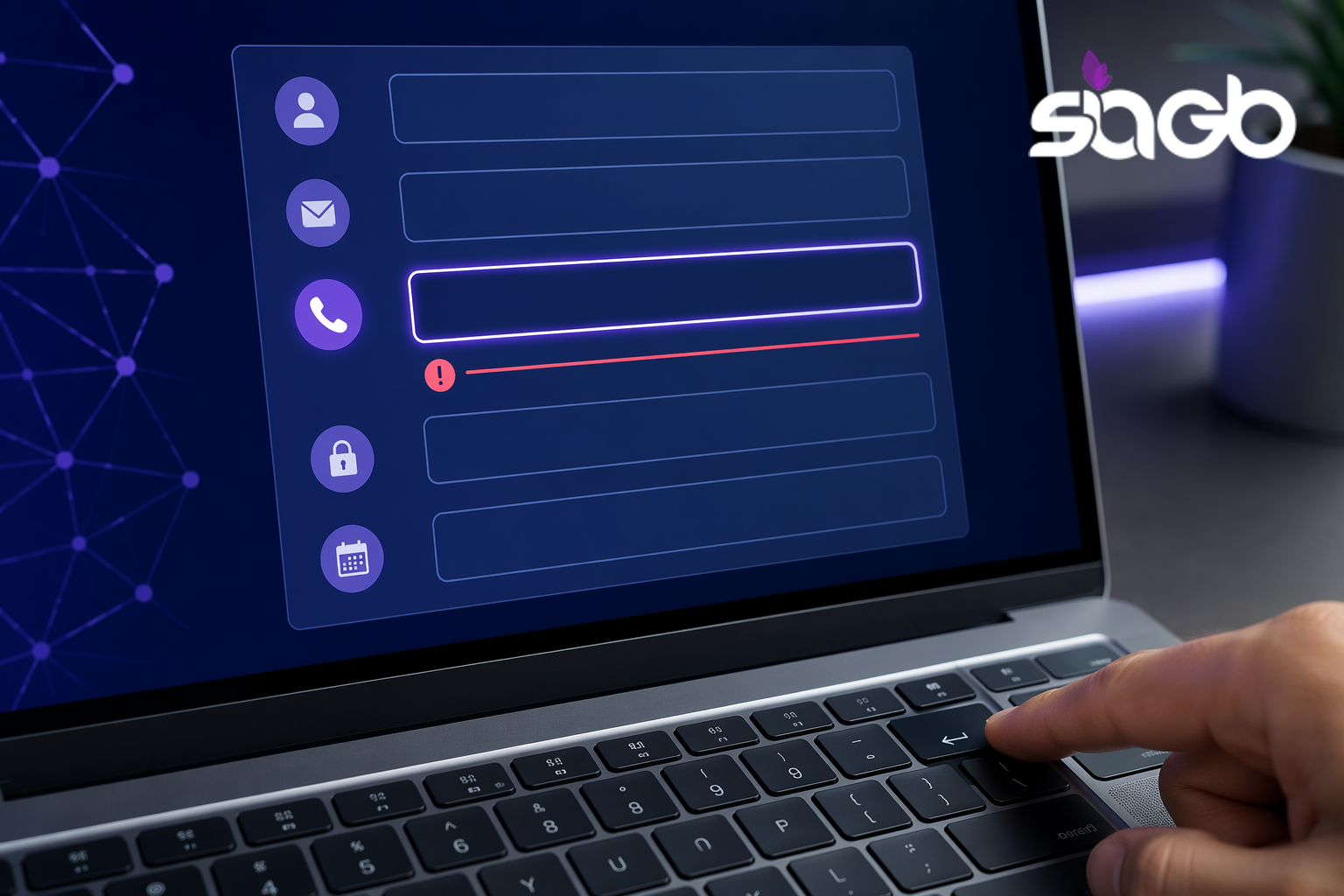
AI solutions in healthcare focus on outcomes. They improve workflows, reduce risk, and support growth across organizations. A strong ai solution maps how work actually happens in a clinic. Then it uses automation to remove friction and improve efficiency.
Healthcare AI isn’t the same as generic automation. Data is sensitive. Decisions affect care. Analytics must be accurate and explainable. Generative AI can help, but only with guardrails and the right ai models. That’s why problem first frameworks beat tool first choices. The table below shows how we prioritize an engagement.
| Clinic problem | AI solution applied | What we measure | Typical result window |
|---|---|---|---|
| Missed patient recalls | Automated recall + reminder workflow | No-show rate, recall completion | 4 to 8 weeks |
| Slow, inaccessible site | WCAG 2.2 AA rebuild + Core Web Vitals tuning | LCP under 2.5s, INP under 200ms, CLS under 0.1 | 3 to 6 weeks |
| Low AI search visibility | Answer engine optimization + schema.org markup | Citations in ChatGPT, Perplexity, Google AI Overviews | 6 to 12 weeks |
| Front-desk phone overload | HIPAA-aware chatbot + intake automation | Call volume, first-response time | 4 to 10 weeks |
| Reputation gaps | Review monitoring + drafted responses | Average rating, response rate | Ongoing |
In practice, this means looking at booking delays, intake forms, recalls, and reviews. Then building custom ai solutions that connect systems through secure integration. AI automation helps staff do less manual work. Analytics provide actionable insights leaders can trust. We track baseline metrics before launch so the change is provable, not anecdotal. And patients notice the difference. Probably more than you’d expect.
AI-Native Consulting Versus Traditional AI Consultants
AI-native firms design solutions around AI from day one. SIAGB was built this way. That’s different from firms that bolt AI on later. Traditional AI consulting often ends with a slide deck. Implementation is left to others, which slows the ai journey.
In regulated healthcare, that gap creates risk. End to end delivery matters. AI consulting services should cover ai strategy, build, testing, and ongoing optimization. No handoffs. No guesswork.
SIAGB brings more than 20 years of IT and AI leadership and hands on ai development and ai integration. Founder Sheetal Dhadial is a Certified Scrum Master and AgilePM practitioner, so delivery follows a real cadence, not a vague roadmap. Our ai developers and ai engineer teams also operate Marvel PTE, which serves over 85,000 users across more than 900 institutes. That shows real scale under load. We also built AI-powered patient scheduling for medical groups, so the healthcare workflows here are not theoretical. In our work, owning strategy through deployment has cut delivery time by months. Honestly.
Healthcare Website Accessibility and Legal Risk
Healthcare website accessibility is no longer optional. Patients expect sites that work for everyone. And legal exposure is growing. WCAG 2.1 and the newer WCAG 2.2 Level AA standards guide how content, forms, and portals should work across organizations. The Department of Justice confirmed in its 2024 Title II rule that WCAG 2.1 AA is the technical benchmark for public entities, and courts routinely apply the same yardstick to private clinics under ADA Title III.
Accessibility builds trust. Patients stay longer and convert more. It also lowers complaints. Clinics often miss this link. They see compliance as a cost. But accessible, ai powered solutions support efficiency and care quality. In our work, fixing color contrast to the 4.5:1 minimum and adding keyboard focus states usually clears the most common lawsuit triggers first.
In the US, accessibility cases keep growing. Courts look at intent and impact. Clinics with poor access face reputational damage. Sound scary? It can be. But the fix is clear when accessibility is built into design, ai technology, and automation from the start.
ADA and WCAG Compliance in Medical Websites
ADA compliance medical website cases often begin with access barriers such as missing alt text, unlabeled form fields, and low-contrast text below the 4.5:1 ratio. ADA website lawsuit doctors face influence expectations nationwide. US providers aren’t immune to scrutiny, and a single demand letter can cost more to settle than a proactive audit.
An ADA compliant patient portal includes readable text, keyboard access, and clear feedback. It also supports screen readers. These features improve usability for all patients and organizations alike. Retention rises as friction drops.
Compliance, usability, and trust connect. Clinics that address them together see fewer issues later. Something to think about.
Modern Medical Website Design with Security Built In
Medical practice website design must do more than look good. A modern medical website supports accessibility, SEO, and trust. It also embeds security into the ai system that supports patient journeys.
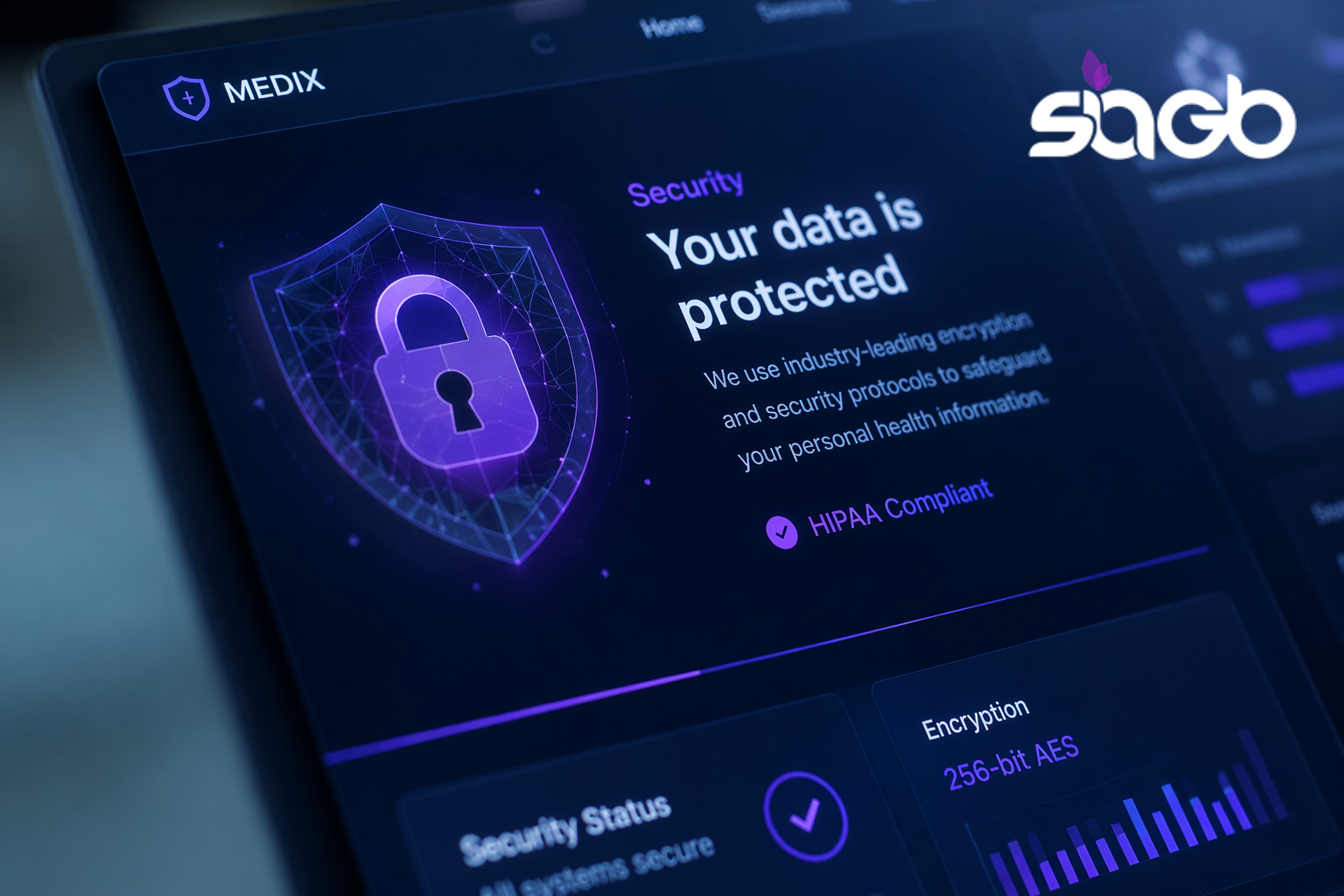
HIPAA compliant website principles shape US standards. Forms, chat, conversational ai, and portals need secure handling, and any vendor touching protected health information needs a signed Business Associate Agreement. AI automation must respect privacy at every step.
Design choices affect efficiency. Clear flows reduce phone calls. Automation handles routine tasks. Analytics show where users drop off and provide ai driven insights. We use schema.org types like MedicalOrganization, Physician, and FAQPage so both search engines and AI assistants can read a clinic correctly. Together, these solutions support growth without adding staff. Which is the goal, right?
Healthcare Cybersecurity and Data Protection for Clinics
Healthcare cybersecurity threats are rising. Phishing, ransomware, and data leaks hit clinics hard. The HHS Office for Civil Rights breach portal lists hundreds of healthcare incidents each year, many affecting 500 or more patients. Cybersecurity for doctors is now a board issue, even for small organizations.
HIPAA cybersecurity principles matter at every step. They promote least access, encryption such as TLS 1.2 or higher in transit and AES-256 at rest, and continuous monitoring. Patient data flows through forms, portals, ai tools, and chatbots. Each step needs protection.
Secure solutions reduce risk and downtime. They also protect trust. And once trust is lost, it’s hard to win back.
AI SEO and Answer Engine Optimization for Medical Practices
Medical visibility has changed. Patients now ask AI assistants like ChatGPT, Perplexity, Google Gemini, and Claude, not just Google search. Google AI Overviews now sit above the classic ten blue links for many health queries. AI SEO healthcare strategies respond to this shift. Answer engine optimization medical content focuses on intent and clarity, supported by relevance ai techniques.
Healthcare SEO strategy must balance accuracy and optimization. AI automation services help update content and track changes. We track which prompts surface a clinic and which competitor gets cited instead, then close the gap with structured, quotable answers. Analytics reveal which answers appear in AI results and why.
This isn’t about gaming systems. It’s about being useful. Clinics that publish clear, compliant answers get seen more. And they attract better fit patients. That helps everyone.
Agentic AI and Automated SEO Agents in Healthcare
Agentic SEO uses agentic ai to manage ongoing tasks. An ai agent can monitor rankings, content gaps, and updates within set rules. No rogue changes.
In healthcare, oversight matters. Humans review outputs. AI agents handle the grind. This mix improves efficiency without risking errors.
Agentic AI works best as support. It’s not set and forget. Organizations that treat it as a partner see steady gains. Others struggle.
AI Content and SEO Strategy for Medical Practices
AI content medical practice teams use must build trust. Content should answer real questions. Medical practice SEO depends on consistency, accuracy, and ai capabilities.
AI automation supports drafts and updates. Clinicians approve final content. This avoids misinformation. It also keeps sites current.
Over time, this supports long term digital transformation. And it reduces stress for busy teams across organizations.
Patient Reviews, Reputation, and Recall Systems
Google reviews medical practice choices strongly influence patient decisions. Most patients read reviews before booking. Patient review management is now core to growth for organizations.
AI automation tracks reviews and drafts responses. Staff approve them. Analytics spot trends early. Reputation management doctors trust needs care and the right tone.
Patient recall systems also matter. Automated reminders improve attendance. They support continuity of care. And they lift revenue without extra effort. Exactly.
AI Chatbots, Analytics, and Patient Engagement
AI chatbots reduce admin load. They answer common questions. They guide bookings. But design matters. Security and compliance come first in any ai platform.
Chatbot analytics consultants US clinics rely on review usage patterns. Analytics show service gaps and content issues. This guides improvement and better business operations.
AI agents should support customer service, not replace empathy. When done right, engagement improves. When rushed, it backfires.
End-to-End AI Solutions for Retail and Education
AI consulting for retail businesses focuses on speed and insight. Inventory, pricing, and service all benefit from automation. Financial services and education platforms also rely on custom ai and tailored ai solution design to scale.
SIAGB applies lessons across sectors. Marvel PTE supports more than 900 institutes and 85,000-plus users, processing high volumes of scored mock tests. That cross industry view strengthens healthcare delivery, because the same analytics discipline that grades a language test at scale also flags where a clinic loses patients.
Different fields. Same discipline. Problem first, tailored solutions with clear ROI.
Infographic: End-to-End AI Solutions for Healthcare Clinics
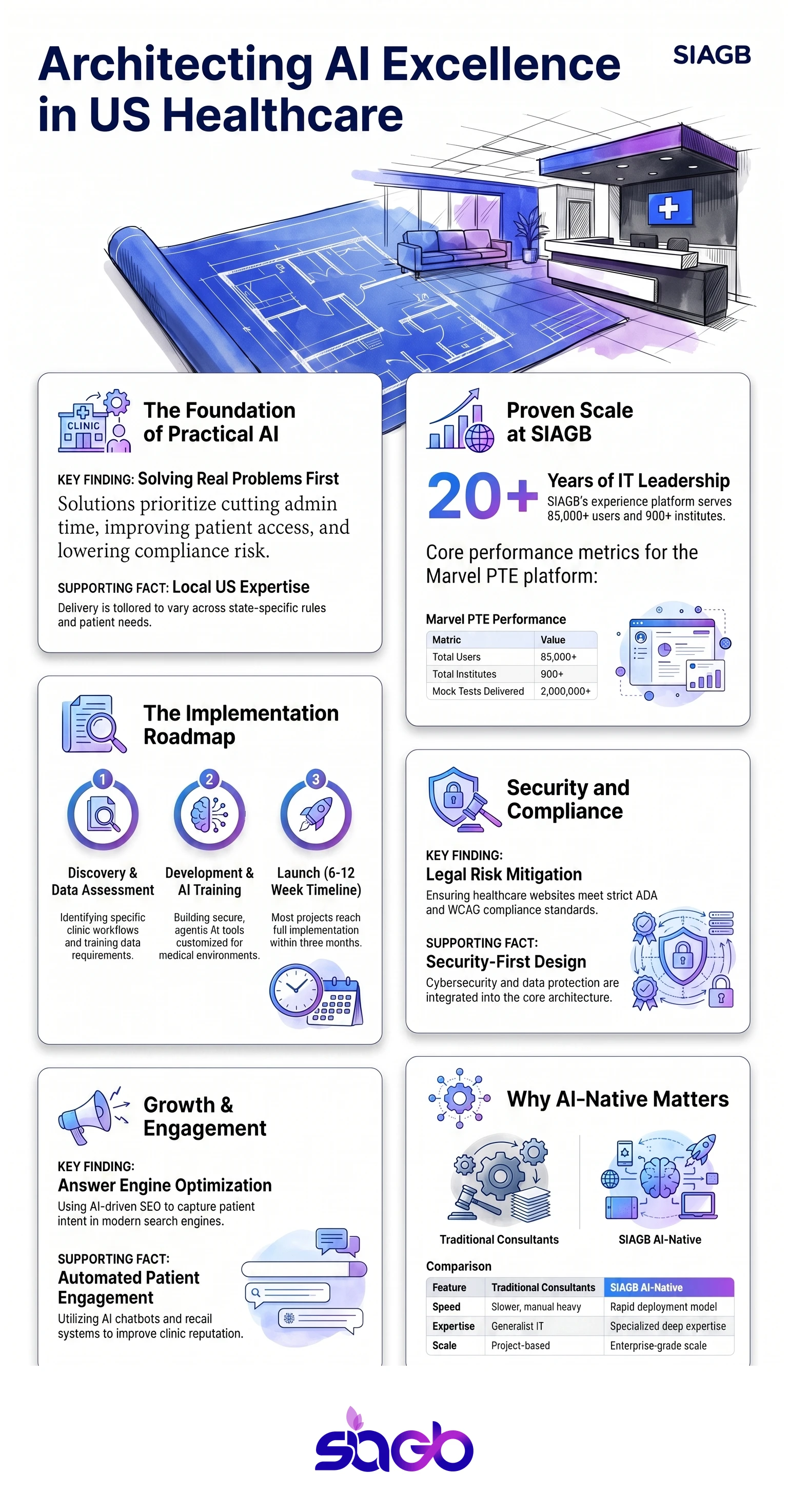
This visual shows how AI solutions clinics use connect websites, SEO, security, analytics, and patient systems. It highlights integration points, risk reduction, ai readiness, and ROI areas across organizations.
Frequently Asked Questions
What are AI solutions US healthcare clinics actually use?
They include website automation, analytics, AI SEO, chatbots, recall systems, conversational ai, and security focused integrations built for compliance.
How long does AI implementation take for a clinic?
Most projects take 6 to 12 weeks. Timing depends on data, workflows, ai training needs, and approvals.
Is AI automation safe for patient data?
Yes, when it’s designed with security, access controls, monitoring, and strong ai technology from day one.
Does accessibility really affect patient numbers?
Generally speaking, yes. Accessible sites convert better, support ai powered solutions, and reduce complaints.
Can small clinics afford AI services?
Often they can’t afford not to. Scaled, custom ai solution approaches focus on efficiency and quick wins.
Key Takeaways and Final Thoughts
AI delivers value when it solves real healthcare problems. Accessibility, SEO, security, and ai system design must work together. Fragmented tools increase risk and slow the ai journey.
US clinics benefit from AI-native partners who handle ai strategy through delivery. SIAGB brings that approach with proven scale, deep ai development experience, and practical ai consulting services.
Look, the tech will keep changing. The focus shouldn’t. Solve the problem first. Then use AI to support care.
Sources
- MIT Technology Review (technologyreview.com)
- Stanford HAI - Human-Centered AI (hai.stanford.edu)

Ready to put this into practice?
Let's Talk