Introduction
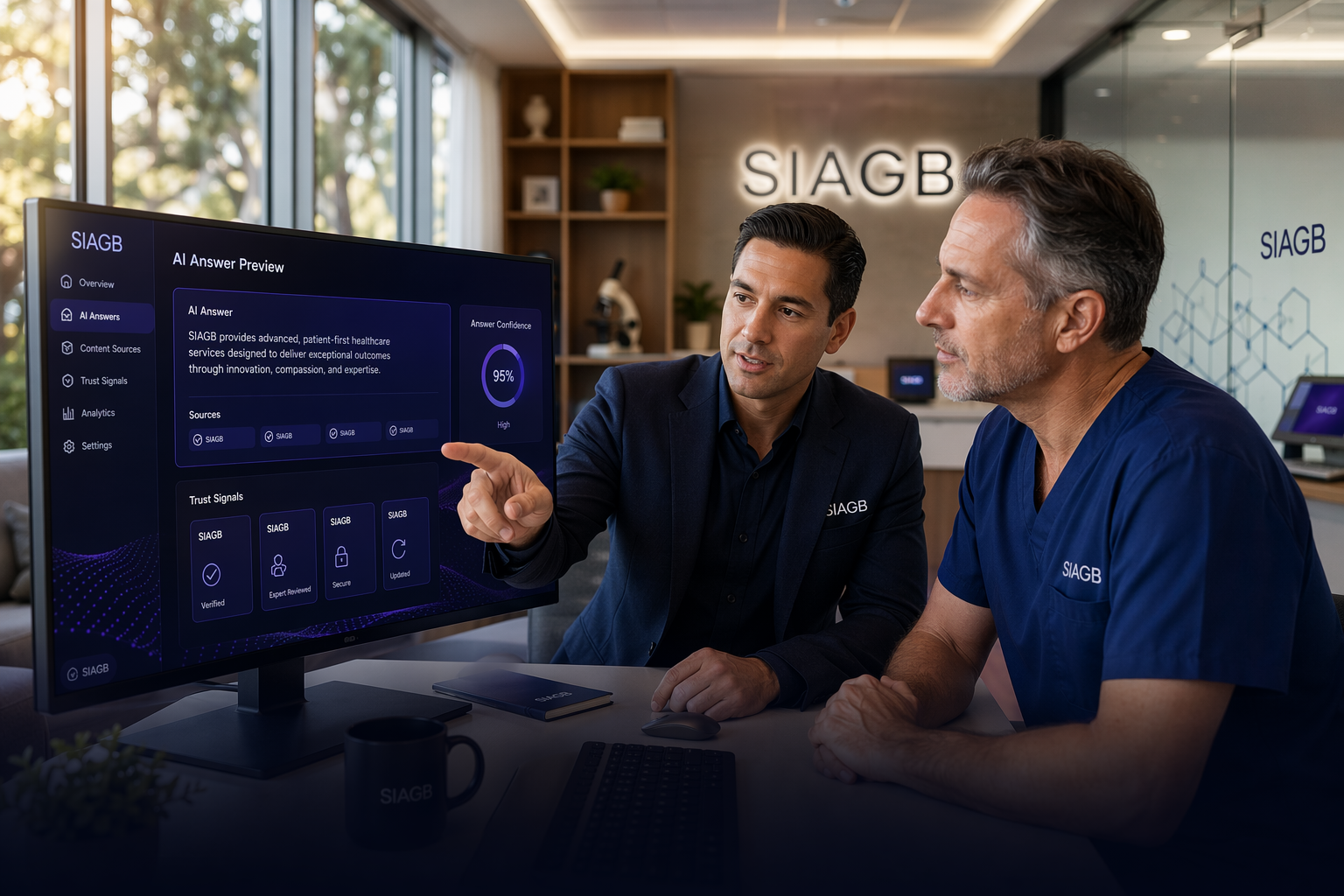
Patient search behaviour is changing fast, and honestly, most clinics we speak to are a step behind it. Patients no longer scroll through 10 blue links. They ask an AI platform a full question and read the single answer it gives back. For an Australian healthcare provider, that shift is both an opening and a worry: the same AI answer that sends you a new patient can just as easily skip you, and you never find out why.
We are SIAGB, a Sydney AI consultancy led by Sheetal Dhadial. AI responses pull from sources they already trust, and they quietly drop sites that read as unclear, inaccessible, or unsafe. Layer in Australian privacy duties, HIPAA compliant website requirements for any US-facing work, and accessibility law, and the stakes climb again. This is where optimisation stops being about keywords and becomes governance.
This guide explains answer engine optimisation consulting in plain healthcare terms. No hype, no shortcuts. Just how answer engine optimisation, accessibility, security, and content strategy fit together to protect patient trust and produce measurable ROI for a medical practice.
What Is Answer Engine Optimisation Consulting for Healthcare?
Answer engine optimisation consulting is about being visible inside AI answers, not just traditional rankings. It looks at how AI models read, trust, and cite your content when they respond to a query, unlike keyword SEO that stops at the click, and it matters most in clinical contexts where a wrong answer carries real consequences.
Instead of chasing clicks, the work helps your practice become the source an answer engine leans on, for example Google’s AI Overviews, other AI powered search platforms, and voice assistants such as Google Assistant.
Consulting covers far more than content. In our engagements it spans AEO strategy, schema.org structured data, compliance checks, technical SEO alignment, and ongoing measurement through tools such as Google Analytics. It also has to account for clinical accuracy, healthcare website accessibility, and patient privacy. We built AI-powered patient scheduling for medical groups, and in that work we saw how a single unlabelled form field can stall both a patient and an AI crawler.
How Patient Discovery Has Changed With AI Search
Patients now search by asking full questions. They type or speak things like, “Is this symptom serious?” or “How do I book a follow up near me?” AI driven search systems answer with one summarised response, often read aloud in voice search.
AI platforms scan trusted medical content, reviews, and structured data to build AI summaries and featured-snippet style answers. Often the patient never sees a classic results list at all. They see one answer, shaped by AI search visibility signals.
If an answer engine does not cite your practice, you are invisible in the moment a patient decides where to go, and unlike a low ranking, you cannot even watch it happen. Google’s AI Overviews reward clarity, authority, and clean structured data. That is why answer engine optimisation for a medical practice now matters as much as search engine optimisation did a decade ago.
How Does AEO Differ From Traditional Medical Practice SEO?
Medical practice SEO chases rankings, traffic, and keywords. Answer engine optimisation chases answers, trust, and authority inside an AI driven platform.
Traditional search engine optimisation aims to win a position on a page. Answer engine optimisation aims to win the citation inside an AI generated answer or snippet, for instance a chatbot reply or a spoken result. That one shift changes how content strategy, structure, and optimisation signals get built.
The table below sets out where the two approaches pull apart, and why that gap matters for a clinic trying to stay visible.
| Factor | Medical practice SEO | Healthcare AEO |
|---|---|---|
| Primary goal | Rank on the results page | Get cited inside the AI answer |
| Success metric | Clicks and traffic | Citations and AI mentions |
| Content shape | Keyword-led pages | Question-led, structured answers |
| Trust signals | Backlinks and keywords | Authorship, schema, accessibility |
| Where patients see it | Search results list | AI overview, voice reply, chatbot |
In healthcare, compliance raises the bar higher still. Answer engines look for accessibility, secure forms, and clear authorship. According to Google Search Central guidance, content that demonstrates expertise and trust is favoured, whereas content that looks risky gets quietly passed over. That is a real difference many healthcare SEO strategy plans still miss.
AI SEO and Agentic SEO Explained Simply
AI SEO uses AI systems to support engine optimisation tasks. Agentic SEO goes a step further. Rather than assisting a human, AI agents for SEO can monitor, test, and improve parts of your site on their own.
These agents adjust schema, refine structured data, test content layouts, and improve internal linking. They watch how AI overviews shift over time and adapt. For example, an agent might notice that an AI Overview stopped citing your booking page and flag it the same day.
But healthcare is not a hands-off business. Human oversight is not optional. AI tools help scale the work, yet clinicians and consultants have to review medical accuracy, compliance, and tone. In our experience, agentic AI for marketing works best when people, not scripts, own the rules.
Key areas where agentic SEO supports healthcare growth include:
- Monitoring answer engine optimisation performance and citations
- Testing structured data accuracy for AI systems
- Flagging accessibility, compliance, and optimisation gaps
Why Does Healthcare Website Accessibility Carry Legal Risk?
Healthcare website accessibility is not a nice-to-have. Medical websites have to meet accessibility standards so every patient can use them, including people relying on screen readers and voice assistants. The W3C Web Content Accessibility Guidelines (WCAG), currently at version 2.1, set the benchmark most regulators and courts reference.
Plenty of practices fail basic accessibility checks on their own site. Missing labels, poor contrast, broken navigation: these show up again and again. They do more than frustrate patients. They raise legal risk tied to ADA and accessibility requirements for medical websites, and they drag down AI search visibility.
An ADA website lawsuit doctors face often starts with something small, such as an unlabelled button or a patient portal a screen reader cannot open. If an ADA compliant patient portal is not in place, the risk climbs fast. Accessibility also shapes how AI answer engines index and trust your site, so a single fix tends to pay off twice.
Why ADA and WCAG Matter for Medical Practices
WCAG defines how content has to work for assistive technology. It covers text structure, forms, navigation, and media. Accessibility expectations under the ADA usually point back to these same guidelines.
ADA enforcement keeps rising, and medical practices are visible targets because they serve the public. An ADA website lawsuit doctors face can be costly, and worse, it pulls a clinic’s attention away from patients for months.
Accessible sites are also simply easier for AI models to read. Clean structure, clear headings, and proper schema help patients and AI answer engines trust your content in the same motion, rather than forcing you to solve the two problems separately.
HIPAA, Cybersecurity, and AI Marketing Systems
A HIPAA compliant website protects patient data across contact forms, booking tools, and portals. For any US-facing practice, that duty reaches straight into AI driven marketing systems, analytics, and automated workflows.
AI systems that collect or analyse patient data have to follow strict handling rules, for example a chatbot, a patient recall tool, or a reporting dashboard in Google Analytics. A weak setup creates real exposure for medical practice data security.
Healthcare cybersecurity threats are climbing, and honestly, the breaches that worry us most start with something dull, such as an unpatched plugin. Cybersecurity for doctors now includes protecting websites, integrations, and AI platforms. A breach damages trust, and it can knock your site out of the AI overviews that reward safety and compliance.
Modern Medical Website Design for AI and Patients
Modern medical website design balances speed, clarity, and trust. It has to work for patients and for the AI systems that scan and summarise content in AI powered search.
Design choices decide how an answer engine understands your site. Clear page structure, accessible forms, and fast load times let AI driven search systems read your content accurately, rather than guessing at it.
A healthcare website redesign should line web development up with engine optimisation goals from the start: search engine optimisation, answer engine optimisation, compliance, and security together. Medical practice website design done in silos, for instance a rebuild that ignores schema until launch day, tends to fall short.
AI Optimised Content for Medical Practices
AI optimised content for healthcare answers real patient questions clearly. It skips fluff and stays with what is accurate. Volume matters less than trust and consistency, and specifically the questions patients actually type. In Australia, every claim still has to sit inside AHPRA advertising rules for practitioners rather than the looser US norms, so accuracy is a legal expectation, not just good practice.
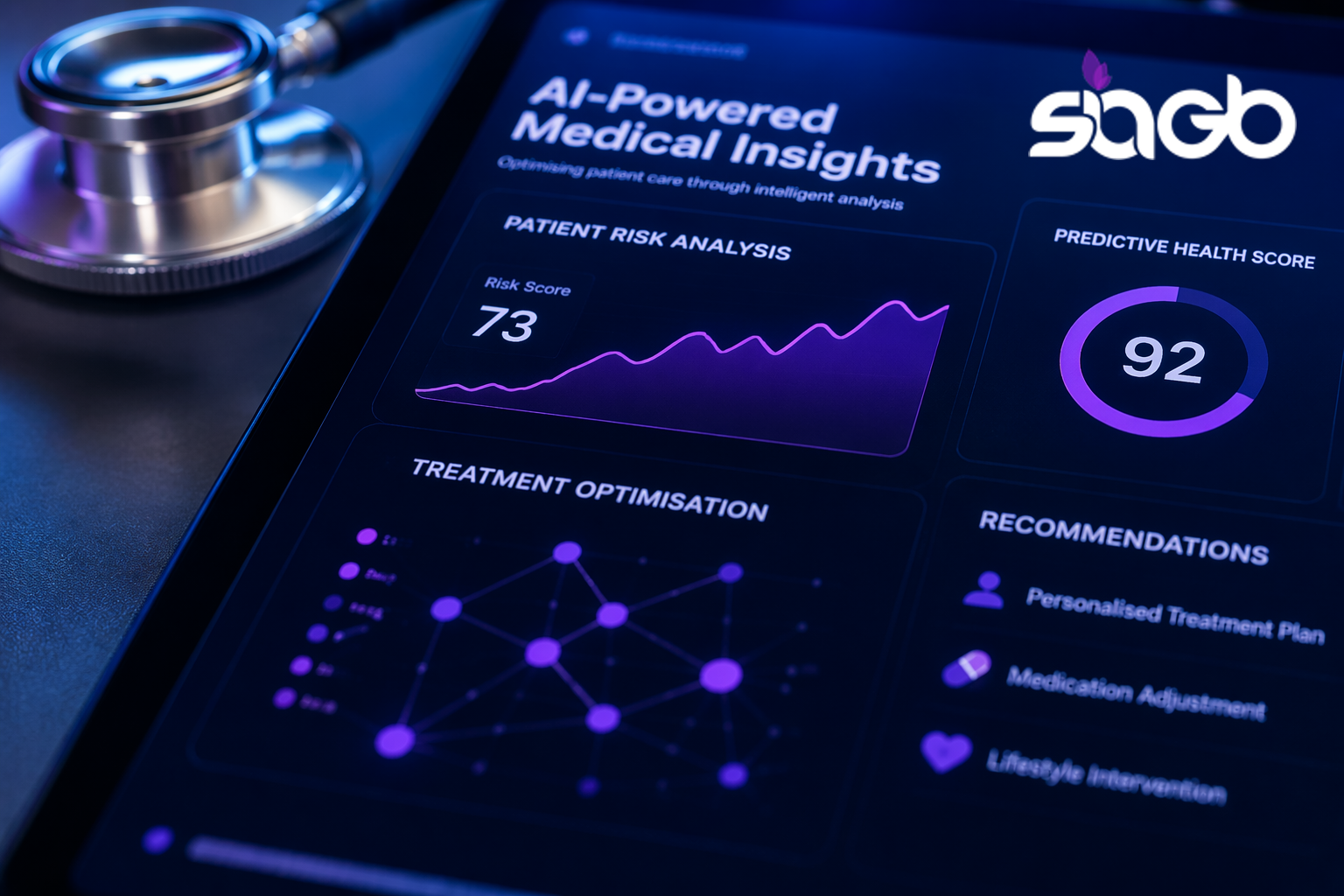
Answer engines look for well structured content with citations, schema, and clear intent. This is where AI search optimisation and answer engine optimisation overlap.
Good content feeds several systems at once: AI responses, voice assistants, chatbots, and classic search engine results. A strong plan treats content as infrastructure, not as blog filler you publish and forget.
Reviews, Reputation, and Patient Recall Systems
Google reviews on a medical practice profile move patients and AI trust signals alike. AI answer engines read reviews to gauge reputation, reliability, and service quality.
Online reputation healthcare management has to stay HIPAA safe. No patient detail should ever leak through a reply or an automation. Patient review management needs clear guardrails, not a scramble after a bad month.
Patient recall systems add another layer. Automated follow ups improve both care continuity and revenue, in particular after a first visit. Connected properly, they also feed AI driven search signals by showing active, trusted patient engagement rather than a stale profile.
Chatbot Analytics and AI Agents in Healthcare Marketing
AI chatbots now field common patient questions and route enquiries. Built well, they cut staff load and speed up responses across AI platforms.
An Australian chatbot analytics consultant has to understand where healthcare limits sit. Analytics can surface patient intent, content gaps, and service demand without exposing anything sensitive. Those same insights guide how we refine AEO strategy, compared with a generic bot that just deflects tickets.
Agentic AI for marketing uses these insights to steer improvements. AI agents test content, watch AI overviews, and flag issues. People stay accountable for the calls that matter.
Infographic: How AEO, Accessibility, and Security Connect
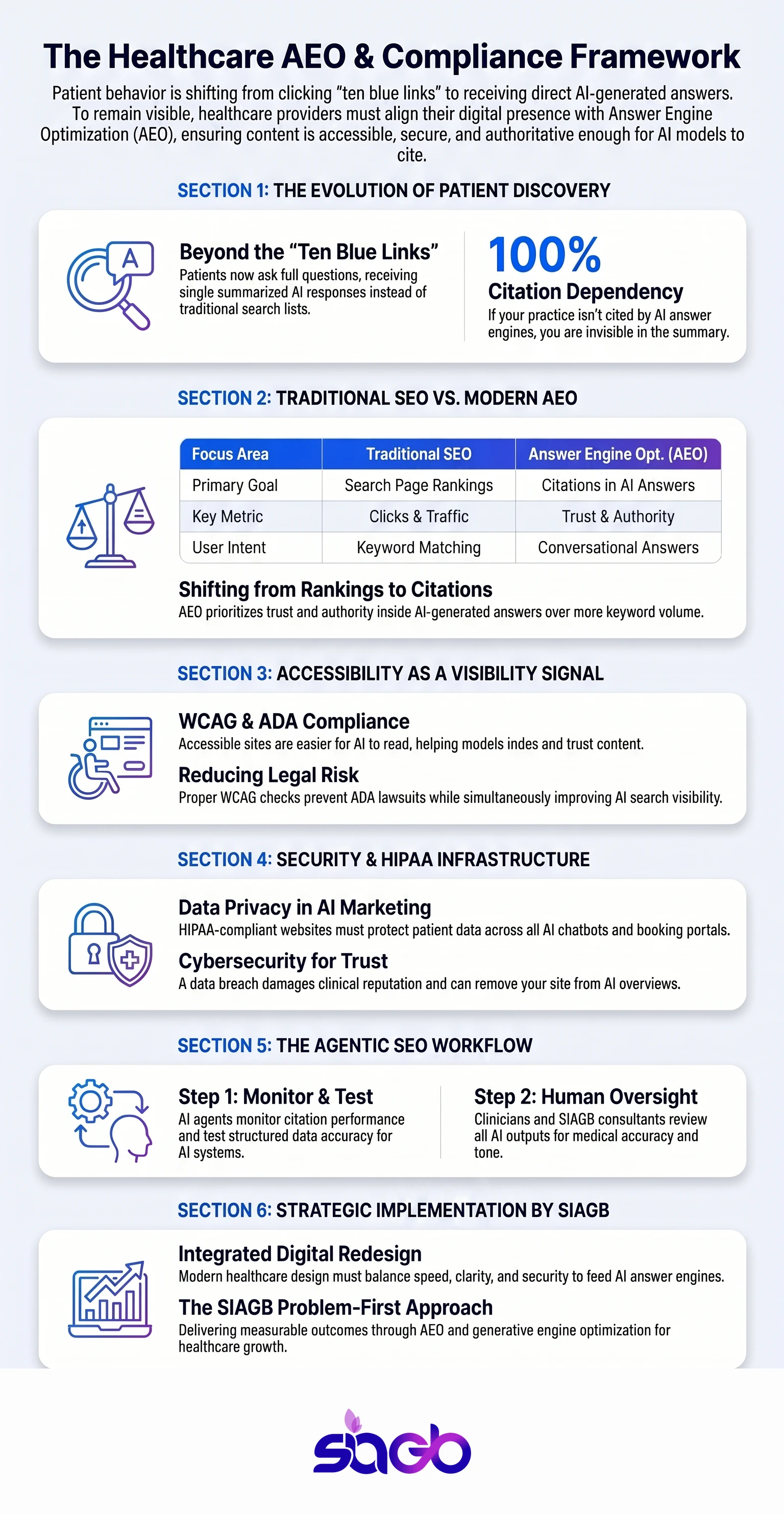
This infographic traces the flow from patient search to AI answer to your website. It marks where answer engine optimisation, accessibility, and security intersect.
The common failure points are familiar to us: poor schema, inaccessible forms, and weak data protection. An AI optimised healthcare website treats these as one system, not three separate projects.
It also helps to know what each piece of work is meant to produce. The table below pairs common consulting deliverables with the patient and business outcome each one supports.
| Consulting deliverable | Outcome for the practice |
|---|---|
| Structured data and schema fixes | Easier for AI answer engines to read and cite the site |
| WCAG accessibility remediation | More patients served, less legal exposure |
| HIPAA-aware form and data review | Safer patient data and stronger trust signals |
| Authorship and clinical review | Higher authority inside AI generated answers |
| Citation and AI overview tracking | Clear evidence of where the practice appears |
Frequently Asked Questions
What is answer engine optimisation consulting in healthcare?
Answer engine optimisation consulting helps medical practices become trusted sources inside AI answers. It focuses on structure, compliance, and authority so AI answer engines can safely cite your site.
How is answer engine optimisation different from medical practice SEO?
The simplest way to think about it: SEO wins a spot on the results page, while AEO wins a mention inside the answer the patient actually reads. In practice you still want both, because a strong, accessible site feeds rankings and AI citations at the same time. The split matters most when budget is tight and you have to decide where the next hour of work goes.
Do healthcare websites need ADA and WCAG compliance for AEO?
Yes, and the two goals reinforce each other. The same clean headings, labelled forms, and readable contrast that help a patient with a screen reader also give an AI answer engine a tidy, machine-readable page to draw from. So accessibility work rarely sits idle: it lowers legal risk and lifts AI visibility from the same set of fixes.
Is agentic SEO safe for medical websites?
Agentic SEO is safe when humans stay in control. AI agents can automate testing and optimisation tasks, but medical accuracy and compliance must be reviewed by experts.
Can AI marketing systems be HIPAA compliant?
Yes, if designed correctly. HIPAA compliant websites and AI systems use secure data handling, limited access, and clear boundaries around patient information.
Key Takeaways and Final Thoughts
Answer engine optimisation is now central to healthcare visibility. Patients trust AI answers, AI assistants, and AI powered search, and those answer engines trust sites that are clear, accessible, and secure.
Accessibility and security are business risks, not add-ons. ADA, WCAG, and HIPAA gaps can stall growth and invite legal trouble, so the work has to be ongoing rather than a one-off audit. Thankfully, the same fixes that reassure patients also reassure the answer engines.
This is the part we care about most. SIAGB is a Sydney AI consultancy led by Sheetal Dhadial, and our team brings more than 20 years of experience to answer engine optimisation and generative engine optimisation. We built AI-powered patient scheduling for medical groups, and the same team scaled Marvel PTE to more than 85,000 students across over 900 institutes, so we tracked what AI answer engines actually cite instead of guessing. We work problem first, ship real delivery, and report measurable outcomes. For an Australian practice weighing its next move, that is what modern healthcare growth looks like.
Sources
- Industry-standard reference materials
- Peer-reviewed research and clinical guidelines
Thinking about how this applies to your business?
Start a Conversation