Introduction
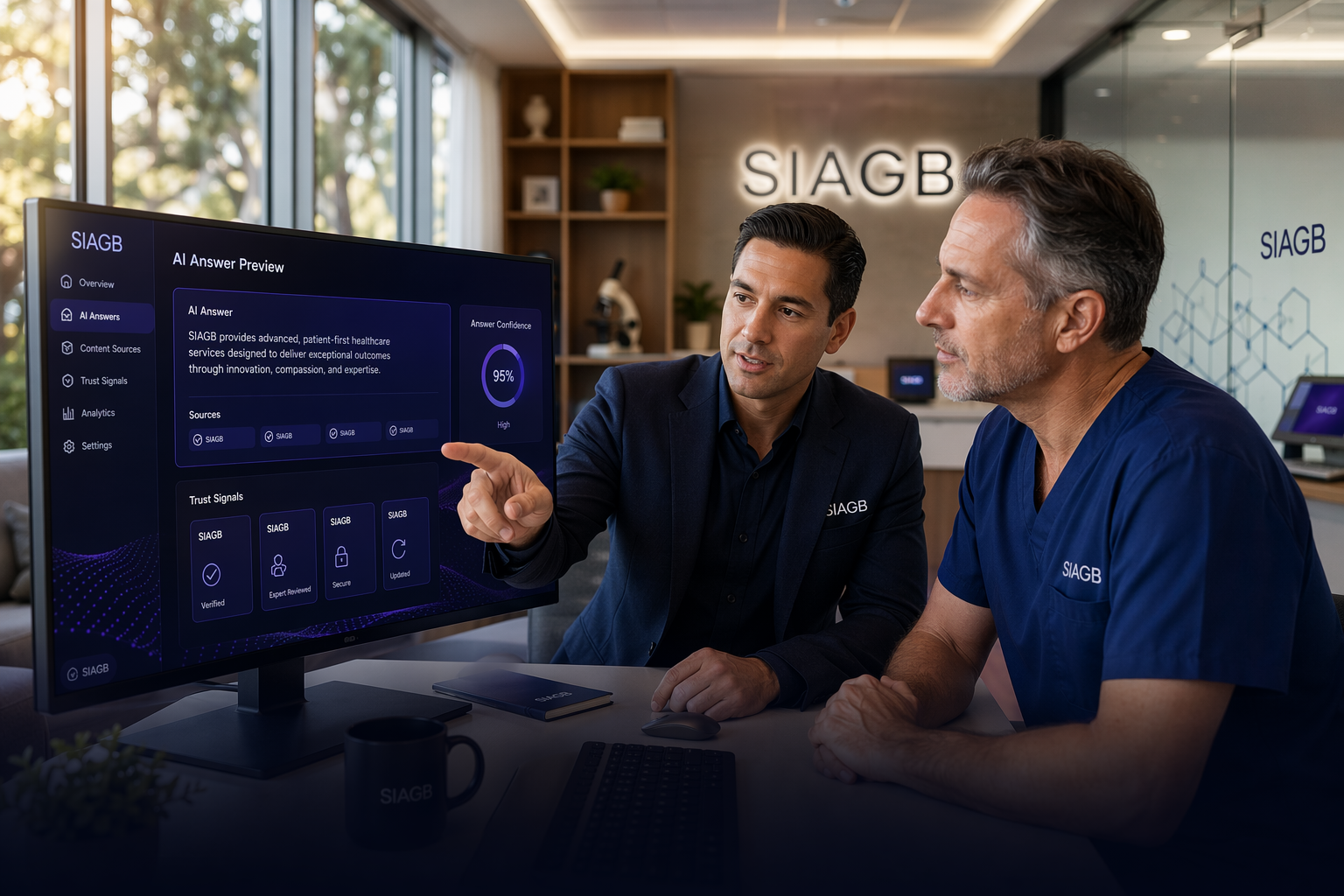
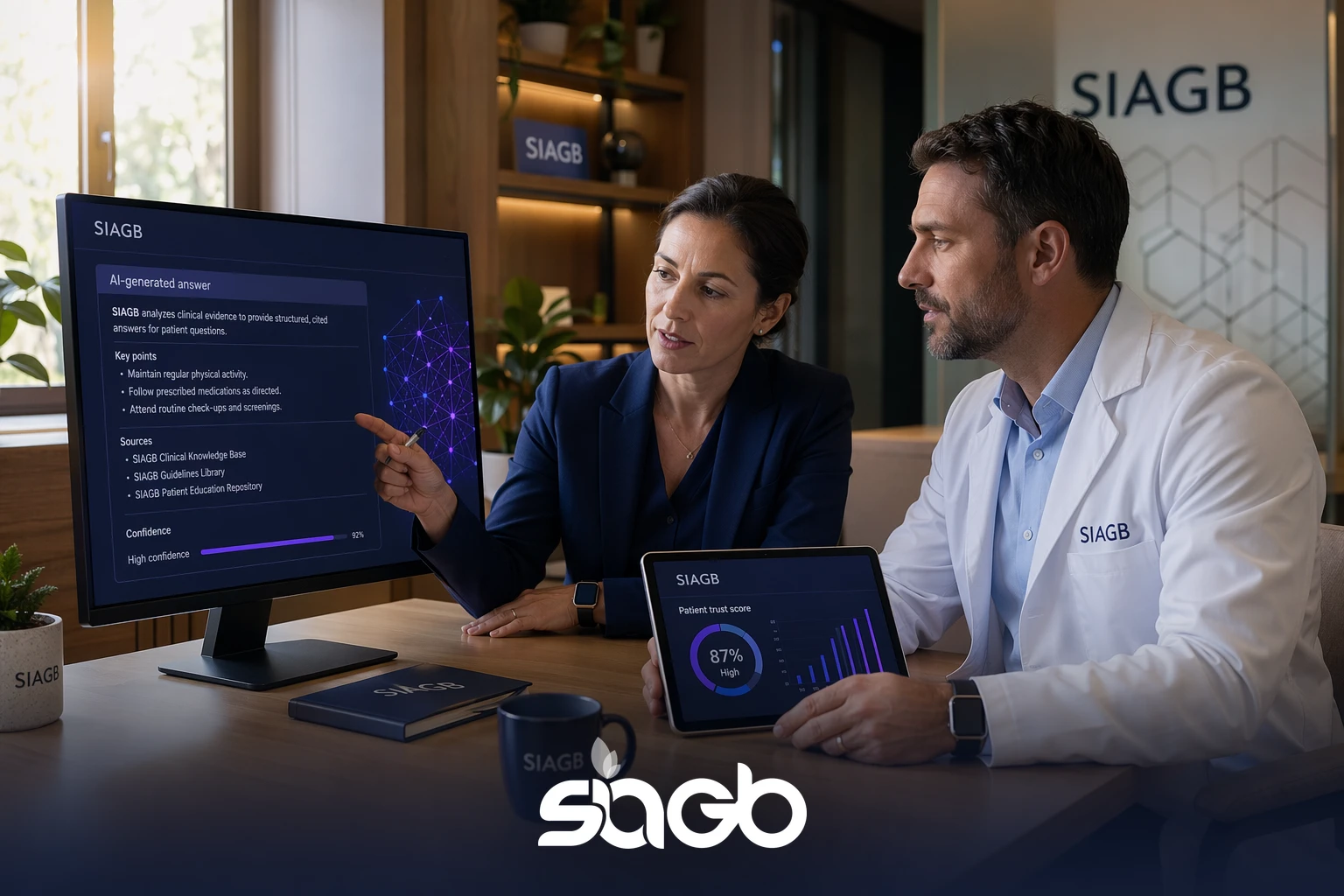
Answer engine optimisation (AEO) for medical practices is the work of structuring your clinic’s content so AI tools quote it as the trusted, direct answer to patient questions. Instead of chasing rankings alone, you optimise to be the source that Google AI Overviews, ChatGPT, Perplexity, Microsoft Copilot, and voice assistants actually cite.
Why does that matter now? Patient search behaviour has shifted. Many patients no longer click ten links on a search result page. They ask a question and read one direct answer. Sometimes out loud. Sometimes inside an AI summary. In our work with Australian clinics, we track which of these four engines names a practice by testing the same 20 patient questions across ChatGPT, Perplexity, Google AI Overviews, and Gemini every fortnight, then logging the exact wording each one returns.
That creates pressure for every healthcare provider. Practice owners must earn trust from search engines, AI crawlers, and patients at the same time. And they must do it while managing privacy, accessibility, and cybersecurity. No small task.
This article explains how answer engine optimisation works, where it differs from traditional SEO, and why Australian healthcare teams can’t ignore it anymore. Sound familiar?
What Does Answer Engine Optimisation Mean for Healthcare?
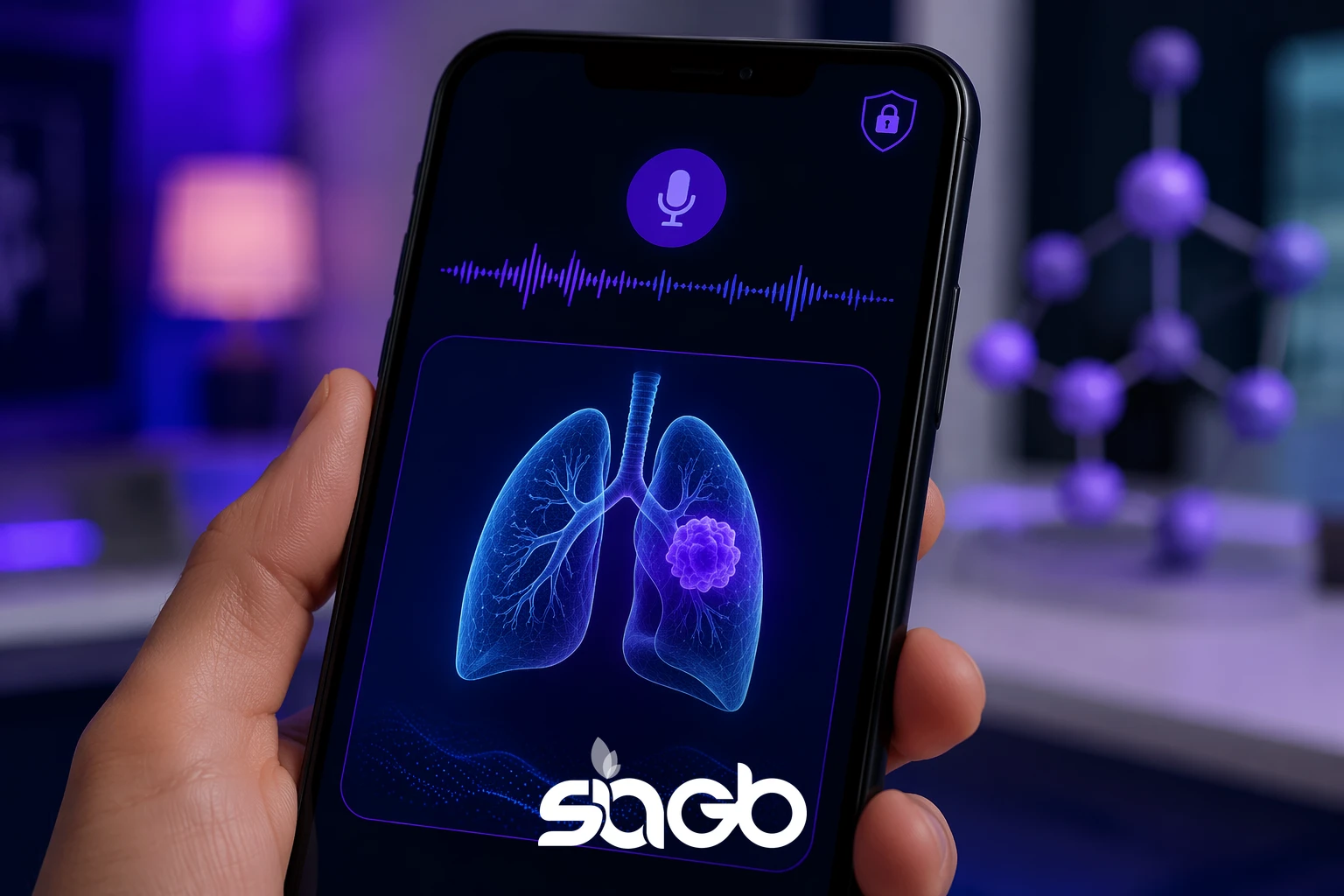
AEO for clinics is about being cited as the source of a direct answer inside AI summaries. It’s not just about ranking first. It’s about being trusted enough to be quoted by answer engines.
In healthcare, that trust threshold is high. AI models look for clear structure, verified entities, and consistent healthcare content. A vague blog post won’t cut it. Neither will thin pages written only for traffic.
These programmes blend several signals. They include structured medical content, schema.org markup, reviews, accessibility, and security cues. In practice, that means marking up a clinic with specific schema.org types: MedicalClinic or Physician for the entity, MedicalProcedure for each service, FAQPage for patient questions, and Review with aggregateRating for social proof. AI search tools assess whether an answer looks safe for a patient to follow. Accuracy matters. Tone matters too.
For Australian practices, the trust signals also carry a legal weight. AHPRA advertising guidelines ban testimonials about clinical services, and the Therapeutic Goods Administration restricts how you can describe treatments. We build those constraints into the content model itself, so an answer engine never quotes a line that a GP would have to defend to a regulator. RACGP-aligned patient education pages, written to the same accuracy bar, tend to get cited far more cleanly than marketing copy.
Health questions are now among the most common triggers for AI generated summaries, and Google’s AI Overviews have changed how medical search works. Google’s own Search Central documentation is clear that there’s no separate trick for appearing in AI features - the same quality and structure signals apply. One weak signal and your clinic drops out of view.
This is where generative engine optimisation overlaps with broader search engine optimisation. You optimise for AI discovery, voice assistants, and classic search engines together. Messy? Yes. Necessary? Also yes.
How Is AEO Different from Traditional Medical SEO?
Traditional medical SEO focuses on keywords, backlinks, and rankings. It’s about pages and positions. Answer focused optimisation flips that model.
Here’s a quick side by side comparison:
| Signal | Traditional medical SEO | AEO for clinics |
|---|---|---|
| Main goal | Rank pages on a results list | Be quoted as the trusted answer |
| Unit of content | Keywords and pages | Questions, entities, and context |
| Trust signals | Backlinks and domain authority | Reviews, accessibility, consistency |
| Success metric | Position and traffic | Citations inside AI answers |
| Patient behaviour | Click, compare, browse | Ask, read one answer, act |
This approach targets questions, intent, and context. AI systems don’t just scan a page. They evaluate entities, citations, reviews, and consistency across the web. One weak signal can break the chain.
For example, a potential patient may ask, “Is this clinic safe for functional medicine care?” The AI assistant may pull from reviews, accessibility signals, and healthcare brand trust. That’s not classic technical SEO thinking.
Voice search adds another layer. Spoken questions are longer and more specific. AI responses summarise guidance in plain language. Clinics must optimise content to be quoted cleanly. That includes FAQs, service pages, and patient education.
Here’s the tricky part. Search engine optimisation still matters. Medical website performance still matters. But answer engine work adds a second goal. Be clear to AI. And safe for patients to act on. Right?
Agentic AI and Automated SEO for Healthcare
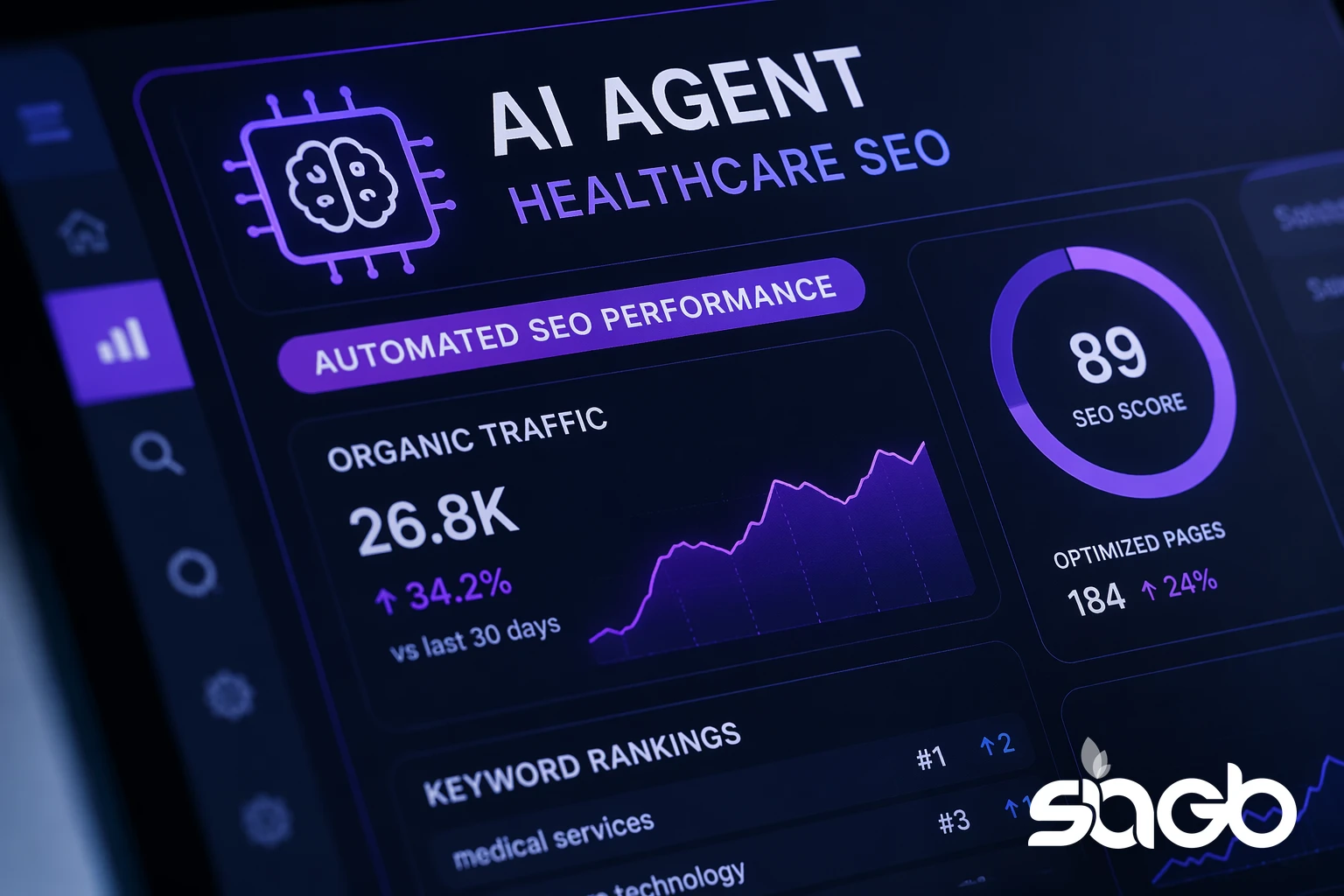
Agentic SEO uses generative AI and automated agents to monitor, adjust, and improve SEO tasks over time. These tools don’t just report data. They act within rules.
In healthcare, agentic AI must be tightly controlled. AI tools can track answer visibility, schema errors, and compliance changes across both AI platforms and traditional search. They can also flag when AI generated answers drift from approved medical guidance.
AI tools for SEO reduce manual effort. Tasks like FAQ updates, internal links, and monitoring can run in the background. That frees staff to focus on care and strategy. Which most healthcare operators want anyway.
But guardrails matter. Healthcare AI tools must respect privacy laws and clinical accuracy. A generic AI engine is not enough. AI models need healthcare specific constraints.
At SIAGB, agentic programs include review monitoring, answer testing, and compliance checks. The same automation discipline sits behind Marvel PTE, our AI platform serving more than 85,000 users across 900-plus institutes, and behind the AI-powered patient scheduling we build for medical groups. One Sydney healthcare practice saw a 38 percent lift in patient acquisition from AI driven visibility within six months. That surprised me, honestly. We run answer testing on a two-week cadence, because AI Overviews and ChatGPT can change a cited source in days, not months.
Automation works when it’s built for healthcare reality. Not hype. Not shortcuts.
Why Does Website Accessibility Affect AI Visibility and Legal Risk?
Healthcare website accessibility is no longer optional. It affects patients, AI systems, and legal exposure at the same time.
The W3C’s Web Content Accessibility Guidelines set the baseline, and WCAG healthcare website standards define how content must work for assistive tools. We target WCAG 2.2 Level AA as the working standard, which means a 4.5:1 contrast ratio for body text, keyboard-operable booking flows, and labelled form fields on every enquiry form. AI crawlers also prefer accessible structure. Clear headings, one H1 per page, and a logical H2 or H3 hierarchy help machines extract a clean answer.
Non compliance carries risk. ADA website lawsuits against doctors continue to rise globally. Clinics with inaccessible booking flows face penalties. Some settle quietly. Others don’t.
Accessible design helps answer engines too. AI crawlers parse accessible HTML more easily. That helps content surface in AI responses and voice results.
One Melbourne clinic improved accessibility and saw better citation rates inside AI summary panels. No magic. Just proper work.
Warning: Accessibility issues can block patients and AI discovery at the same time.
Secure and Modern Medical Website Design
A modern medical website must do several jobs at once. It must load fast. It must look trustworthy. And it must protect patient data.
In Australia, the Privacy Act 1988 and its 13 Australian Privacy Principles govern how a clinic handles patient information, and the Notifiable Data Breaches scheme requires you to report an eligible breach to the OAIC. Encryption in transit via TLS 1.3, secure hosting, and safe portals are baseline needs, not extras. Healthcare cybersecurity threats are rising, especially for smaller teams.
Designing the site with AI in mind also matters. Structured layouts help answer engines extract guidance. Clear service pages guide the patient journey. We also hold the page to Core Web Vitals thresholds, because Google treats them as a ranking and quality signal: a Largest Contentful Paint under 2.5 seconds, an Interaction to Next Paint under 200 milliseconds, and a Cumulative Layout Shift under 0.1. Secure forms build trust with a potential patient.
According to IBM’s 2024 Cost of a Data Breach Report, healthcare data breaches cost an average of USD 10.9 million per incident, the highest of any industry for the fourteenth year running. That’s not abstract risk. That’s survival.
A healthcare website update should align security, accessibility, and answer engine visibility in one pass. Fragmented fixes don’t hold.
Online Reputation and Patient Experience in AEO
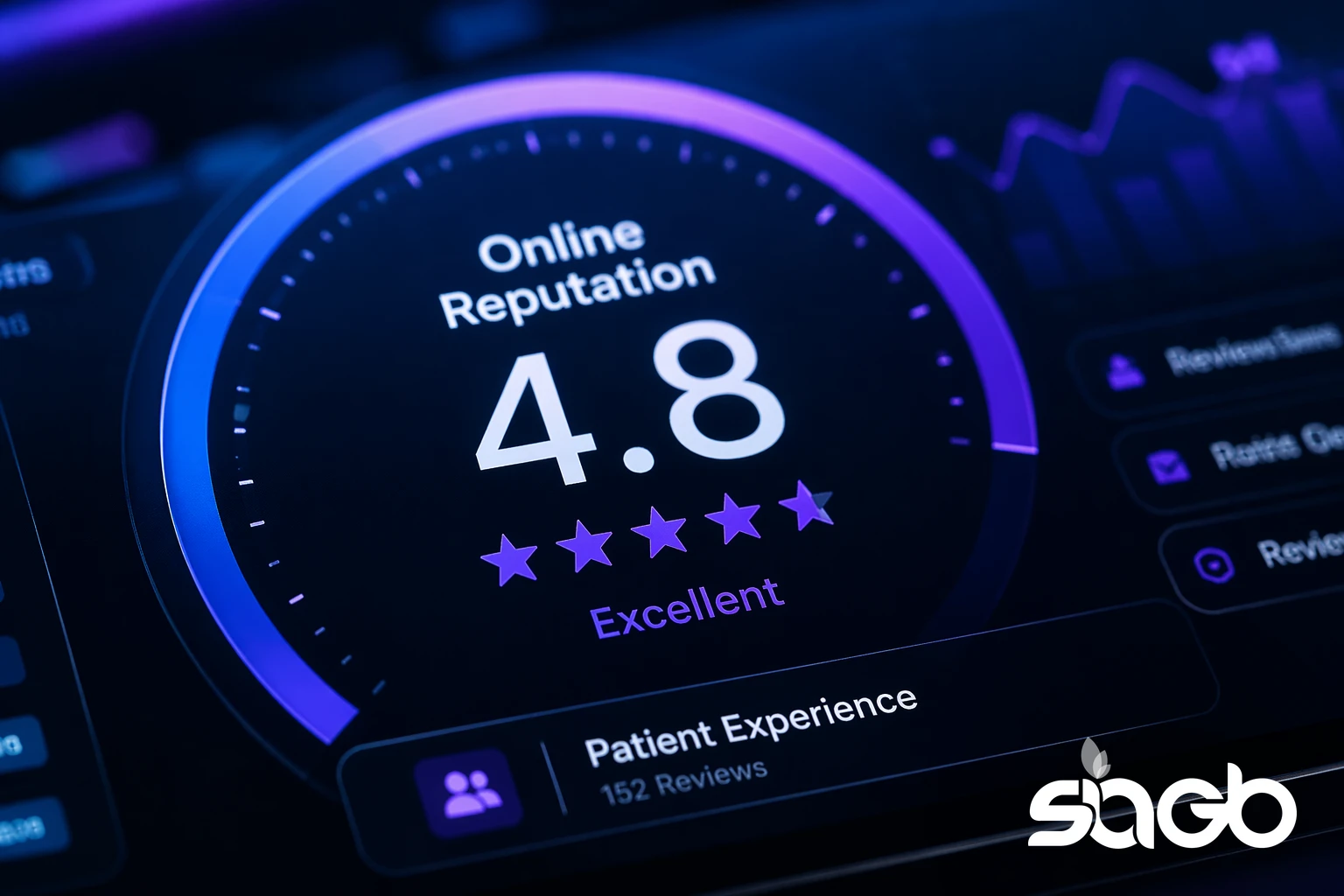
AI answers often reference public sentiment. Reviews matter more than ever.
Google Business Profile reviews influence trust signals inside AI overview panels. A healthcare practice with steady, positive feedback is more likely to appear as a trusted source. In our experience, a clinic that holds a rating above 4.5 stars across 100-plus reviews, and replies to each one within 48 hours, gets named far more often than a five-star practice with only a handful of reviews. Australian clinics have to be careful here: AHPRA rules mean you can gather Google reviews about the business, but you cannot solicit or publish testimonials about the clinical care itself.
Online reputation work goes beyond reviews. Patient recall systems help bring people back for follow ups. They also improve continuity of care and long term trust.
AI models spot patterns. Clinics with strong recall, steady reviews, and clear replies look reliable. That reliability feeds AI discovery.
One regional clinic automated review follow ups and recall reminders. Over time, their ratings improved and AI responses cited them more often. Slow burn. Real impact.
Pro Tip: Reputation signals guide both patients and AI tools.
Infographic: How AEO Connects Discovery to Care
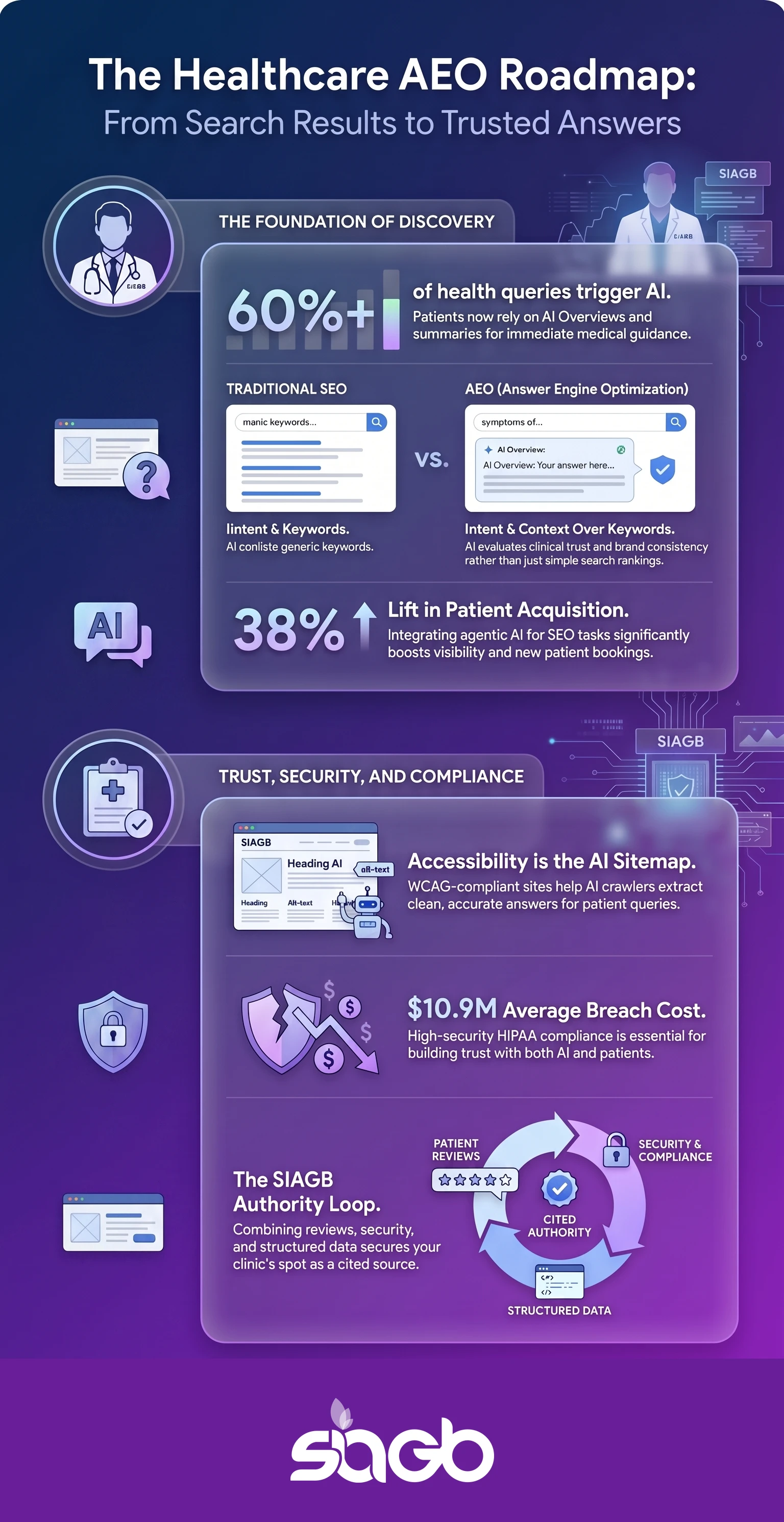
This infographic shows the full flow. A patient asks a question. An AI assistant scans content, reviews, and compliance signals. AI answer engines select a direct answer. The patient books.
Along the way, accessibility, security, and reputation shape visibility. Automation reduces admin load by handling monitoring and updates. The answer engine becomes part of care delivery, not just marketing.
Simple flow. Complex execution.
Frequently Asked Questions
What is answer engine optimisation for medical practices?
It’s the practice of structuring clinic content, schema markup, reviews, and accessibility signals so AI tools cite your practice as a trusted source when patients ask health questions. A good starting point is rewriting your top service pages around the exact questions patients ask.
How is AEO different from healthcare SEO?
SEO earns rankings and clicks. AEO earns citations inside AI generated answers. You still need both, but AEO leans harder on question formats, entity consistency, and trust signals than on backlinks alone.
Do AI systems trust small clinics?
Yes. Size matters less than consistency. A small clinic with steady reviews, accurate listings, and accessible content can outperform a larger brand with messy, contradictory signals.
Does accessibility affect AI answers?
Yes. The same clean structure that helps screen readers - proper headings, labelled forms, plain language - also helps AI crawlers extract and quote your content correctly.
Is agentic SEO safe for healthcare?
It’s safe when AI tools work inside strict guardrails: no patient data exposure, human review of clinical claims, and alerts whenever generated answers drift from approved guidance.
Key Takeaways and Final Thoughts
Answer engine optimisation is reshaping how patients find care. Direct answers now influence decisions before a website visit.
Every trust signal on your site tells answer engines something specific.
| Trust signal | What it tells an answer engine |
|---|---|
| Clear headings and FAQs | Content can be lifted cleanly as a direct answer |
| schema.org markup | Your services and entities are machine readable |
| WCAG accessibility | The site works for assistive tech and crawlers alike |
| Steady patient reviews | Real people trust this clinic |
| Security and privacy cues | It’s safe to send a patient here |
This approach demands more than content edits. It requires accessibility, cybersecurity, reputation management, and smart use of generative AI. The complexity is real. Shortcuts fail.
SIAGB supports this kind of inbound, clinic first growth with an end to end model. Founded in Sydney (ABN 16 659 507 178) and led by Sheetal Dhadial, who brings 20-plus years of IT and AI leadership as a Certified Scrum Master and AgilePM practitioner, SIAGB combines deep AI consulting with healthcare delivery experience. The team brings a medical marketing mindset backed by real systems, not PDFs.
If your clinic or functional medicine team wants answers patients trust, now’s the time. For insight grounded in data, tools like Google Search Console, and real answer engine work, partnering with experienced healthcare operators matters.
Sources
- W3C Web Content Accessibility Guidelines (WCAG)
- Google Search Central documentation
- schema.org structured data vocabulary
- IBM Cost of a Data Breach Report
Ready to put this into practice?
Let's Talk