Introduction
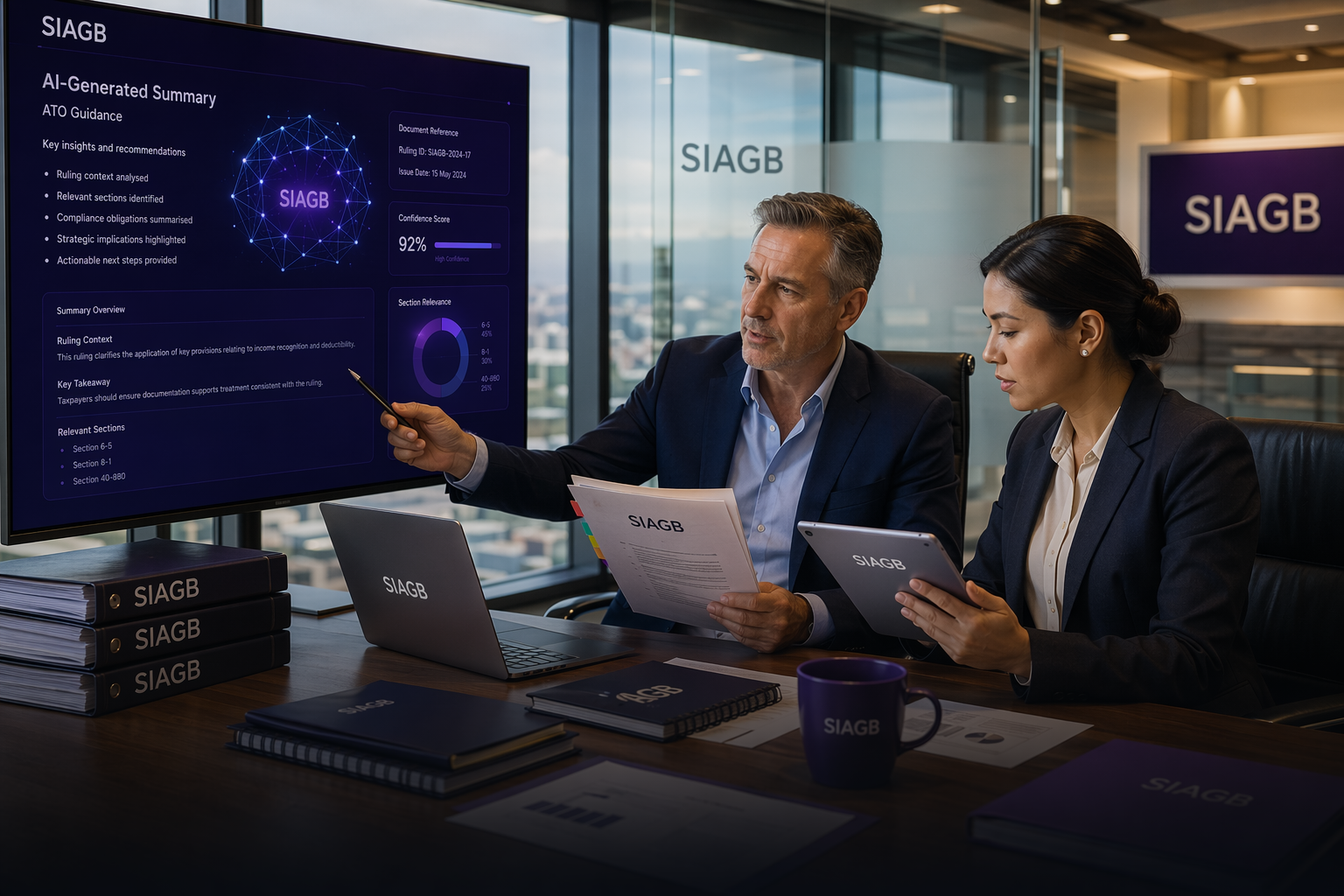
ATO guidance keeps piling up. Public rulings, Practical Compliance Guidelines, Taxpayer Alerts, and website updates arrive almost every week, and the Australian Taxation Office publishes hundreds of documents each year across those categories. For an accounting practice, this creates real pressure on partners and senior accountants who must review, interpret, and explain changes to clients before deadlines like the 30 June financial year end or the 31 March FBT year. Speed matters. Accuracy matters more.
Many Australian accountants are cautious about artificial intelligence and ai technology in general. And honestly, that makes sense. A summary that misses a threshold, an effective date, or the difference between a Taxpayer Alert and a binding ruling can create audit problems later. The same risk appears in healthcare and education when automation skips nuance. In our work building compliance-grade AI for regulated sectors, we have seen this first hand, and this article explains how can an australian accounting firm use ai to summarise ato guidance and still protect trust, professional judgment, and clients.
Why Is ATO Guidance Overload A Real Business Problem?
The Australian Taxation Office updates guidance often. Public rulings, draft guidance, and web content shift as policy changes, whether it is a new Division 7A benchmark rate, a GST ruling, or an update to how the 10% goods and services tax applies to a sector. Each update needs attention from finance teams and accounting professionals. Manual review takes hours. Sometimes days.
Senior accountants often read a full 30-page document just to spot the two paragraphs that changed. In our client work we have watched partners spend 3 to 5 hours a week simply tracking what moved, rather than advising. That slows advice to clients and business owners. It also raises audit risk when details slip through. For example, a missed effective date on a Practical Compliance Guideline can change which financial year a position applies to, and in an australian practice that missed context can affect financial processes, financial data handling, and reputation.
Automation sounds appealing. But generic automation without controls creates new risks. Australian accounting firms don’t need faster reading. They need faster understanding, with confidence and clear ato compliance guardrails.
What Does AI Summarisation Mean In A Compliance Context?
AI summarisation in compliance work isn’t the same as summarising a blog post. In accounting, meaning matters. Scope matters. Conditions matter.
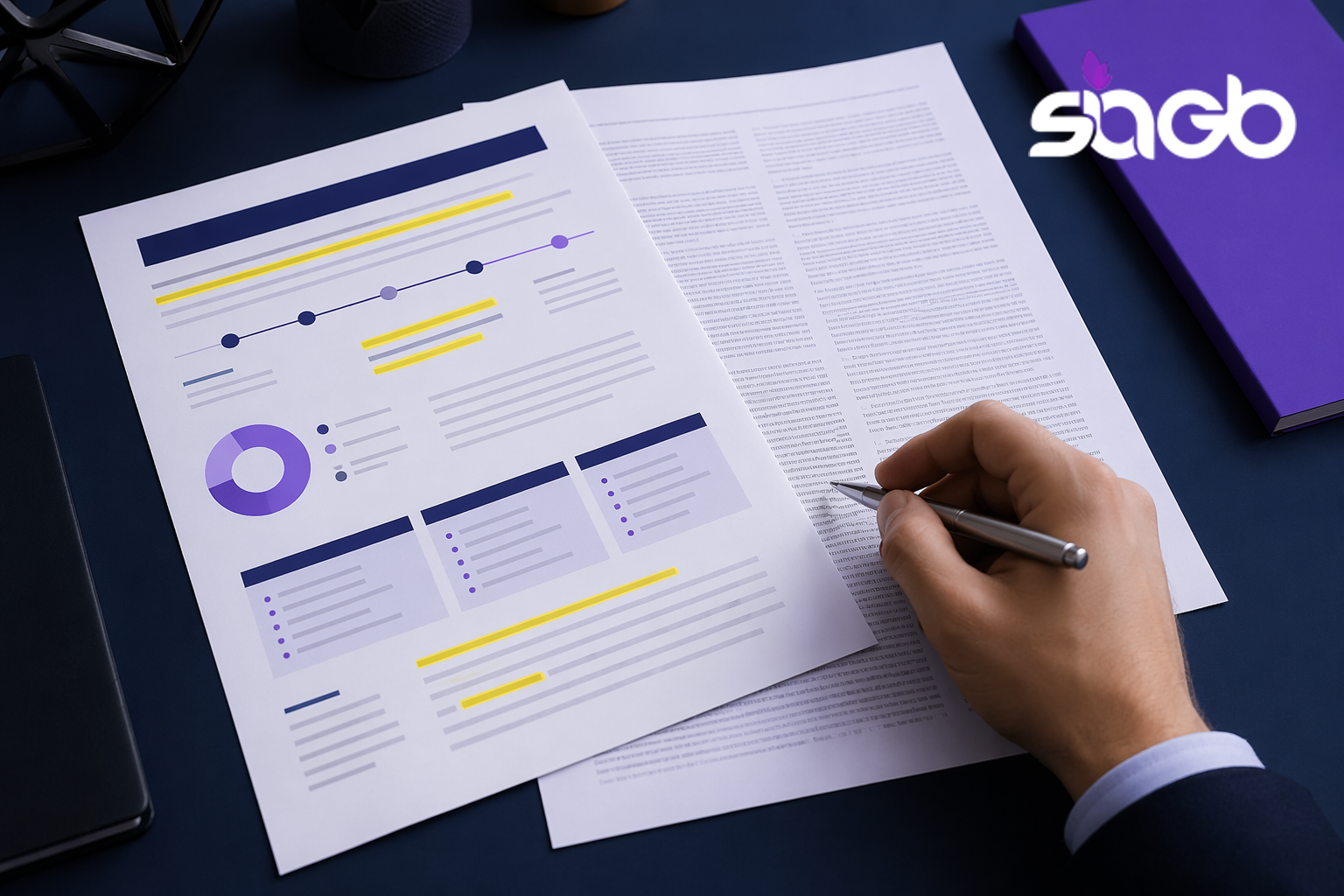
Generative AI uses ai models trained on large datasets to produce summaries. Consumer tools such as ChatGPT, Microsoft Copilot, Claude, and Perplexity, along with Google AI Overviews, can all draft a summary in seconds, but in a compliance setting an ai system must preserve what the ATO actually intended. Thresholds, exclusions, and effective dates must stay clear. A loose summary is risky, because unlike a marketing recap, a tax summary is relied on for a signed position.
Human accountability still sits at the centre. Accountants sign off on advice. Not machines. AI supports professional judgment. It doesn’t replace it. That principle applies whether you’re using an ai assistant, ai powered tools, or a generative ai tool inside an accounting workflow, and it maps directly onto APES 110, the Code of Ethics that CPA and Chartered Accountant members already follow.
ATO Content Suitable And Unsuitable For AI Summarisation
Not all ATO content should be treated the same. Some material works well with AI summarisation. Some doesn’t.
High level guidance pages, update notices, and explanatory content are good candidates. AI accounting tools can pull out key changes, dates, and impacted taxpayers. For instance, a web update notice announcing a revised cents-per-kilometre car rate is a clean, low-risk summary target. That helps teams quickly see what matters and make informed decisions.
Legislative text, detailed examples, and edge cases need extra care. These usually require a chartered accountant to interpret intent, rather than a model that pattern-matches wording. Clear rules should be set before automation begins. When australian accounting practices define boundaries early, risk drops fast.
| ATO content type | AI suitability | How AI supports the team |
|---|---|---|
| Web update notices | High | Flags key changes, dates, and impacted taxpayers |
| High level guidance pages | High | Drafts a structured summary with source links |
| Practical Compliance Guidelines | Medium | Highlights scope and thresholds for human checking |
| Detailed worked examples | Low | Surfaces context only; accountant interprets intent |
| Legislative text | Not suitable | Reserved for full human review |
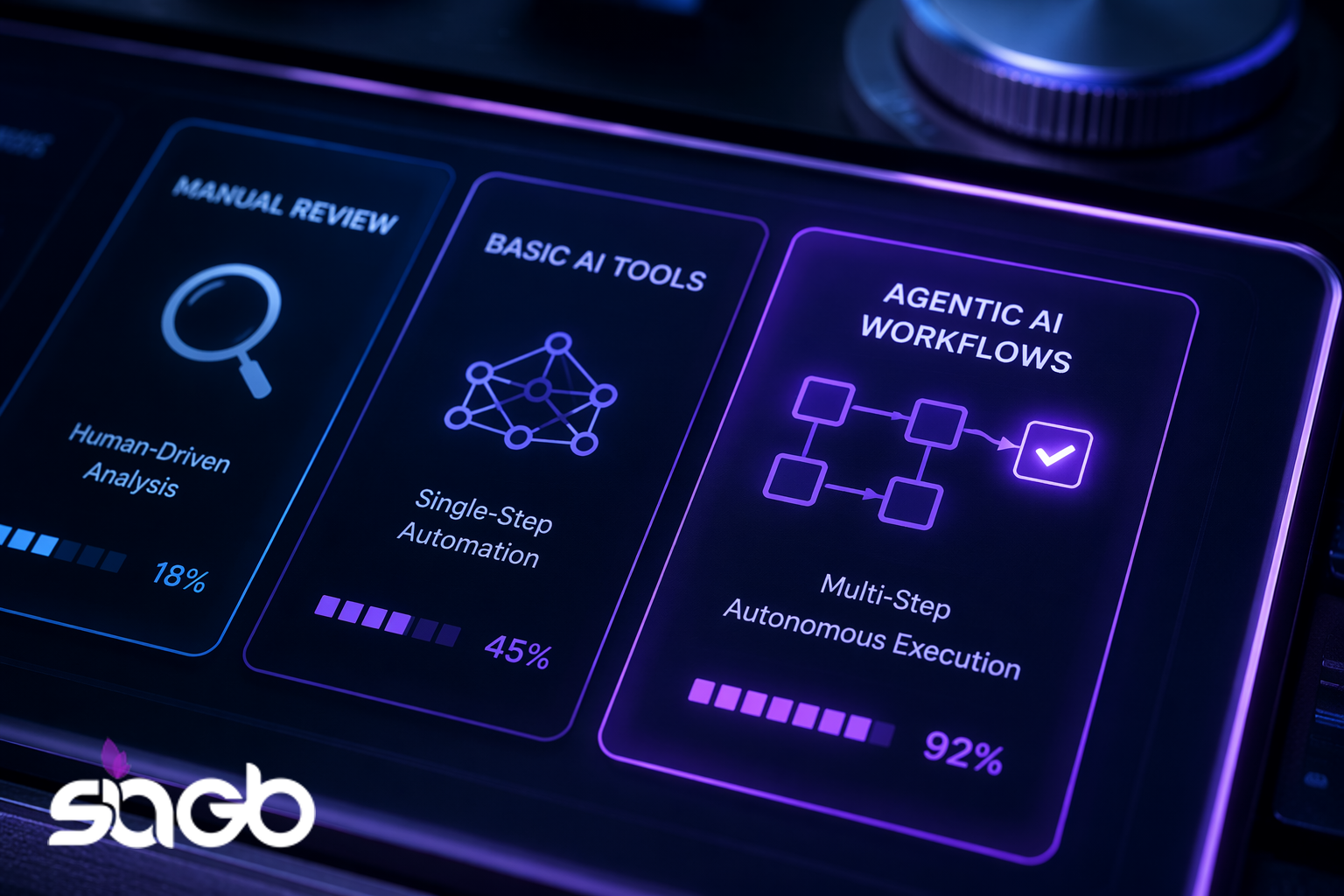
Manual Review Versus Basic AI Tools Versus Agentic AI Workflows
Manual review offers control. Accountants read everything and write notes. But it doesn’t scale as data entry and guidance volume grow, especially when a single practice may track 5 to 10 ATO categories at once.
Basic AI tools save time. Paste content in. Get a summary out. But governance is thin. There’s no audit trail and no validation, so unlike a controlled pipeline, you cannot show a reviewer which paragraph a claim came from. Trust is low. Mistakes happen.
Agentic AI workflows sit in between. AI agents ingest ATO updates, compare versions, summarise changes, and flag risks. Automation is controlled rather than open-ended. Review steps are enforced. Audit logs are built in. This respects accounting standards, ai governance, and human oversight. In our own products, for example the AI-powered patient scheduling we built for medical groups, the same pattern holds: the model drafts, but a defined human step approves before anything reaches the end user.
Comparison Framework For ATO Guidance Summarisation
| Approach | Speed | Accuracy | Audit Trail | Staff Trust |
|---|---|---|---|---|
| Manual review | Slow | High | Manual notes | High |
| Basic AI tool | Fast | Variable | None | Low |
| Agentic AI workflow | Fast | High with review | Built in | Growing |
This framework helps leaders assess risk realistically. It also shows why ai strategy matters more than chasing tools.
Risk Controls And Human In The Loop Review
Risk controls decide whether AI works in ai accounting. Without them, firms shouldn’t proceed.
Every AI summary should link back to the source ATO content at paragraph level, so a reviewer can jump from a claim to the exact sentence rather than re-reading the whole ruling. Review checklists help accountants confirm scope, dates, and exclusions. Audit trails record who reviewed what, and when. These controls support ato compliance and CPA Australia expectations, and they mirror the accountability that APES 110 already demands of members.
At SIAGB, AI consulting starts with governance. Automation comes after. Our founder, Sheetal Dhadial, brings 20+ years of IT and AI leadership and holds Certified Scrum Master and AgilePM credentials, so we track review coverage and error rates the same way a delivery team tracks defects. That approach suits Australian accounting practices that value standards set by CPA Australia and other professional bodies.
Key Point: If you can’t audit the AI output, don’t use it for client work.
Example Workflow For Summarising New ATO Guidance
Here’s a workflow many teams follow.
First, the system monitors releases from the Australian Taxation Office. New or updated guidance is ingested with version tracking, so a document at version 3 is compared against version 2 automatically. No manual data entry.
Next, ai models create a structured summary. Key changes, impacted taxpayers, and risk flags are highlighted. Each point links back to the source text. Built in analytics help track accuracy and usage over time, for example the percentage of summaries a reviewer edits before approval.
Then, a senior accountant reviews the summary using a checklist, typically a 5-point check covering scope, thresholds, effective dates, exclusions, and source links. Once approved, it’s shared internally or with finance teams supporting clients. This is responsible ai use in practice.
Infographic: AI Summarisation Workflow For Accounting Firms
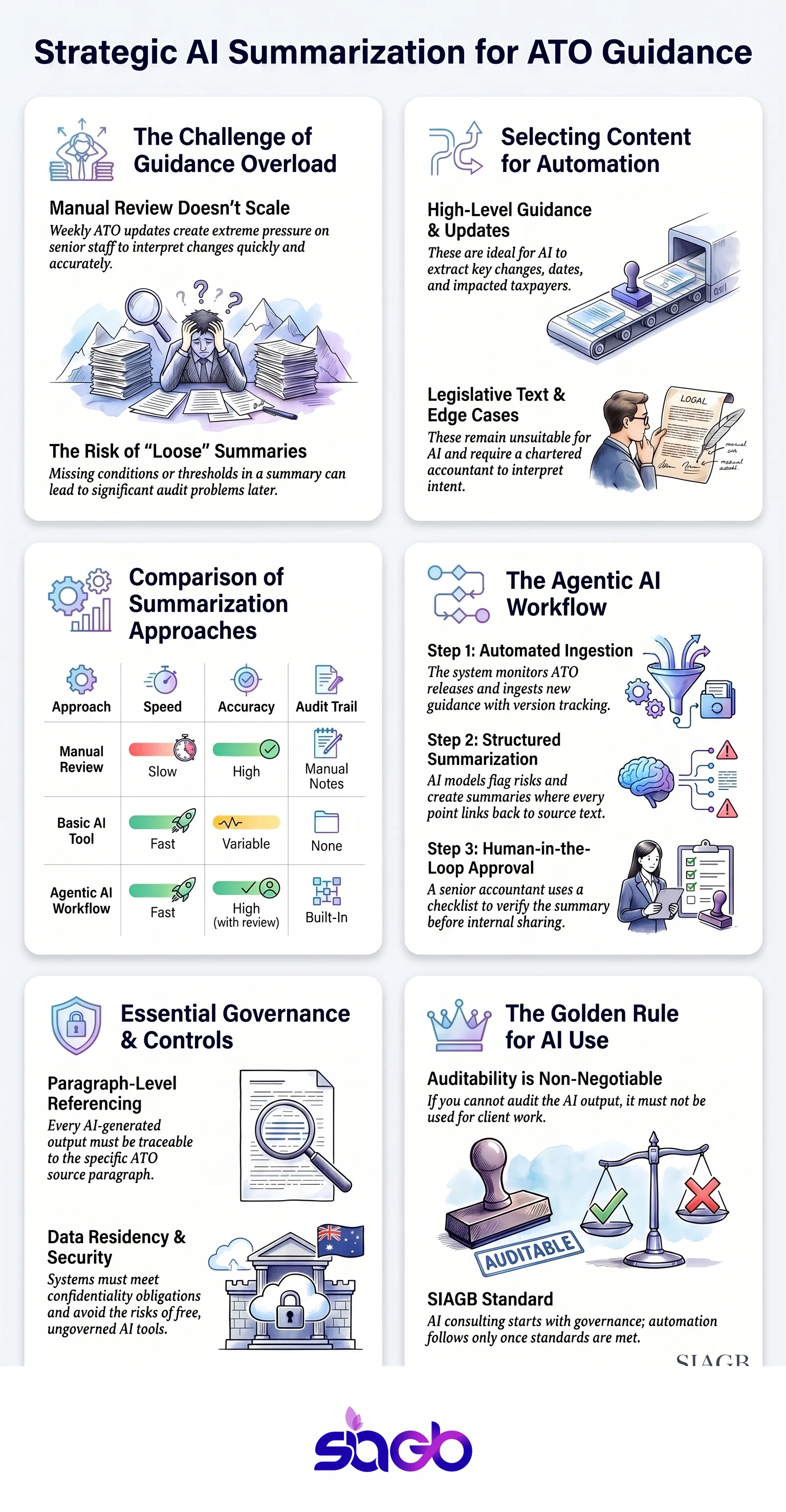
This infographic shows the path from ATO release to client advice. It highlights automation steps, human review points, and audit checks. Partners often use it to explain artificial intelligence and ai capability to staff.
Data Security And Australian Regulatory Considerations
Security matters. Accounting professionals handle sensitive financial and client data. Any ai solution must meet confidentiality obligations under the Privacy Act 1988 and its 13 Australian Privacy Principles.

Data residency matters. Access controls matter. Under the Notifiable Data Breaches scheme, an eligible breach must be reported to the OAIC and affected individuals, so where the data sits often matters more than the ai accounting software itself. If a client portal surfaces these summaries, it should also meet WCAG 2.2 AA accessibility so every client can read the advice. Lessons from regulated healthcare and education environments apply here too, for example the 85,000+ users across 900+ institutes we support through Marvel PTE, where data protection is non-negotiable at scale.
Warning: Free AI tools often lack clear data controls. That’s a risk most australian businesses should avoid.
Managing Change For Partners And Staff Sceptical Of AI
Scepticism is healthy. Many accountants have seen automation promises fall short before.
Start small. Use AI on 1 or 2 low risk ATO update types first, such as web notices, instead of the whole compliance library. Measure results over a 4 to 6 week pilot. Show reduced review time and lower pressure on staff. Analytics help demonstrate value beyond hype.
Involve staff early. Let them shape review steps. Over time, ai accounting becomes just another trusted tool, in the same way spreadsheets once did.
Measuring Success Beyond Time Saved
Time saved is easy to count. But it’s not the full picture.
Track error rates found during human review, rather than only counting minutes saved. Monitor adoption across teams. Measure how quickly guidance reaches clients and business owners, for example cutting the gap from an ATO release to client advice from 5 days to under 1. These analytics show whether AI actually improves quality and supports informed decisions.
When Should You Engage An AI Consulting Partner?
Off the shelf ai accounting tools rarely fit regulated work. Custom workflows matter.
An experienced partner understands accounting, audit, and compliance. End to end delivery avoids gaps. The same principle applies whether deploying an ai assistant, ai powered tools, or a full ai system. We have delivered exactly this pattern in other regulated settings, from the AI-powered patient scheduling for medical groups to large-scale platforms, so the governance is proven rather than theoretical.
SIAGB helps australian accounting practices design practical ai strategy and measurable ai capability from our base in Sydney. The focus stays on real problems, not demos. For many australian businesses, and for the United States firms we also advise, that difference counts.
Frequently Asked Questions
Can AI replace accountants when reviewing ATO guidance?
No. Think of AI as a fast first reader that drafts summaries and flags what changed, while the accountant still owns the interpretation and the sign off. Liability and professional standards, including APES 110, sit with the human, so the value lies in freeing senior staff to focus on judgment rather than scanning.
Is it safe to use AI on ATO content?
Yes, provided the controls come first. Beyond source links and audit trails, choose tools with clear data residency under the Privacy Act 1988, restrict who can approve summaries, and start on low risk updates so you can measure accuracy before it ever touches client advice.
What ATO guidance should not be summarised by AI?
Legislative text and complex edge cases need careful human review. AI works best on high level guidance and updates.
How long does it take to set up an AI summarisation system?
Most teams can pilot an ai solution in a few weeks, often a 4 to 6 week trial on 1 or 2 content types. Full rollout depends on governance, security, and training.
Does CPA Australia support the use of AI in accounting?
CPA Australia encourages responsible AI use, with clear governance, ethics, and accountability.
Key Takeaways And Final Thoughts
AI can help manage ATO guidance overload. The value comes from controlled automation, not shortcuts.
When you ask how can an australian accounting firm use ai to summarise ato guidance and still stay compliant, the answer is clear. Combine ai technology with human oversight, strong governance under the Privacy Act 1988 and APES 110, and professional standards.
Used this way, artificial intelligence supports accountants, finance teams, and clients alike.
Sources
- MIT Technology Review (technologyreview.com)
- Stanford HAI - Human-Centred AI (hai.stanford.edu)

Ready to put this into practice?
Let's Talk