
Chatbot analytics services usa help businesses turn everyday conversations into clear actions. A chatbot answers questions, but insight comes from understanding patterns, risks, and outcomes behind those chats. For US enterprises, this link between conversational data, compliance, and business decisions is where real value shows up.
Chatbots are everywhere now. But many leaders still ask, “So what?” Fair question. Without insight, a chatbot is just another AI tool. With the right approach, conversational AI becomes a decision system. It reveals patterns in customer inquiries, gaps in customer support, and risks hiding in plain sight. In our work building an AI-powered patient scheduling system for US medical groups, the first month of chat logs did more to reshape the front-desk workflow than a year of survey data ever had. That is what this guide unpacks. Plain language. Real examples. No hype.
Introduction
Chatbots are now part of daily business life. Patients book appointments. Shoppers ask about deliveries. Staff rely on bots after hours. But the real value does not come from the ai chatbot alone. It comes from understanding what those conversations actually mean for customer service and customer experience.
US businesses need more than message counts. They need insight linked to revenue, cost, risk, and compliance. Chatbot analytics services usa focus on that connection. They tie ai chatbot conversations to real decisions like staffing levels, recall rates, and content gaps. This matters for healthcare website accessibility, modern medical website programs, and large retail environments. We built our first analytics stack on a platform that already handles 85,000+ users across 900+ institutes for our Marvel PTE product, so we learned early that conversation volume without segmentation is just noise. Group the same 85,000 sessions by intent and you get a roadmap.
Here is the thing. Most chatbot projects stop too early. Teams launch an ai chatbot and move on. Insight changes that. It turns conversational data into actionable insights leaders can actually use. Not just look at. We track five numbers on day one for every deployment: containment rate (share of chats resolved without a human), unanswered-intent rate, median time-to-first-response, booking completion rate, and escalation reason. Everything else is secondary.
What Chatbot Analytics Services Mean for US Businesses
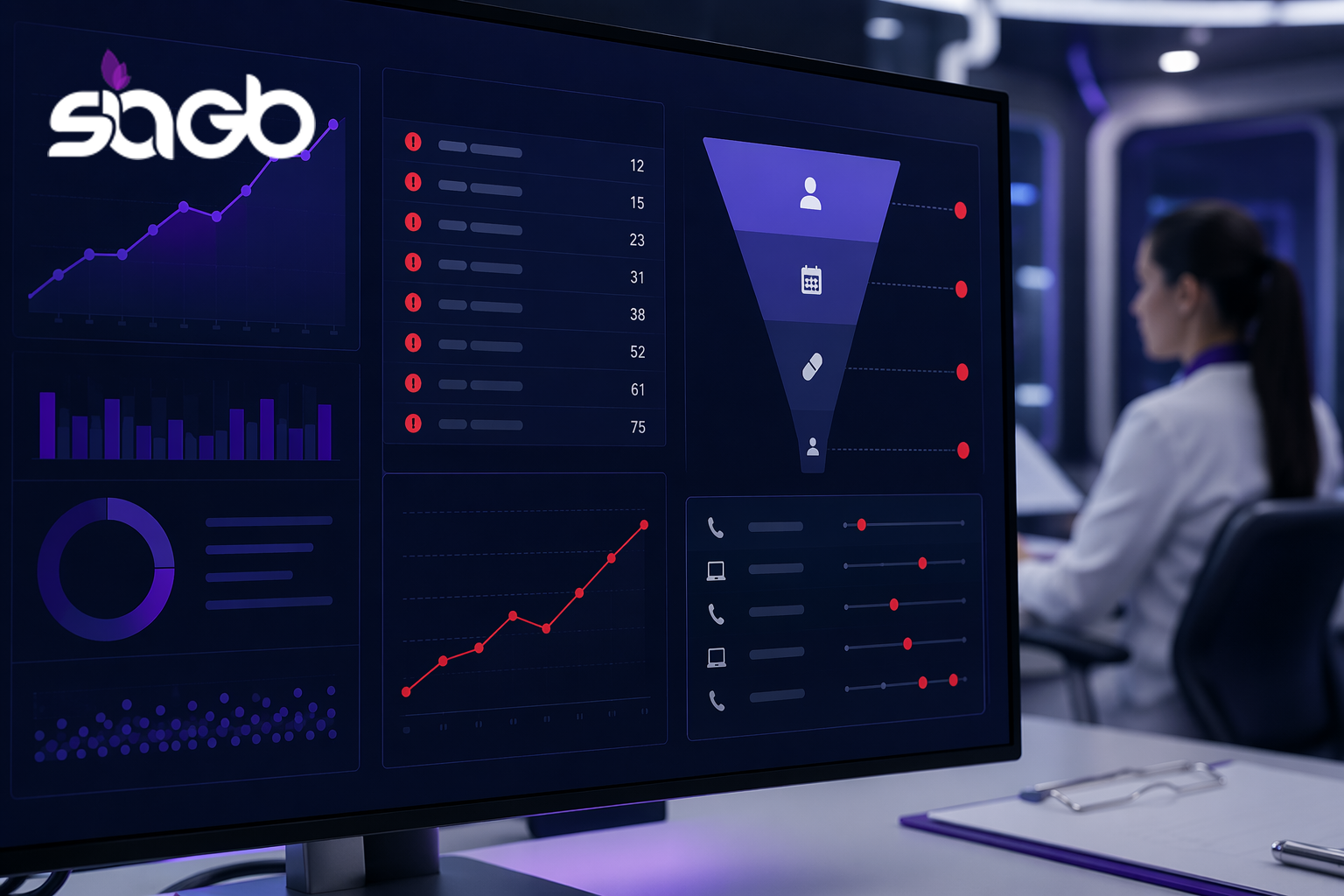
Chatbot analytics measure intent, outcomes, and gaps across every customer interaction handled by an ai chatbot. This includes what users ask, how the ai systems respond, and where conversations fall apart. It goes well beyond basic reports that only show volume or response time.
Decision-grade insight answers tougher questions. Which customer inquiries lead to bookings? Which ai chatbot flows reduce calls, and which ones increase demand for human agents? Where does the ai chatbot confuse users, damage user experience, or miss a sale?
Chatbot analytics consultants usa also bring local context. US enterprise teams face specific rules, language habits, and expectations. Retail hours vary by state. Healthcare rules differ across payers and state regulators. Any ai strategy has to reflect that reality.
For AI consulting for retail businesses, this means comparing stores, regions, and campaigns. For healthcare, it means tracking access, safety, and follow-through across a healthcare seo strategy and medical practice website design. Same ai technology. Very different decisions.
The gap between a basic bot and an analytics-led system is easy to see once you put the two side by side. Here is how we frame it for US clients evaluating an investment:
| Capability | Basic Chatbot | Analytics-Led System |
|---|---|---|
| What it reports | Message count, response time | Intent, containment rate, revenue impact |
| Compliance posture | Ad hoc, often unaudited | HIPAA controls plus WCAG 2.2 AA testing on every release |
| SEO value | None | Feeds FAQPage and MedicalWebPage schema from real queries |
| Failure visibility | Manual complaints | Weekly unanswered-intent report |
| Typical containment | 20 to 30 percent | 55 to 70 percent after tuning |
| Payback horizon | Unclear | 3 to 6 months, tracked against staff hours saved |
Key Point: A chatbot solution without insight is guesswork. Clear data turns conversational AI into a management tool.
Chatbot Analytics in US Healthcare Settings
Healthcare chatbots handle high-stakes work. Appointment bookings. Patient recalls. Medication questions. Basic triage. An ai powered chatbot in a clinic isn’t a novelty. It’s part of how patients access care through a hipaa compliant website or patient portal.
Chatbot insight shows where care breaks down. Missed intents reveal questions the ai chatbot does not understand. Drop-offs highlight confusing flows. Delays point to risks for patient safety and staff workload. This directly affects customer support teams and overall customer experience.
Healthcare website accessibility matters here too. If a chatbot works on desktop but fails on a mobile app view, patients notice. Insight tied to user experience helps teams spot and fix those gaps, supporting wcag healthcare website standards and ada compliance medical website requirements. We hold every chat widget to WCAG 2.2 Level AA and to Google Core Web Vitals: Largest Contentful Paint under 2.5 seconds, Interaction to Next Paint under 200 milliseconds, and Cumulative Layout Shift under 0.1. A slow widget is an abandoned booking, and roughly 53 percent of mobile visitors leave a page that takes longer than 3 seconds to load.
From what we have seen across US clinics, the strongest healthcare bots focus on access and efficiency. Not flashy features. Clear data supports that focus by showing how conversational ai affects bookings, recalls, and call volumes. On our AI-powered patient scheduling work for medical groups, the single highest-value insight was mundane: 1 in 5 after-hours chats asked the same question about insurance acceptance, so we surfaced that answer first and watched escalations to staff drop.
Pro Tip: Track unanswered intents weekly. They often point to process gaps, not software bugs.
Patient Recall, Reviews, and Operational Efficiency
Patient recall systems often fail quietly. A chatbot sends reminders, but patients still don’t come back. Insight reveals why. Timing problems. Confusing wording. Or follow-ups that stop too soon. This supports a reliable patient recall system and better customer service outcomes.
Chatbot data also connects to google reviews medical practice performance and broader reputation management doctors care about. When patients get fast, clear answers, reviews usually improve. When ai chatbot flows frustrate users, complaints follow. Simple as that.
By linking chatbot insight to staff time saved, clinics can show protected revenue. Fewer missed recalls. Fewer inbound calls. Better use of human agents. That’s operational efficiency you can explain to a board and to clients.
Using Chatbot Data to Power AI SEO and AEO
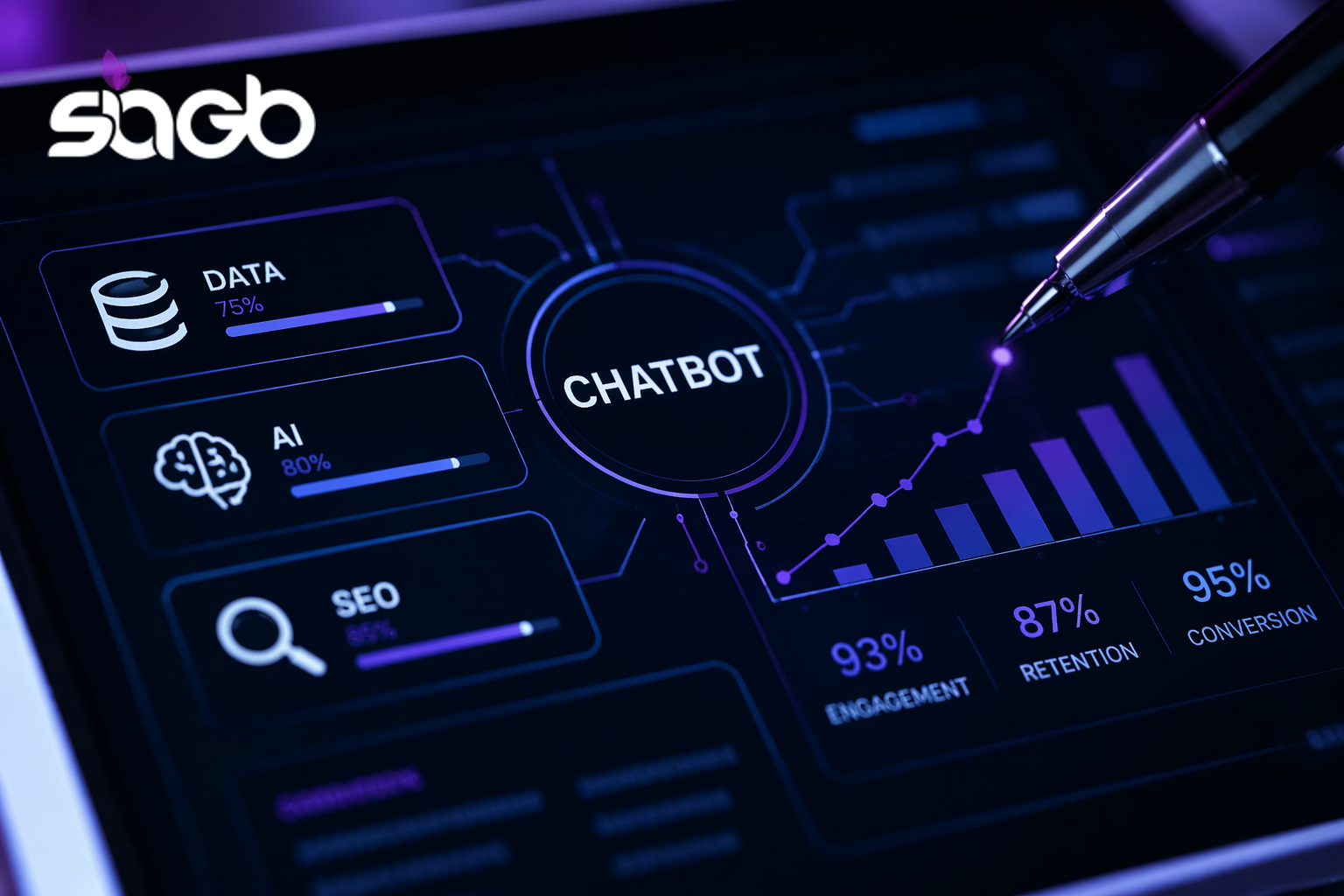
Here is what happens next. Chatbot questions mirror real search behavior. Patients ask bots the same things they ask Google. Opening hours. Costs. Symptoms. Policies. That data delivers valuable insights for medical practice seo and ai content medical practice planning.
Clear insight feeds AI SEO healthcare by revealing the exact language users use. Not guessed keywords. This supports answer engine optimization medical strategies, where content is built to answer direct questions in search and AI platforms like ChatGPT, Perplexity, Google AI Overviews, and Gemini. Those engines increasingly quote pages that answer a question in one clean paragraph, so we map the top 25 chat intents each month straight onto page copy.
Agentic SEO builds on this. Chatbot insight guides updates to FAQs, service pages, and schema. In practice that means marking up answers with schema.org types such as FAQPage, MedicalWebPage, and LocalBusiness so both Google and the AI engines can parse them cleanly. The goal is straightforward. If users ask it in chat, your website should answer it clearly too as part of an ai optimized website healthcare approach.
This is where ai chatbot development, chatbot development, and healthcare website redesign stop being separate projects. They become one system. Conversation in. Content out. Measured over time.
Warning: Publishing content without chatbot data often means answering questions no one is asking.
Agentic AI and Automated SEO Agents Explained Simply
Agentic AI means software that can act on goals, not just respond. In plain terms, AI agents for SEO watch data, spot gaps, and suggest changes. Sometimes they even draft updates as part of ai seo automation.
Automated SEO agents use chatbot insight to see what users want next. They might update FAQs, suggest new pages, or flag outdated answers. Generative ai tools help speed this up, supported by predictive analytics and data driven insights.
But automation still needs people. Strategy, compliance, and tone need human oversight. In my experience, the best results come from teams that mix automated seo agents with clear rules and regular reviews.
Accessibility and Compliance in Chatbot Analytics
Accessibility isn’t optional in healthcare. WCAG healthcare website standards apply to chat interfaces too. Insight helps test whether an ai chatbot works with screen readers, keyboards, and clear language. This directly impacts customer support quality.
ADA compliance is a growing risk area. Under Title III of the Americans with Disabilities Act, US courts have repeatedly treated inaccessible websites as covered, and federal digital-accessibility lawsuits have run into the thousands each year. ADA website lawsuit doctors cases often involve poor digital access. Chatbot logs can show where users struggle, helping teams fix issues early. We test every flow against the four WCAG principles (perceivable, operable, understandable, robust) using screen readers like NVDA and VoiceOver before launch.
Designing an ADA compliant patient portal includes chatbots. Clear prompts. Simple flows. No time traps. If a session auto-expires, give at least 20 seconds and a clear warning, as WCAG 2.2 success criterion 2.2.1 expects. Insight confirms that real users can complete tasks without barriers, improving customer experience across devices.
Data Security and Cybersecurity Risks to Manage
Chatbots often handle personal information. Names. Symptoms. Contact details. That makes security critical. Healthcare chatbot insight must respect privacy at every step and align with hipaa cybersecurity expectations.
US providers must align with HIPAA controls across every patient touchpoint. The HIPAA Security Rule expects encryption in transit and at rest, so we default to TLS 1.2 or higher and AES-256 storage, with access logging and a Business Associate Agreement in place before any vendor touches protected health information. Insight should never expose raw data unless absolutely needed, and we redact identifiers before a single message reaches an analytics dashboard.
Healthcare cybersecurity threats now include AI systems. Poor chatbot implementation can open new attack paths, from prompt injection to leaky logs. Strong medical practice data security includes secure data integration, audits, and role-based limits on data science access. The average cost of a US healthcare data breach has topped 9 million dollars, so cybersecurity for doctors is no longer optional. It is a line item.
Key Point: If insight stores more data than needed, risk rises quickly.
Retail and Multi-Location Use Cases in the US
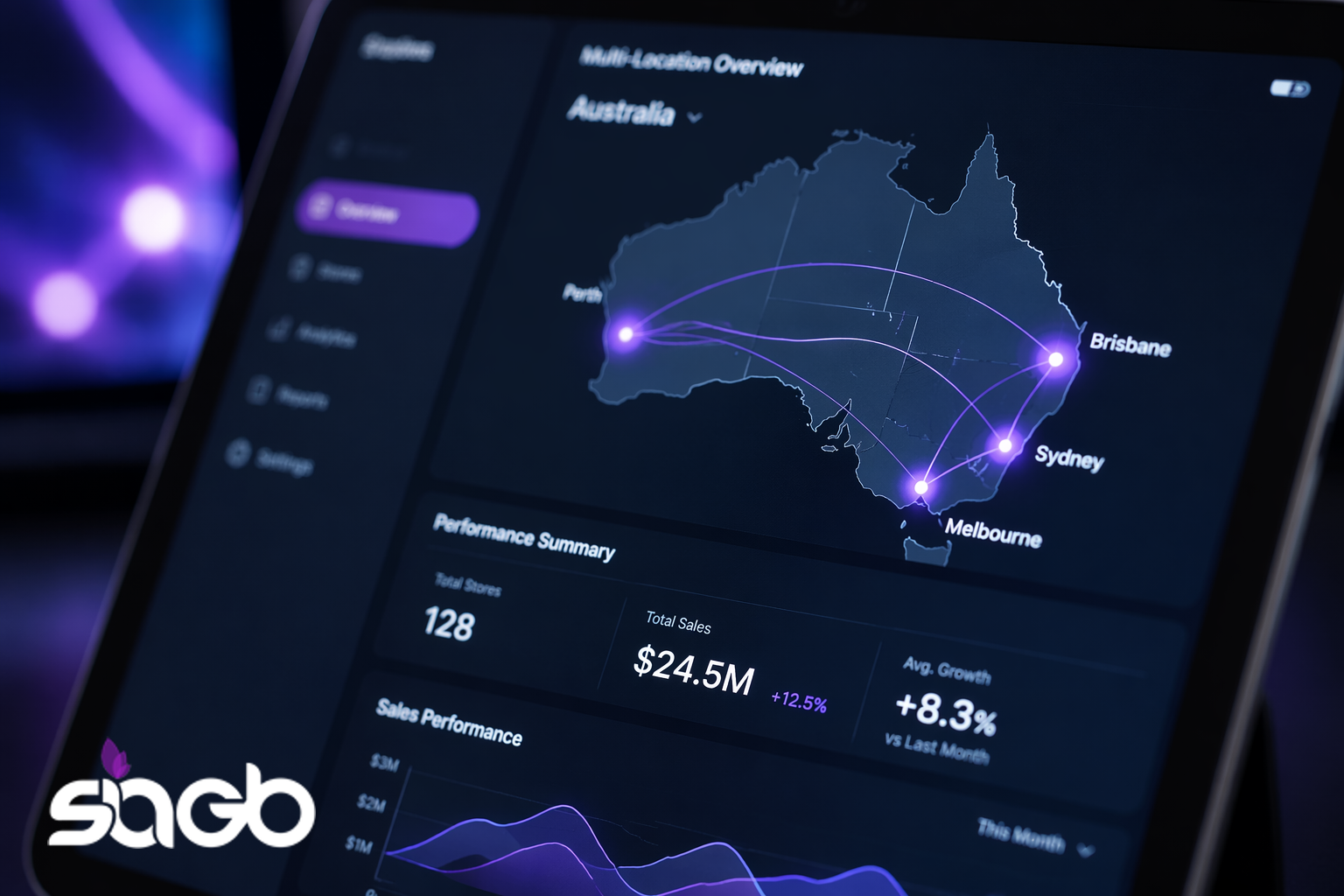
Retail chatbots answer product questions, store hours, and returns. Insight compares how an ai chatbot performs across locations. Which stores get more customer queries? Which problems keep coming up? A chain running 40 stores across California, Texas, and Florida will see very different question mixes: return-policy questions spike after the holidays, while store-hours questions cluster around state-specific holidays. Segmenting chats by ZIP code turns one national dashboard into 40 local action lists.
For AI consulting for retail businesses, this insight drives action:
- Update product and inventory pages using real customer language.
- Fix recurring service issues before they reach customer support teams.
- Improve conversion rates by reducing friction in ai chatbot flows.
The focus should stay on outcomes. Not vanity metrics. Clear insight linked to customer service impact matters most.
Measuring ROI from Chatbot Analytics
ROI comes from three places. Time saved. Costs reduced. Revenue gained. Chatbot insight tracks all three when set up properly with strong software development practices.
Common ROI drivers include:
- Reduced inbound calls and customer support workload.
- Higher patient recall and booking completion rates.
- Better content alignment through agentic seo and ai seo automation.
This often uses predictive analytics to forecast demand and staffing needs. One-off reports do not cut it. Ongoing measurement does. Trends matter more than snapshots. That is how leaders justify continued investment in artificial intelligence.
Here is the math we walk clients through. If a bot deflects 1,000 calls a month and each handled call costs a front-desk agent about 6 dollars in loaded time, that is 6,000 dollars saved every month before you count a single recovered booking. Add a 10-point lift in booking completion on a clinic that sees 2,000 appointment requests a month, and the revenue side dwarfs the cost side fast. We report both numbers monthly so nobody has to take ROI on faith.
Infographic: How Chatbot Analytics Create Business Value
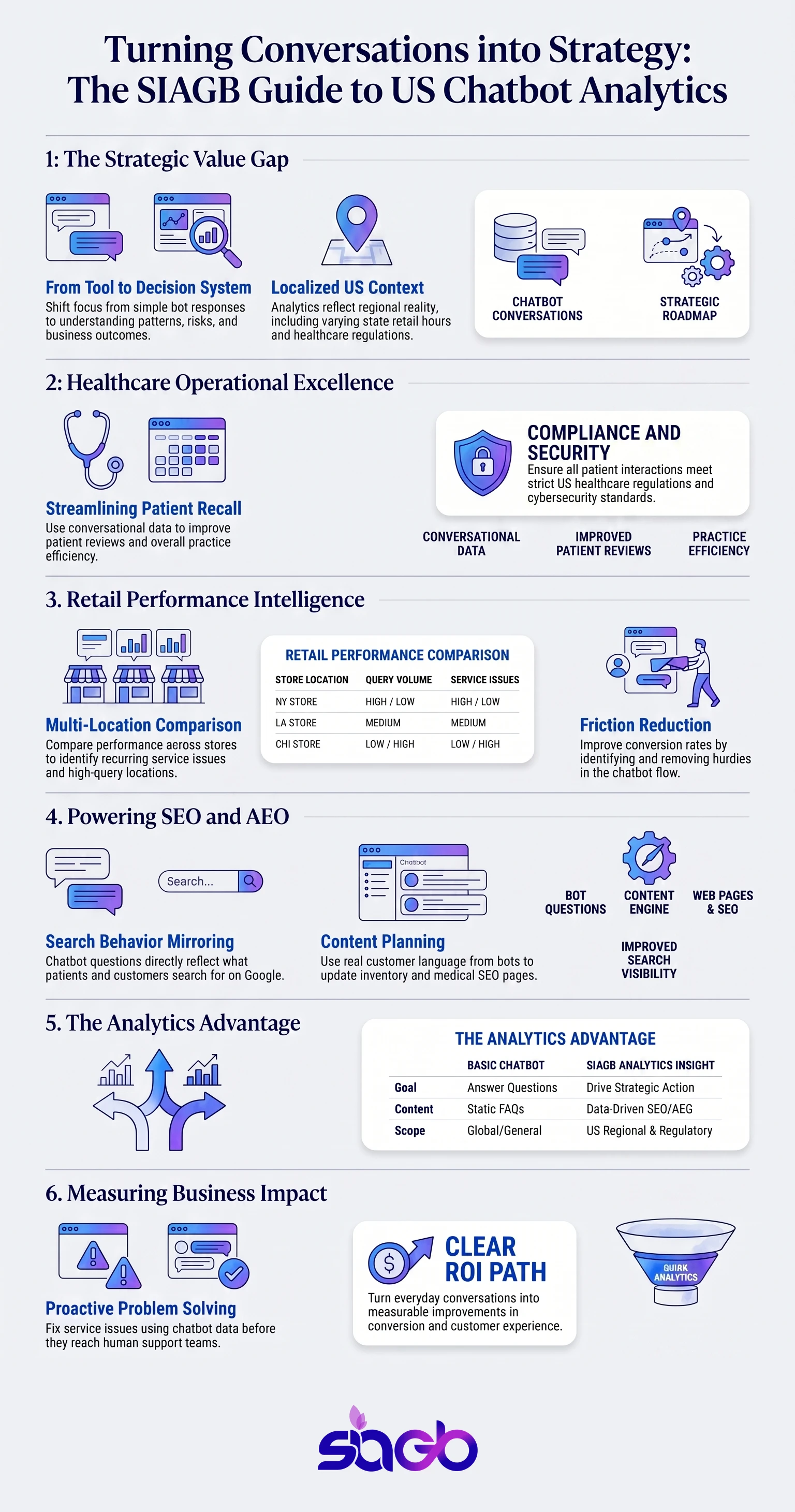
This infographic shows the flow from chatbot conversations to insight, then to action. It links ai chatbot development, customer service, accessibility, and security in one view. You’ll also see a comparison between basic bots and analytics-led systems that drive outcomes for clients.
Frequently Asked Questions
What are chatbot analytics services used for in the US?
Chatbot analytics services measure intent, outcomes, and gaps in ai chatbot conversations. US enterprise teams use them to reduce costs, improve customer support, and manage compliance risks.
How do chatbot analytics help healthcare providers?
They show where patients get stuck, miss recalls, or abandon bookings. This helps clinics improve access, efficiency, and customer experience without adding staff.
Can chatbot analytics improve SEO and AEO?
Yes. Chatbot questions reflect real search intent. Insight supports AI SEO healthcare and answer engine optimization medical strategies with accurate, current data.
Are chatbot analytics compliant with healthcare regulations?
They can be when designed properly. Compliance requires strong access controls, privacy limits, and alignment with WCAG and ADA expectations.
Do retail businesses benefit from chatbot analytics?
Retailers use insight to compare locations, fix recurring issues, and improve customer service. The focus stays on revenue impact, not chat volume.
Key Takeaways and Final Thoughts
Chatbot analytics turn conversations into measurable outcomes. Without insight, an ai chatbot is just another interface. With it, the chatbot becomes a decision engine.
Healthcare and retail teams need solutions that respect accessibility, security, and local rules. Dashboards alone don’t deliver that. End-to-end software development, strong ai strategy, and the right ai developers do.
SIAGB approaches this with a problem-first mindset. Our founder, Sheetal Dhadial, brings 20+ years of IT and AI leadership and holds Certified Scrum Master and AgilePM credentials, so delivery discipline is baked into every build. From chatbot development and ai chatbot development to agentic seo, virtual assistant design, wellness chatbots, educational chatbots, and custom ai chatbot plans, the goal stays the same. Real results. Clear ROI. Systems that support human conversation and better customer interaction through artificial intelligence. Ready to see what your chat logs are already telling you? Let us take a look.
Sources
- MIT Technology Review (technologyreview.com)
- Stanford HAI - Human-Centered AI (hai.stanford.edu)

Want to explore this further?
Book a Free Consultation