Healthcare chatbots are software assistants that talk with patients through a website, app or messaging channel. Clinics use them to book appointments, answer common questions, take symptom details before a visit, and remind people about follow-ups. Some run on fixed scripts. Others use AI language models. Both have real limits.
There’s a lot of hype around them, so let’s keep it grounded. Here’s what they actually do, where they help, and where they can bite you.
What healthcare chatbots actually do
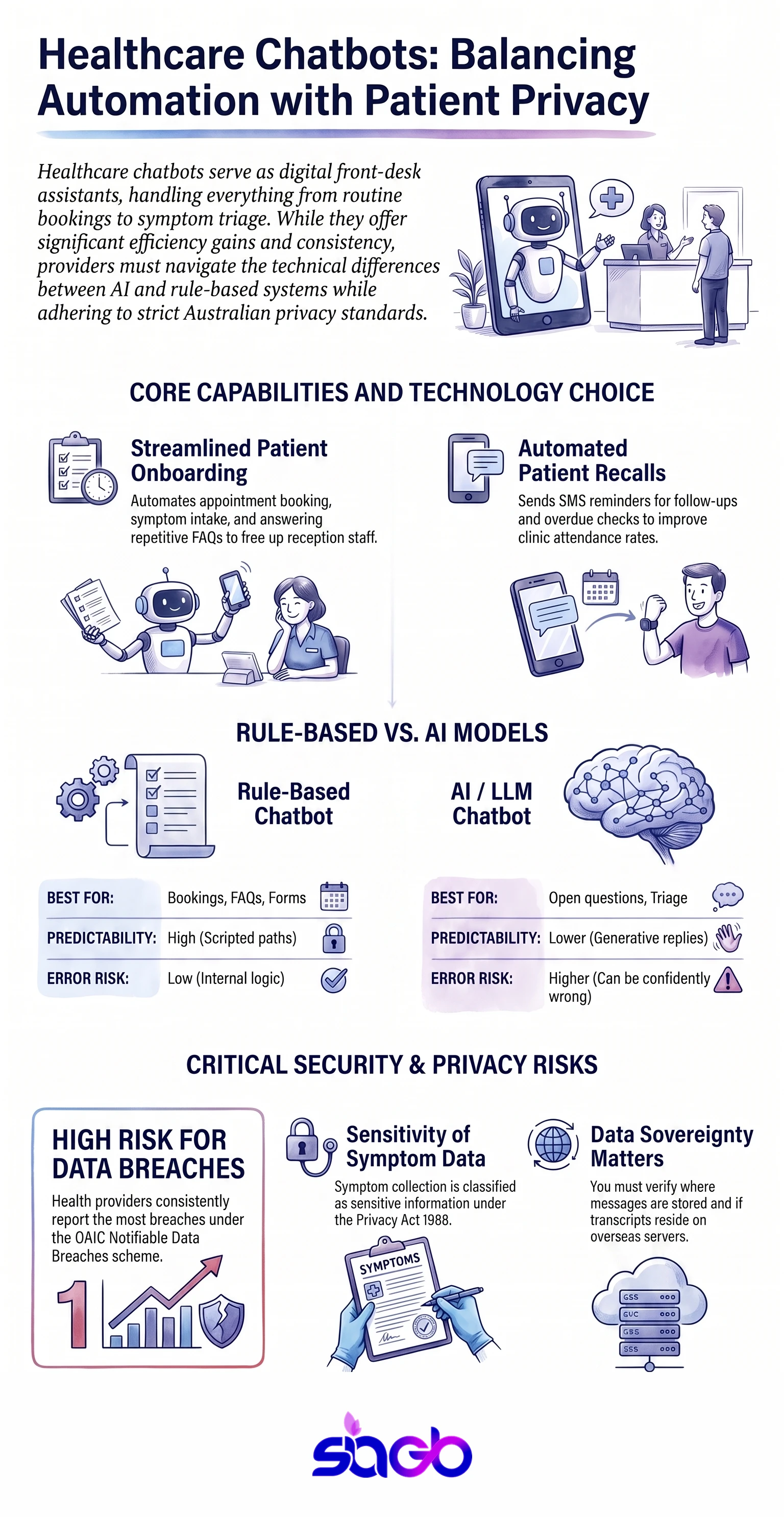
Strip away the marketing and most healthcare chatbots do a handful of jobs. Here are the ones we see earning their keep in Australian and US clinics:
- Appointment booking. The patient picks a clinic, a clinician or a service, then books a slot without phoning reception.
- Symptom intake and light triage. Before a visit, the bot asks a few structured questions and routes the patient to the right service, or tells them to seek urgent care.
- Answering repeat questions. Things such as opening hours, parking, bulk billing, referral rules, and what to bring. A front desk answers these 50 times a day.
- Patient recall and reminders. A nudge for a follow-up, a script renewal, or an overdue check, sent by SMS or chat.
None of that is glamorous. All of it takes load off a reception team that’s usually stretched thin. A clinic in Parramatta doesn’t need a robot doctor. It needs the phone to ring less. A bulk-billing practice in Brisbane and a specialist clinic in Melbourne want the same thing here.
The benefits, honestly weighed

The upside is real, as long as you don’t oversell it to yourself.
The clearest win is time. Unlike a phone line, a booking bot works at 2am, on a public holiday, and while every line is engaged. Patients who’d otherwise close the tab and ring a competitor can book on the spot. That matters more than it sounds. A missed booking is often a lost patient, not a delayed one.
Reminders help too. Automated recall for follow-ups and overdue checks, for instance an overdue Medicare-rebated review, can lift attendance, though how much depends on your patient mix. And a chatbot answers the same 20 questions the same way each time, which frees your reception team for the calls that genuinely need a person. Honestly, that consistency is underrated.
There’s a quieter benefit as well. Patients ask a bot things they’re too embarrassed to raise with a receptionist, such as a sexual health worry or a mental health question. A private channel gets you cleaner intake, which is worth more than it looks on a feature list.
Rule-based vs AI chatbots
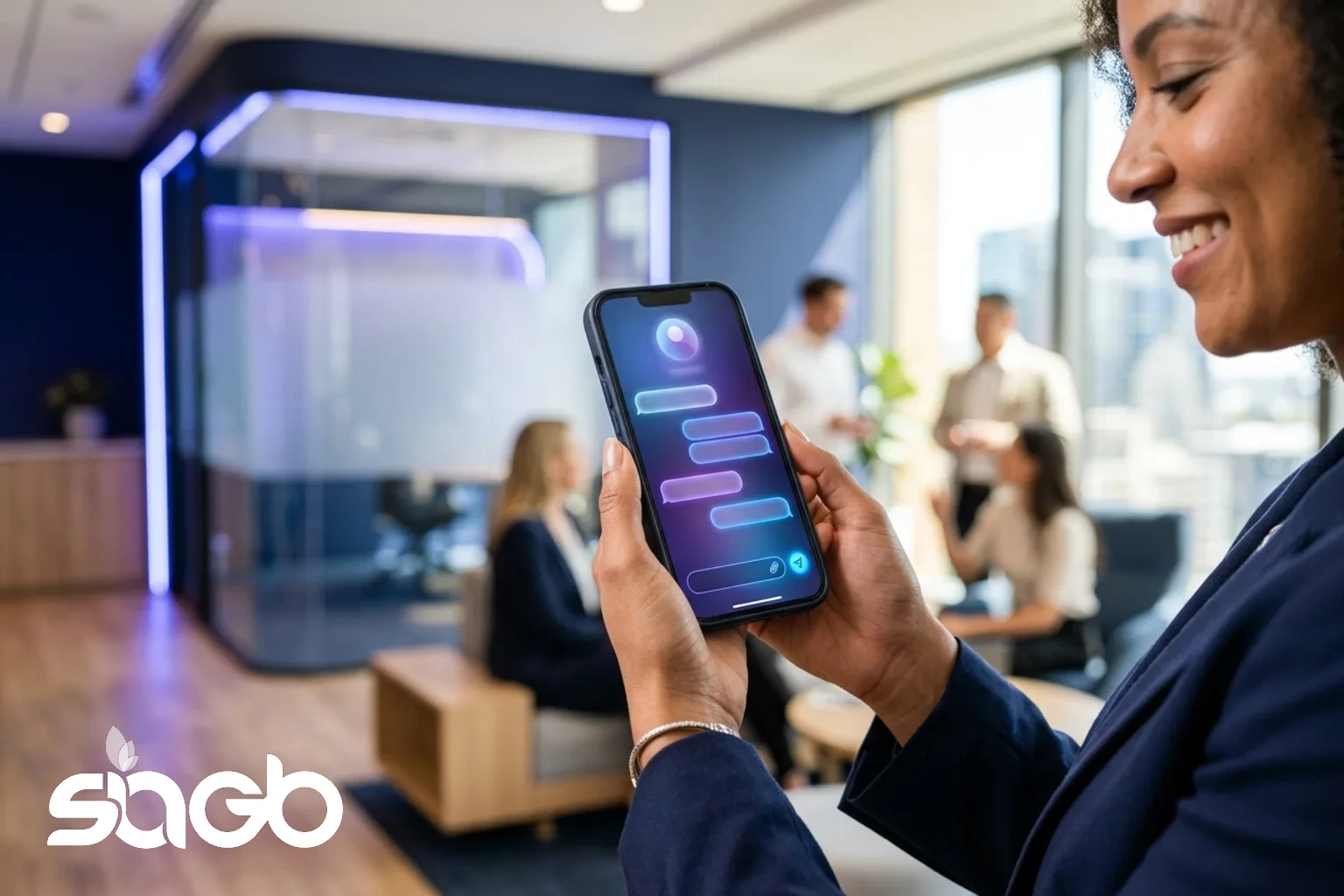
Not all healthcare chatbots are the same, and the difference decides how far you can trust one. Broadly, there are two kinds.
| Rule-based chatbot | AI / LLM chatbot | |
|---|---|---|
| How it answers | Follows a fixed decision tree | Generates replies from a model |
| Best for | Booking, FAQs, forms | Open questions, symptom intake |
| Predictability | High, every path is scripted | Lower, wording shifts each time |
| Wrong-answer risk | Low, it stays inside the script | Higher, can sound sure and be wrong |
| Setup effort | Map the questions once | Train, test, then keep checking |
| AHPRA / privacy exposure | Contained | Needs tighter review |
Rule-based bots follow a script you design. Ask this, then that, then book. They’re predictable, cheap to run, and hard to embarrass, because they can only say what you told them to say. For booking and FAQs, that’s usually enough.
AI, or large language model bots, generate their answers instead. They handle messy, open questions well, which is handy for symptom intake, for example a patient describing a rash in their own words rather than ticking a box. The catch is that they can sound confident while being wrong, a habit the field calls hallucination. In a clinic, a confident wrong answer isn’t something you can shrug off. So, compared with a rule-based bot, the AI ones need tighter guardrails, human review, and a clear line they won’t cross.
The limits and the risks
Now the part the vendor demo skips. This is where I get cautious, because health is not e-commerce.
Privacy comes first. Health information is sensitive information under the Privacy Act 1988, and a chatbot that collects symptoms is collecting exactly that. If patient data leaks, you may have a notifiable breach on your hands. According to the Office of the Australian Information Commissioner, health service providers are consistently among the sectors reporting the most breaches under the Notifiable Data Breaches scheme. So where the bot stores messages, who can read them, and whether transcripts sit on an overseas server all matter. Ask those questions before you sign anything.
Then there’s advertising, and this one catches Sydney clinics off guard. If your chatbot promotes a regulated health service, the rules of the Australian Health Practitioner Regulation Agency apply to what it says. According to AHPRA advertising guidance, advertising of a regulated health service can’t be false or misleading, can’t use testimonials about clinical care, and can’t create unreasonable expectations of benefit. A bot that promises outcomes, or lets patient reviews of treatment slip into its replies, can put your registration at risk. That’s not a hypothetical worth ignoring.
There’s a regulatory edge on the clinical side too. A chatbot that assesses symptoms and suggests a diagnosis might count as software that is a medical device, which the Therapeutic Goods Administration regulates in Australia. Booking and FAQ bots usually sit outside that. A symptom-checker that gives clinical advice might not. If you’re unsure, get advice before you launch, not after.
And the plain one. A chatbot can’t replace clinical judgement. It can gather information and hand it to a clinician. It shouldn’t be the thing deciding whether a chest pain is indigestion or something worse. Keep a human in the loop for anything that could affect care, and make the escalation path loud and obvious. A good bot knows when to say, “I can’t help with that, please call the clinic.”
How we build them
I’ll show our workings, because “trust me” proves nothing. In our healthcare builds, we start narrow, then widen once the bot has earned it.
Take booking. On our AllHealth public booking project, we built a public appointment flow for All Health Medical Group, a practice running on AthenaOne, across 7 clinics with 29 clinicians and 9 specialties. The vendor’s widget only let patients book by location. Our patients wanted to search by specialty, or pick a named clinician first, so we built that path ourselves. A patient now goes from specialty, to a shortlist, to a booked slot in 3 clicks. One client had been taking every new-patient booking by phone. That front desk bottleneck is exactly what a booking bot clears.
We keep the same discipline on the AI side. A language model can draft a warm reply, but we fence what it’s allowed to discuss, log every conversation, and route anything clinical to a person. Surprised how often the safe move is to make the bot smaller, not smarter? So were we, at first. If you want the split between a scripted bot and a genuine agent spelled out, we cover it in AI agents vs chatbots. The healthcare version simply carries higher stakes and stricter rules.
If you’re weighing this up for a clinic in Sydney or Melbourne, start with the safe, dull wins: booking and FAQs. That’s the work we do in AI chatbots and agents, and we tie it into healthcare AI SEO so the bot and the site pull the same way. Thankfully, the boring stuff is where most of the value sits.
Infographic: Healthcare Chatbots: Uses, Benefits and Limits
FAQ
What are healthcare chatbots used for?
The useful jobs, not the flashy ones. Booking appointments, answering repeat questions like hours and bulk billing, taking symptom details before a visit, and sending recall reminders. The best fit is any task a front desk repeats all day, where a scripted answer is safe.
Are they safe for patients?
Within limits, yes. A booking or FAQ bot carries low clinical risk. A bot that assesses symptoms carries more, since it can sound sure and still be wrong. Gather information, keep a clinician in the loop for anything that affects care, and make the escalation path clear.
Do AHPRA advertising rules apply to my chatbot?
If it promotes a regulated health service, yes. Advertising can’t be false or misleading, can’t use testimonials about clinical care, and can’t create unreasonable expectations of benefit. A bot that promises outcomes, or repeats patient reviews of treatment, can put your registration at risk.
Is the patient data private?
That depends on how the bot is built. Health details are sensitive information under Australian privacy law, so storage location, access, and whether transcripts sit offshore all matter. A leak can become a notifiable breach. Ask the storage questions before you commit to a vendor.
Can a chatbot replace my reception or a nurse?
No, and it shouldn’t try. It takes load off both by handling bookings and repeat questions, which frees people for the calls that need a human. It can collect symptom details for a clinician. It shouldn’t be the one judging whether a symptom is minor or serious.
Key takeaways
Healthcare chatbots are patient-facing software that book appointments, answer repeat questions, take symptom details, and send recall reminders. The strong use cases are the low-risk, high-volume ones, such as booking and FAQs. Rule-based bots are predictable and safe for those. AI bots handle open questions, but they can sound confident and be wrong, so they need guardrails and human review. The limits are real. Patient data counts as sensitive information under the Privacy Act 1988. AHPRA advertising rules apply to any bot promoting a regulated health service. A symptom-checker may fall under Therapeutic Goods Administration rules. And it can’t replace clinical judgement. Whether you run a clinic in Sydney or regional New South Wales, start with booking and FAQs, keep a human in the loop, and widen scope slowly.
Want a booking or FAQ bot that respects the AHPRA line? That’s the work we do in AI chatbots and agents, built for clinics in Australia and the US.
Sources
- Office of the Australian Information Commissioner, Notifiable Data Breaches: https://www.oaic.gov.au/privacy/notifiable-data-breaches
- AHPRA, Advertising resources for regulated health services: https://www.ahpra.gov.au/Publications/Advertising-resources.aspx
- Therapeutic Goods Administration, Regulation of software based medical devices: https://www.tga.gov.au/how-we-regulate/manufacturing/medical-devices/manufacturer-guidance-specific-types-medical-devices/regulation-software-based-medical-devices
Updated August 2026. Written by Sheetal Dhadial, founder of SIAGB, an AI-native consultancy in Sydney.

Ready to put this into practice?
Let's Talk