
Healthcare cybersecurity threats are a daily business risk for clinics in 2026. They affect patient data, websites, AI tools, and reputation, not just hospital IT systems. For US practices, a single data breach can trigger regulatory action, patient loss, and long-term trust damage.
Sound familiar?
This risk shows up across modern medical websites, patient portals, AI tools, and even online reviews. It’s why healthcare leaders now link cybersecurity, accessibility, SEO, and AI strategy together instead of treating them as separate projects.
Introduction: Why Healthcare Cybersecurity Is a Business Risk
Healthcare cybersecurity threats no longer focus only on large hospitals. Small and mid-sized clinics are now firmly in the crosshairs of cyber threats to the healthcare industry. Why? Because clinics hold valuable healthcare data, rely on always-on websites, and use automation to save time.
Here’s the thing. Patient records, booking systems, chatbots, and recall tools all create entry points for an attack. One weak plugin or a misconfigured form can expose sensitive patient information. That risk keeps growing across healthcare organizations in the US.
Regulators also expect more. Data breaches now lead to reporting, audits, and reputational fallout. Patients notice too. Trust drops fast after a breach, and online reviews often follow. Cybersecurity isn’t just technical anymore. It’s a core business issue that touches medical practice SEO, website design, and patient communications.
What Are Healthcare Cybersecurity Threats in 2026?

Healthcare cybersecurity threats are attacks or failures that expose health information, disrupt care, or allow unauthorized access to systems holding patient data. In 2026, healthcare cybersecurity risks go well beyond internal servers.
Clinics now depend on websites, patient portals, AI tools, and third-party integrations. Each system handles healthcare data differently. Threat actors target both technical gaps and human behavior. A phishing email. A reused password. An outdated plugin.
Healthcare organizations face a wider threat surface than ever. Cyber threats include ransomware attacks, credential theft, data breaches, and supply chain compromise. According to IBM’s 2024 Cost of a Data Breach report, healthcare data breaches remain the most expensive globally, averaging USD $10.93 million per incident. That surprised me, honestly.
For healthcare providers, cybersecurity must cover people, processes, and technology together. Miss one, and the risk climbs across the entire healthcare website ecosystem.
The 3 Types of Cyber Threats Targeting Healthcare
What are the main cyber security threats clinics face today? They fall into three clear groups.
External cyber threats target healthcare systems from outside. These include ransomware attacks, phishing, and credential stuffing. Cyber criminals focus on clinics because downtime pushes quick payment. One ransomware attack can shut operations down for days.
Internal risks come from poor access controls, shared logins, or simple staff mistakes. Insider threats are usually unintentional. Someone clicks the wrong link. Or downloads data to an unsecured device. These incidents still lead to data breaches and compliance failures.
Third-party risks come from vendors and tools. Think website plugins, booking systems, SEO tools, or chatbot platforms. One weak integration can expose healthcare data without the clinic realizing. This happens a lot across the healthcare sector.
Each threat type creates different cybersecurity challenges. Together, they explain why healthcare data breaches keep rising.
Common Attack Vectors Against Doctors and Clinics
Cybersecurity for doctors often breaks down at the edges. Not in the server room.
Insecure medical practice websites are a common attack vector. Outdated themes, abandoned plugins, or poor hosting create easy entry points. Chatbots and online forms that collect health information without proper safeguards add another layer of risk.
Email and SMS systems used for recalls and reminders also matter. If compromised, attackers can access patient lists and sensitive data. Medical practice data security depends on securing every patient-facing system, not just core records.
I’ve seen this happen. A simple contact form logged patient details in plain text. No one noticed. Until the breach.
Healthcare Websites, Accessibility and Cyber Risk
Healthcare website accessibility isn’t only about inclusion. It links directly to cybersecurity too.
WCAG healthcare website standards and ADA compliance medical website requirements push better structure, cleaner code, and clearer data handling. Poor accessibility often signals rushed development, weak testing, and hidden security gaps.
Non-compliant sites increase exposure in two ways. First, they raise legal risk from ADA website lawsuit doctors face. Second, they often lack proper input validation, error handling, and monitoring. That mix invites an attack.
Healthcare organizations that take accessibility seriously tend to reduce overall cyber risk. Clean code is easier to secure. Accessible design supports better logging and auditing. It’s all connected, even if it doesn’t feel like it at first.
ADA Lawsuits, Website Security and Patient Trust
ADA website lawsuits doctors face rarely stop at design issues. They often uncover deeper problems in medical practice website design. Missing security headers. Poor access controls. Weak hosting.
Accessible websites improve patient trust. They also improve system reliability. When patients see errors, broken forms, or security warnings, confidence drops. That damage lingers long after any legal issue ends.
Secure and compliant sites protect both data and brand. Clinics that ignore this link usually regret it later.
HIPAA, Patient Portals and Data Protection
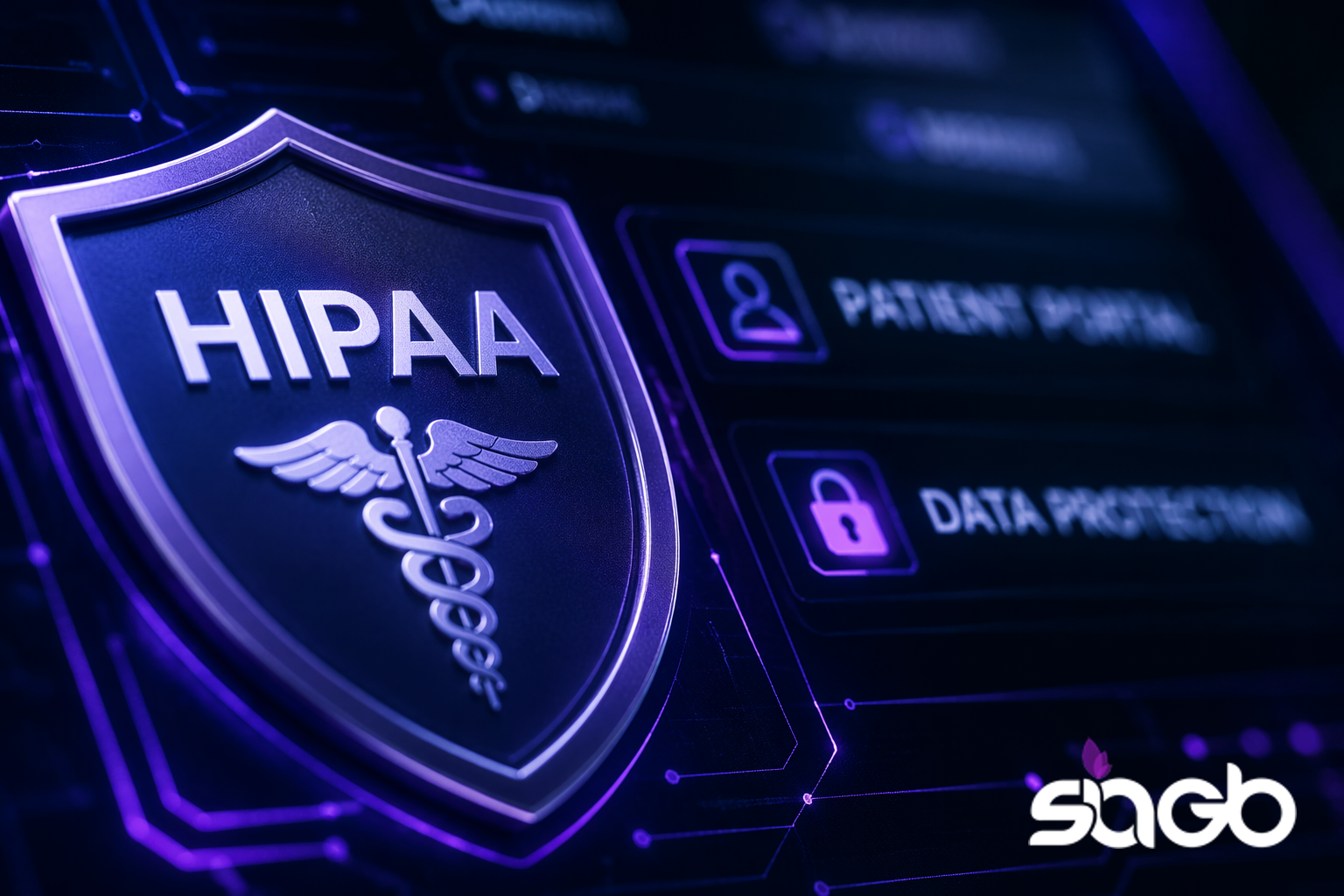
HIPAA cybersecurity obligations apply to all systems handling patient data. The HIPAA Security Rule requires safeguards for confidentiality, integrity, and availability of health information.
Patient portals are prime targets. So are recall systems and online messaging tools. Attackers know these systems store protected health information and login credentials. A HIPAA compliant website must enforce encryption, strong authentication, and detailed audit trails.
An ADA compliant patient portal also supports better security. Clear navigation reduces user errors. Strong access controls limit unauthorized access. Healthcare data breaches often start with weak portals, not core databases.
HIPAA cybersecurity isn’t optional. It’s the baseline for any healthcare provider handling sensitive information, including patient recall systems and secure messaging.
AI, SEO, and Automation in Healthcare Marketing
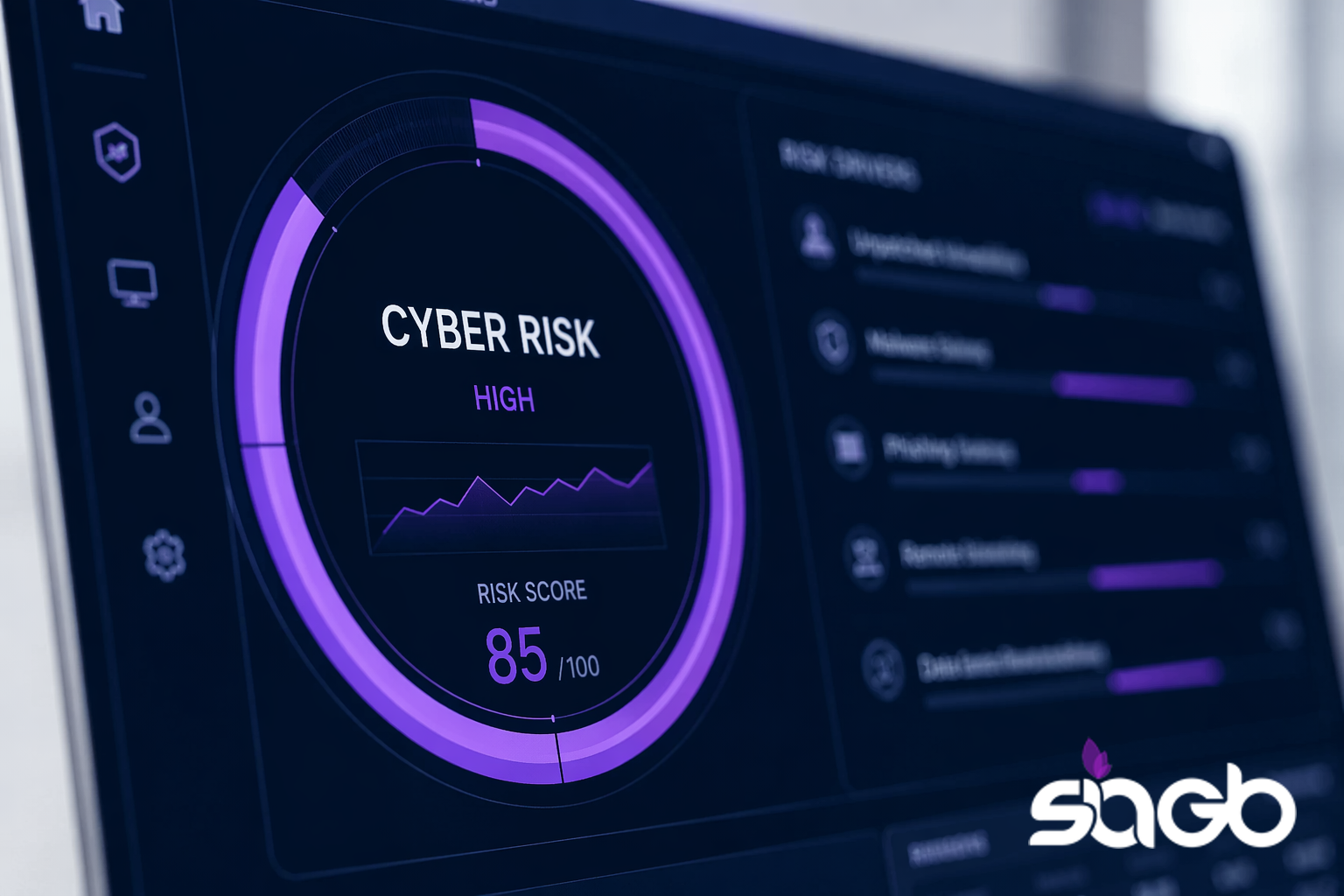
AI tools now shape how clinics attract, inform, and retain patients. AI SEO healthcare strategies, answer engine optimization medical approaches, and agentic SEO systems are becoming standard across competitive practices.
AI content medical practice workflows speed up publishing, but they also touch live websites and analytics. Automated SEO agents and AI agents for SEO can introduce risk if access controls are weak. Agentic AI for marketing often connects SEO, reviews, chatbots, and analytics in one stack.
That said, well-designed AI reduces risk. AI SEO automation cuts down manual errors. Secure agentic SEO tools track changes, flag anomalies, and support healthcare SEO strategy without exposing admin access.
This is where experienced AI consulting matters. Teams like SIAGB approach AI problem-first, whether it’s healthcare, education, or even AI consulting for retail businesses. The same security principles apply across industries when AI is built end to end.
AI-Powered Security Monitoring in Healthcare
AI-powered monitoring spots unusual behavior faster than humans. It flags abnormal logins, data access spikes, and suspicious patterns across healthcare systems.
Agentic SEO and AI SEO automation tools can also support security when built correctly. They track changes, alert on anomalies, and reduce blind spots. Automation allows faster response when a cyber incident hits.
This isn’t hype. According to the US Cybersecurity and Infrastructure Security Agency (CISA), early detection significantly reduces the impact of cyberattacks. Speed really matters.
Cybersecurity, Google Reviews and Patient Reputation
Data breaches don’t stay private. Patients talk. And they leave reviews.
Google reviews medical practice ratings often fall after a breach. Patients link security failures with poor care, even when clinical quality is strong. Online reputation healthcare depends on trust.
Secure systems support reliable patient review management and recall workflows. When systems fail, messages go out late. Appointments get missed. Frustration shows up online.
Reputation management doctors rely on stable platforms. Cybersecurity underpins that stability, whether people realize it or not.
Reactive vs Proactive Cybersecurity Strategies
Reactive cybersecurity fixes problems after damage occurs. A breach happens. Then systems get patched. Costs spike. Trust drops.
Proactive strategies start with business risk. They map where healthcare data flows. They prioritize patient-facing systems. They align security, accessibility, SEO, and AI decisions together.
Medical practice data security improves when clinics take end-to-end oversight. Fewer vendors. Clear ownership. Ongoing monitoring. Long-term costs drop. Disruption reduces.
Proactive cybersecurity isn’t cheaper upfront. It’s cheaper over time. Trust me on this.
Here’s how the two approaches compare across the factors that matter most to a clinic.
| Factor | Reactive Cybersecurity | Proactive Cybersecurity |
|---|---|---|
| Trigger | Fixes problems after a breach happens | Starts with business risk before an incident |
| Focus | Patches systems once damage occurs | Maps where healthcare data flows first |
| Priority | Reacts to whatever failed | Prioritizes patient-facing systems |
| Alignment | Security treated as a separate project | Security, accessibility, SEO, and AI aligned together |
| Upfront cost | Lower to start | Higher to start |
| Long-term cost | Costs spike after each incident | Long-term costs drop as disruption reduces |
| Patient trust | Drops after a breach | Protected through stability and oversight |
Infographic: Where Cyber Risk Hides in a Modern Clinic
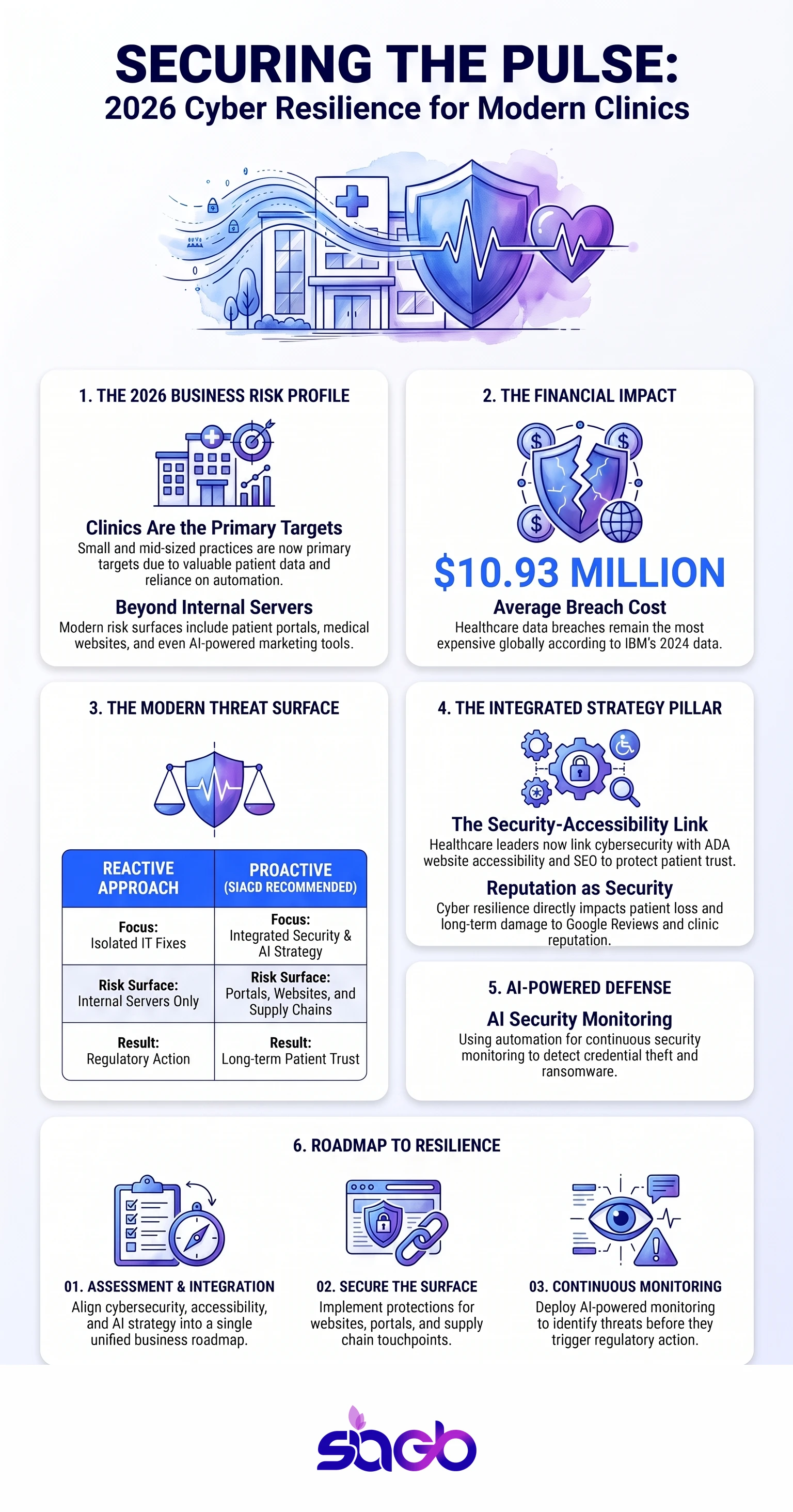
A modern medical website connects to portals, chatbots, recall systems, analytics, and AI SEO tools. Each connection adds risk.
This infographic maps common blind spots across an AI optimized website healthcare setup. It helps clinics see hidden exposure points and prioritize fixes that actually matter.
A Practical Roadmap to Reduce Cyber Risk in Clinics
Start with patient-facing systems. Websites, portals, forms, and messaging tools handle the most sensitive data. Review how healthcare data moves between them.
Next, align accessibility, SEO, AI, and security decisions. A healthcare website redesign should address WCAG, HIPAA, performance, and cybersecurity together. Medical practice SEO and healthcare SEO strategy should never bypass security controls.
Finally, prioritize by risk, not fear. Focus on likely attack paths. Reduce complexity. Improve visibility. Cybersecurity improves when decisions support the business, not when tools pile up.
Frequently Asked Questions
What are the biggest healthcare cybersecurity threats for clinics?
The biggest threats include ransomware attacks, phishing, insecure websites, and third-party tool exposure. Most data breaches start at patient-facing systems, not internal servers.
How do healthcare website accessibility and cybersecurity connect?
Accessible websites use cleaner code and clearer structure. This reduces errors, improves monitoring, and lowers security risk over time.
Are small medical practices really targeted by cyber criminals?
Yes. Smaller healthcare providers are often targeted because they have fewer controls. Attackers see them as easier entry points.
Do AI tools increase cybersecurity risk in healthcare?
They can if poorly designed. Secure AI reduces human error and improves monitoring when implemented correctly.
What is the first step to improving cybersecurity in a clinic?
Map how patient data flows across websites, portals, AI tools, and patient recall systems. Then secure the highest-risk systems first.
Key Takeaways for Healthcare Leaders
Healthcare cybersecurity risks now touch every part of a clinic. Websites, AI tools, accessibility, SEO, and reputation are tightly linked. Cybersecurity for doctors isn’t optional or isolated anymore.
Clinics that invest in proactive, end-to-end strategies protect patients, reduce data breaches, and support growth. Accessibility and compliance strengthen security outcomes. And trust, once protected, tends to compound over time.
Sources
- Industry-standard reference materials
- Peer-reviewed research and clinical guidelines

Thinking about how this applies to your business?
Start a Conversation