
HIPAA cybersecurity is the set of security and compliance controls that protect electronic protected health information across websites, portals, and AI systems. It matters because weak security breaks trust, disrupts care, and slows growth. For modern practices, strong cyber security supports safe operations, not just regulation. The rules are not vague either. The HIPAA Security Rule lives in 45 CFR Part 164, Subparts A and C, and the Breach Notification Rule sits in Subpart D, so every safeguard below maps to a specific legal citation you can point an auditor to.
Introduction
Healthcare is digital now. Patients book online, message staff, and expect fast replies. Many practices also use AI, chatbots, and automated marketing. That’s where HIPAA security really comes into play. It protects sensitive patient data across the whole organization, not just the EHR. The exposure is real: the HHS Office for Civil Rights breach portal (the so-called Wall of Shame) logged more than 700 breaches affecting 500 or more people in a single year, and the IBM Cost of a Data Breach report has pegged healthcare as the most expensive sector at roughly 9.8 to 10.9 million dollars per breach for several years running.
Look, most breaches don’t start with hackers in hoodies. They usually start with a form, a plugin, or a rushed website update. In our work with medical groups, the pattern repeats. A small change slips through, and suddenly security rule gaps and hipaa compliance issues appear at the same time. One overlooked example that cost dozens of health systems dearly: the Meta Pixel and Google Analytics tags many marketing teams paste site-wide were quietly transmitting appointment data and diagnoses to third parties, which OCR flagged as an impermissible disclosure in a December 2022 bulletin.
This guide focuses on real risks and real controls. It’s written for US practices using modern tools, including those that share data with partners, vendors, and other covered entities. No hype here. Just practical guidance that fits busy clinics and real organizations. We build AI-powered patient scheduling for medical groups, so the controls here are the same ones we apply to production systems, not theory.
What Is HIPAA Cybersecurity and Why It Matters
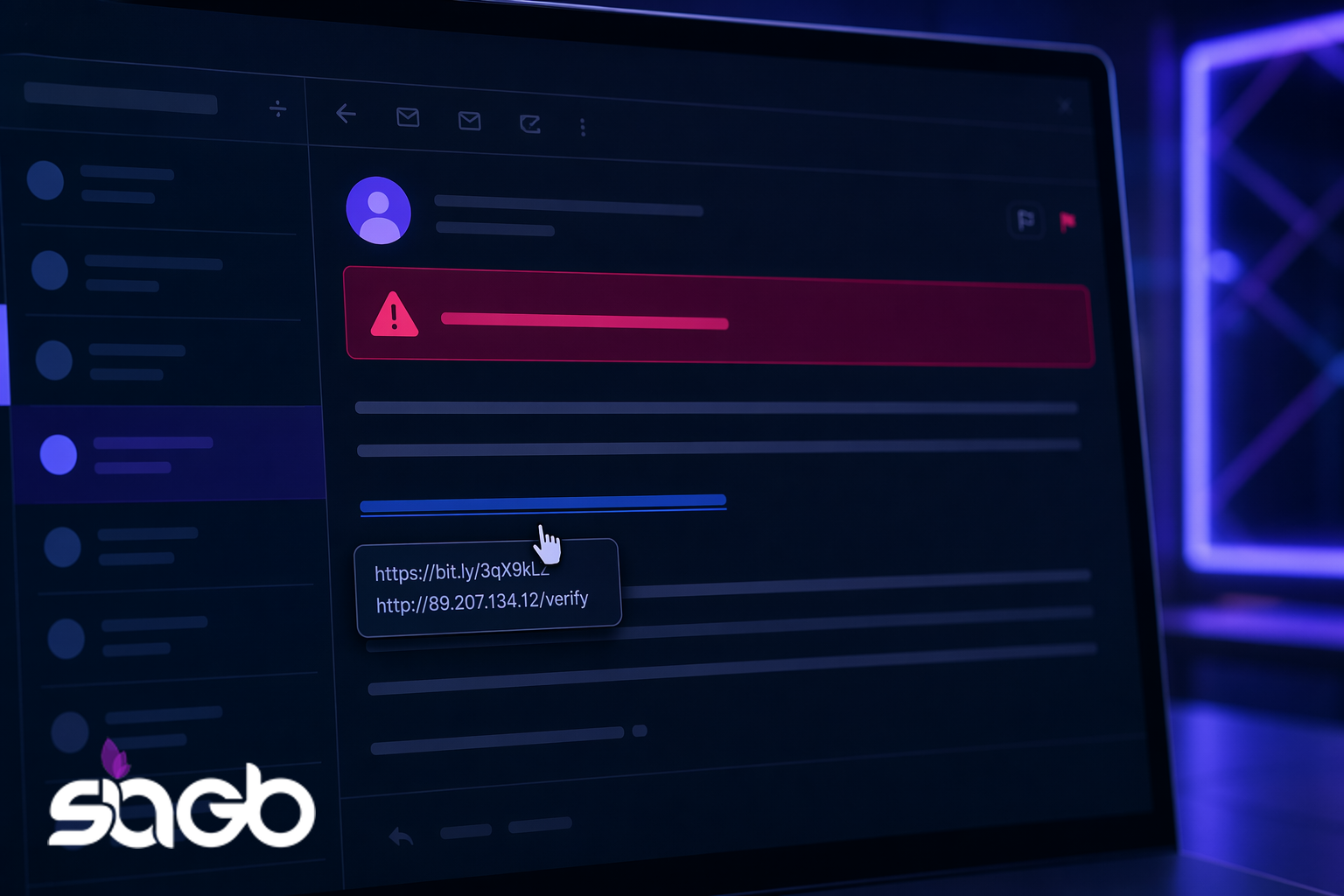
HIPAA cybersecurity is the set of security measures required to protect protected health information. It applies to electronic protected health information created, received, or stored by a covered entity and its partners. The goal is simple. Prevent unauthorized access, misuse, or loss of sensitive information.
The HIPAA Security Rule explains how data must be protected. It defines technical safeguards (164.312), administrative safeguards (164.308), and physical safeguards (164.310). The HIPAA Privacy Rule focuses on how data is used and shared. Together, the security rule and privacy rule form the foundation of hipaa compliance and hipaa privacy. Getting this wrong is expensive: as of 2024 the tiered civil penalties run from about 137 dollars per violation at the low end up to 68,928 dollars per violation, capped near 2.07 million dollars for identical violations in a single calendar year, and OCR settlements in the hundreds of thousands are routine.
Why does this matter for every US practice? Almost all organizations handle electronic protected health information, integrate third party platforms, or work with business associates and other covered entities. In those cases, hipaa regulation and hipaa requirements apply directly, and every vendor that touches PHI needs a signed Business Associate Agreement under 164.502(e). And even beyond the legal minimum, following hipaa standards improves information security overall. Patients expect this level of care.
Here is how the two main rules divide the work in practice:
| Dimension | HIPAA Security Rule (164.302-318) | HIPAA Privacy Rule (164.500-534) |
|---|---|---|
| Protects | Electronic PHI only (ePHI) | All PHI: oral, paper, and electronic |
| Core concern | Confidentiality, integrity, availability | Permitted uses and disclosures |
| Typical controls | Encryption, access control, audit logs | Minimum necessary, patient consent, notices |
| Website relevance | TLS, role-based access, logging | Forms, chatbots, tracking pixels, marketing |
| Breach clock | 60 days to notify (164.404) | 60 days to notify affected individuals |
| Who enforces | HHS Office for Civil Rights (OCR) | HHS Office for Civil Rights (OCR) |
HIPAA Cybersecurity Requirements Explained Simply
HIPAA requirements fall into three clear areas under the security rule.
Administrative safeguards cover policies, training, risk analysis, and risk management. Every organization needs a clear owner for this work. Without one, hipaa compliance drifts and reviews don’t happen.
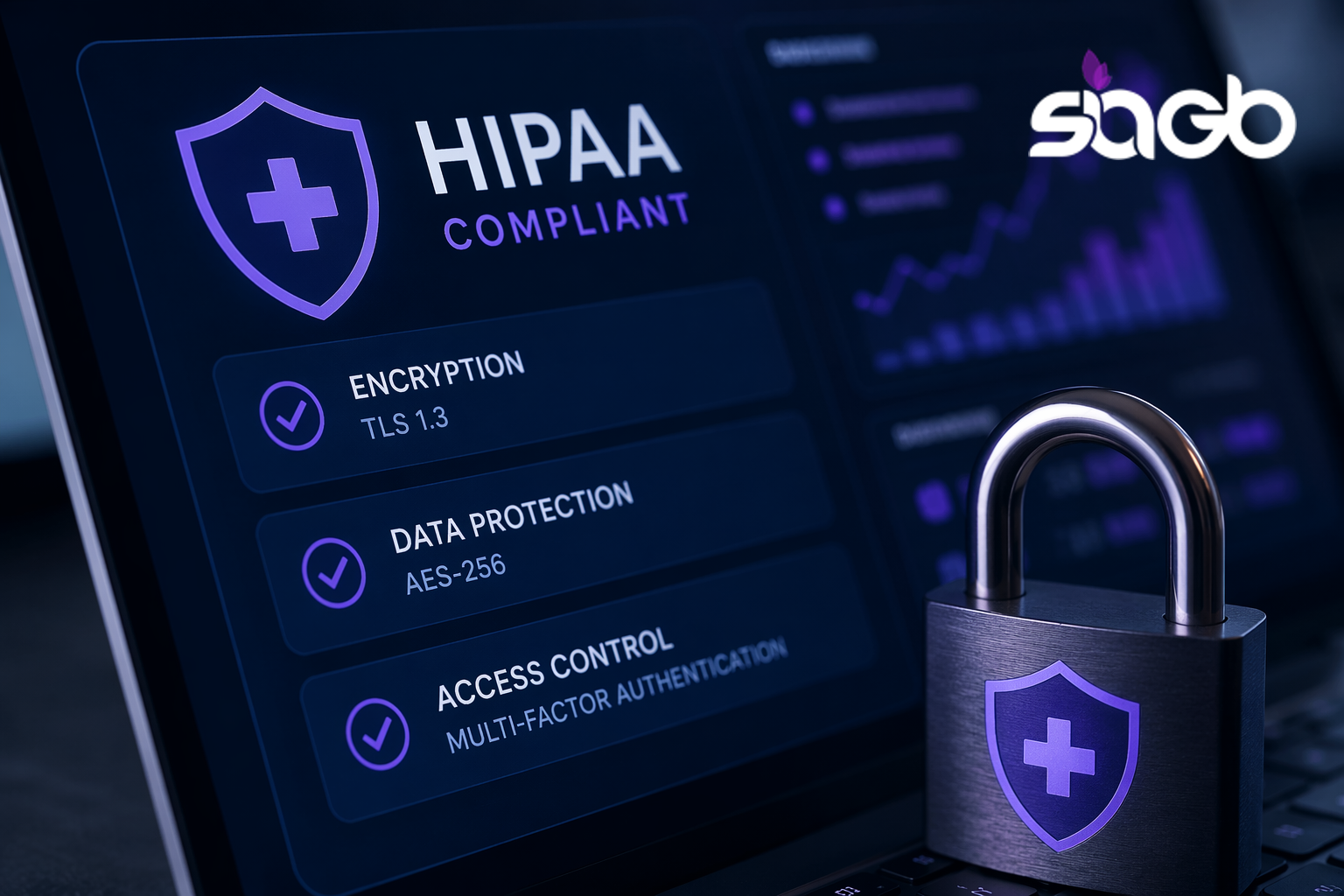
Technical safeguards include access control, audit logs, encryption, and network security. These security measures protect systems every day. In concrete terms that means TLS 1.2 or 1.3 for data in transit, AES-256 for data at rest, unique user IDs, automatic logoff, and an audit trail you can actually query. Missing a technical safeguard increases the chance of a hipaa violation. We track failed login attempts and privileged access changes in a central log because that is exactly what OCR asks for during an investigation.
Physical safeguards cover devices, servers, and office access. Lost laptops and shared workstations still cause breaches, especially when sensitive patient data is involved.
Together, these controls form a practical security rule framework. Many covered entities struggle where systems connect. A website talks to a CRM. The CRM talks to marketing tools. Without coordination across the organization, security and compliance fall through the cracks.
Common Healthcare Cybersecurity Threats Facing Doctors
Healthcare faces constant cybersecurity threat pressure. Ransomware is common: the 2024 Change Healthcare attack, tied to the ALPHV/BlackCat group, disrupted claims processing for thousands of US providers and exposed data on an estimated 100 million-plus people. Phishing targets staff inboxes daily. Credential theft leads to unauthorized access when passwords are reused, which is why NIST SP 800-63B guidance and multi-factor authentication belong on every clinical login.
Third party tools add more risk. Scheduling apps, chat tools, WordPress plugins, and analytics tags may not meet hipaa security rule requirements. One weak vendor can expose sensitive patient data and trigger a data breach. In our audits the usual culprits are a chat widget with no BAA, a contact form emailing PHI in plain text, and an outdated plugin with a known CVE that nobody patched for months.
Doctors are targeted because speed matters. Care comes first. That’s why cyber security and cybersecurity measures must fit real workflows. Most breaches I see start small. A click. A form. A missed update. Then escalation follows.
HIPAA Compliant Websites and Patient Portals
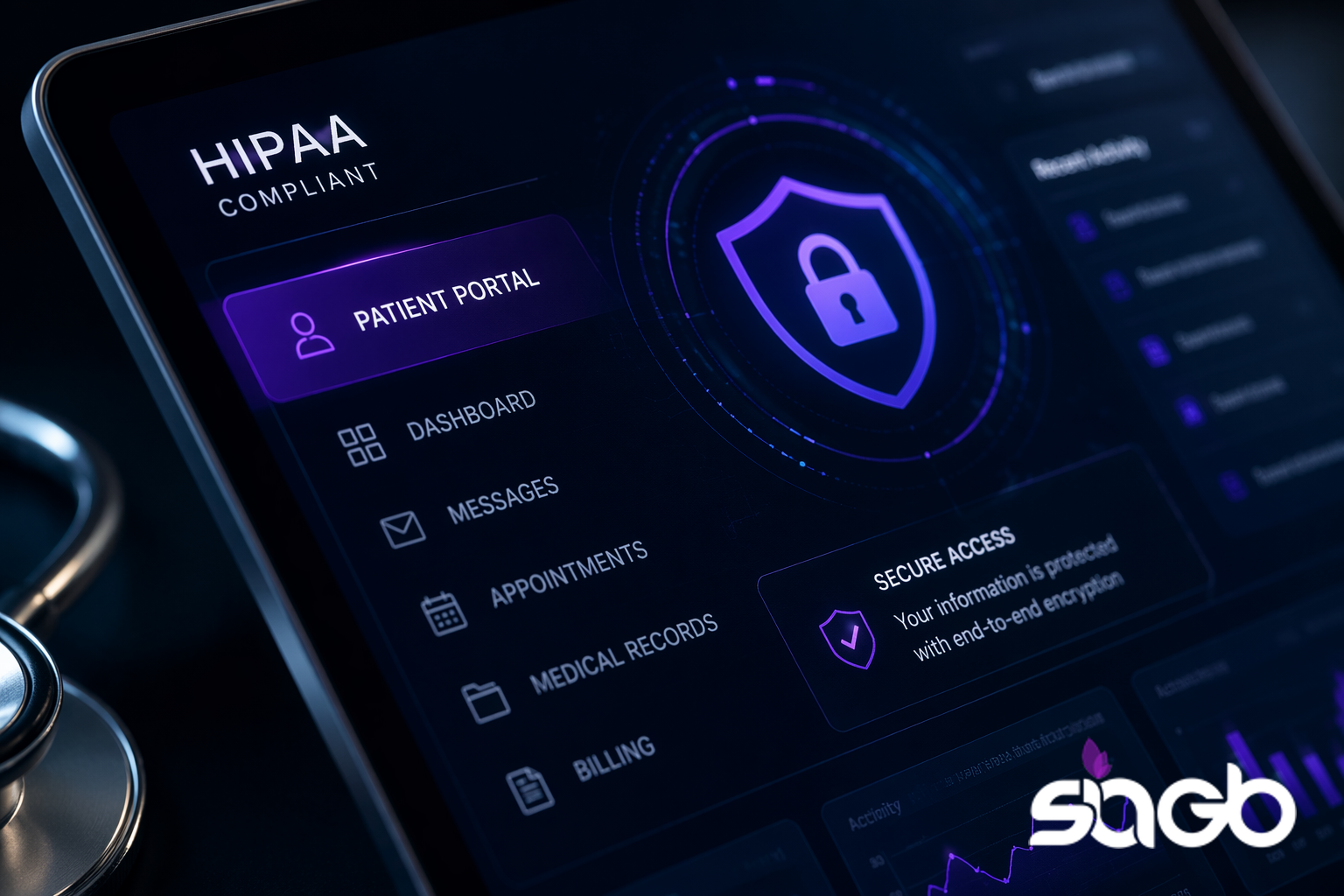
A hipaa compliant website needs more than SSL. Security must cover how data moves through the organization. Forms, chatbots, portals, CRMs, and EHRs all matter.
Data should be encrypted in transit and at rest. Access should be limited by role. Activity logs must be reviewed. That’s hipaa security rule practice in action.
Patient portals increase complexity. An ADA compliant portal must meet accessibility and security rule needs together, which in practice means WCAG 2.1 (and now 2.2) Level AA. Medical website design should plan for hipaa privacy, technical safeguards, and usability at the same time. We also hold portals to Core Web Vitals thresholds (Largest Contentful Paint under 2.5 seconds, Interaction to Next Paint under 200 milliseconds, Cumulative Layout Shift under 0.1) because a slow portal pushes patients toward insecure workarounds like emailing records. When teams don’t align, hipaa compliance suffers.
Healthcare Website Accessibility and Security Overlap
Accessibility and security overlap more than people expect. Clear labels reduce mistakes. Proper roles reduce unauthorized access. Accessibility supports the security rule when done right.
Poor accessibility can create risk. Custom widgets sometimes bypass safeguards. That’s often how a hipaa violation begins.
ADA lawsuits often uncover deeper issues. Fixing accessibility late can break security measures. Planning early helps the whole organization stay compliant.
AI Tools, Chatbots, and Automated SEO in Healthcare
AI tools now touch many systems. Chatbots answer questions. SEO tools update content. AI agents sometimes scan logs or forms.
Here’s the risk. These tools may touch sensitive data. Without limits, they can create unauthorized access paths. Governance matters.
Here is a rule we apply without exception: consumer AI tools like the public ChatGPT, Perplexity, or Google AI Overviews are not HIPAA eligible by default, and pasting a patient chart into them is a disclosure. If you want generative AI in a clinical workflow, you need an enterprise tier with a signed BAA (OpenAI, Microsoft Azure OpenAI, and Google offer these) and a documented data-handling boundary. AI use must follow hipaa standards. Access should be restricted. Logs reviewed. Regular penetration testing, ideally at least annually and after major releases, helps confirm cybersecurity measures work as expected. AI can help organizations move faster, but only with the right safeguard in place.
Reputation Management and Patient Communication Risks
Online reviews and messaging create hidden risk. Staff replies can expose sensitive patient data if not reviewed.
Recall systems and reminders carry similar risk. SMS and email must follow security policy rules and hipaa privacy expectations. Automation helps only when monitored.
Every organization should review who has access, where data is stored, and how breach notification would work if something goes wrong.
Security Considerations During Healthcare Website Redesigns
Redesigns are high risk moments. New plugins. New vendors. New data flows. Security rule checks are often skipped.
A modern healthcare website should build hipaa compliance from day one. Data mapping, logging, and technical safeguards must be planned early.
Clear ownership matters. When one organization owns design, build, and monitoring, gaps are reduced. Gaps lead to breaches and breach notification obligations.
Cybersecurity Governance for AI Driven Medical Practices
Governance keeps systems safe over time. It defines access, review cycles, and response plans.
Covered entities should prepare for breach notification rule steps before an incident. Breach notification planning reduces chaos during a real event.
Regular reviews, penetration testing, and staff training support hipaa security and long term compliance. Governance turns rules into daily practice.
How AI Consulting Supports Secure Healthcare Systems
Problem first AI consulting starts with risk, not tools. It looks at outcomes, workflows, and hipaa requirements.
SIAGB supports organizations end to end across websites, AI, and security. One team reduces handoffs and lowers the risk of hipaa violation. We ship real systems at scale: our Marvel PTE platform serves 85,000-plus users across 900-plus institutes, and we build AI-powered patient scheduling for medical groups, so the safeguards described here are ones we run in production.
Experience across healthcare and regulated industries helps. The practice is led by founder Sheetal Dhadial, who brings 20-plus years of IT and AI leadership and holds Certified Scrum Master and AgilePM credentials, so security, governance, and delivery stay connected rather than siloed. Strong information security, clear governance, and real world delivery sit at the center of this work. We are based in Sydney (ABN 16 659 507 178) and work with US medical practices on HIPAA-aligned websites and AI systems.
Infographic: HIPAA Cybersecurity Across the Digital Patient Journey
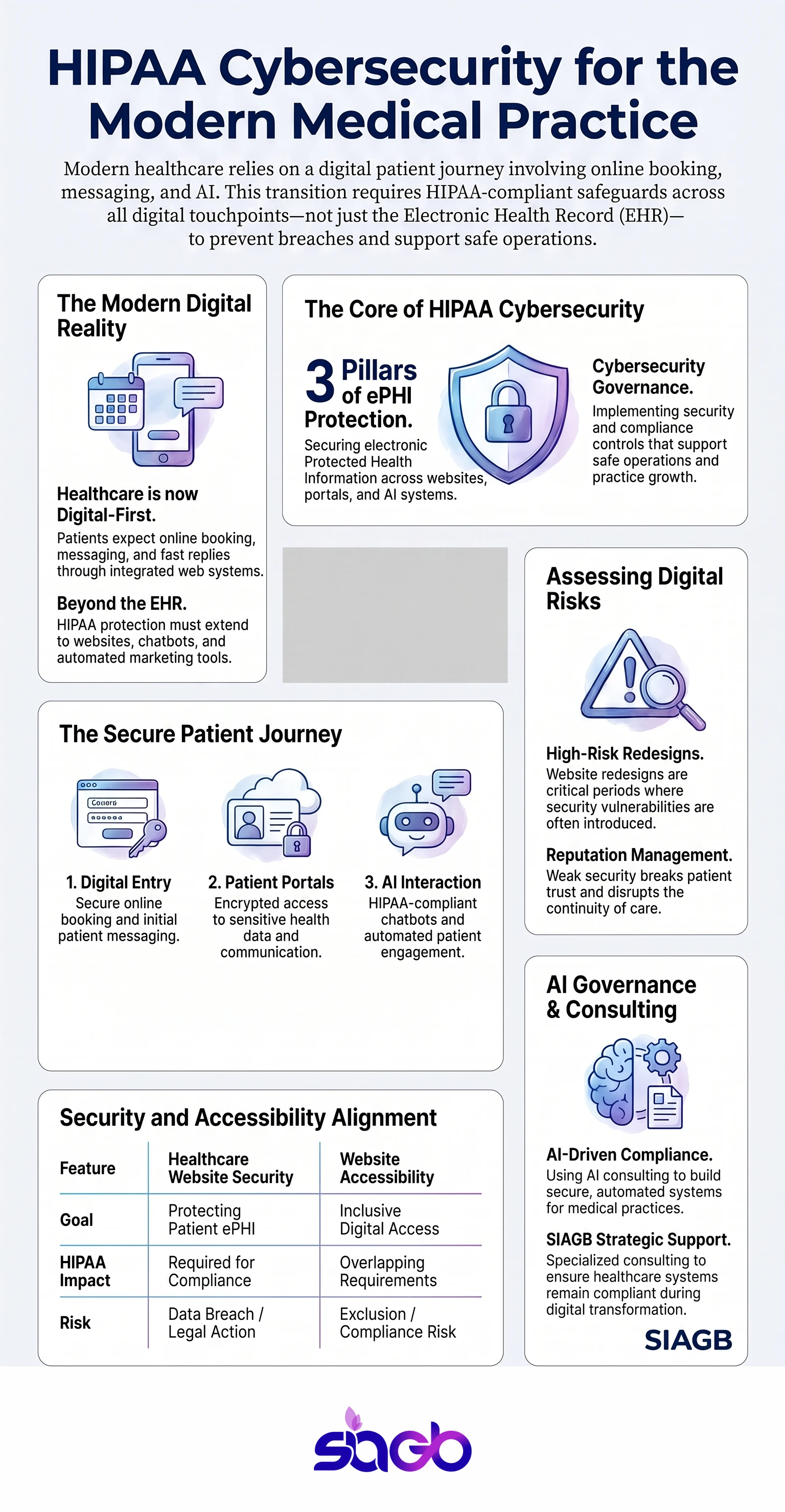
This infographic shows how data moves from website to portal to EHR. It highlights risk points, safeguards, and compliance checks. It also shows where AI systems, security rule controls, and accessibility intersect across the organization.
Frequently Asked Questions
Does HIPAA cybersecurity apply to my medical practice?
Yes. If your organization creates, receives, or stores electronic protected health information, or works with covered entities and business associates, hipaa compliance applies. Beyond the legal requirement, the security rule improves overall cyber security.
What is the biggest HIPAA cybersecurity risk for small clinics?
Third party tools. Forms, plugins, and chat tools often lack proper cybersecurity measures. One weak link can lead to a breach.
Are AI chatbots allowed under HIPAA rules?
Yes, with controls. Access must be limited, logged, and reviewed. Strong governance and vendor checks are essential.
What happens after a HIPAA breach?
Covered entities must follow the breach notification rule. That includes breach notification to affected parties and regulators within required timeframes.
How does accessibility affect HIPAA compliance?
Accessibility changes code and workflows. Poor implementation can bypass safeguards. Planning accessibility and security together supports hipaa security rule goals.
Key Takeaways and Final Thoughts
HIPAA cybersecurity supports trust and growth. It protects patients, staff, and the organization.
Strong hipaa compliance connects websites, AI, accessibility, and security rule controls. Treating them separately increases risk.
Plan early. Review often. Test controls. Clear governance and practical safeguards protect sensitive patient data and support better care.
Sources
- Industry-standard reference materials
- Peer-reviewed research and clinical guidelines

Want to explore this further?
Book a Free Consultation