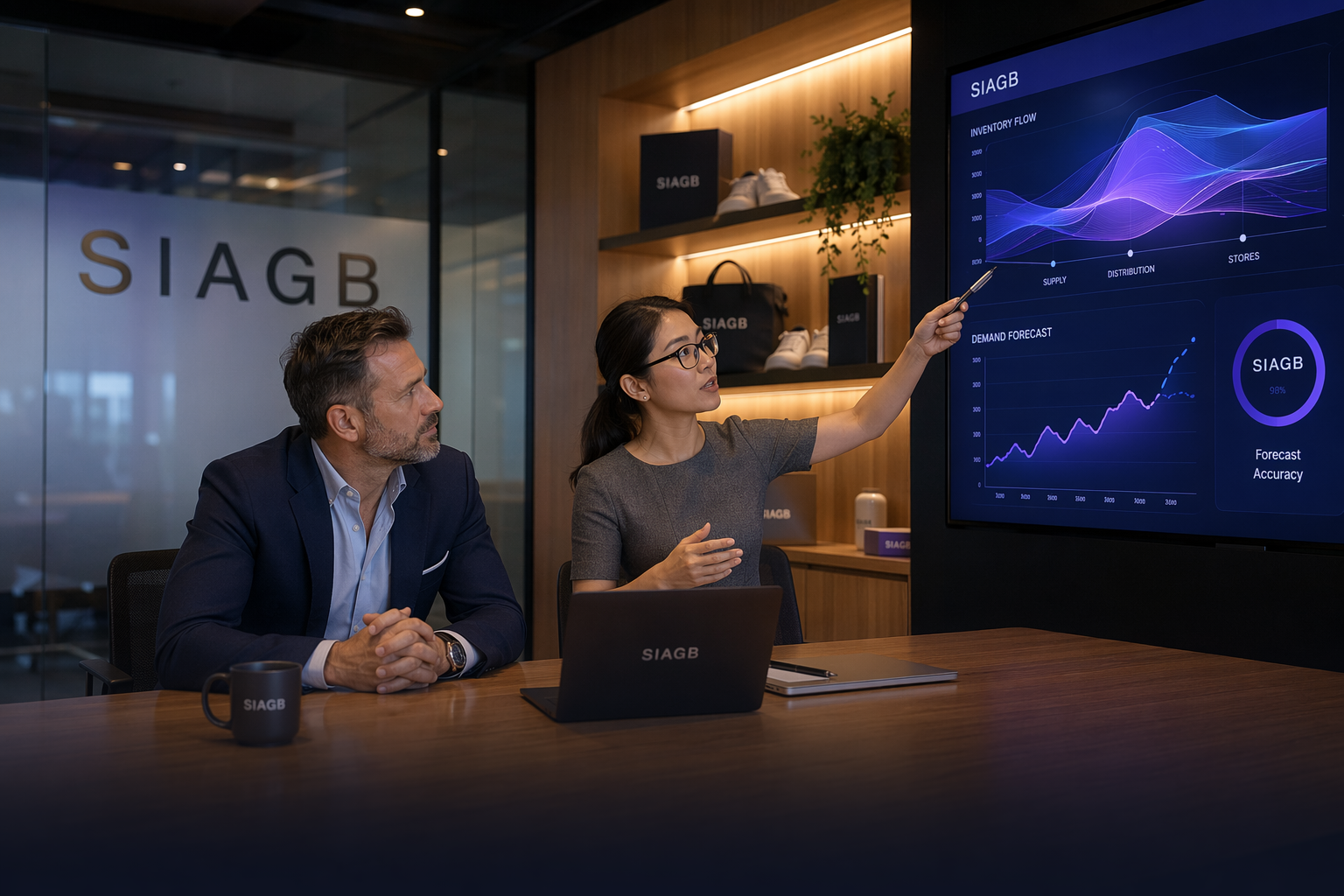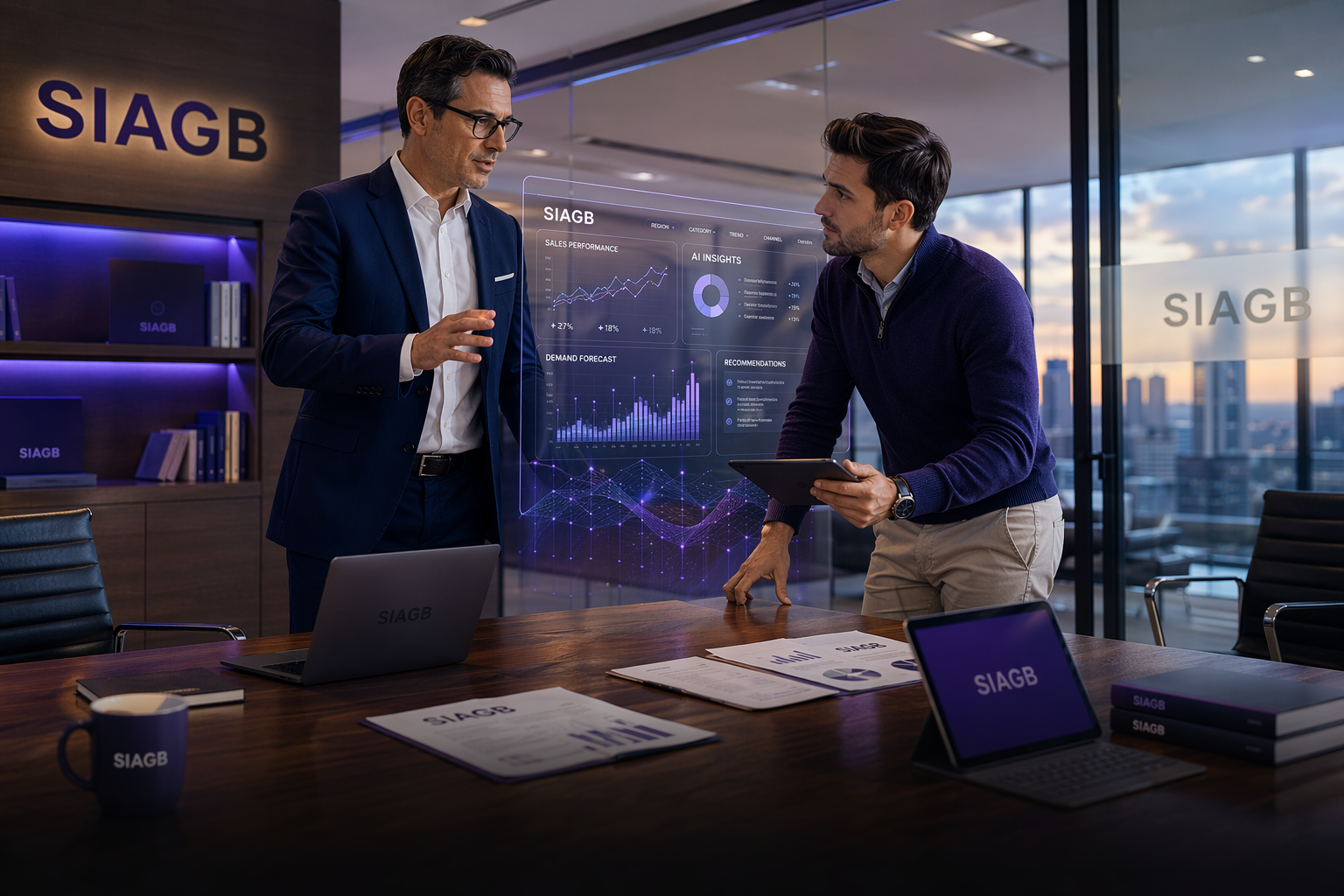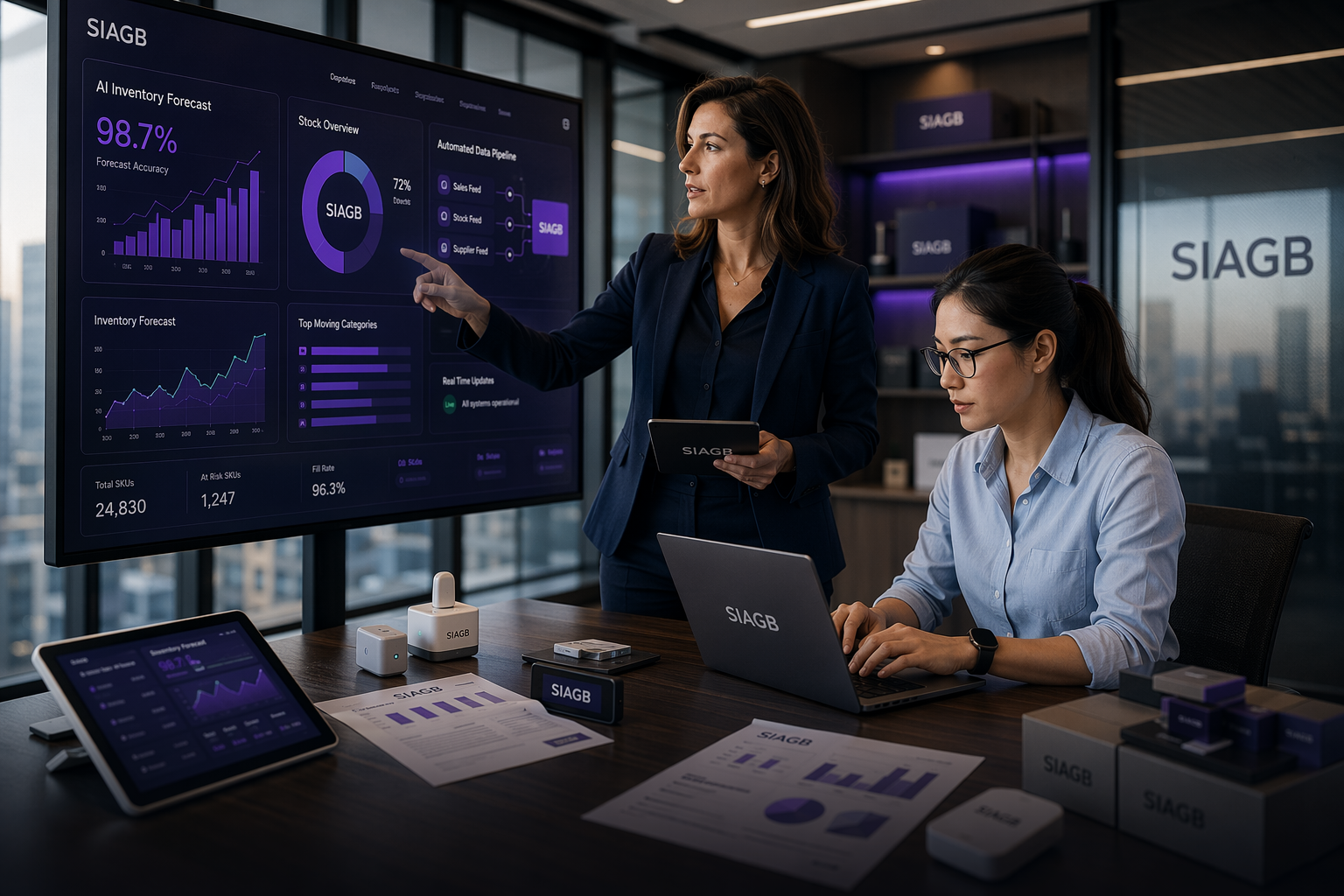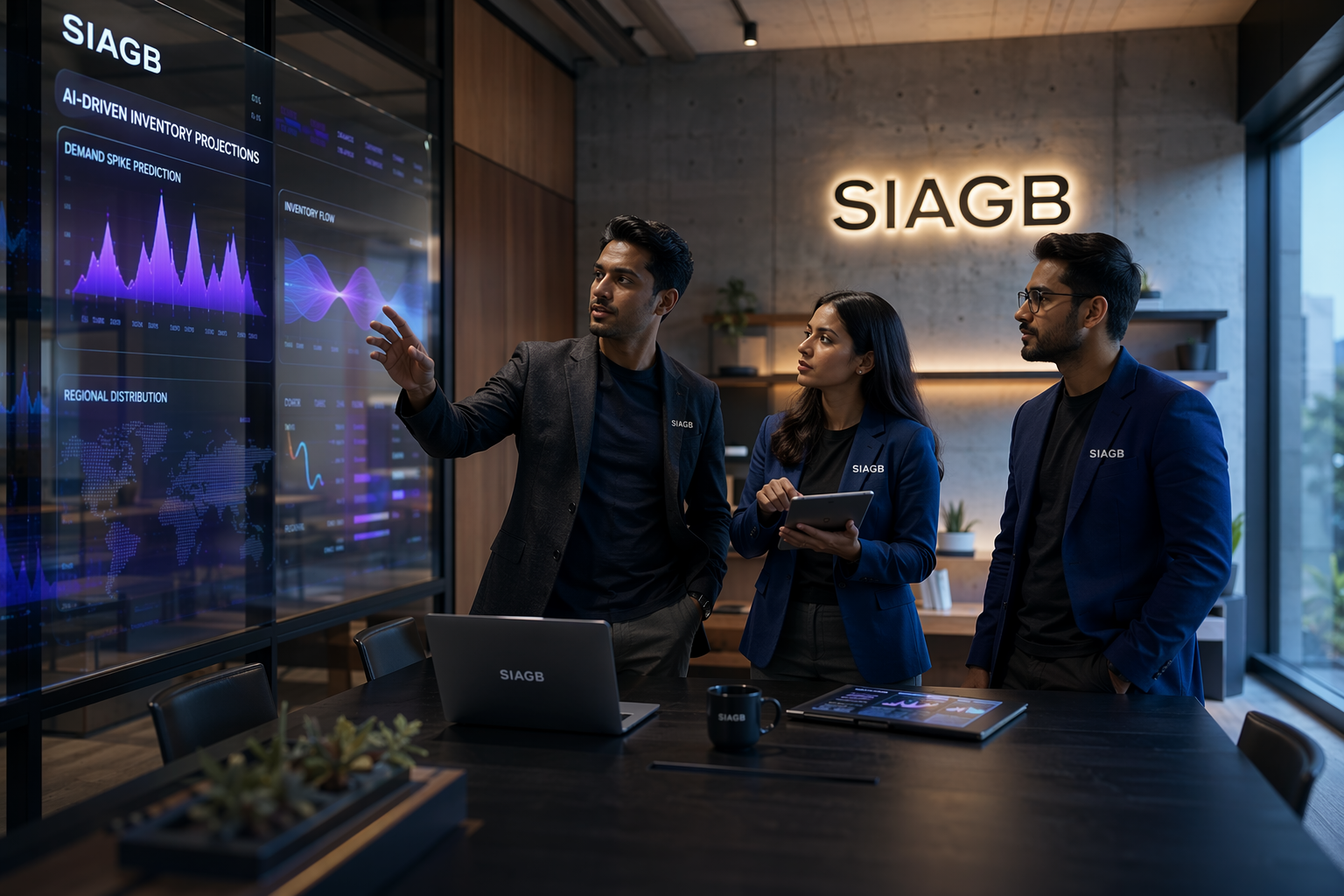
Retail AI analytics solutions services help retailers turn messy data into clear actions. They focus on real problems such as excess inventory, missed demand, and rising costs. Instead of more dashboards, AI driven analytics gives decisions teams can actually use, often within 5 to 10 minutes rather than the next weekly report. At SIAGB, this same problem-first thinking also underpins work across healthcare website redesign, medical practice website design, and AI consulting for retail businesses.
Introduction
Retail is getting harder. Costs keep rising. Margins stay thin. And data is scattered across POS, inventory, supply chain, and customer systems. Many United States retailers feel data rich but insight poor. Sound familiar?
Here’s the thing. Retail AI analytics solutions services aren’t about fancy charts or buzzwords. They focus on fixing business problems first, such as reducing stockouts, improving customer experience, and cutting manual work. That mindset mirrors how SIAGB approaches healthcare website accessibility, WCAG 2.2 AA healthcare website compliance, and modern medical website builds.
So, what will you get from this? You’ll learn what retail AI analytics really is, how it differs from traditional tools, and where it delivers value in the retail industry. We’ll also look at data readiness, real US examples across grocery, apparel, and convenience chains, and why a problem-first approach to AI consulting for retail businesses actually works. In our work with a founder-led team carrying 20 plus years of IT and AI leadership, we’ve learned the mindset matters more than the model.
What Are Retail AI Analytics Solutions?
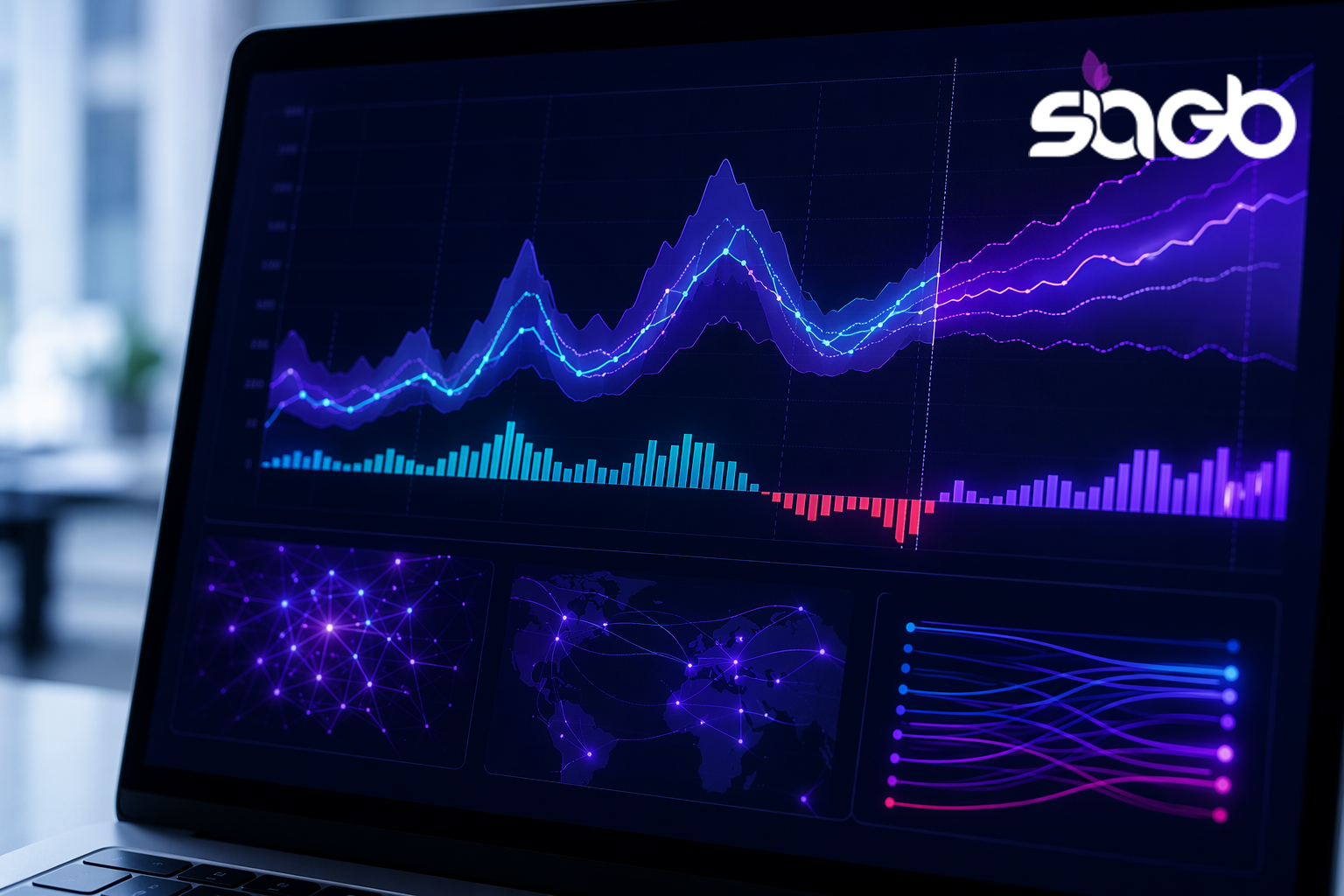
Retail AI analytics uses machine learning and automation to analyze data from across a retail business and guide decisions. It looks at patterns in sales, inventory, supply chain, and customer behavior. Then it predicts what’s likely to happen next and suggests actions. A single mid-size US chain with 40 stores can generate 2 to 3 million transaction rows a month, far more than any analyst can read by hand.
Traditional retail analytics usually shows what already happened. AI driven systems go further. They explain why it happened and what to do now. Compared with a static monthly report, a model can re-score demand every 24 hours. That difference matters when conditions shift fast, just as it does in AI SEO healthcare and answer engine optimization medical strategies.
A retail analytics solution can support many decisions. For example, pricing changes based on demand, inventory management across retail stores and warehouses, customer service improvements tied to real customer interaction, and merchandising choices backed by data rather than gut feel. Data from the National Retail Federation shows US retail shrink reached roughly 1.6 percent of sales, so even a small accuracy gain protects real margin.
In simple terms, retail analytics solutions turn raw data into actionable insights. They help retailers move from reporting to decision making. And yes, they adapt as conditions change. That’s kind of the point.
Traditional BI Tools vs AI-Native Retail Analytics
Traditional business intelligence tools rely on rules and static reports. Platforms such as Google Analytics 4, Power BI, or Tableau show trends after the fact. They’re useful, but limited. Unlike a rules engine, a learning model does not need you to define the threshold in advance.
AI native analytics works differently. An AI system learns from data analytics over time. It spots patterns humans miss. And it updates as new customer data and sales data comes in. This learning loop is similar to agentic SEO and AI agents used in advanced healthcare SEO strategy work.
The contrast is easiest to see side by side:
| Capability | Traditional BI (Power BI, Tableau, GA4) | AI-native retail analytics |
|---|---|---|
| Time horizon | Reports the past 30 to 90 days | Forecasts the next 1 to 12 weeks |
| Refresh cadence | Manual, often weekly | Continuous, every 1 to 24 hours |
| Root cause | You interpret the chart | Model links the drop to a driver |
| Handling of messy data | Breaks on gaps and duplicates | Tolerates 5 to 15 percent missing rows |
| Setup effort | Static rules per report | Learns from history in 4 to 8 weeks |
| Output | A dashboard to read | A ranked action to take |
Here’s what happens in practice. A dashboard might show falling sales. AI algorithms link that drop to inventory gaps, demand shifts, or supply chain delays. Whereas a static report waits for month-end, the model flags the issue 3 to 14 days earlier.
Static reports don’t adapt well when conditions shift. Smarter retail analytics solutions do. That’s why many US retailers outgrow basic tools and start looking for a more predictive analytics approach.
Common Retail Problems AI Analytics Solves
Retail AI analytics works best when problems are connected and messy. The retail sector has plenty of those.
Demand forecasting is a big one. For instance, predictive analytics reduces overstock and stockouts by learning from sales patterns, seasonality, and local consumer behavior. In our work with US retailers, a lift of 10 to 15 points in forecast accuracy often frees 20 to 30 days of tied-up working capital. Better forecasting leads to healthier inventory levels. Fewer surprises.
Shrinkage is another challenge. Pattern analysis across transactions, stock movements, and store operation data can highlight risks early. Rather than reviewing exceptions once a quarter, a model scores every basket in near real time. That protects margin, which matters more than ever.
Customer experience also improves. Analytics connects online and in-store journeys. Specifically, it shows where customer interaction breaks down or where a checkout wait over 4 minutes hurts customer engagement. That same insight-driven approach is used in Google reviews medical practice analysis and patient review management programs.
And yes, it saves time. Automated reporting replaces manual spreadsheets. Teams focus on decisions, not data prep. Exactly.
Data Readiness in Real Retail Environments
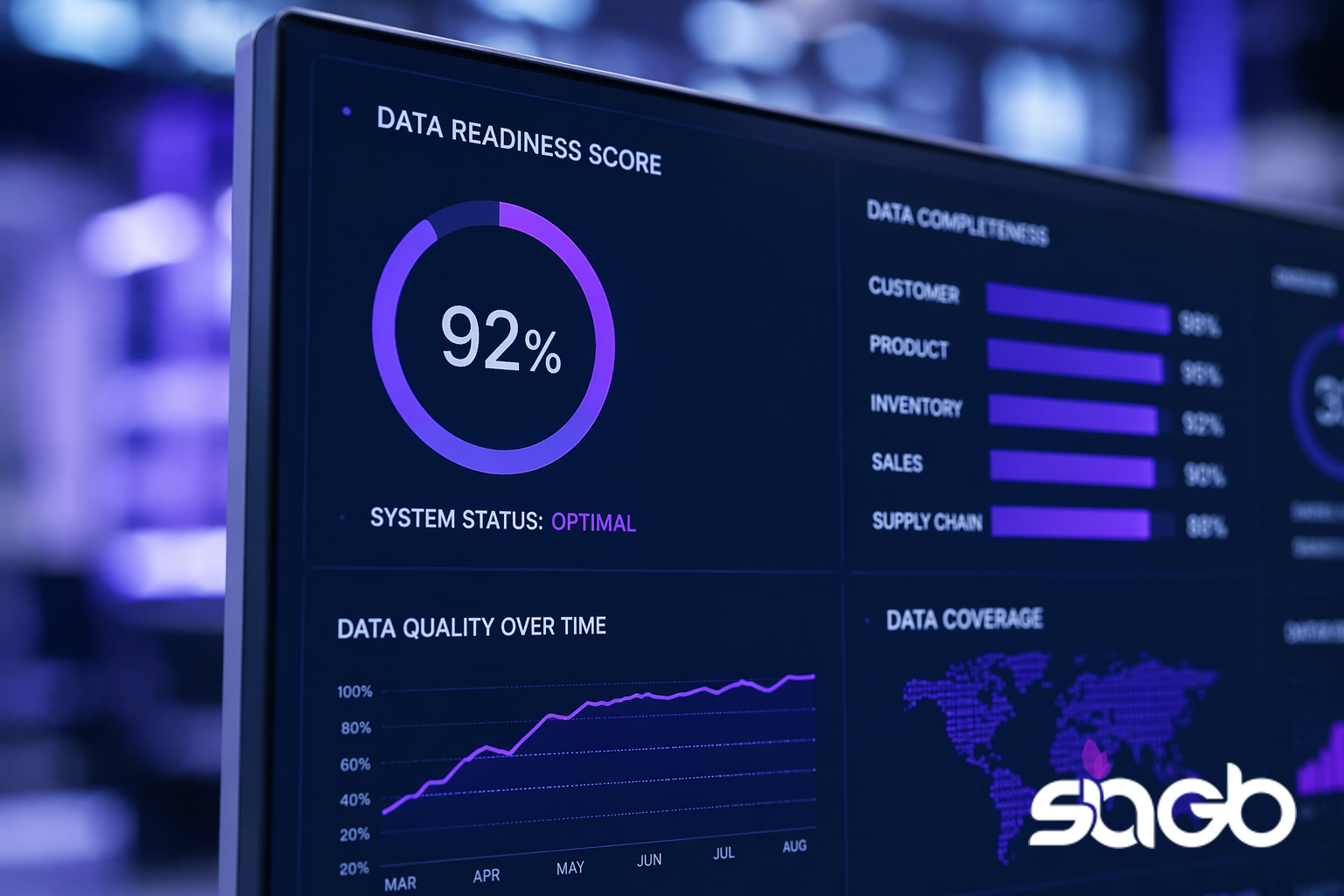
Let’s be honest. Clean data is rare in the retail industry. POS systems don’t always match inventory records. Supply chain data arrives late. Loyalty and customer data lives somewhere else entirely.
US retail environments are no different. Years of system changes leave gaps and duplicates. That doesn’t mean AI applications won’t work. It just means you need to prepare properly. We often see 5 to 15 percent of SKU records mismatched between POS and inventory on day one. The same reality applies to HIPAA compliant website builds and ADA compliant patient portal projects in healthcare, where CCPA and state privacy laws add further constraints.
Data readiness starts with mapping sources. POS, ERP, inventory, and customer platforms.
- Identify where critical data lives
- Check quality, delays, and gaps
- Define what decisions the data must support
Good AI consulting for retail businesses tackles this upfront. Otherwise, analytics suffers. And once trust is lost, it’s hard to win back.
Integrating AI Analytics With Legacy Retail Systems
Most US retailers still run on legacy systems, such as Oracle Retail, SAP, older ERPs, and custom POS setups built years ago. Replacing them is risky and expensive. A full rip-and-replace can run 12 to 24 months, whereas an analytics layer ships in weeks.
A strong retail analytics solution connects to what’s already there through APIs, nightly SFTP files, or a data warehouse such as Snowflake or BigQuery. It handles delays, manual uploads, and system gaps. And it does this without disrupting day-to-day retail operations. SIAGB applies the same integration discipline to healthcare website redesign and HIPAA cybersecurity programs.
Integration matters more than model choice. If AI can’t access the right data at the right time, value drops fast. This is where experience really shows.
Problem-First AI Consulting for Retail Businesses
Many AI projects fail because they start with tools, not problems. I’ve seen this happen. A shiny platform. No clear outcome.
SIAGB takes a different approach. Problem first. Always. We start with cost leaks, time drains, or revenue blockers in a retail business. Only then do we design retail analytics solutions. This philosophy also drives AI content medical practice delivery and AI optimized website healthcare projects.
We also avoid strategy-only work. A PDF doesn’t change a retail operation. Systems do. For example, teams need analytics tied to KPIs such as gross margin, inventory turns, sell-through rate, customer loyalty, and customer satisfaction, not a 40-slide deck.
This approach comes from real delivery experience. SIAGB is an AI native retail analytics consultancy based in Sydney, ABN 16 659 507 178, led by founder Sheetal Dhadial, a Certified Scrum Master and AgilePM practitioner with 20 plus years in IT and AI leadership. And yes, we run our own products at scale: Marvel PTE serves 85,000 plus users across 900 plus institutes, and we built AI-powered patient scheduling for medical groups. Compared with a consultancy that has never shipped software, that operating experience changes how we scope a build.
Real Retail AI Analytics Case Examples
One US retailer came to us with rising stock holding costs. Inventory sat too long. Demand signals were missed. Data lived in silos across 3 disconnected systems.
We built an AI analytics layer over their data. It linked sales, inventory, and supply chain systems. We tracked the results against a 90-day baseline, and consumer insights improved within 3 weeks through better demand forecasting.
The results?
- Stock holding costs dropped by 18 percent in 6 months
- Manual reporting time fell by 40 percent, roughly 15 hours a week
- Forecast accuracy rose from 62 to 78 percent
Another retailer used analytics to adjust pricing by location across 22 stores. Revenue lifted by 6 percent without increasing promotions. That surprised them, honestly.
These outcomes came from retail analytics solutions designed for real environments. Not labs. Not demos. In our experience, the messy production data is exactly where the value hides.
AI Agents and Automation for Continuous Retail Insights
Here’s where things get interesting. AI agents don’t just analyze data once. They watch it all the time.
AI applications for marketing and store operation monitor live data streams. They flag demand spikes. They spot pricing issues. They alert teams to anomalies before they grow. Similar automated agents power AI SEO automation and chatbot analytics consultants nationwide rely on.
This isn’t one-off analysis. AI systems work quietly in the background.
- Automated alerts replace weekly reports
- AI agents highlight issues in near real time
- Teams respond faster with less manual effort
The point is continuity. Retail decisions don’t pause. Analytics shouldn’t either.
Security, Governance, and Compliance in Retail AI
Retail data includes sensitive customer information and consumer goods performance data. That brings risk. Cyber threats are real. Governance matters. Card data, for example, falls under PCI DSS, whereas customer profiles in California fall under the CCPA.
We often borrow lessons from healthcare. Healthcare website accessibility, ADA compliance medical website standards meeting WCAG 2.1 AA, and ADA website lawsuit doctors cases show what strong controls look like. Web pages that meet Core Web Vitals thresholds (LCP under 2.5 seconds, INP under 200 milliseconds, CLS under 0.1) also earn more trust from AI answer engines such as ChatGPT, Perplexity, and Google AI Overviews. Medical practice data security and cybersecurity for doctors offer frameworks that translate well to the retail sector.
AI systems must respect privacy. Access controls. Audit logs. Clear ownership. Without these, trust erodes fast.
Designing security in from day one protects the retailer and the customer. It’s not optional. It’s essential.
Measuring ROI From Retail AI Analytics Projects
Retailers want proof. Fair enough. ROI needs clear metrics.
Common measures include margin lift, reduced inventory costs, and labor savings. Customer metrics matter too. Better customer engagement, smoother customer interaction, and stronger customer loyalty. In healthcare, similar measures support online reputation healthcare and patient recall system improvements.
Start with a baseline. Measure before analytics goes live. Then track results after deployment. And keep tracking.
ROI doesn’t stop at launch. Retail analytics solutions improve over time as customer behavior data grows and AI algorithms learn. That ongoing improvement is where long-term value sits.
Why End-to-End AI Delivery Matters in Retail
Handoffs kill momentum. One firm does strategy. Another builds models. Someone else deploys. Things get lost along the way.
End-to-end delivery fixes that. One team owns data, analytics, and outcomes. Adjustments happen faster. Risk drops. This matters in regulated work like HIPAA compliant website builds and ADA compliant patient portal platforms.
SIAGB works this way. From data readiness to production systems. No disappearing consultants. No bolt-on tools.
That’s how retail analytics solutions actually deliver results.
Infographic: Retail AI Analytics From Data to Decisions
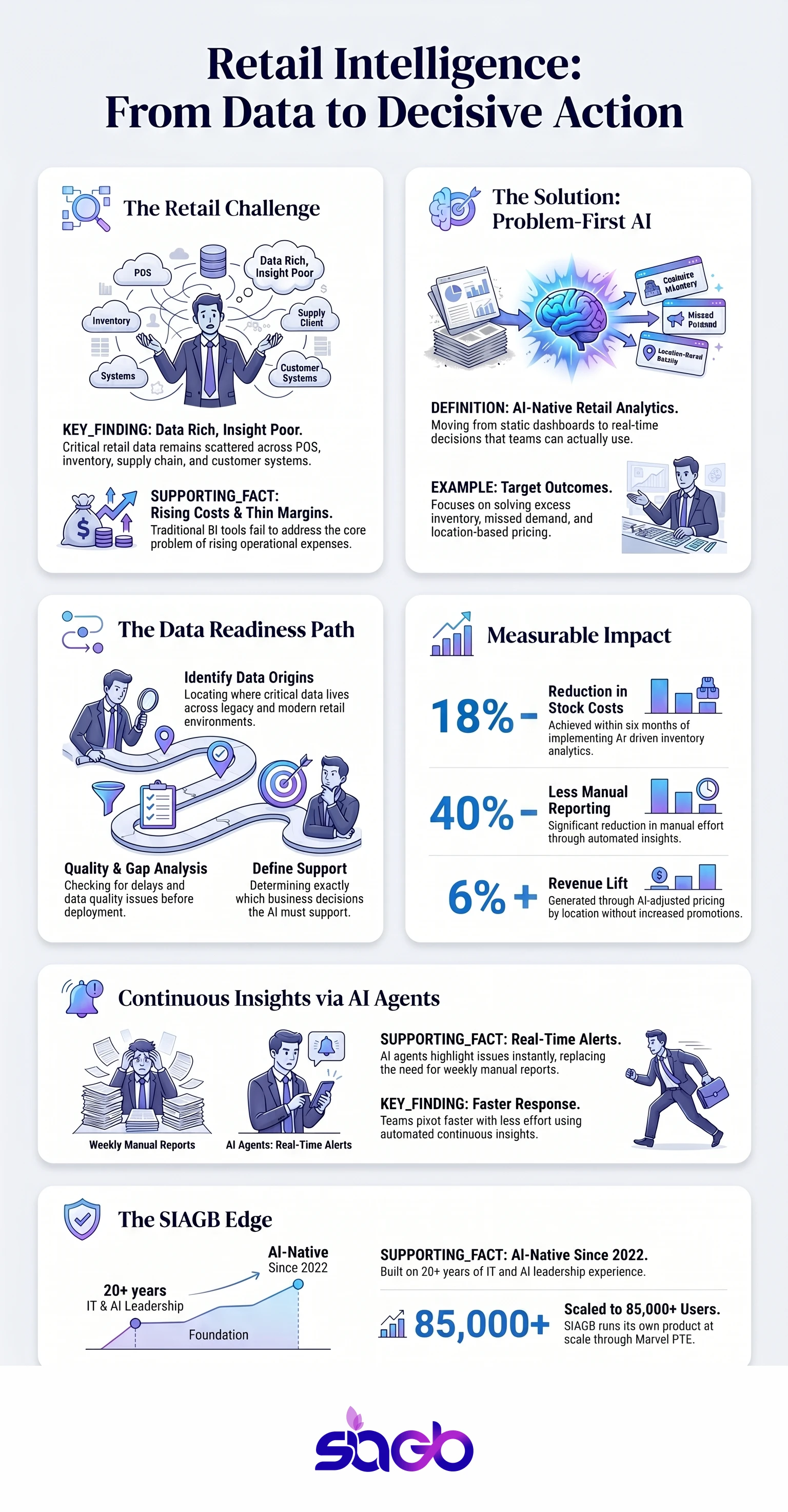
This infographic shows the full flow. Data sources feed AI models. Models drive decisions. Automation and AI agents add speed. A feedback loop improves the solution over time. Simple. Clear. Effective.
FAQ
What are retail AI analytics solutions services?
Retail AI analytics solutions services use AI to analyze data analytics outputs and guide decisions across inventory, demand, and customer outcomes.
How is AI analytics different from traditional retail analytics?
Traditional retail analytics reports the past. AI driven systems use predictive analytics to forecast outcomes and recommend actions.
Do retailers need perfect data for AI analytics?
No. Most data is messy. The key is understanding its limits and designing analytics around real conditions.
How long does it take to see ROI?
Many retailers see early consumer insights in weeks. Measurable ROI often appears within three to six months.
Can AI analytics work with legacy retail systems?
Yes. Modern retail analytics solutions integrate with POS, ERP, and inventory systems without full replacement.
How does this approach translate to healthcare websites and SEO?
The same problem-first methods power medical practice SEO, answer engine optimization medical strategies, and AI optimized website healthcare projects.
Key Takeaways and Final Thoughts
Retail AI analytics works when it solves real problems. Not when it adds noise.
AI native, end-to-end delivery reduces risk. It improves ROI. And it helps retailers act faster on data.
For retailers across the USA thinking about this path, start small. Focus on one problem. Build trust in the analytics. Then scale.
If you’re exploring AI consulting for retail businesses, SIAGB brings deep experience as a retail analytics consultancy across retail, healthcare, accessibility, and AI driven growth. That’s something to think about.
Sources
- MIT Technology Review (technologyreview.com)
- Stanford HAI - Human-Centered AI (hai.stanford.edu)

Ready to put this into practice?
Let's Talk