
A WCAG healthcare website is a medical website built to meet recognised accessibility guidelines so people with disability can actually use it. In Australia, WCAG compliance lowers legal risk, improves access, and supports SEO, bookings, and trust. For most healthcare organisations, accessibility is now a growth and compliance issue, not just a technical one.
Picture a patient with low vision booking a mammogram at 9pm. The date field sits in pale grey text below the 4.5:1 contrast minimum, so she cannot read it. She guesses, gets an error she also cannot see, and phones a clinic down the road instead. That is one lost booking from one barrier on one field.
Healthcare websites sit at a tough intersection. They need to support digital accessibility, privacy, security, and growth all at once. Miss one piece, and the cracks show fast.
Introduction
A WCAG healthcare website helps practices balance accessibility, compliance, and patient growth. Many clinics still treat healthcare website accessibility like a checklist task. Tick the boxes and move on. That rarely holds up.
People book online, read care information, complete forms, and use digital services every day. If any part breaks accessibility guidelines, drop off happens. Bookings fall. Recalls weaken. Trust slips. Honestly, the frustrating part is how invisible these barriers stay to the people running the clinic, who test the site with a mouse, sharp eyesight, and no screen reader switched on.
Australian healthcare organisations also face rising pressure from regulators and the public. Digital accessibility, privacy, and user experience now shape the whole digital experience.
What Does WCAG Healthcare Website Compliance Mean in Australia?
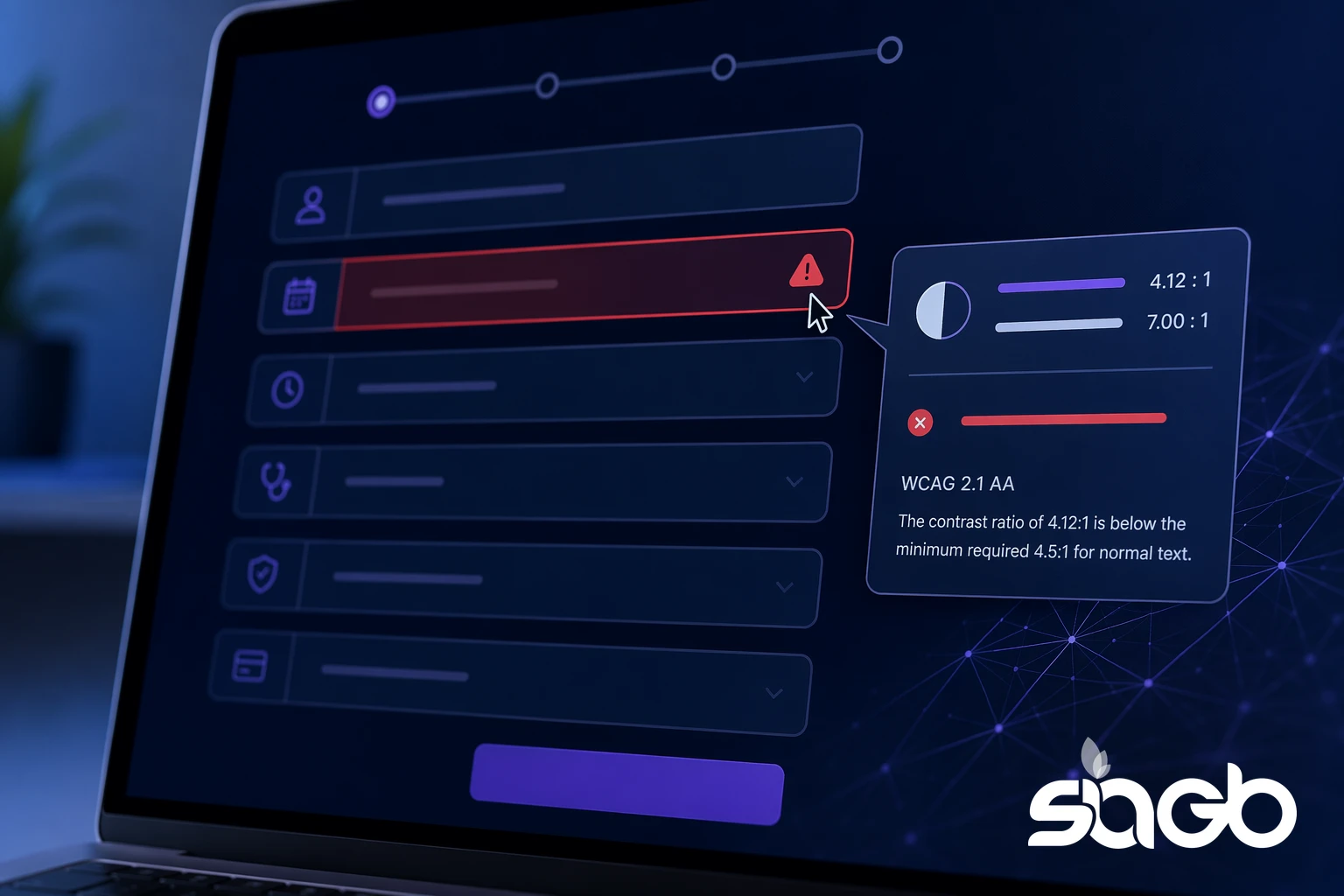
WCAG sets global standards for web accessibility. The Web Content Accessibility Guidelines come from the World Wide Web Consortium. They define how web content should work for people with disability.
In Australia, a WCAG healthcare website usually aligns with WCAG 2.1 AA. You might hear this called wcag 21 aa, wcag 21 level aa, or wcag 21 aa standards. These accessibility guidelines cover web content structure, navigation, colour contrast, forms, and error handling. In practice they come down to specific, testable success criteria. For example, 1.4.3 Contrast (Minimum) sets the 4.5:1 text ratio. 2.4.7 Focus Visible keeps keyboard users oriented. 3.3.2 Labels or Instructions makes sure every field is announced, and 2.1.1 Keyboard means nothing needs a mouse. WCAG 2.2 later added 2.4.11 Focus Not Obscured, but 2.1 AA stays the working benchmark here.
WCAG has three conformance levels, and knowing which one applies to you saves a lot of confusion:
| WCAG level | What it requires | Who needs it |
|---|---|---|
| Level A | The basics. Text alternatives for images, keyboard access, no content that traps or flashes | The absolute minimum for any healthcare website |
| Level AA | Everything in Level A plus 4.5:1 colour contrast, resizable text, visible focus states, consistent navigation | The accepted benchmark for Australian medical practices |
| Level AAA | Everything in Level AA plus 7:1 contrast, sign language for video, plain language alternatives | Rarely required in full. Specialist services pick selected AAA features for complex needs |
Healthcare organisations also sit under guidance from the Australian Human Rights Commission. WCAG itself is not a law, but it is the accepted wcag standard used to assess compliance. This links closely to the Disability Discrimination Act and other disabilities act obligations when delivering human services online.
Accessibility applies everywhere. Pages, booking tools, PDFs, video content, and patient portals all count. It also includes mobile access, mobile app interfaces, and assistive technology like screen readers and voice control.
WCAG vs ADA vs AHRC for Medical Websites
WCAG provides the technical rules. It explains how to design accessible website experiences using web accessibility best practice and clear web content accessibility guidelines.
ADA compliance medical website cases in the United States influence global enforcement trends. Many ada website lawsuit doctors cases focus on appointment booking tools or web content that assistive technology cannot read. Australian healthcare organisations often learn from these cases, even though local law is different.
In Australia, the AHRC applies accessibility principles under the Disability Discrimination Act. The Rehabilitation Act also shapes how digital access is assessed in public services. Together, these frameworks push healthcare organisations toward consistent compliance using WCAG guidelines and stronger web content accessibility.
Here is how the three frameworks compare at a glance:
| Framework | Where it applies | What it means for medical websites |
|---|---|---|
| WCAG 2.1 | Global technical standard | Defines the testable rules for accessible content, forms, and portals |
| ADA | United States law | Drives lawsuits and enforcement trends that shape expectations worldwide |
| AHRC and the DDA | Australia | Applies accessibility principles under the Disability Discrimination Act, with WCAG as the benchmark |
Legal Risk and Lessons from ADA Website Lawsuits
Ada website lawsuit doctors cases follow a familiar pattern. People cannot book appointments, read care information, or complete forms using assistive tools. The issues are usually basic.
Missing labels. Poor keyboard navigation. Low contrast text. Stuff that could have been avoided. The WebAIM Million report finds these same few failures, low contrast text and missing form labels among them, on the vast majority of home pages it scans each year. Healthcare is no exception. When we audit clinic sites, we found the same short list nearly every time. Fields a screen reader reads out as blank. A booking calendar that traps keyboard focus. Grey hint text sitting under the 4.5:1 minimum. We ran WAVE and axe DevTools first, then checked each one by hand with a keyboard and VoiceOver, since scanners only flag the machine-checkable failures.
Compliance lowers legal risk, but that is only part of it. Improving web accessibility tends to help sighted, mouse-using patients too, not just the people it was designed for. Older users notice. Busy carers notice. Staff notice too.
How Does Accessibility Impact Patient Bookings and Recalls?
Accessibility directly affects bookings. If someone cannot complete an online form, they abandon it, and it happens more often than many practices think.
Accessible appointment booking flows reduce friction. Clear labels, readable web content, and logical steps lead to more completed appointments. When we worked with one clinic, its booking form lost keyboard focus halfway through, so anyone not using a mouse got stranded and rang reception instead. After we reworked it against 2.4.3 Focus Order and 3.3.1 Error Identification, those calls started to ease. That supports recall systems and follow up care.
A recall system depends on clarity and trust. Web content accessibility helps people understand reminders and instructions. It also cuts down admin follow ups.
Medical practice website design should support people with low vision, limited mobility, or cognitive challenges. When digital accessibility works, people feel supported, and that quiet reassurance is what earns the next booking and the referral after it.
What Makes a Patient Portal ADA Compliant?
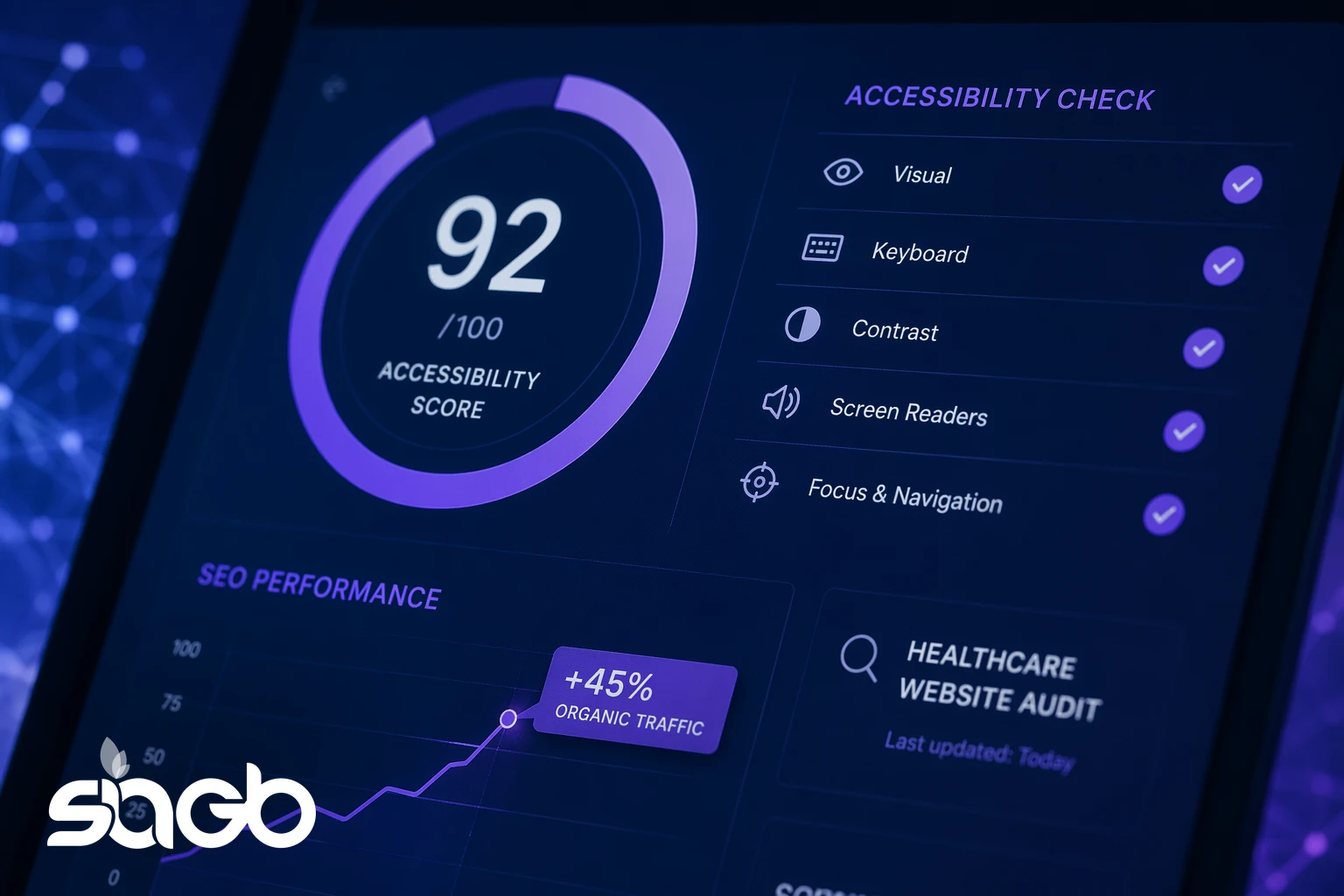
An ada compliant patient portal improves access to results, messages, and forms. It also reduces staff workload when self service works well.
Keyboard navigation is critical. Screen reader support is not optional. Portals need clear error handling and should avoid timeouts that lock users out halfway through a task, which is exactly what 2.2.1 Timing Adjustable is there to prevent.
Security matters just as much. A patient portal must align with hipaa compliant website principles and local privacy rules. Accessibility and security should work together, not fight each other.
Accessible portals improve patient experience and user experience without weakening data protection. That balance is tricky, but achievable with the right accessibility solution.
Healthcare Website Accessibility and SEO Performance
Healthcare website accessibility improves SEO more than many expect. Search engines rely on structure, clarity, and readable web content.
Accessible headings, descriptive links, and clean HTML make sites easier to crawl. That supports medical practice SEO and long term visibility.
Healthcare seo strategy now overlaps heavily with web accessibility and digital marketing work. Clear content helps people and search engines at the same time. It also supports answer based search.
Good web accessibility improves page speed and mobile usability. These signals matter for rankings and for real people trying to book care on a phone or mobile app.
AI SEO Healthcare and Answer Engine Optimisation
AI SEO healthcare depends on structured, accessible content. Answer engine optimisation for medical practices relies on clear questions and clear answers.
Accessible web content gives AI systems stronger signals. Headings, lists, and simple definitions help AI surface trusted answers.
AI systems tend to prefer content that aligns with accessibility guidelines and web content accessibility guidelines. That alignment improves visibility across search, voice tools, and new platforms. It also helps future proof digital services.
Using Agentic SEO and AI Agents for Ongoing Compliance
Accessibility is not a one time task. Standards change. Content shifts. Tools break.
Agentic SEO uses automated SEO agents to monitor issues over time. These ai agents for seo scan pages, forms, and web content updates. They flag problems early, before people feel them.
Agentic AI for marketing reduces manual audits. It supports ongoing wcag 21 aa compliance while teams focus on care delivery. Automated SEO agents also help keep language and structure consistent across healthcare organisations.
From what I have seen, this works best when paired with human review. AI handles scale. People handle judgement.
HIPAA Compliance, Cybersecurity, and Medical Data Security
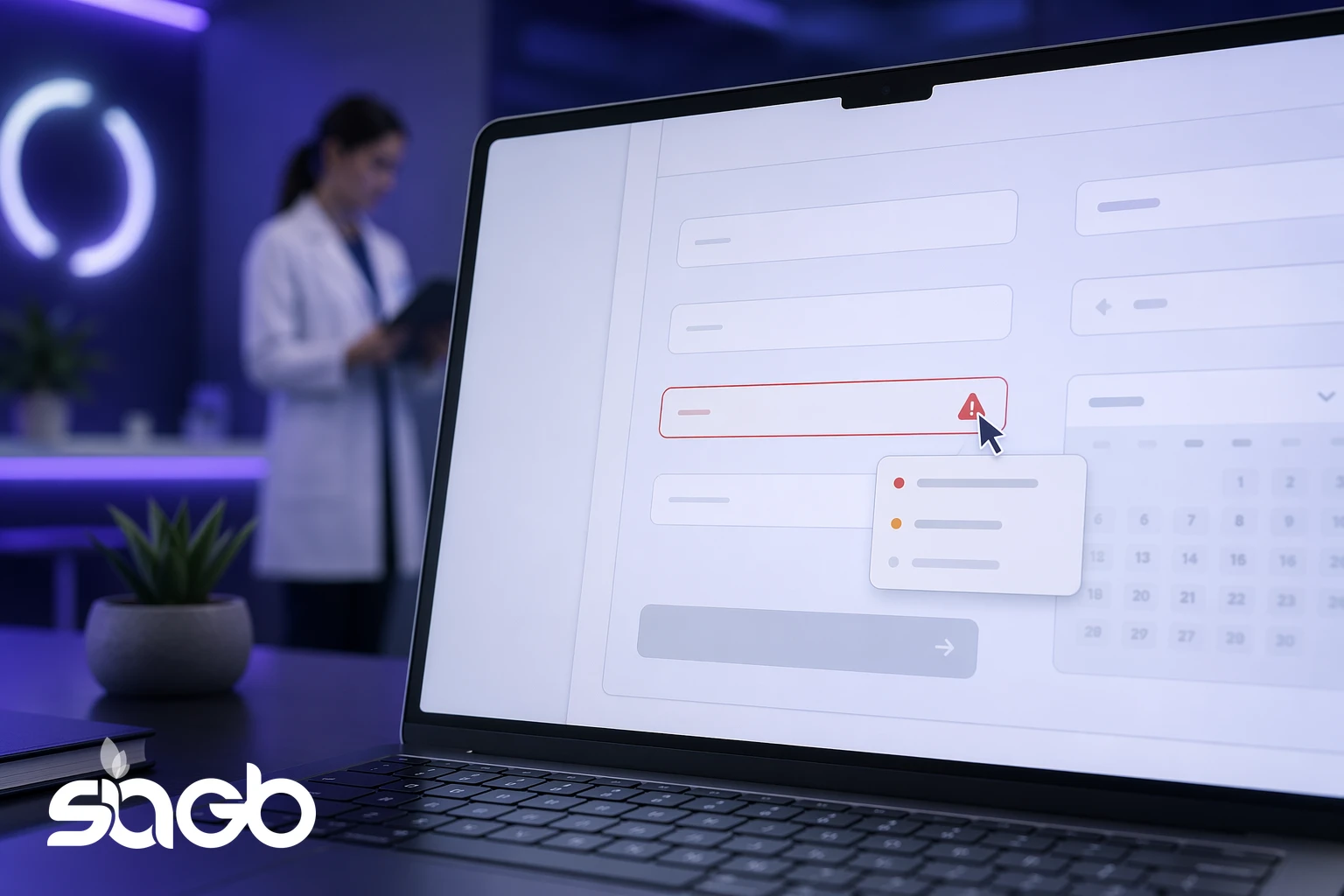
Accessible design must align with healthcare cybersecurity. A hipaa compliant website protects sensitive data while staying usable.
Doctors face growing healthcare cybersecurity threats. Unfortunately, phishing, ransomware, and form abuse target healthcare practices every day. Medical practice data security cannot be an afterthought.
Accessibility features should never expose data. Secure forms, encryption, and access controls all matter. Staff training matters too.
Cybersecurity for doctors works best when built into the website design from day one. Retrofitting later costs more. Trust me on this.
Modern Healthcare Website Redesign Framework
A healthcare website redesign should balance digital accessibility, performance, and growth. Content updates, accessibility checks, and security reviews need to continue over time. Redesign is a process, not a launch date.
AI consulting helps link design decisions to outcomes. Bookings, recalls, SEO, and user experience should guide every change.
Patient Reviews, Trust, and Reputation Signals
Accessible sites support better reviews. When people can book and leave feedback easily, Google reviews medical practice results improve.
Reputation management doctors depends on access. If feedback tools are hard to use, only frustrated voices respond.
Online reputation healthcare signals reflect real experiences. Digital accessibility builds trust quietly, but consistently. Over time, that trust shows up in reviews and referrals.
How SIAGB Supports Compliant, AI-Optimised Healthcare Websites
SIAGB is an AI native consulting company founded in Sydney in 2022. With over 20 years of IT and AI leadership, the focus stays on real problems first.
SIAGB works with healthcare organisations and individual healthcare provider teams to deliver end to end accessibility, compliance, and AI strategy. No handoffs. No PDFs that disappear into a folder.
In our experience, the practices that pull ahead treat accessibility as part of AI strategy, not a separate compliance chore. We have built AI-powered patient scheduling for medical groups. The discipline that keeps a booking assistant reliable, clear labels, predictable focus order, plain error messages, is the same discipline that makes the wider site usable for our clients’ patients.
Through chatbot analytics consultants Australia services, SIAGB helps healthcare providers improve digital accessibility, insight, and flow. The aim is measurable outcomes, not hype.
Infographic: WCAG Compliance and Patient Growth Framework
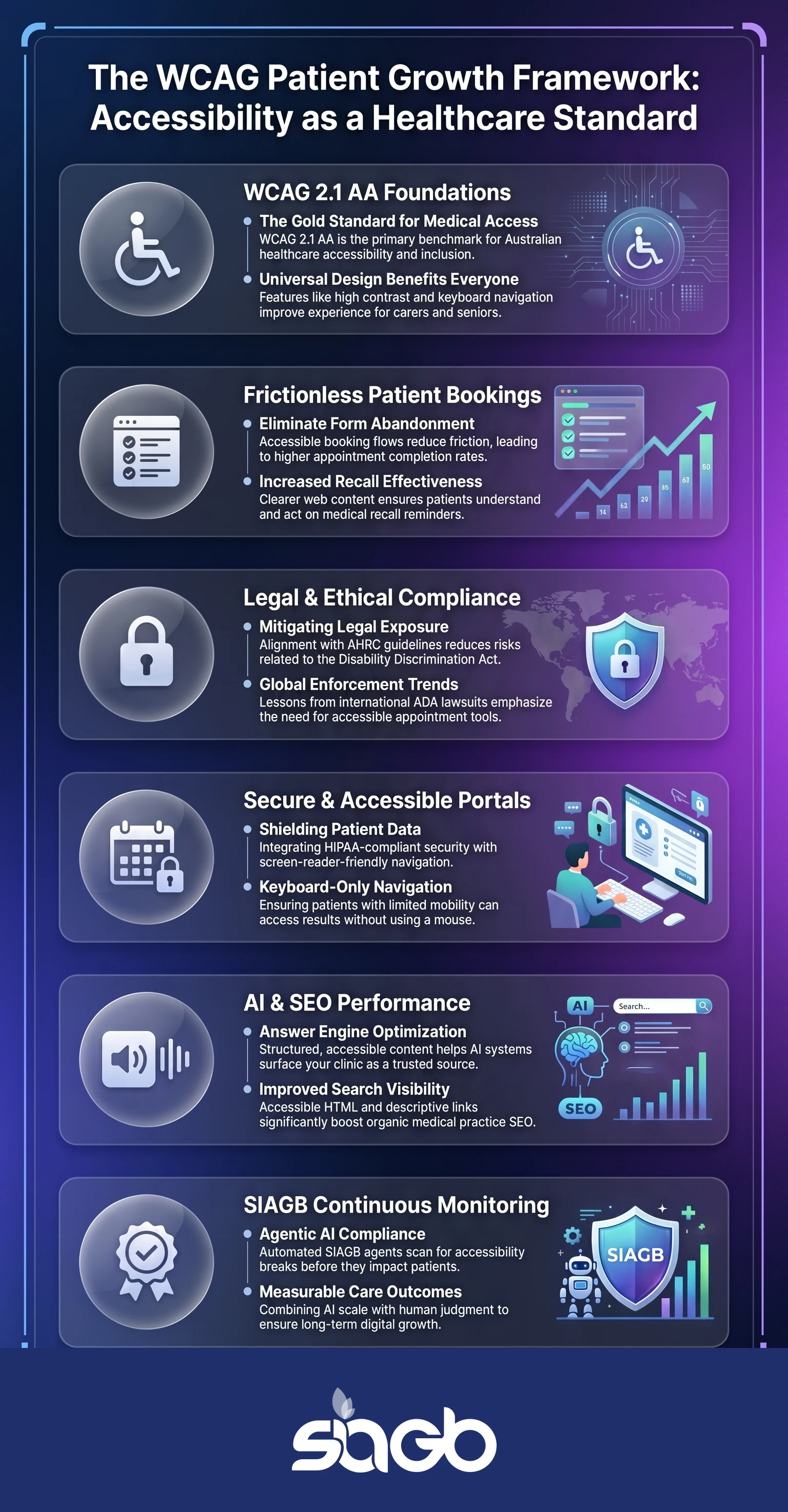
This infographic shows how web accessibility connects to bookings, recalls, and trust. It maps wcag requirement priorities, security, and growth together. AI and automation touchpoints highlight where ongoing monitoring cuts risk and effort.
Frequently Asked Questions
What is a WCAG healthcare website?
It is a medical website designed and tested against the W3C’s accessibility guidelines. In practice, that covers booking forms, PDFs, videos, and patient portals, so people using screen readers, keyboard navigation, or voice control can finish tasks without phoning the clinic for help.
Do Australian clinics need ADA compliance?
Australian clinics do not follow ADA law directly, but ADA cases influence expectations. Most align with WCAG guidelines and AHRC guidance instead.
Does accessibility really improve bookings?
Yes. Accessible appointment booking flows reduce drop offs and improve completed appointments, especially for older users and carers.
Is WCAG compliance expensive?
Costs depend on site size and current quality. Fixing issues early is far cheaper than retrofitting after complaints or legal action.
What about WCAG Level AAA?
Level AAA goes beyond the WCAG 2.1 AA standard. It is not required for most healthcare organisations, but selected AAA features, like higher contrast and plain language alternatives, can improve the experience for patients with complex needs.
Key Takeaways and Final Thoughts
A WCAG healthcare website supports access, trust, and growth. Digital accessibility is not just about compliance. It shapes how people experience care online.
AI and automation make accessibility sustainable over time. Healthcare organisations that treat web accessibility, web content accessibility, and user experience as ongoing priorities tend to lead.
Sources
- Industry-standard reference materials
- Peer-reviewed research and clinical guidelines

Want to explore this further?
Book a Free Consultation