The Challenge
All Health Medical Group runs a 37-page website on GoDaddy, serving patients across multiple clinic locations. The site had never been properly audited for accessibility. When they finally ran the numbers, the picture was grim: 213 WAVE errors across the site, an average AIM score of 4.1 out of 10, and not a single page that met WCAG 2.1 Level AA standards.
The problems were everywhere. Provider photos had no alt text — over 30 clinician portraits were invisible to screen readers. Buttons lacked labels. The heading hierarchy was broken on nearly every page. Links led nowhere for assistive technology users. For a medical practice where patients need to find providers, book appointments, and access health information, this wasn’t just a compliance gap. It was a barrier to care.
They’d already tried to fix it. Four different providers had been engaged to deploy an accessibility widget on the site. All four failed. GoDaddy’s builder doesn’t give you clean access to the underlying HTML, and none of the previous vendors could work around that limitation.
Our Approach
We started with a full WAVE audit of every page — all 37 of them, individually. No sampling, no shortcuts. Each page got its own before screenshot, error count, and categorised issue list. We needed to know exactly what was broken before touching anything.
The audit revealed five major problem categories:
- Missing alt text — 30+ provider images, service images, and linked images with no descriptions
- Unlabeled interactive controls — hamburger menus, close buttons, CTAs, phone links, and social icons with no aria-labels
- Broken heading structure — incorrect H1/H2/H3/H4 nesting across almost every page
- Empty links — icon-only links with no accessible text
- Missing form labels — booking and contact forms with inaccessible inputs
We also identified the platform constraints up front. GoDaddy injects its own HTML — empty links in headers and footers, auto-generated buttons in carousel widgets — that you simply cannot edit through the builder. We documented these separately so the client would know exactly what was fixable and what wasn’t.
The Solution
We worked through every page systematically. Each provider portrait received descriptive alt text with the clinician’s name and title. Every interactive element — hamburger menus, close buttons, booking CTAs, phone links, social icons — got proper aria-labels. We restructured headings across the entire site to follow correct semantic hierarchy. We added alt text to all linked images describing both the content and the destination.
We created a dedicated accessibility statement page and linked it in the site footer.
Then came the part that four vendors couldn’t crack: the accessibility widget. We deployed a site-wide accessibility assistant that gives visitors direct control over their browsing experience — text size adjustment, contrast controls, screen reader optimisation, keyboard navigation support, content spacing controls, and link highlighting. It works on every page.
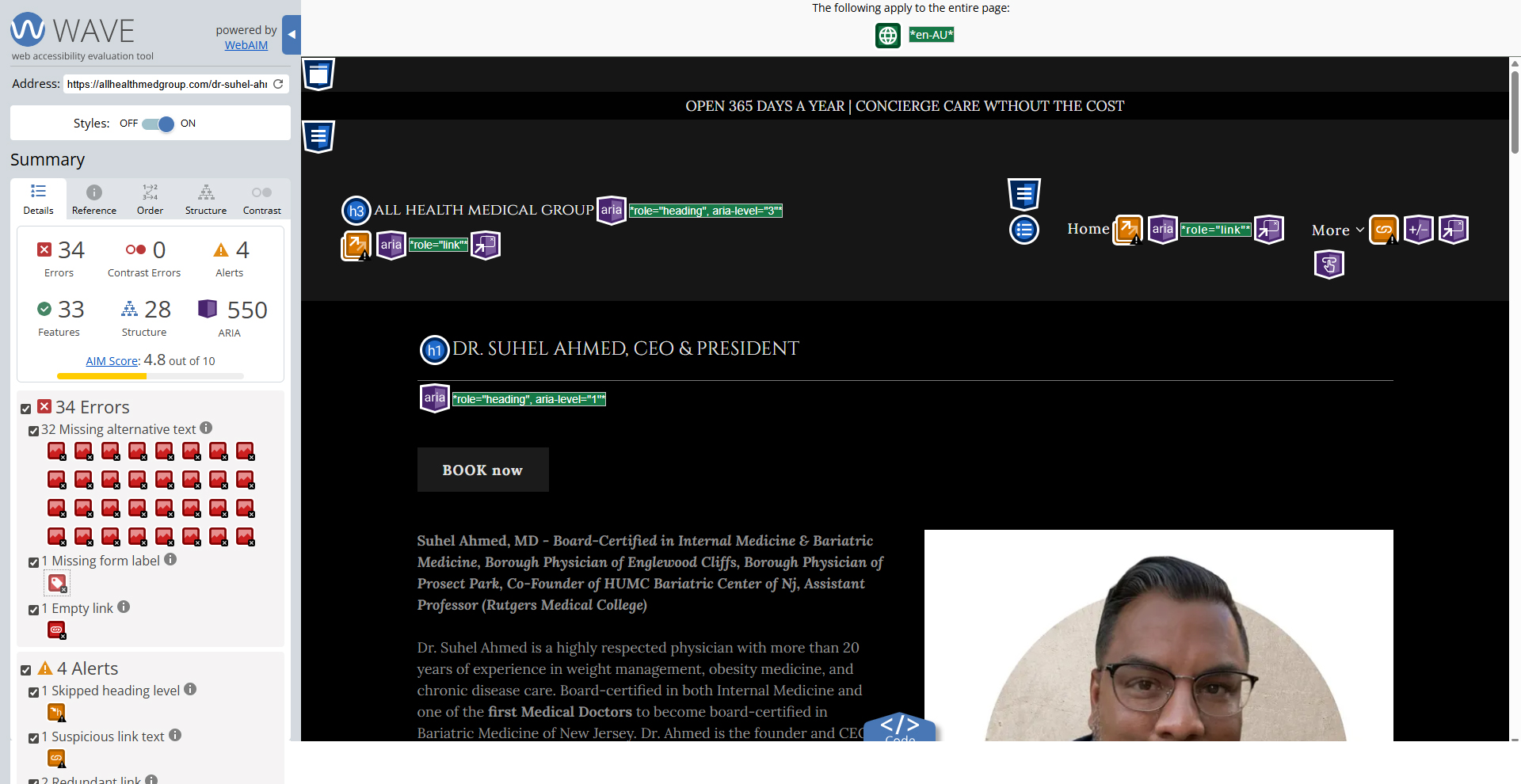
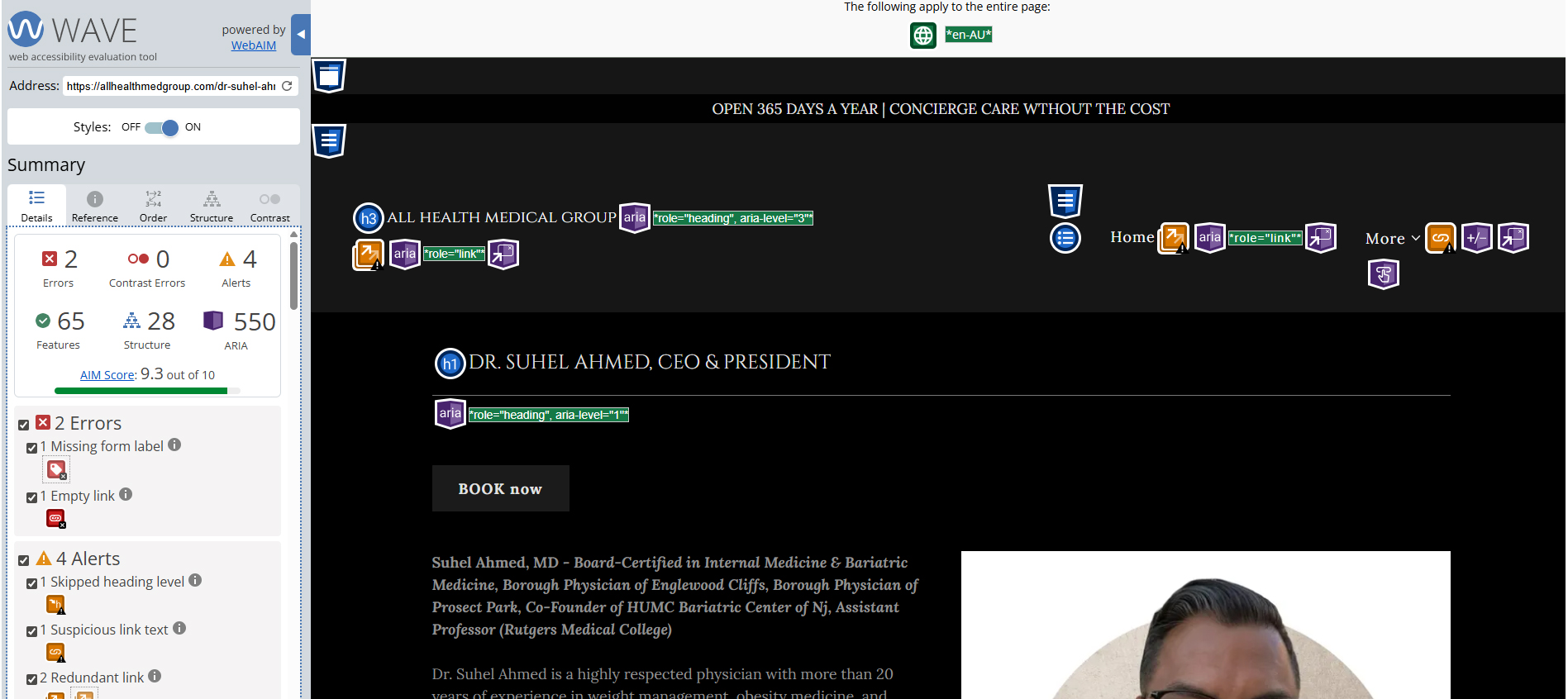
Every single fix was documented with before and after WAVE screenshots — 72 comparison images across the full site.
Before & After — WAVE Audit Evidence
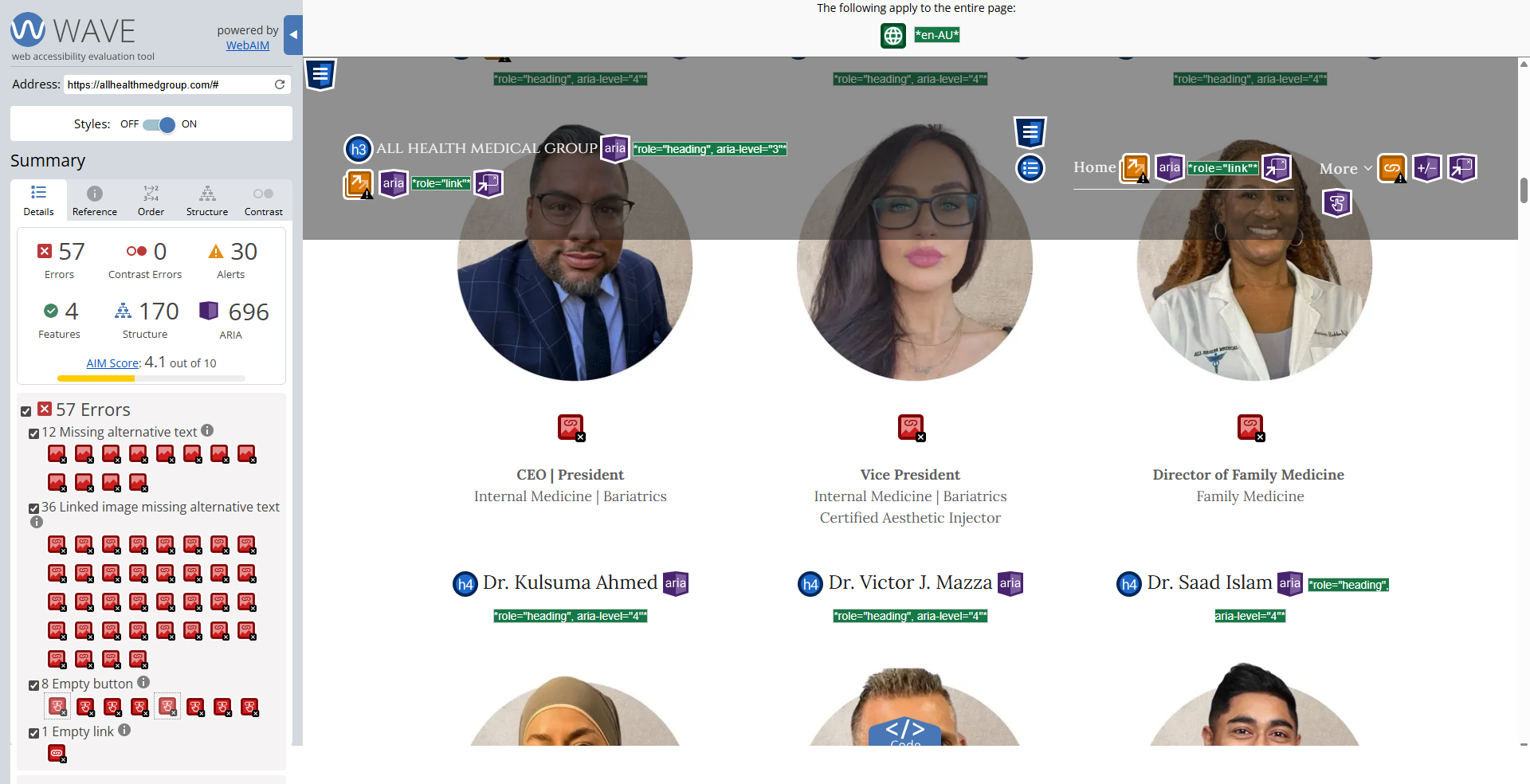
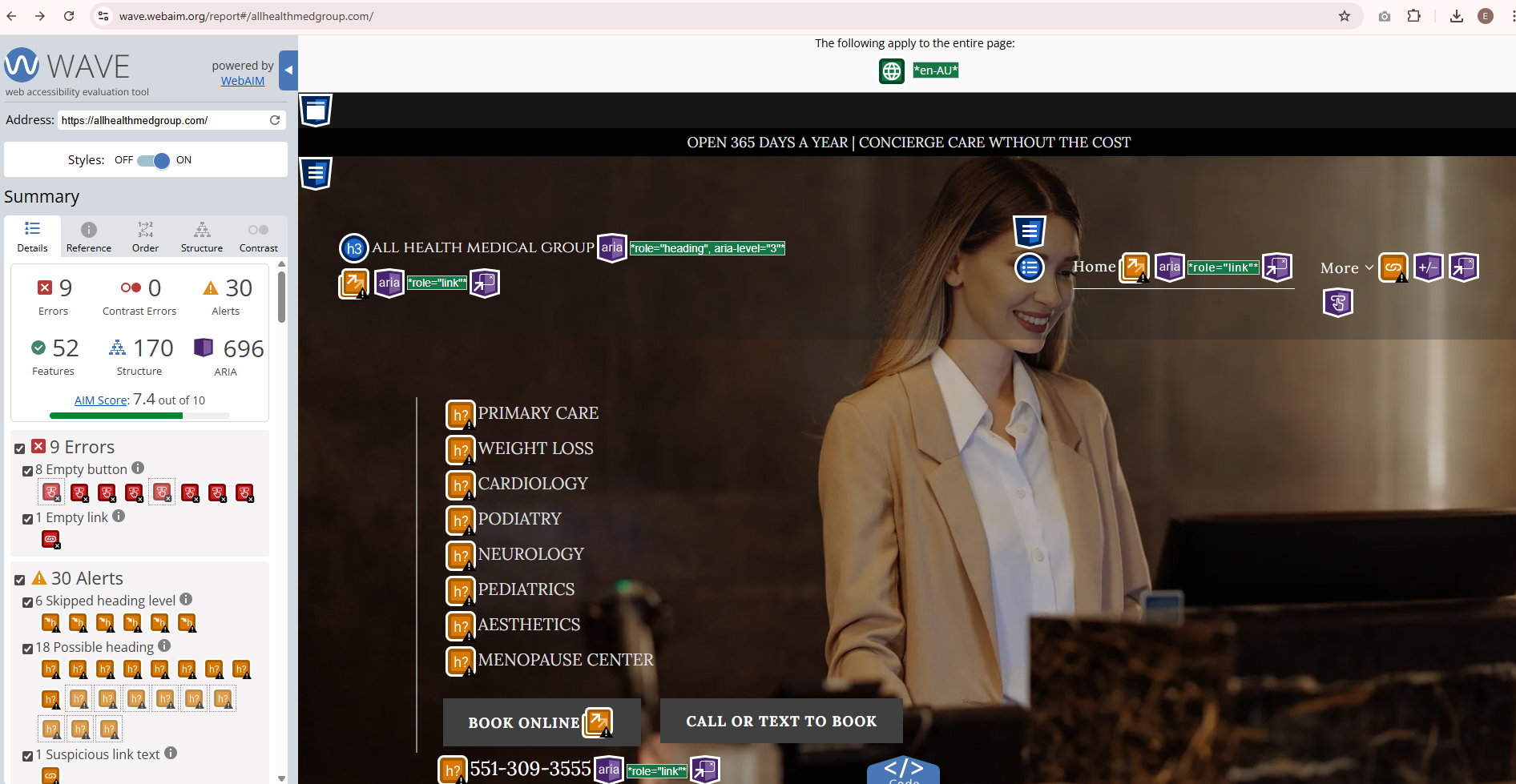
Homepage — 57 errors → 9
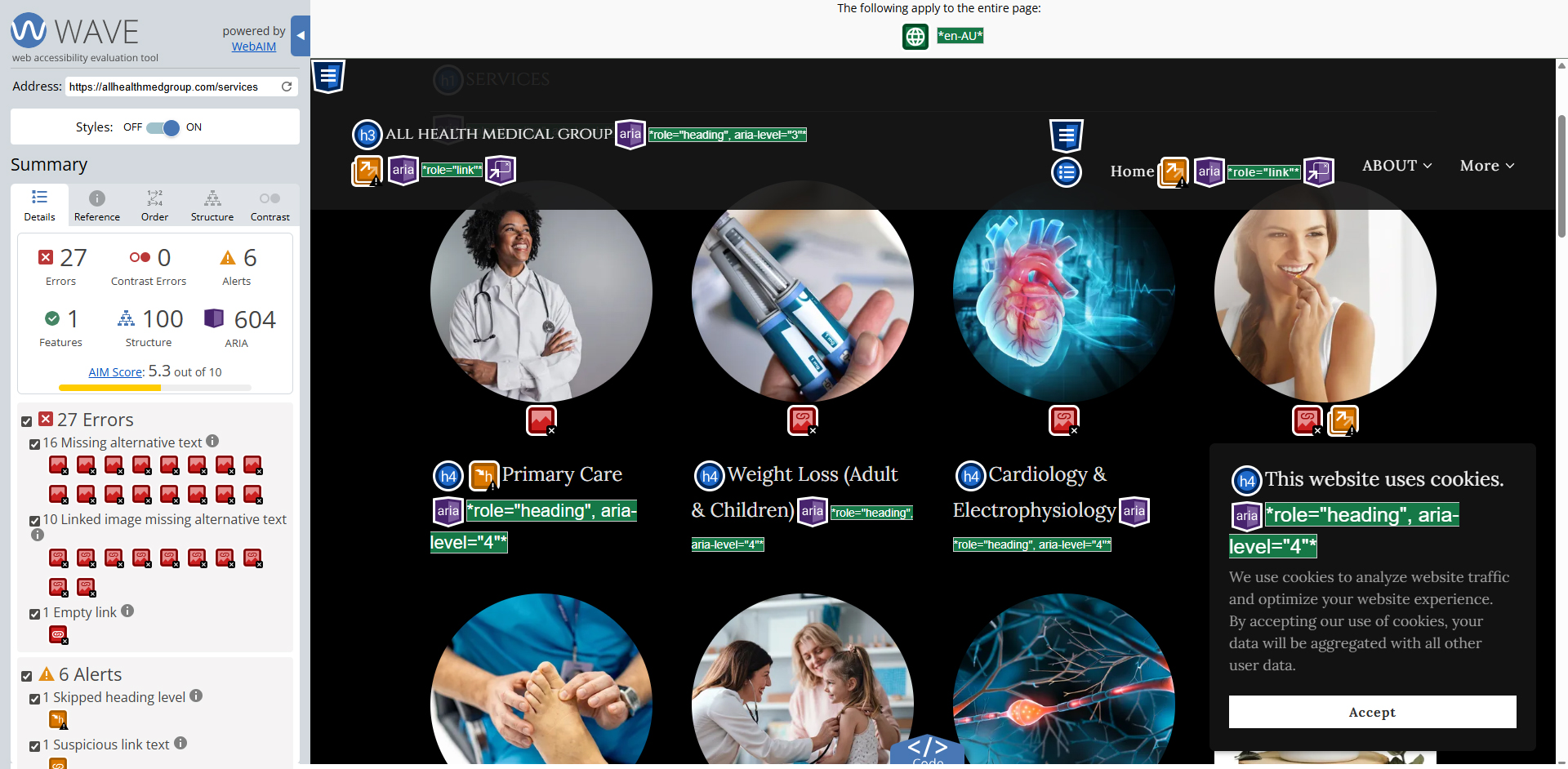
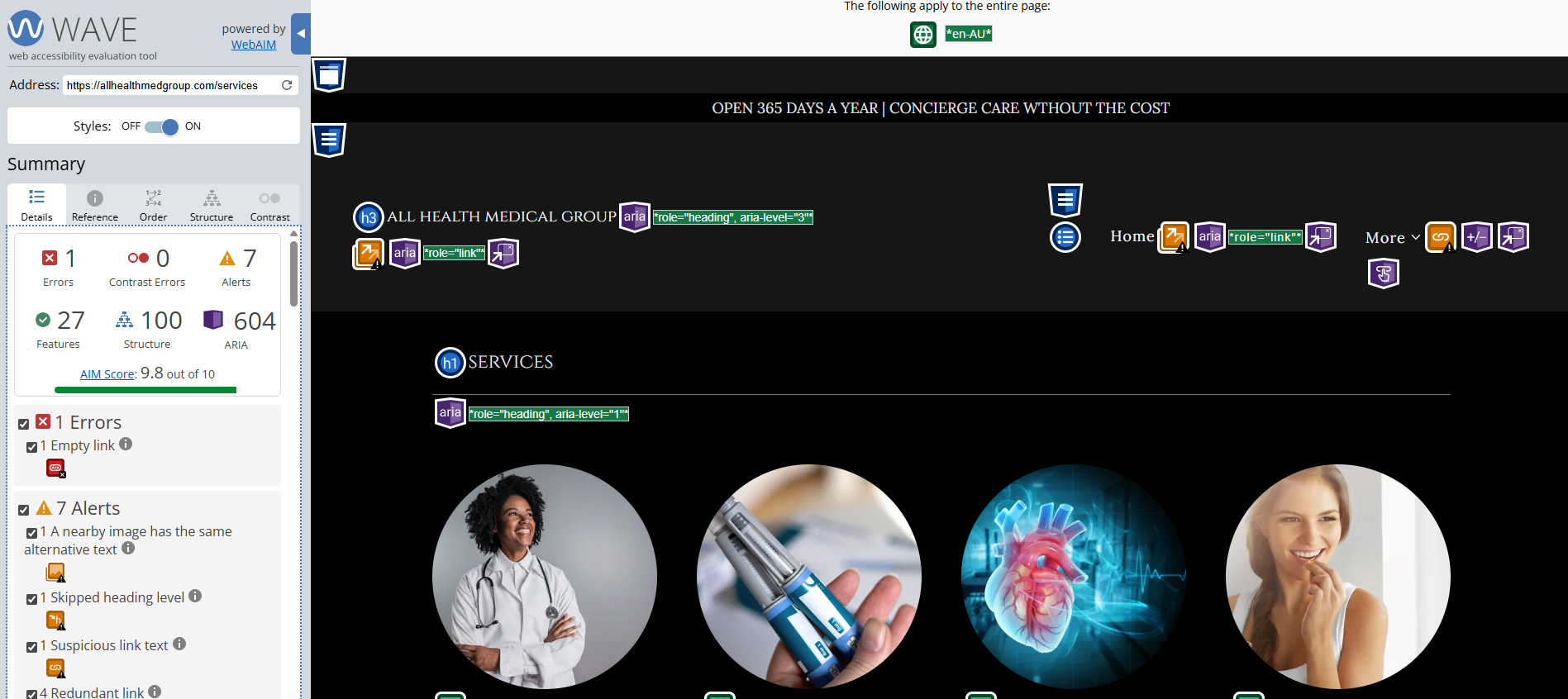
Services Page — 27 errors → 1
Dr Suhel Ahmed (President) — 34 errors → 2
Results
The numbers speak for themselves:
- 77% error reduction — from 213 total WAVE errors down to 50
- AIM score: 4.1 → 9.7/10 — near-perfect accessibility scoring
- 37 pages audited and remediated — every page on the site, no exceptions
- Accessibility widget deployed — after 4 previous providers failed
- 72 before/after screenshots — full documentation for compliance evidence
- 50 remaining errors documented — all attributed to GoDaddy platform limitations beyond editor control
The remaining 50 errors are all platform-generated: 37 empty links injected by GoDaddy’s framework into every page header/footer, and 13 empty buttons rendered by GoDaddy’s carousel and social widgets. These cannot be fixed without migrating off the platform entirely — which we’ve recommended as a next step.
The remediation report serves as good-faith evidence of substantial WCAG 2.1 Level AA compliance — directly relevant for any ADA or Disability Discrimination Act inquiry.