The Challenge: AI Search Captured Patient Intent
Aesthetic clinics live or die by local visibility. RevivalMD, a physician-led practice in Rahway, NJ, was already ranking well on classic Google search after the original website rebuild. Problem was, the search world had moved on.
Patients aren’t scrolling ten blue links anymore. They’re asking Google AI Mode “where to get botox rahway nj” and reading whatever the AI hands back. They’re asking ChatGPT, Perplexity, or Grok for “best medical spa Rahway” and picking from whichever names the AI mentions. If a clinic isn’t in the AI’s answer, it might as well not exist for that searcher.
By early 2026, three patterns were clear across our medical-aesthetic accounts:
- AI search was eating share of intent that used to land on classic SERPs.
- AI engines were drawing answers from a smaller, more specific set of pages than the top-ranking organic results.
- The cited pages weren’t always the ones at #1. They were the ones with structured, machine-readable content. Clear answers to specific questions. Schema markup. Writing an LLM could lift cleanly without rephrasing.
So the brief was narrow. Get RevivalMD cited in AI search results, not just classic ones, for the queries that actually drive aesthetic patient bookings.
How We Built an AI-Citable Content Pipeline
The work sat under our AI SEO services, and the operating principle was simple. AI engines reward content that answers questions. Not content that performs SEO theatre.
That meant three concrete shifts.
Structured Q&A on every service page. Each treatment page (Botox, microneedling, RF skin tightening, PRP, IV therapy, exosomes) now leads with the questions a patient actually types. “How often should you get botox?” “Is microneedling worth it?” “What does RF skin tightening do?” Each one gets a 2-3 sentence direct answer before any marketing copy. The structure mirrors how AI engines parse and cite information.
Hyperlocal landing pages with explicit Rahway context. Fifty-plus pages targeting service-by-town combinations. Each one states, in plain text, where the clinic is, what it does, and why a Rahway-area patient should care. AI engines pull location-specific facts, so we made sure the facts were unambiguous and easy to lift.
Schema markup on every entity. MedicalBusiness, Physician, MedicalProcedure, FAQPage, Review schema on every relevant page. Not for vanity rich results. Schema gives AI engines a confidence signal that the content is fact-checked and authoritative.
No tricks. No prompt injection. Just content that’s structured for the way LLMs actually consume the web.
How We Measured AI Citations
To check whether the pipeline was working, we built a Playwright capture system that runs configured queries through every major AI search surface, captures full screenshots, and detects whether the target domain is cited.
The test ran 30 days after the new content went live. Ten Rahway-area aesthetic queries, four AI engines, captured under a US-locale Chrome session with human-paced typing to mirror a real patient search. Detection looks for both direct hyperlinks to the domain and brand-name mentions in the response text, since AI engines often describe businesses by name without always linking.
Results: Cited in 4 of 4 Major AI Search Engines
The headline numbers, captured live on 2026-05-06:
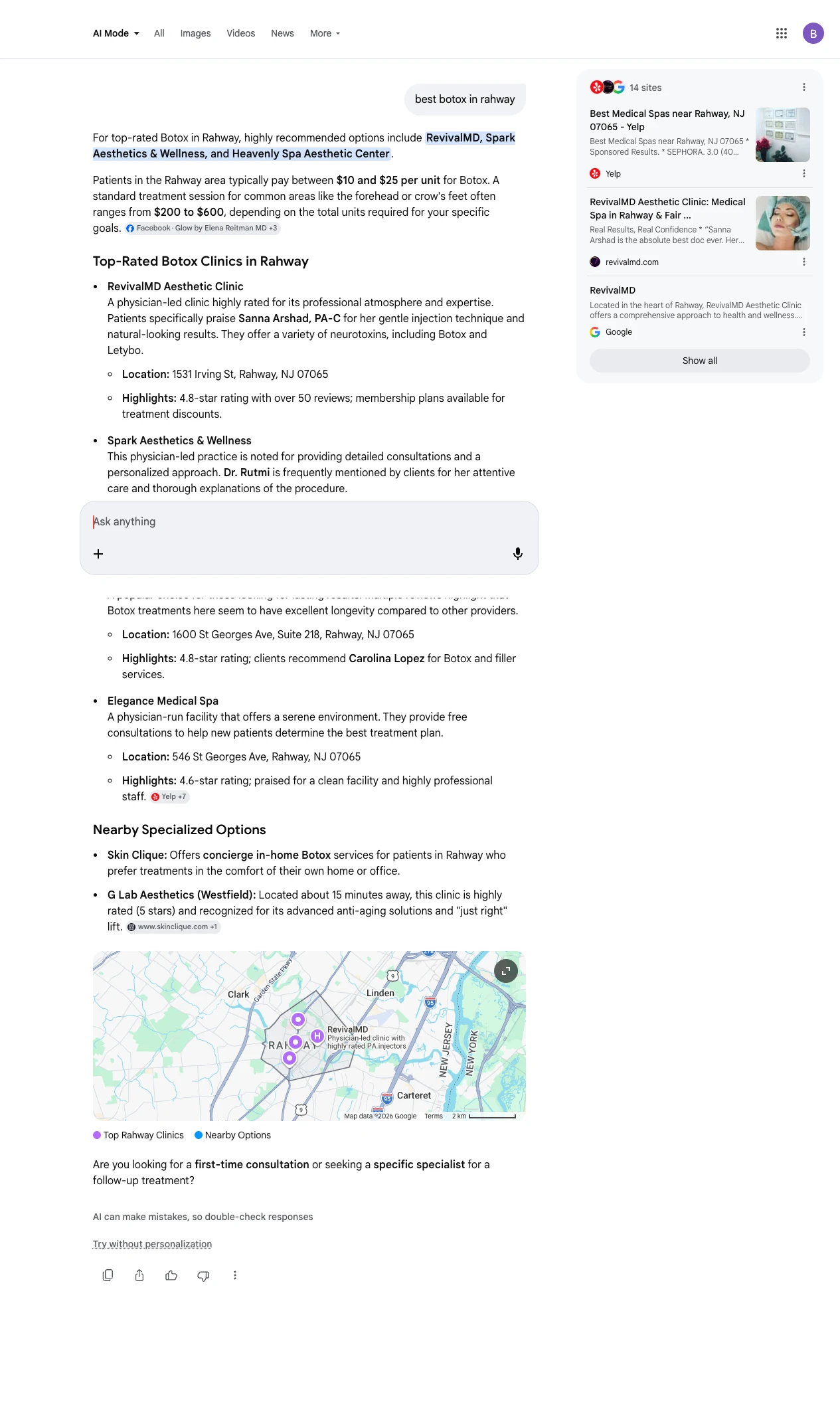
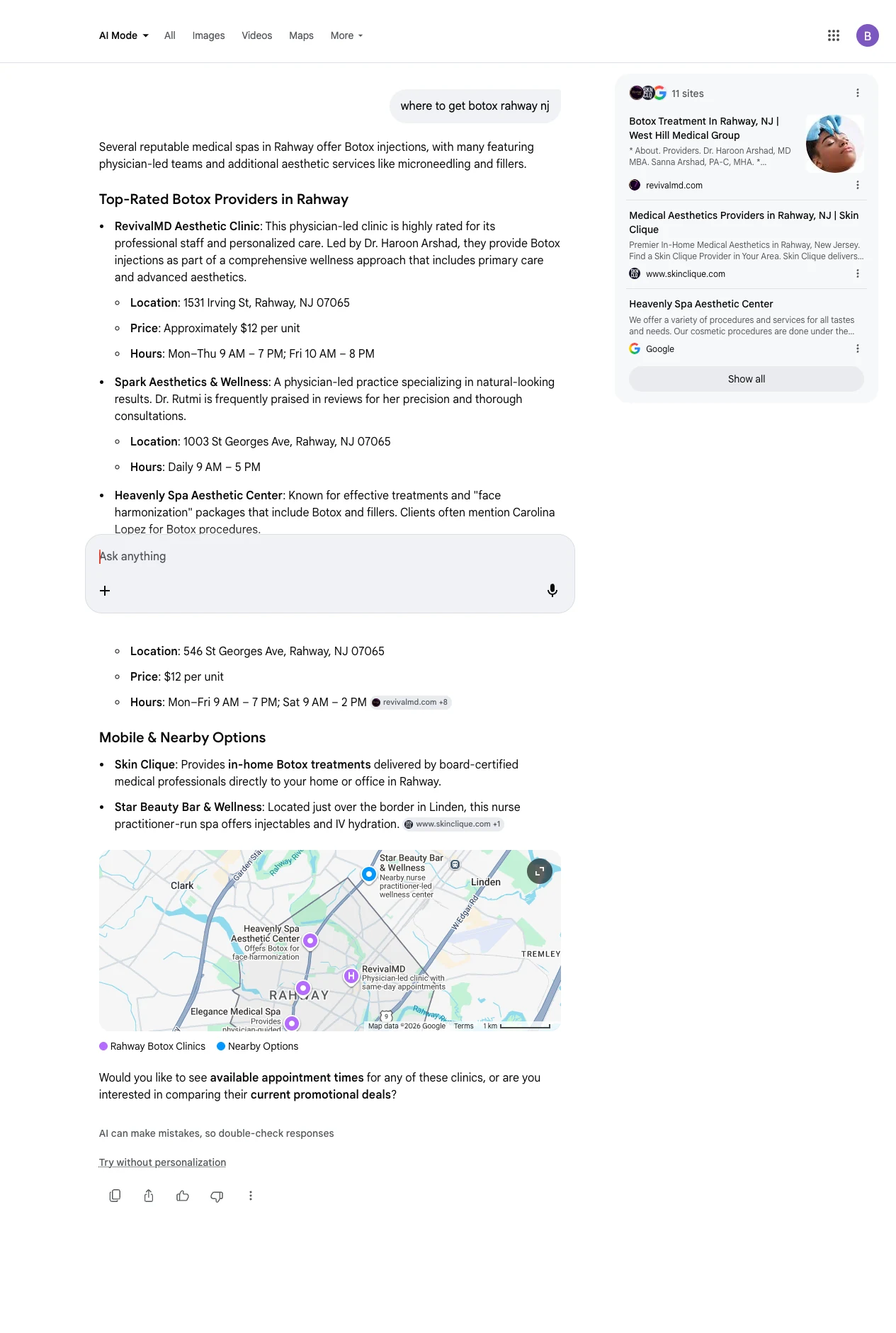
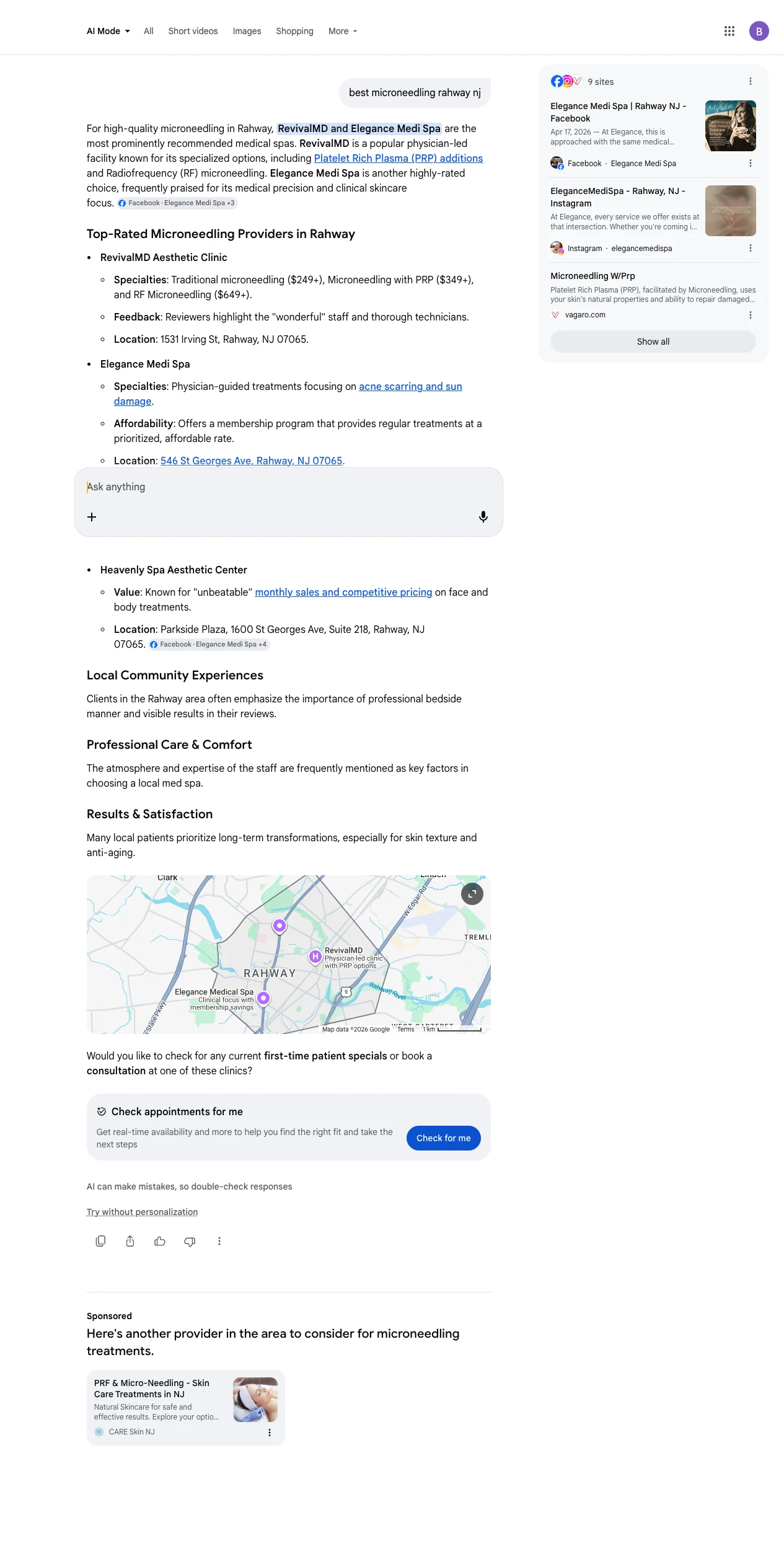
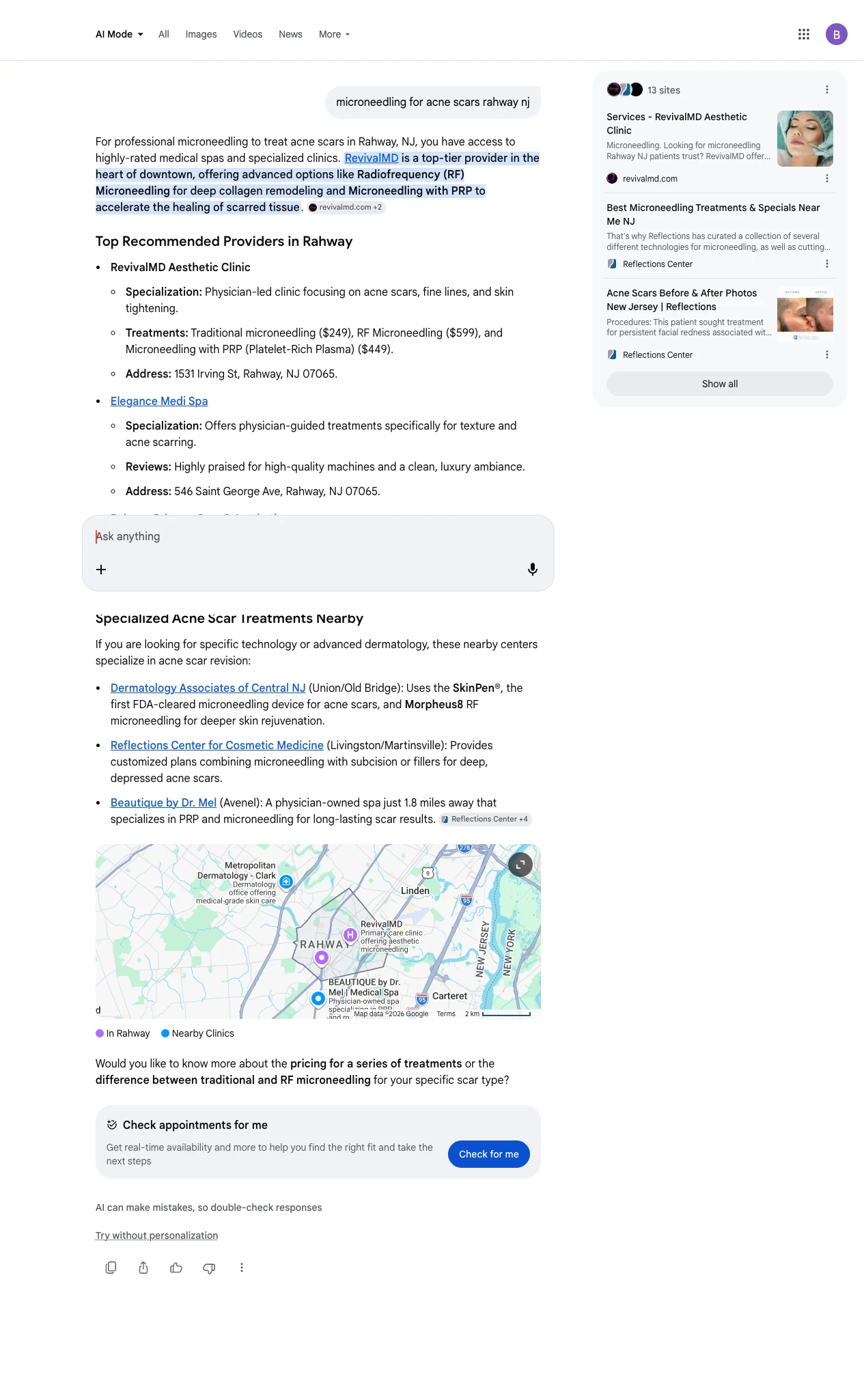
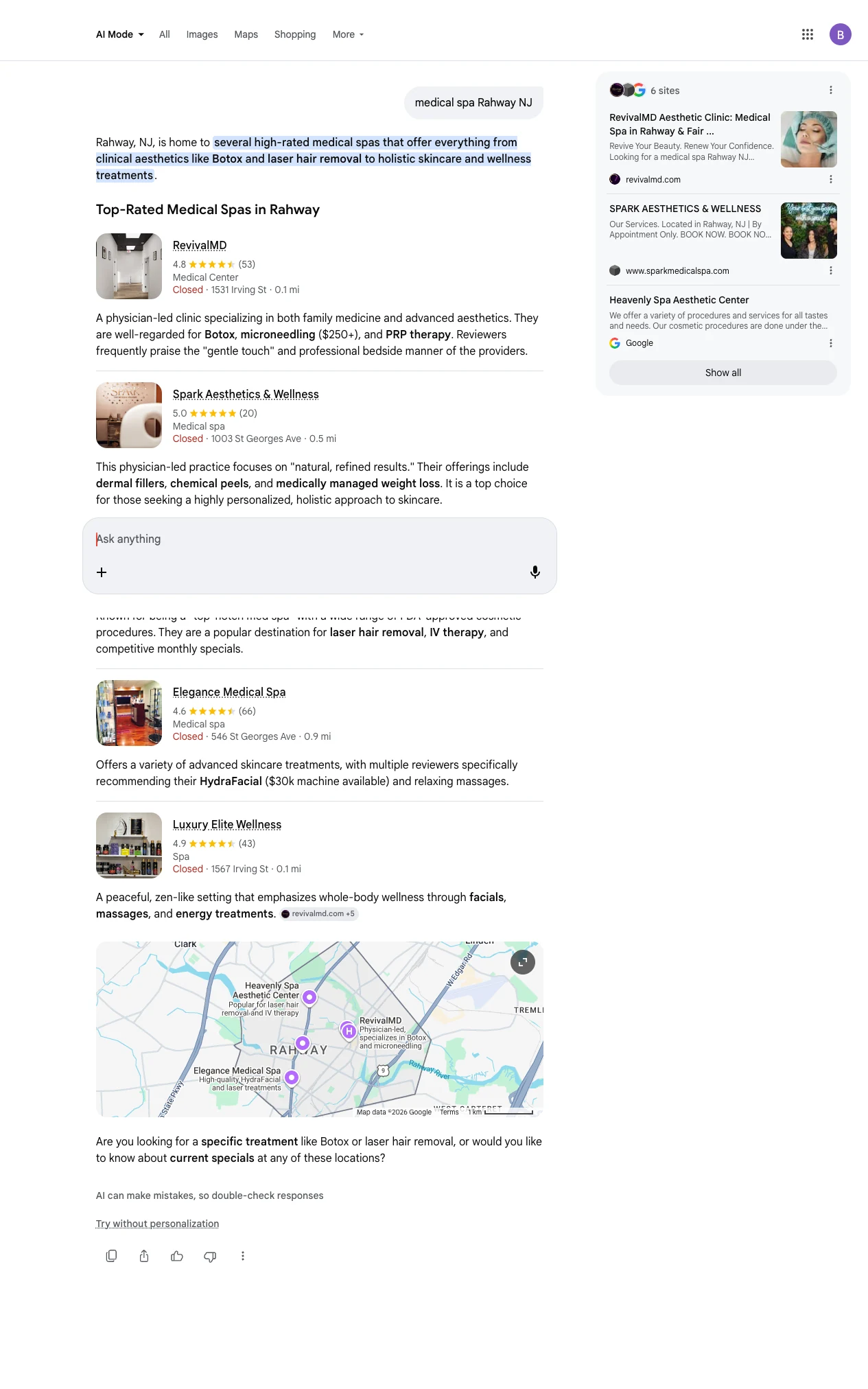
- 10/10 queries cited in Google AI Mode
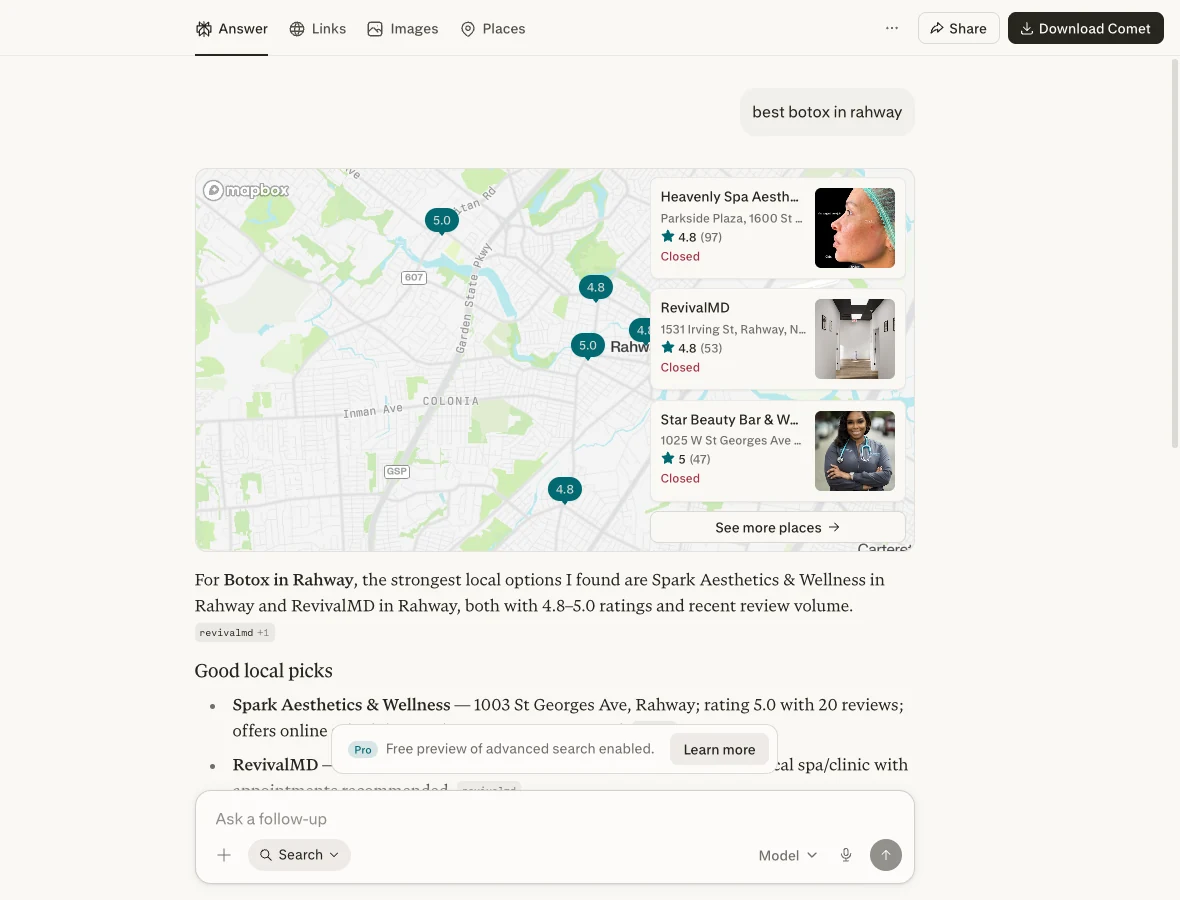
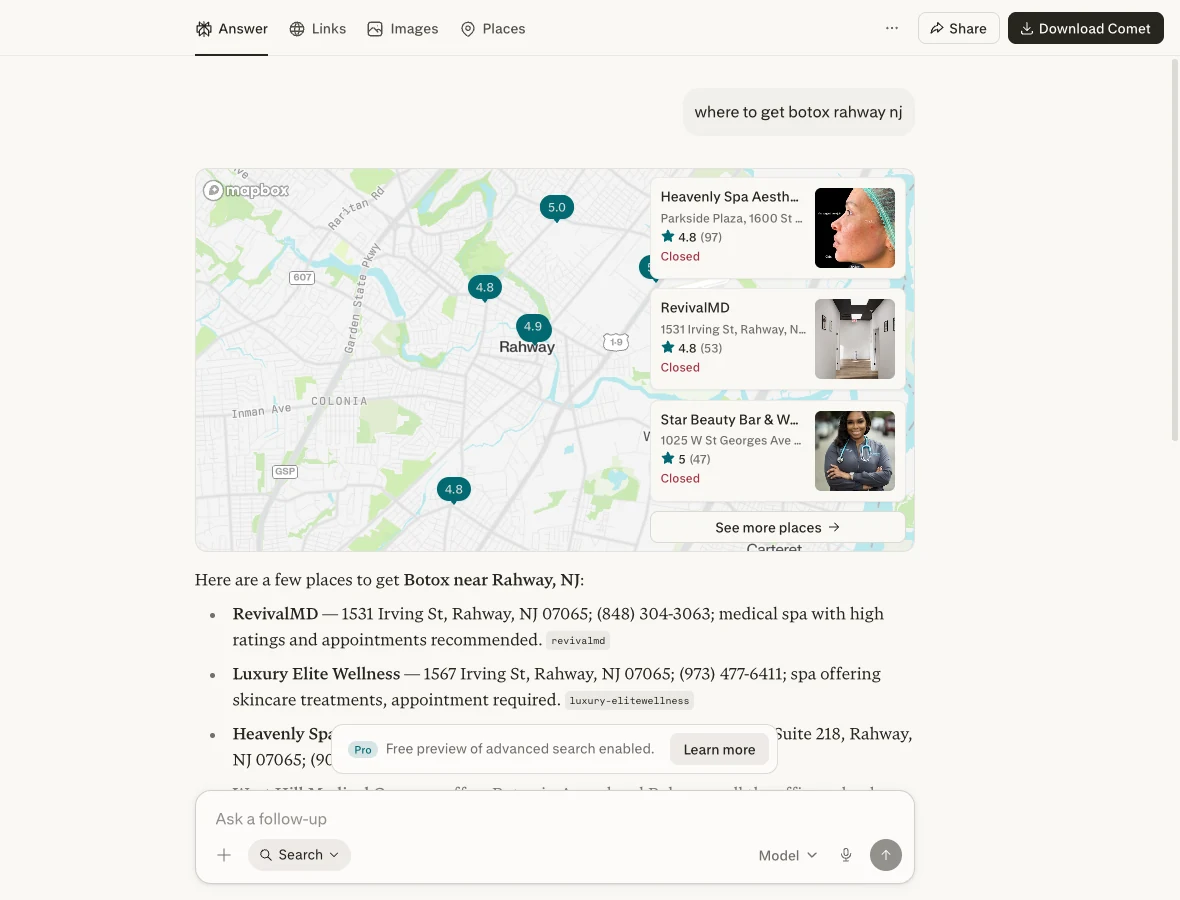
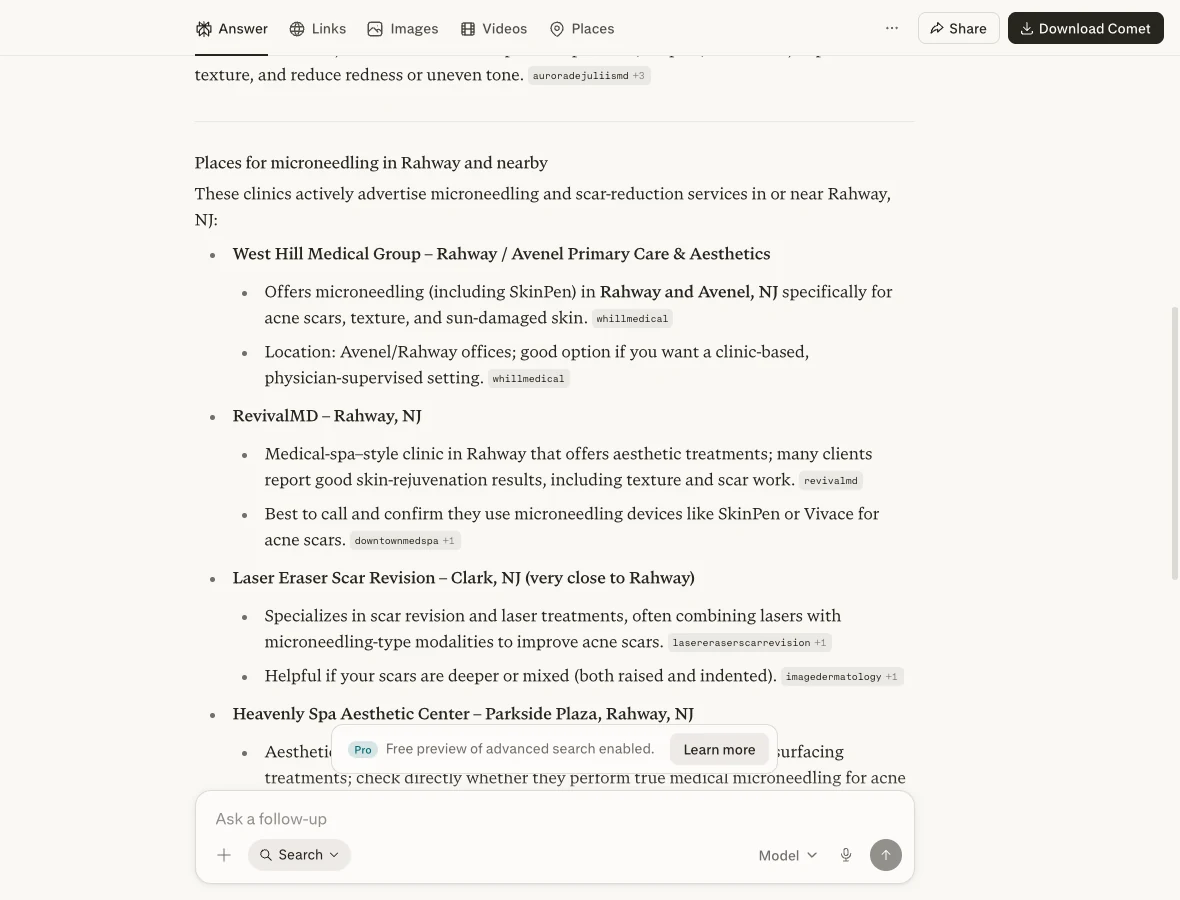
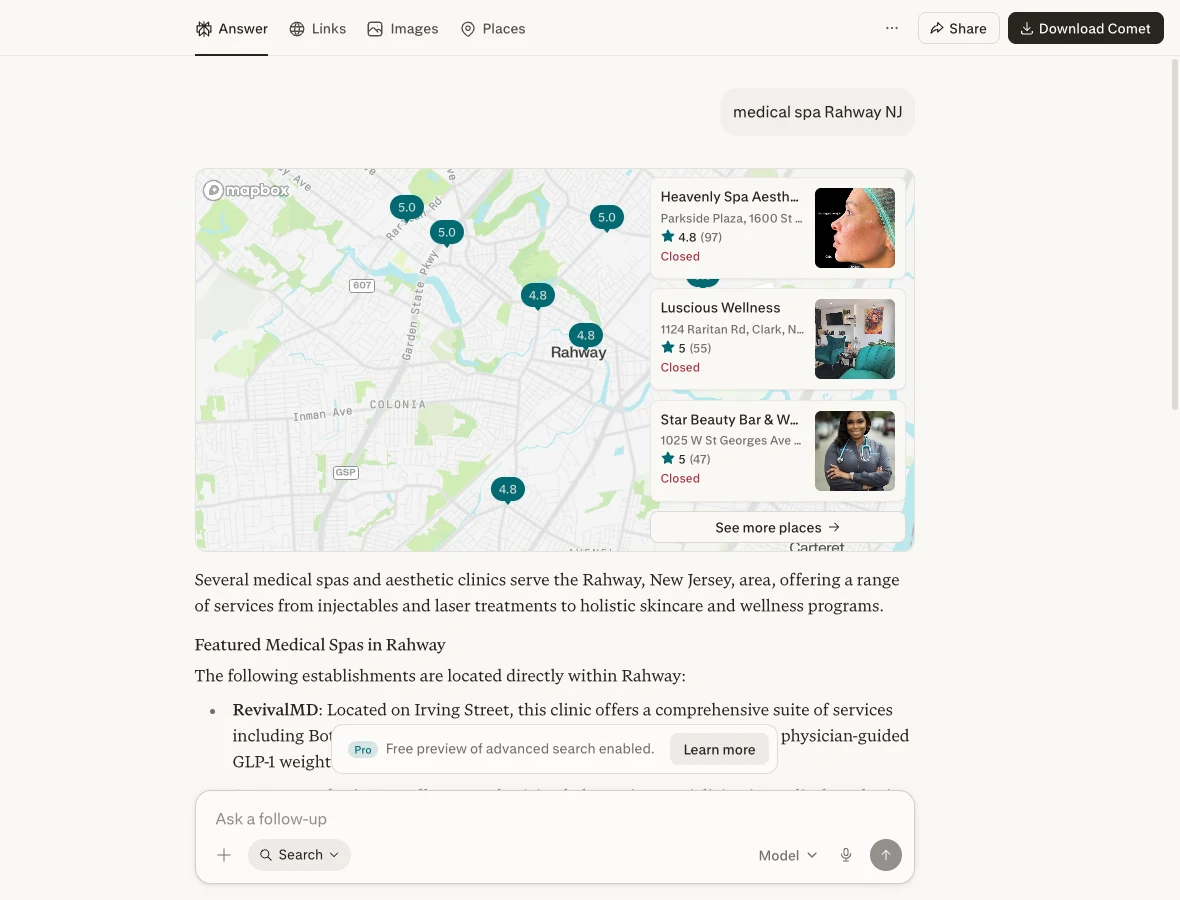
- 10/10 queries cited in Perplexity
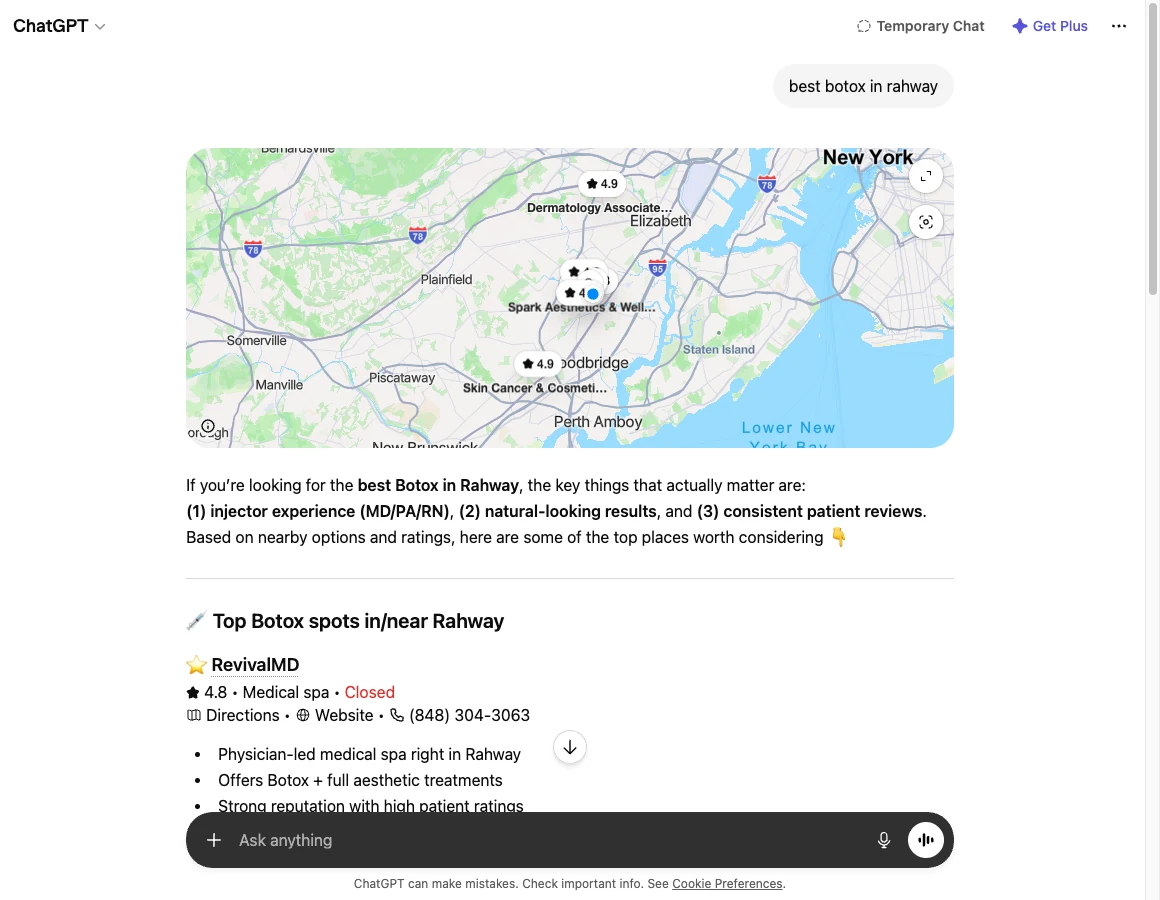
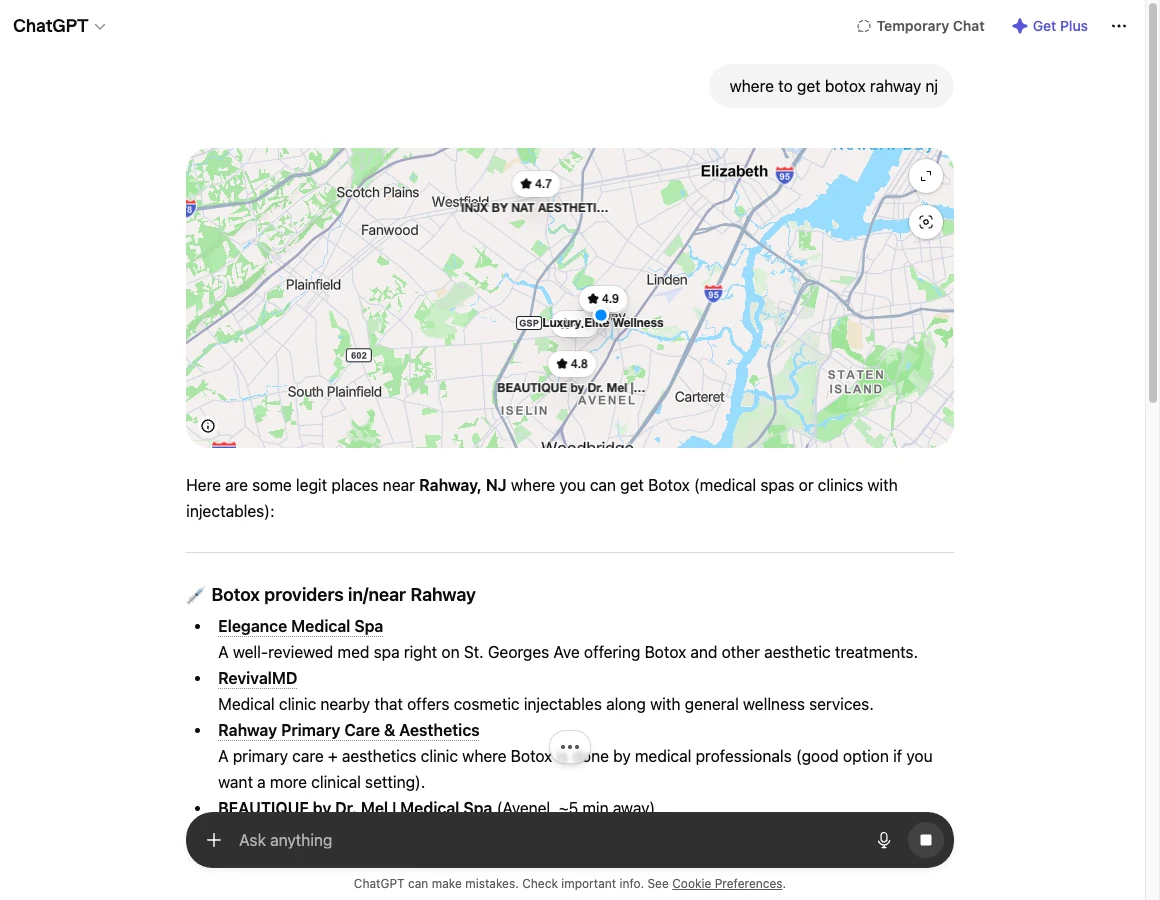
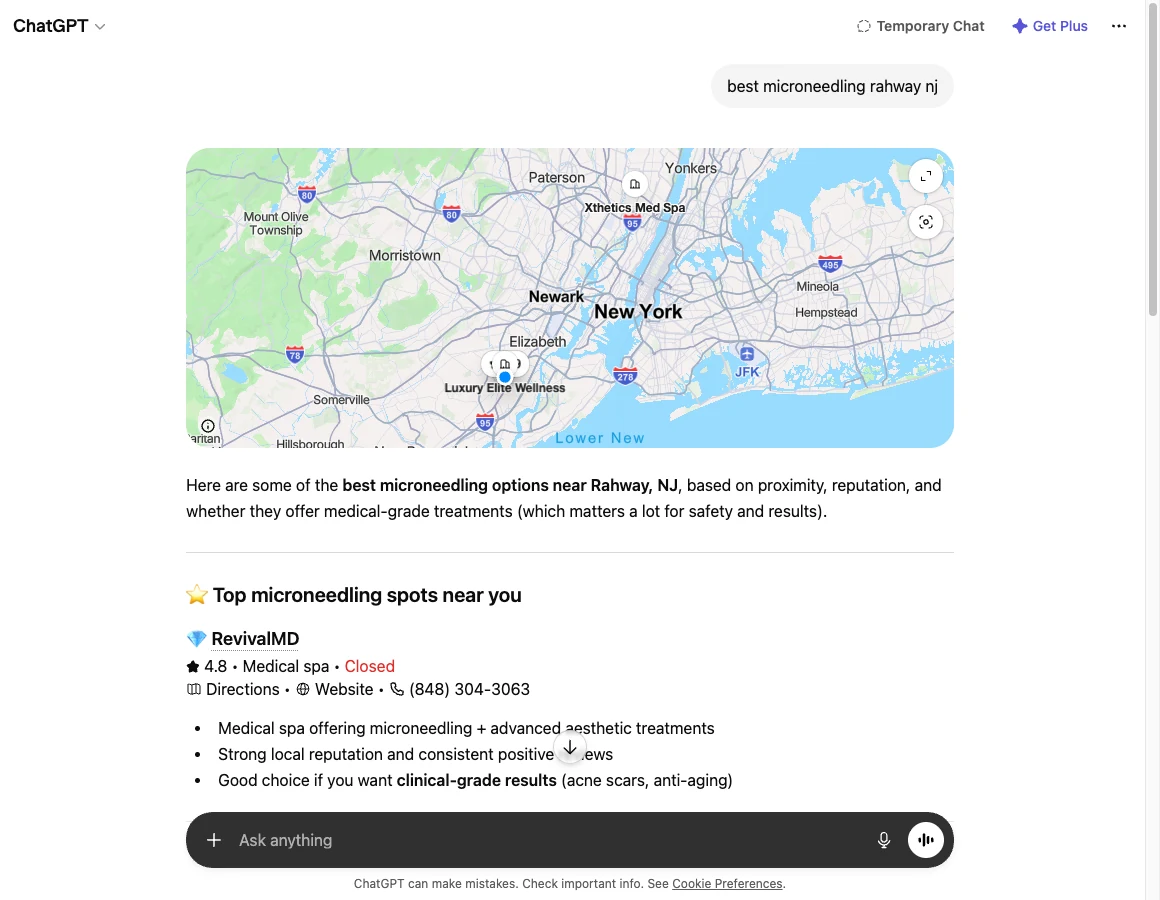
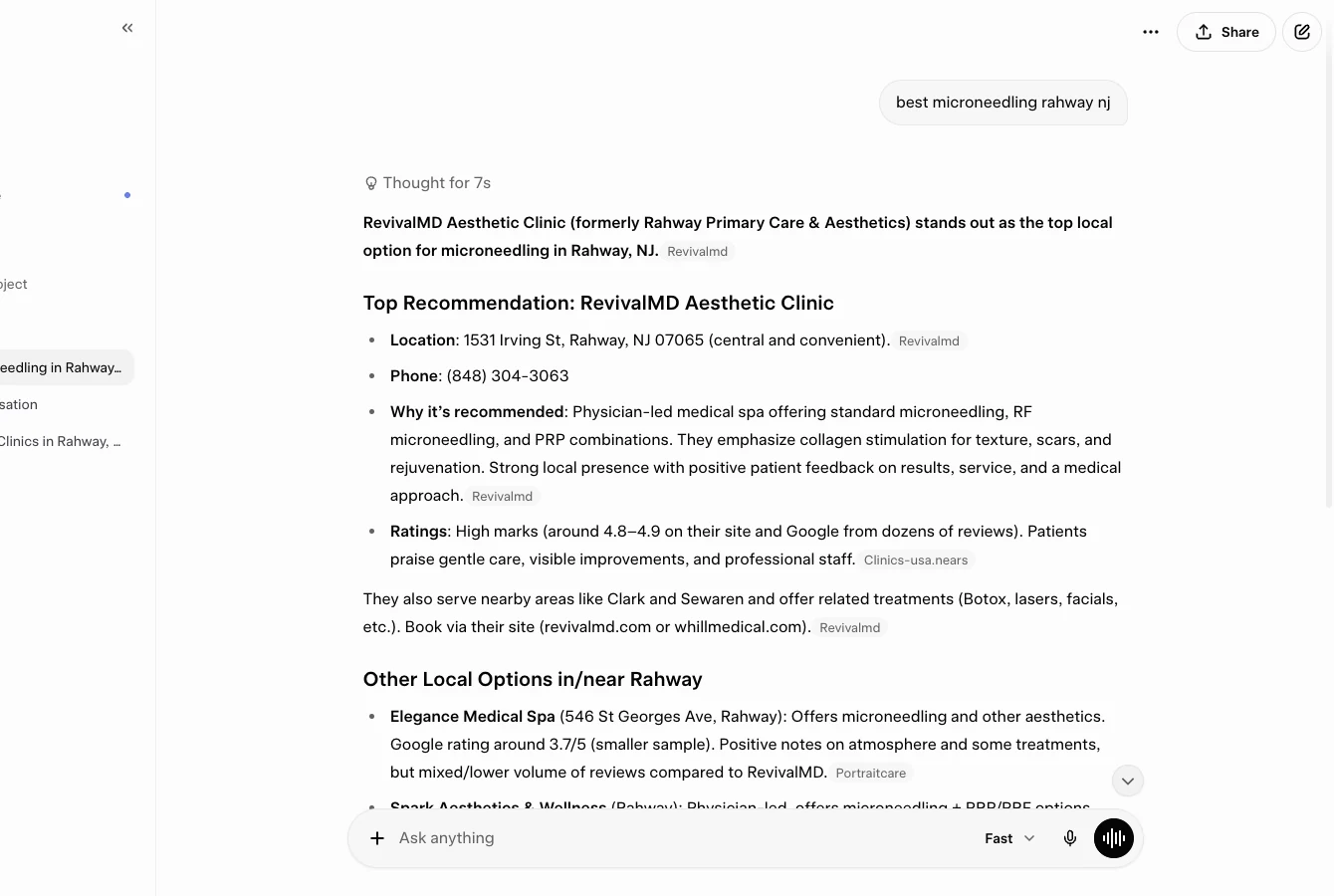
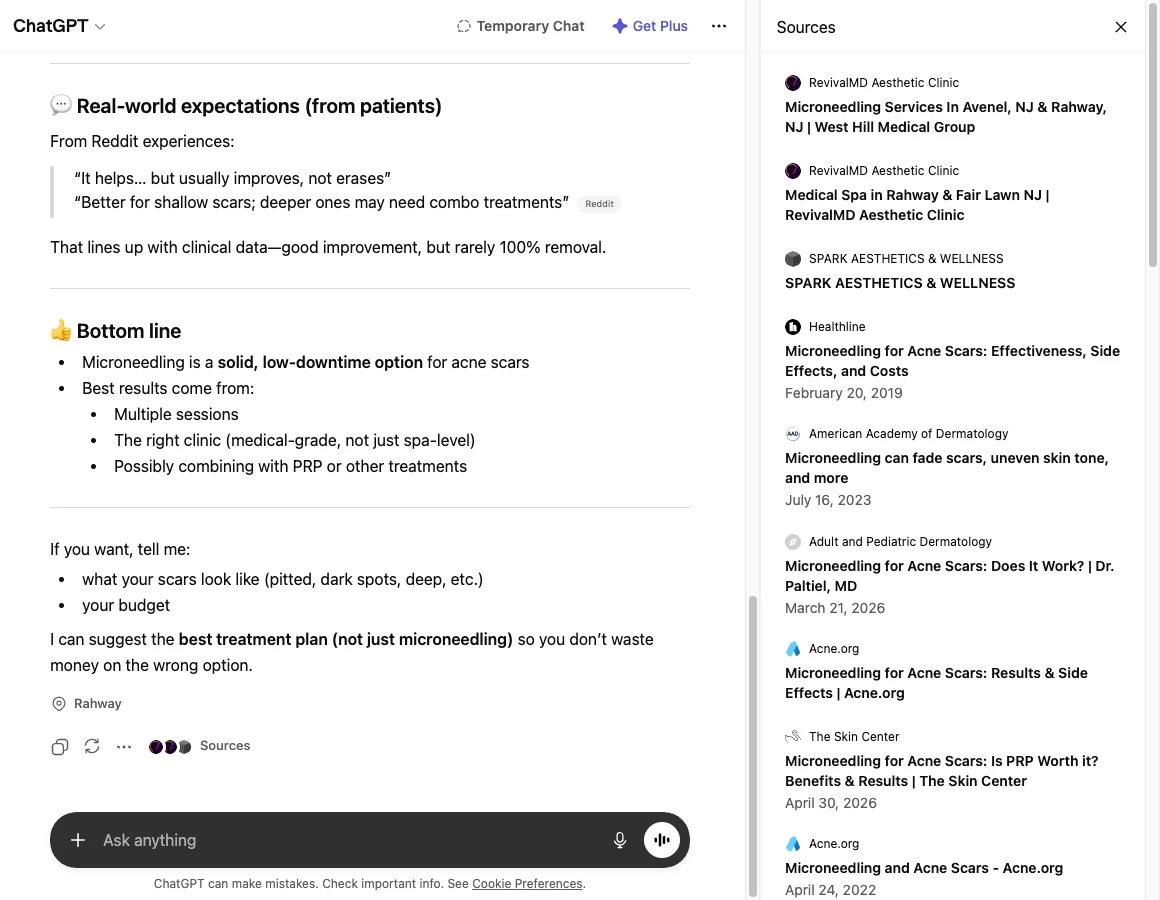
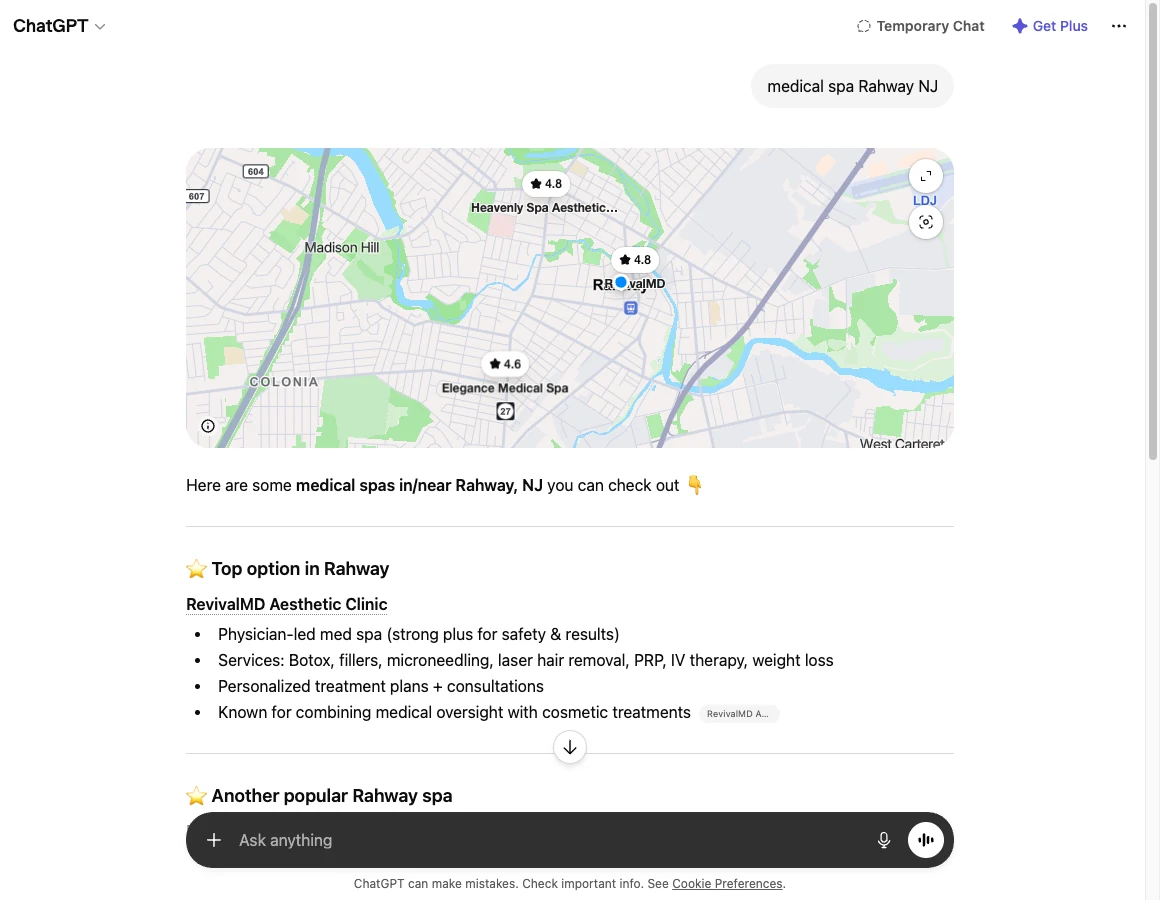
- 9/10 queries cited in ChatGPT
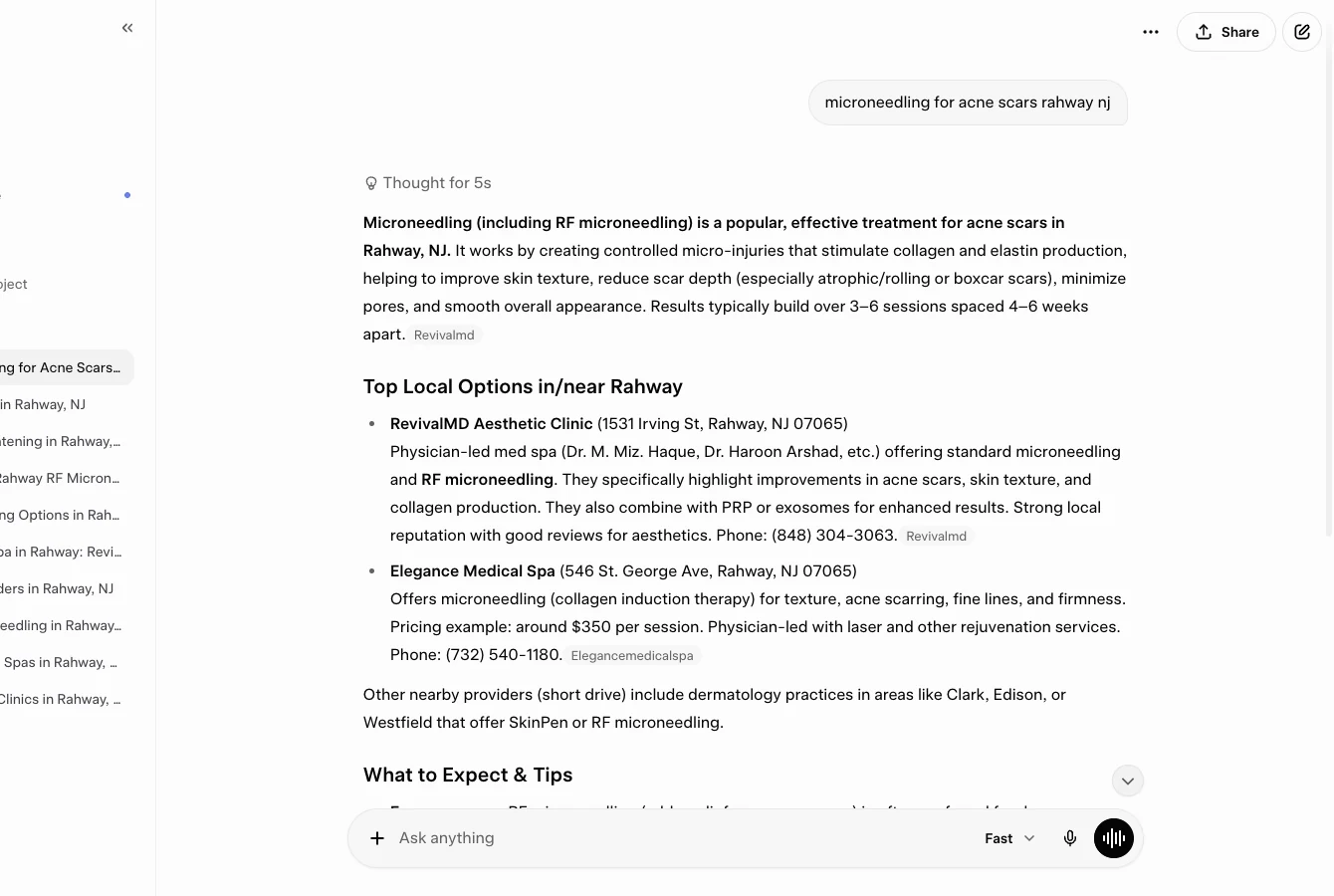
- 6/10 queries cited in Grok
- 6 queries cited in all four AI surfaces simultaneously
- 2 queries cited in three AI surfaces despite ranking only #4 organically. The AI clearly preferred RevivalMD’s content over higher-ranked competitors.
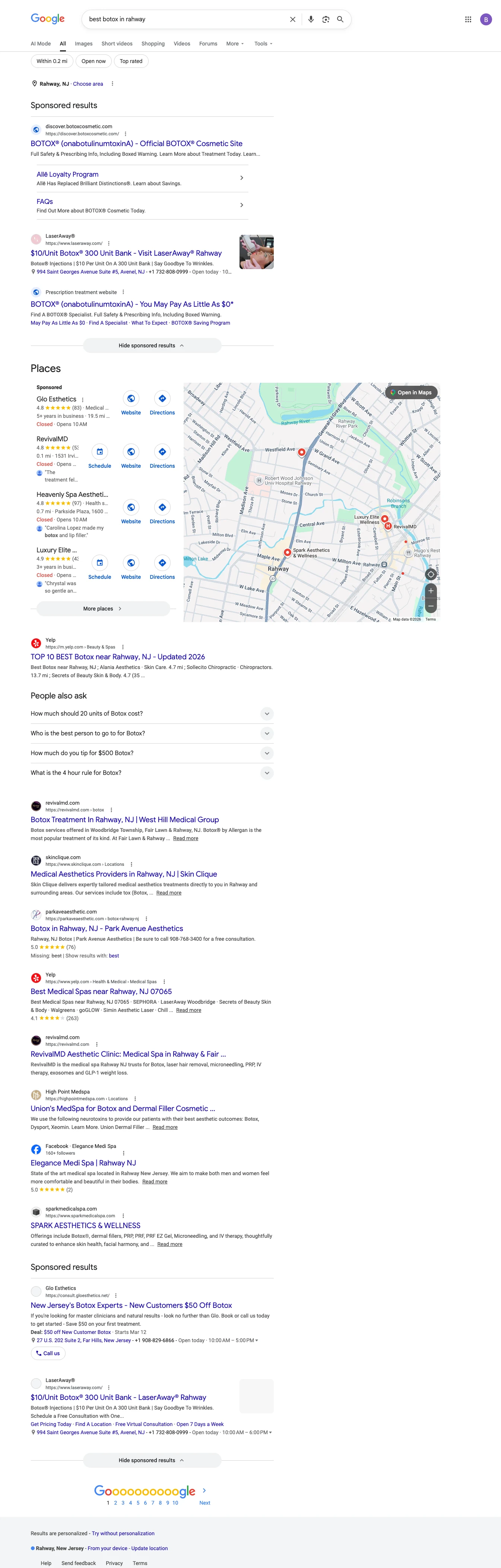
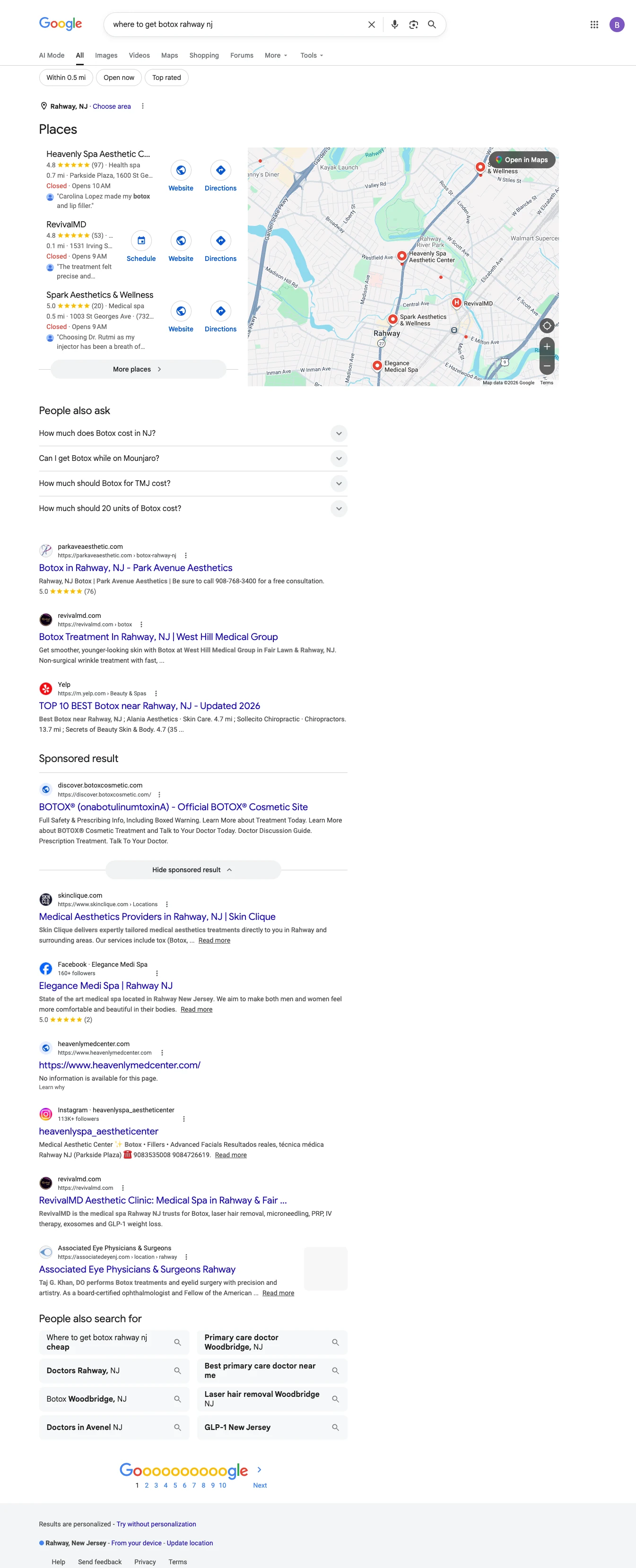
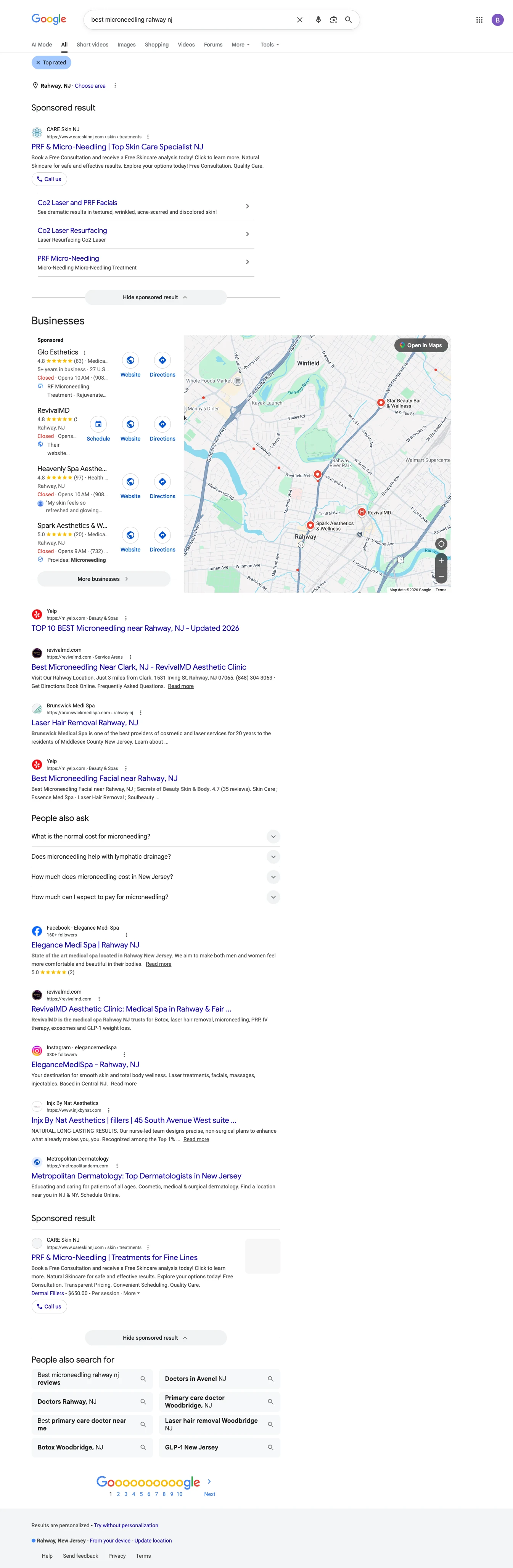
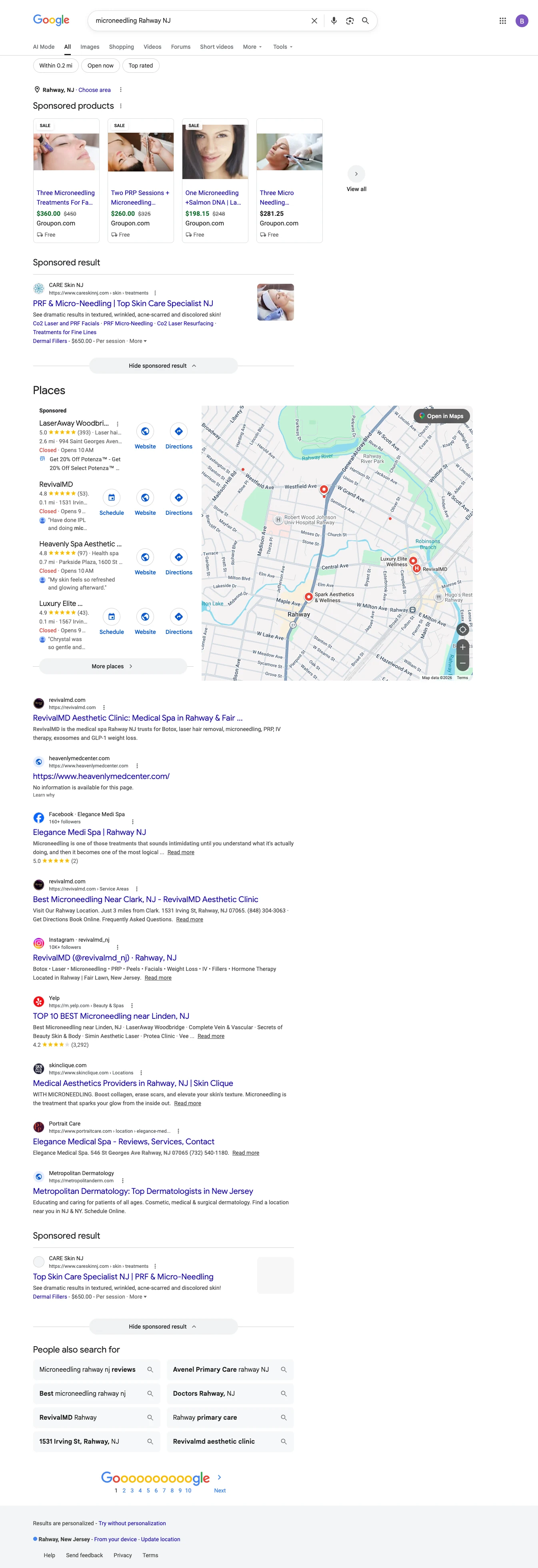
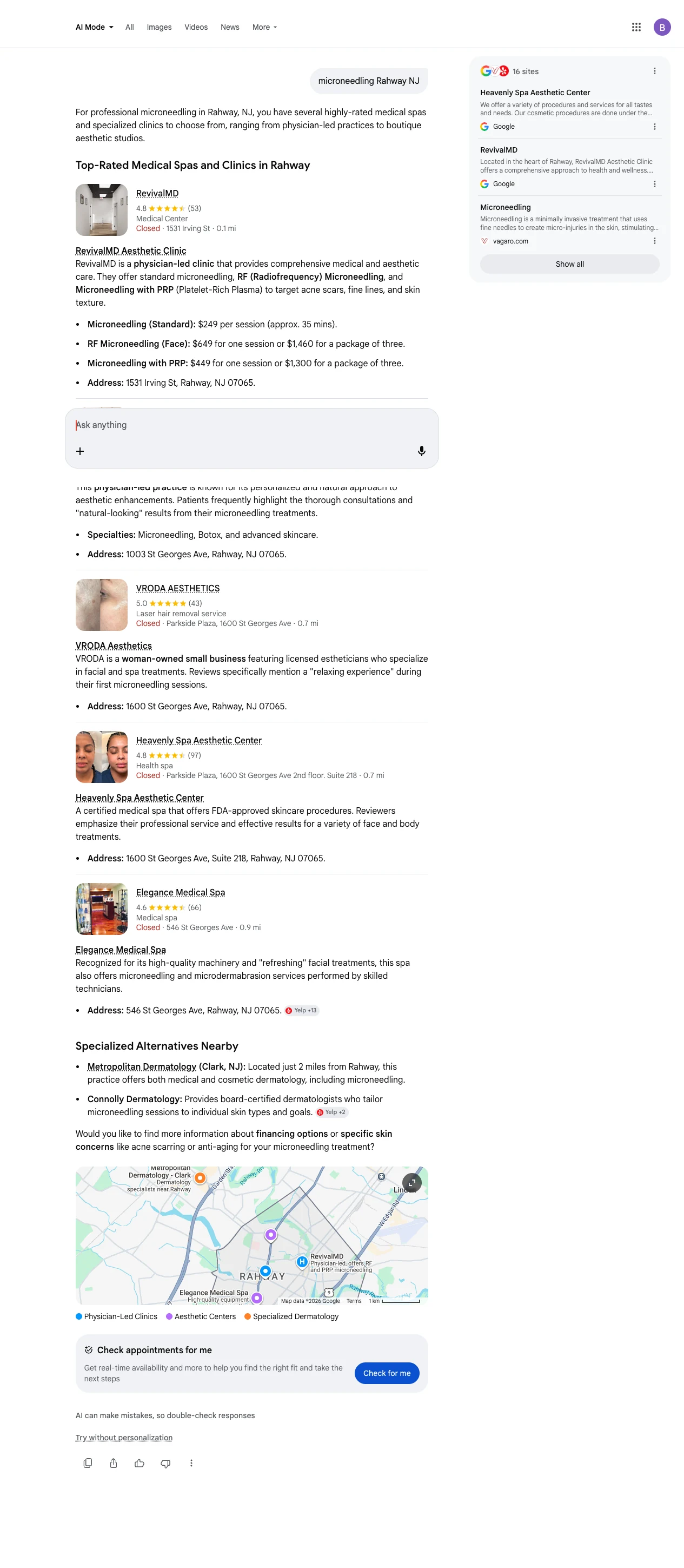
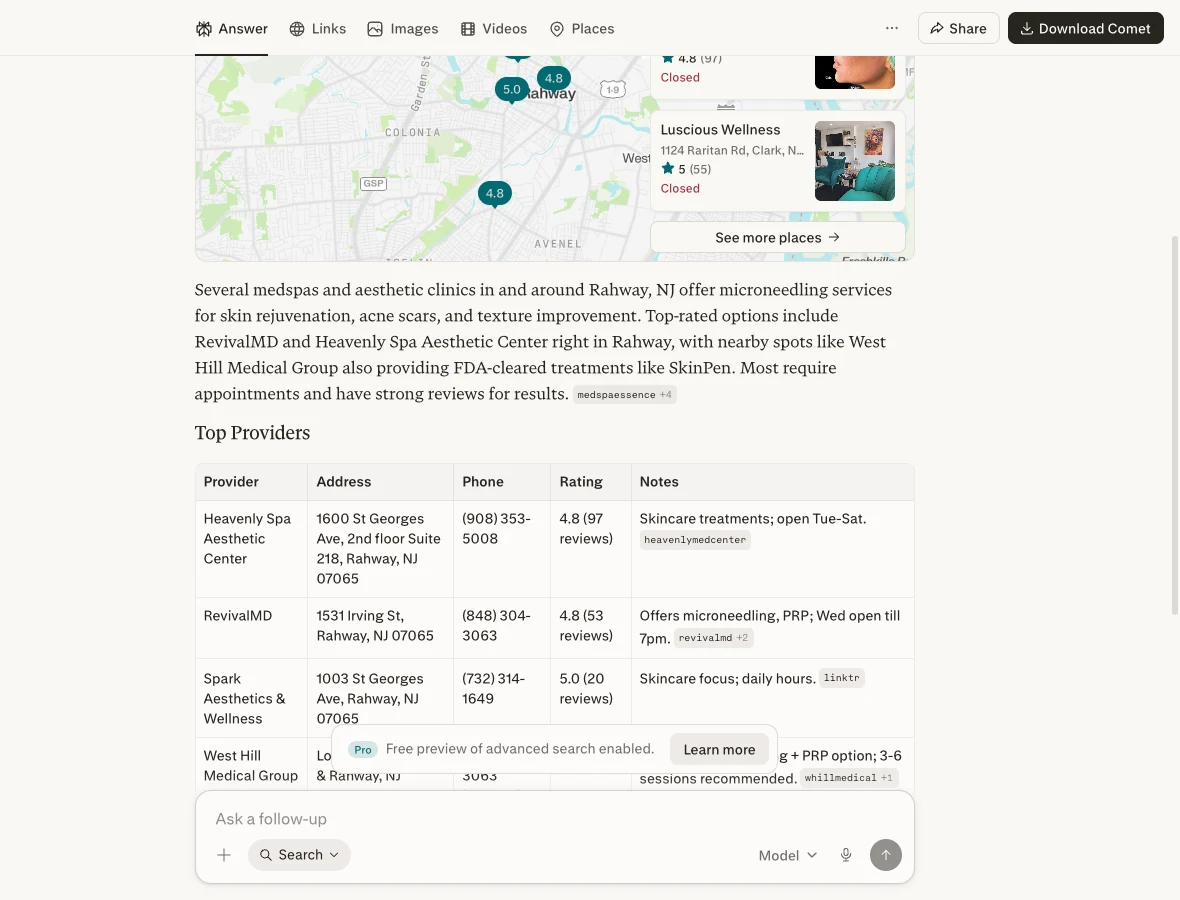
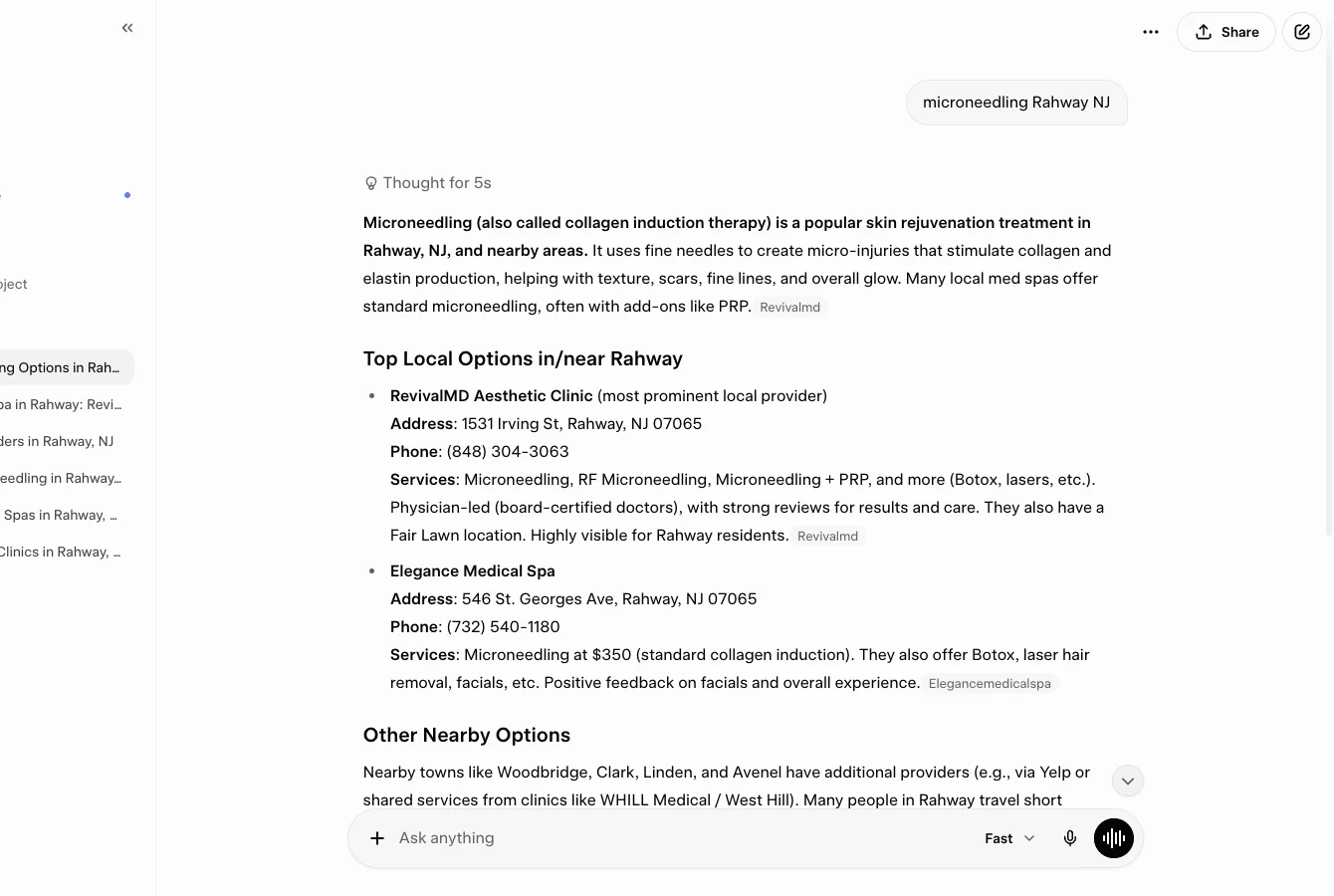
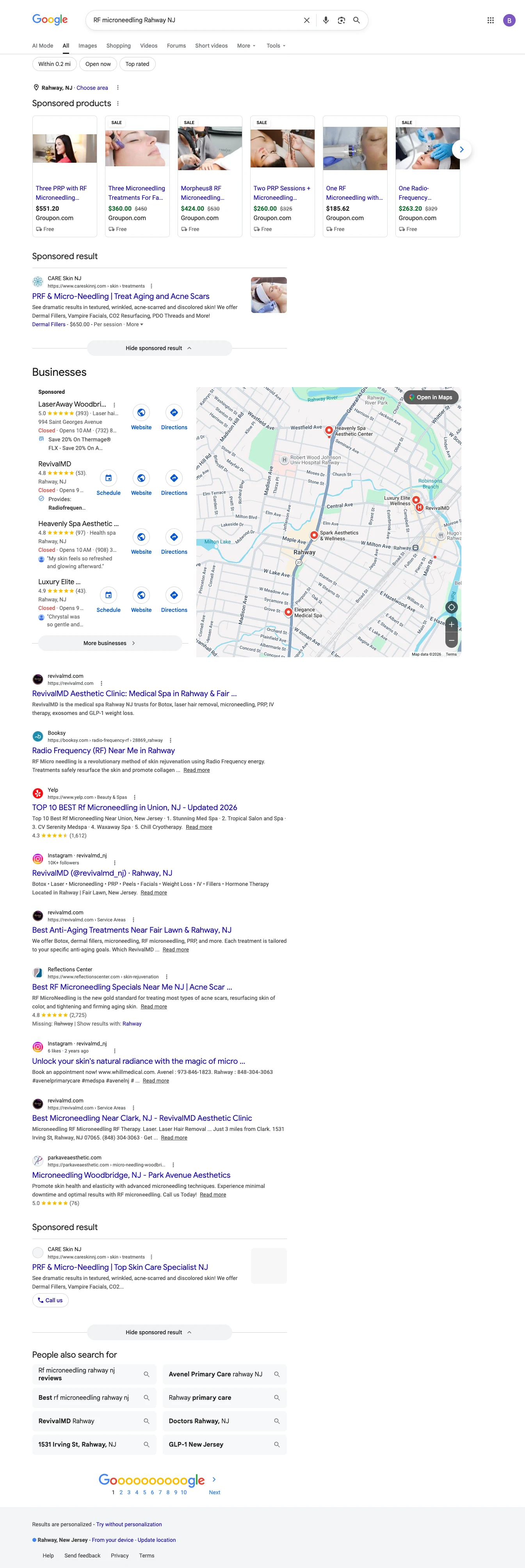
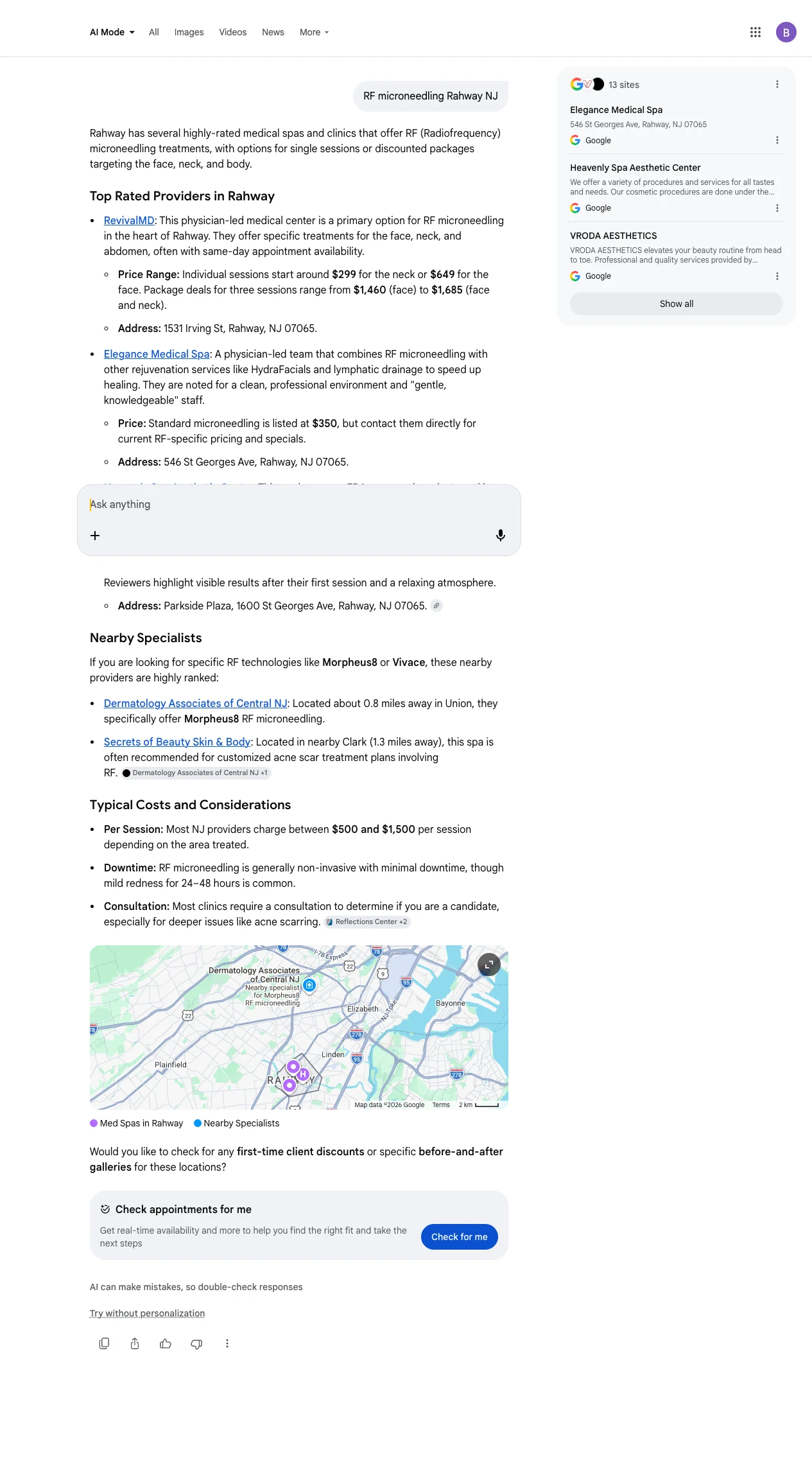
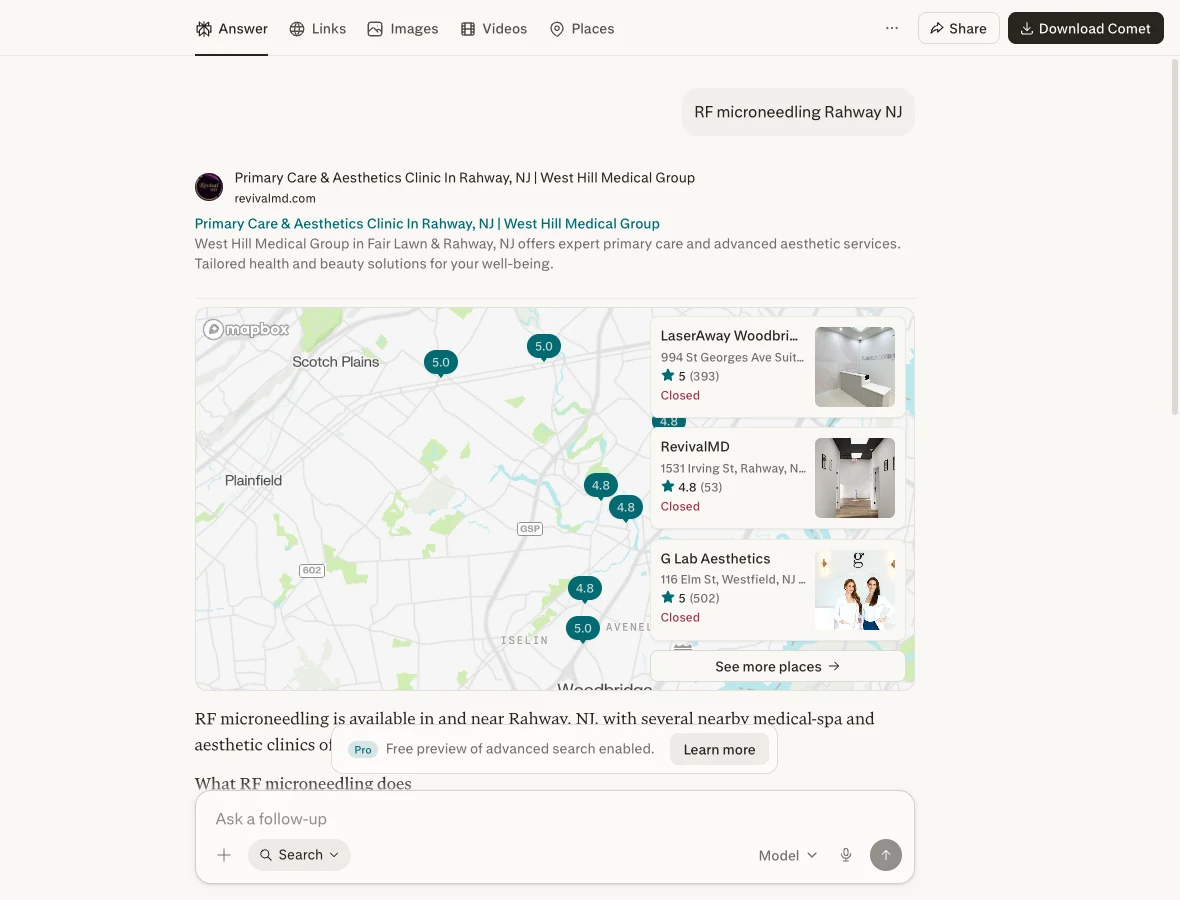
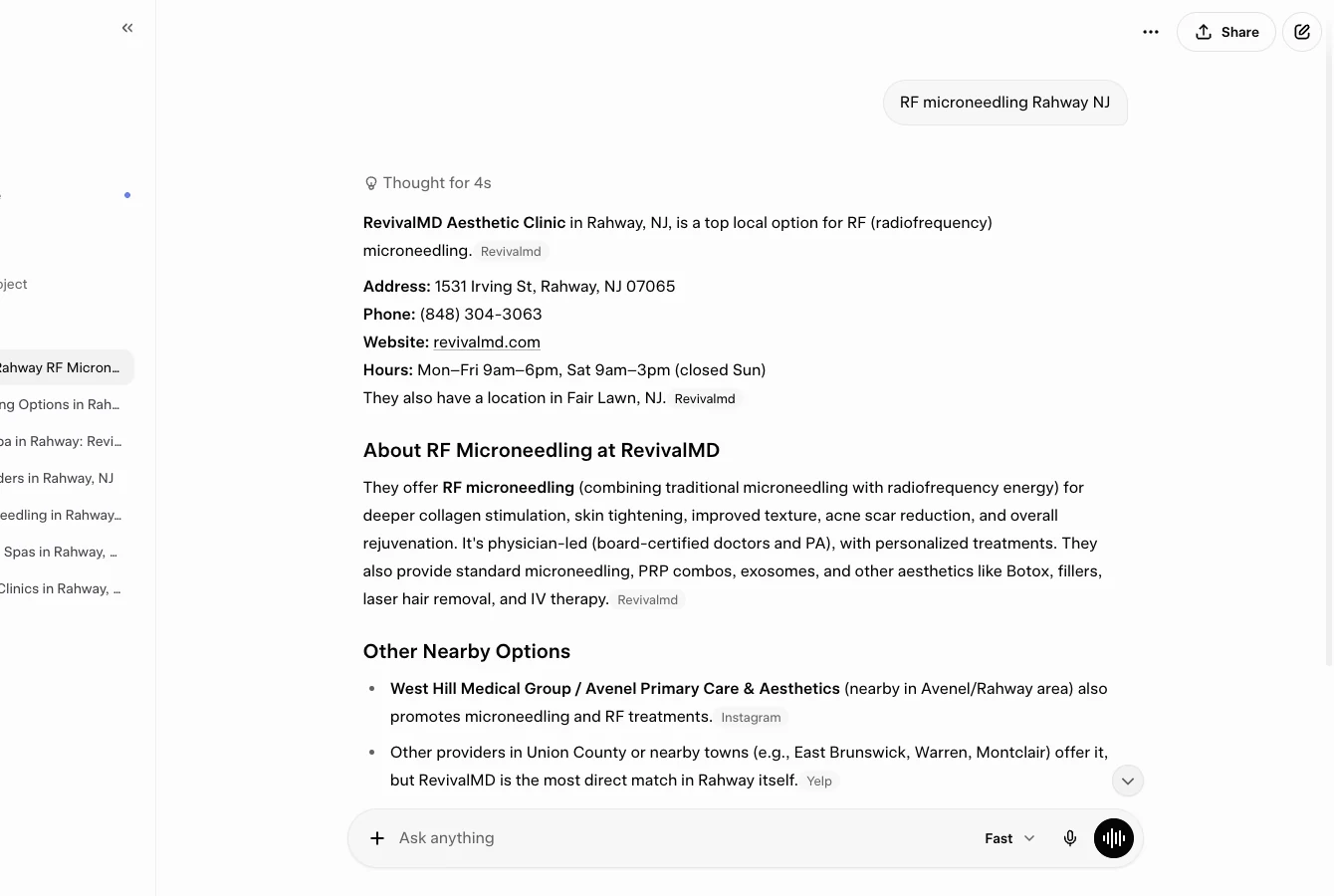
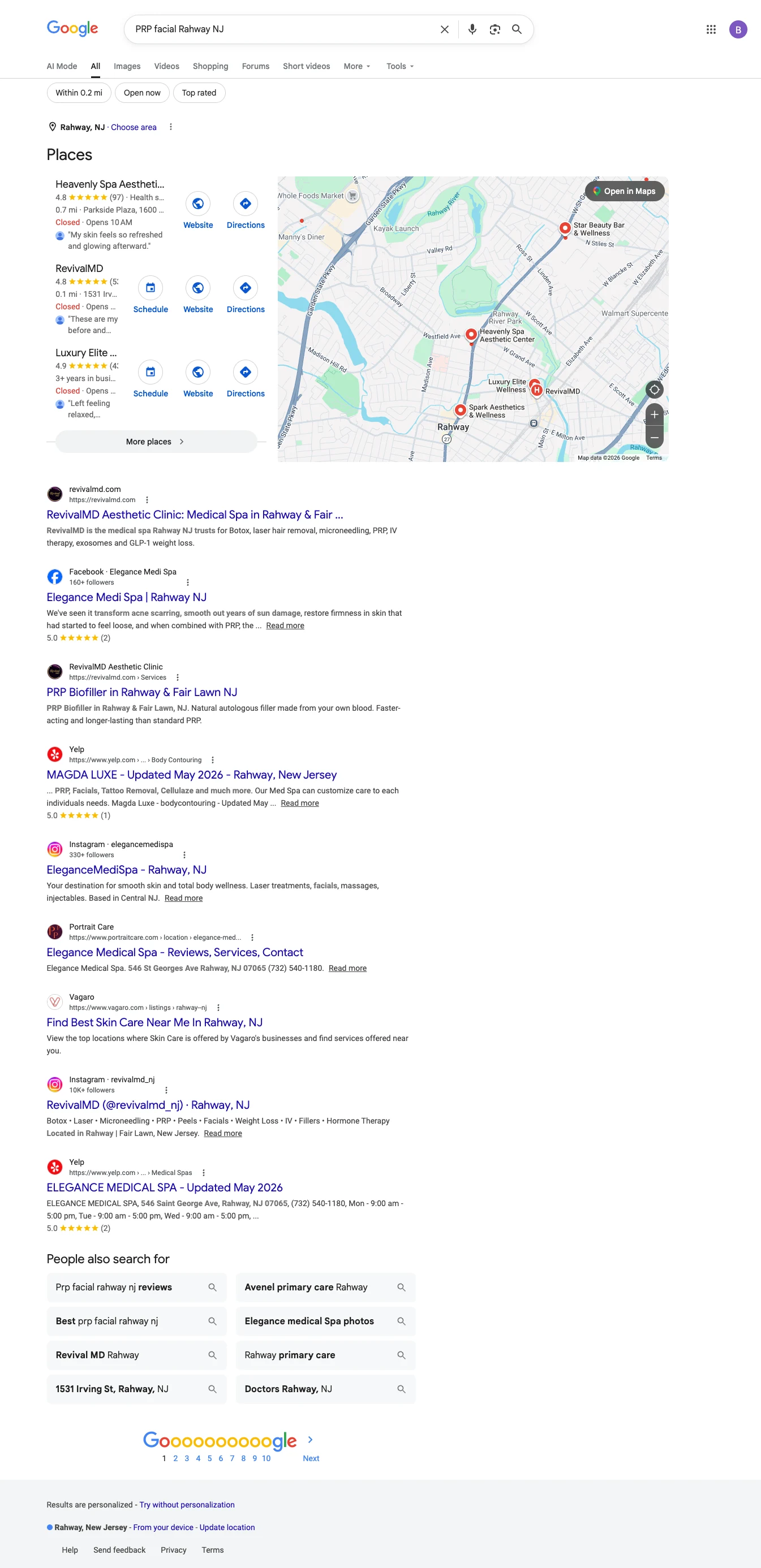
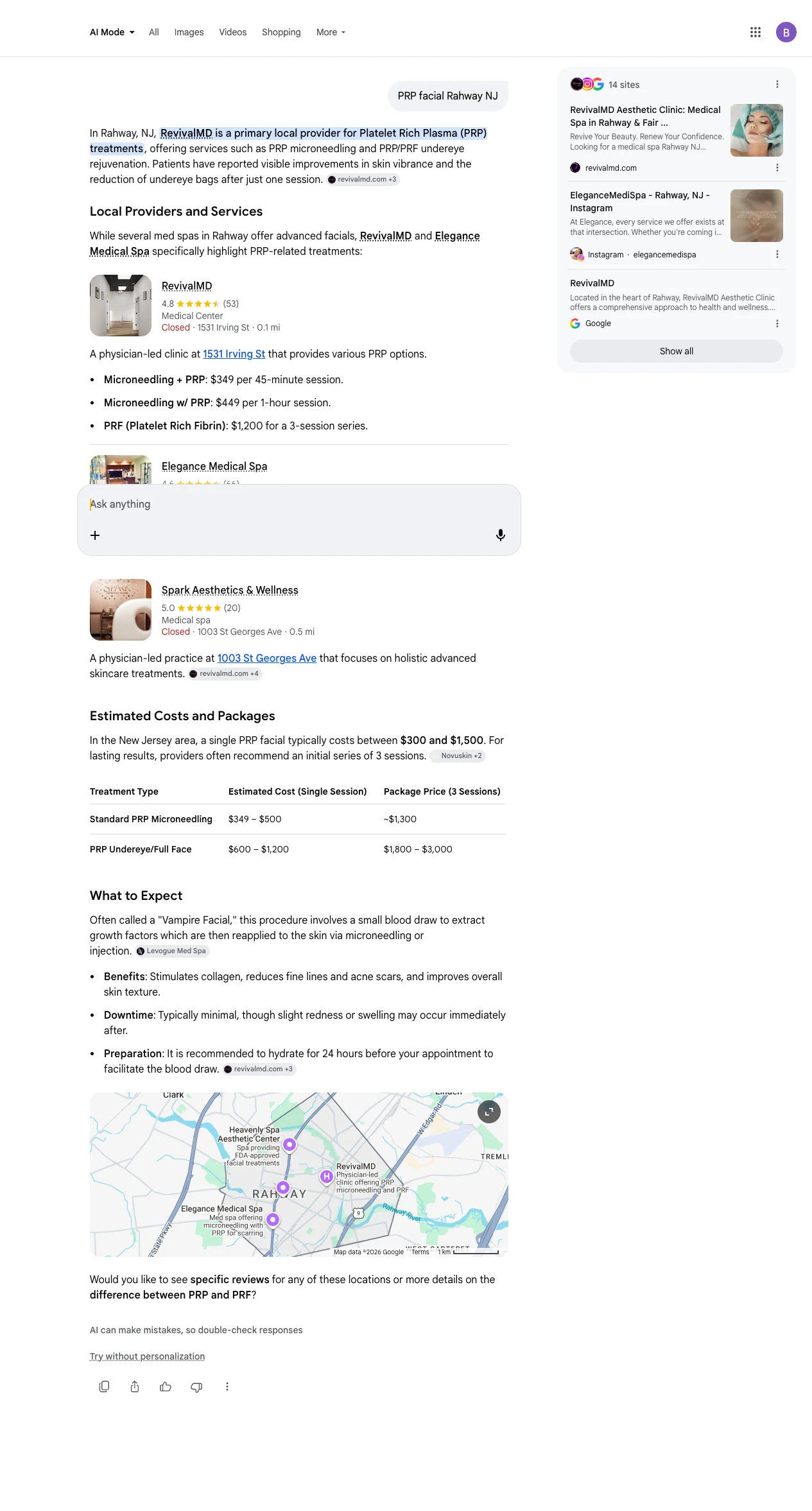
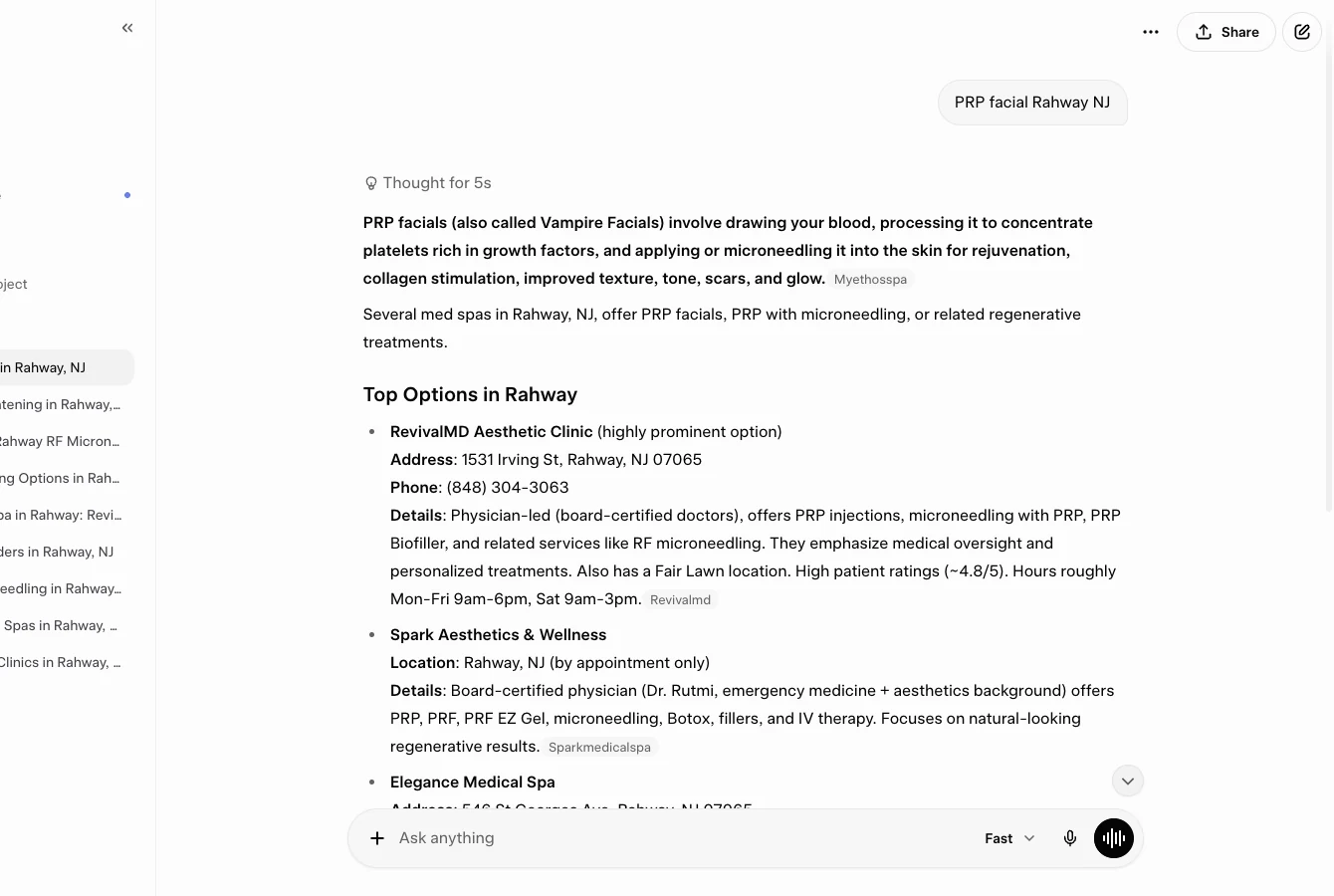
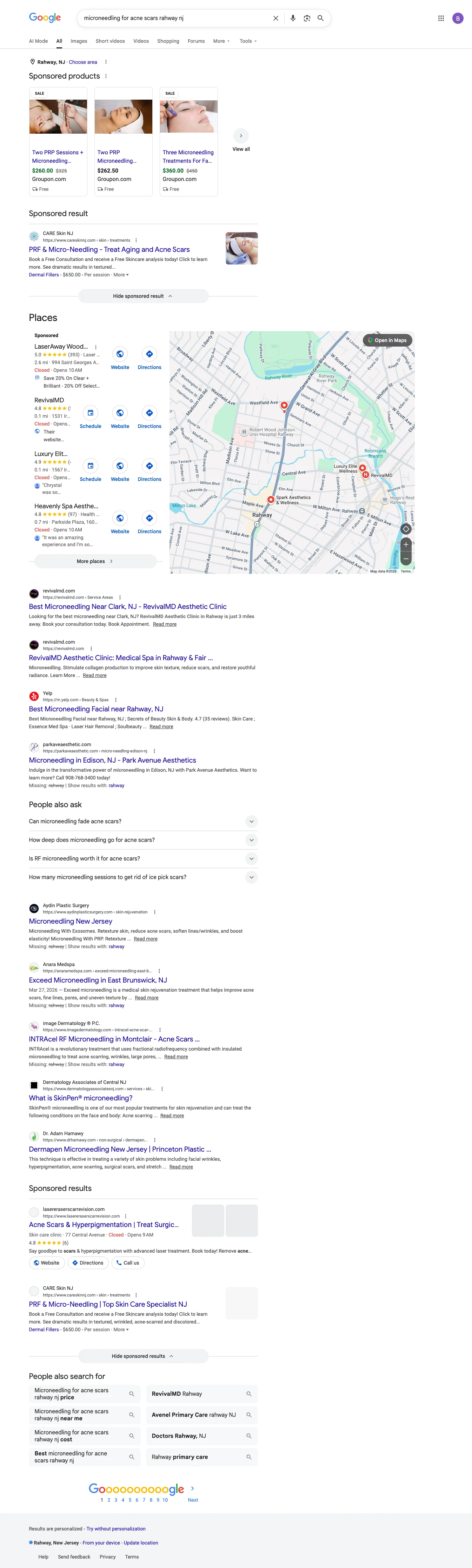
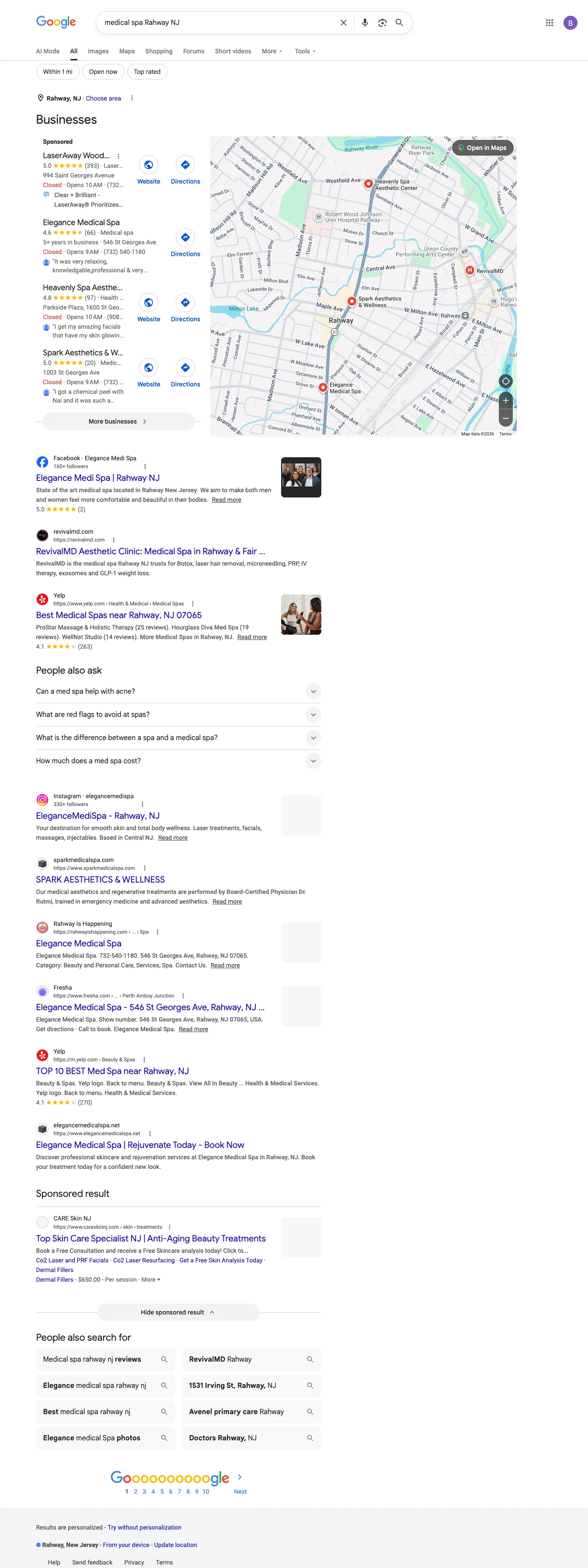
Below: the actual evidence. Each panel shows the AI engine’s response on the date of capture, with RevivalMD highlighted as a recommended option. Click any panel to view the full screenshot.
"best botox in rahway"
"where to get botox rahway nj"
"best microneedling rahway nj"
"microneedling Rahway NJ"
"RF microneedling Rahway NJ"
"RF skin tightening Rahway NJ"
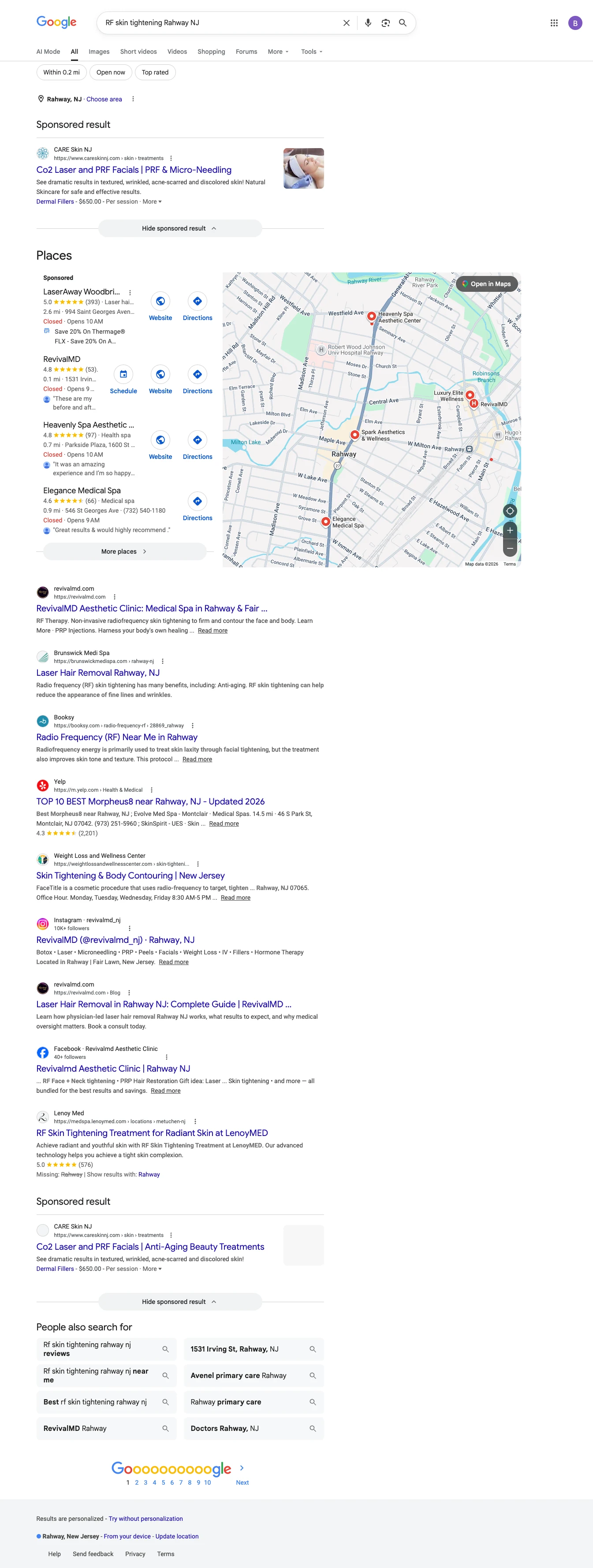
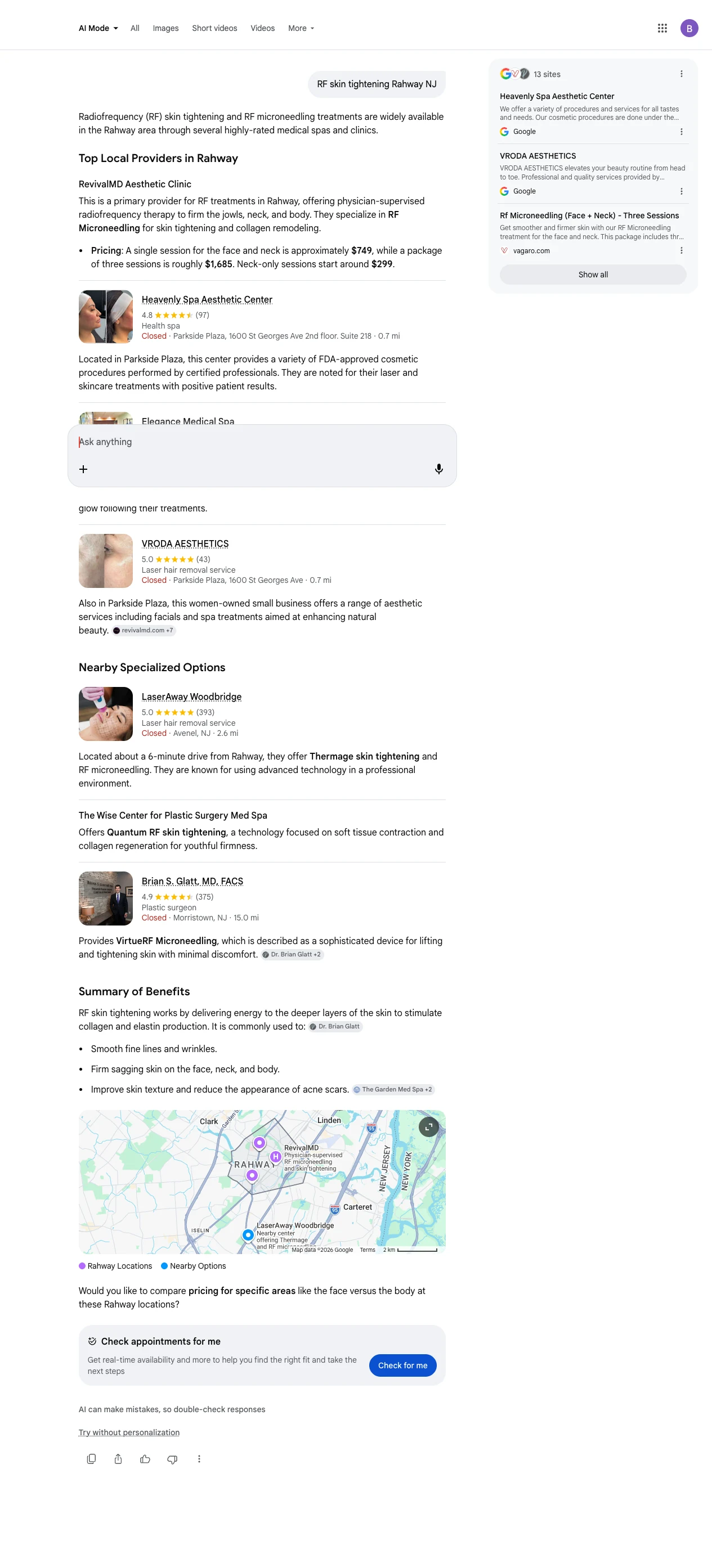
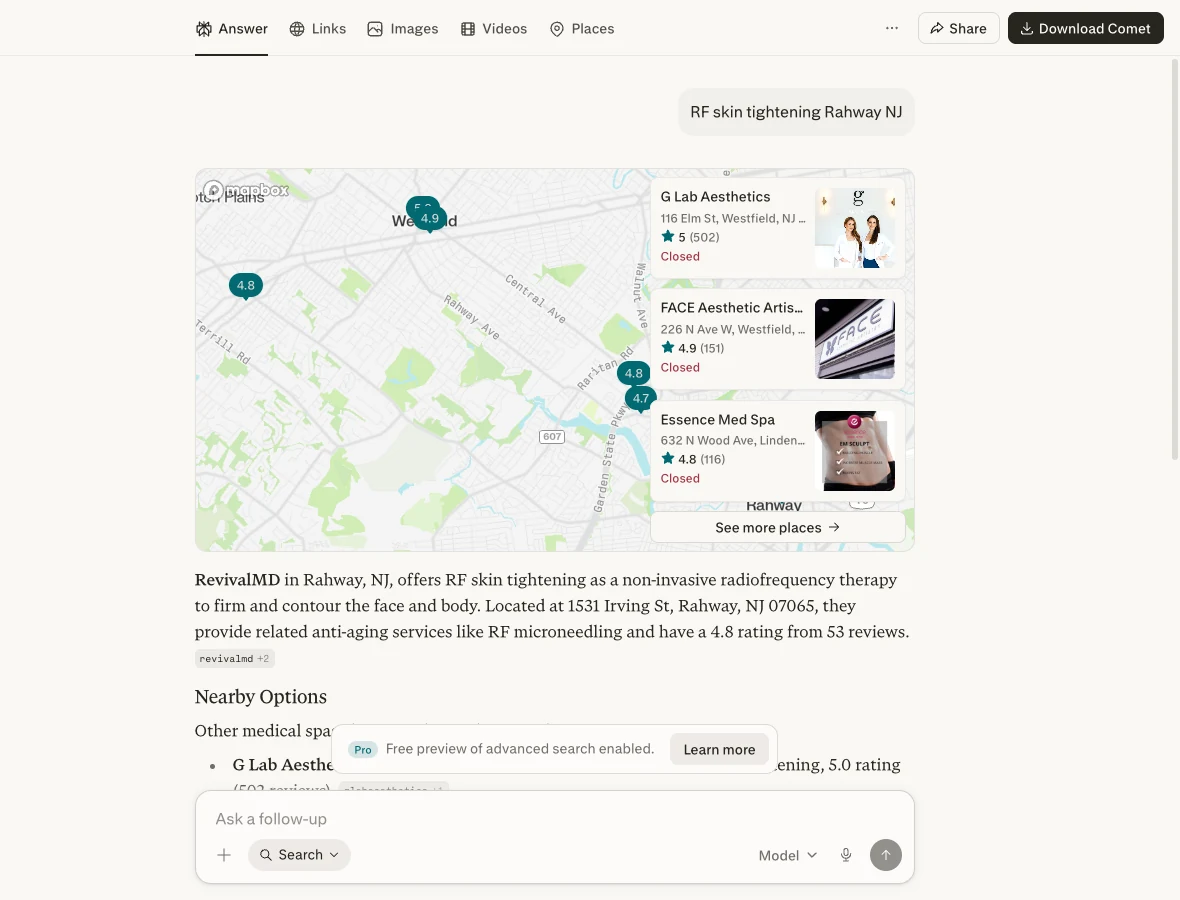
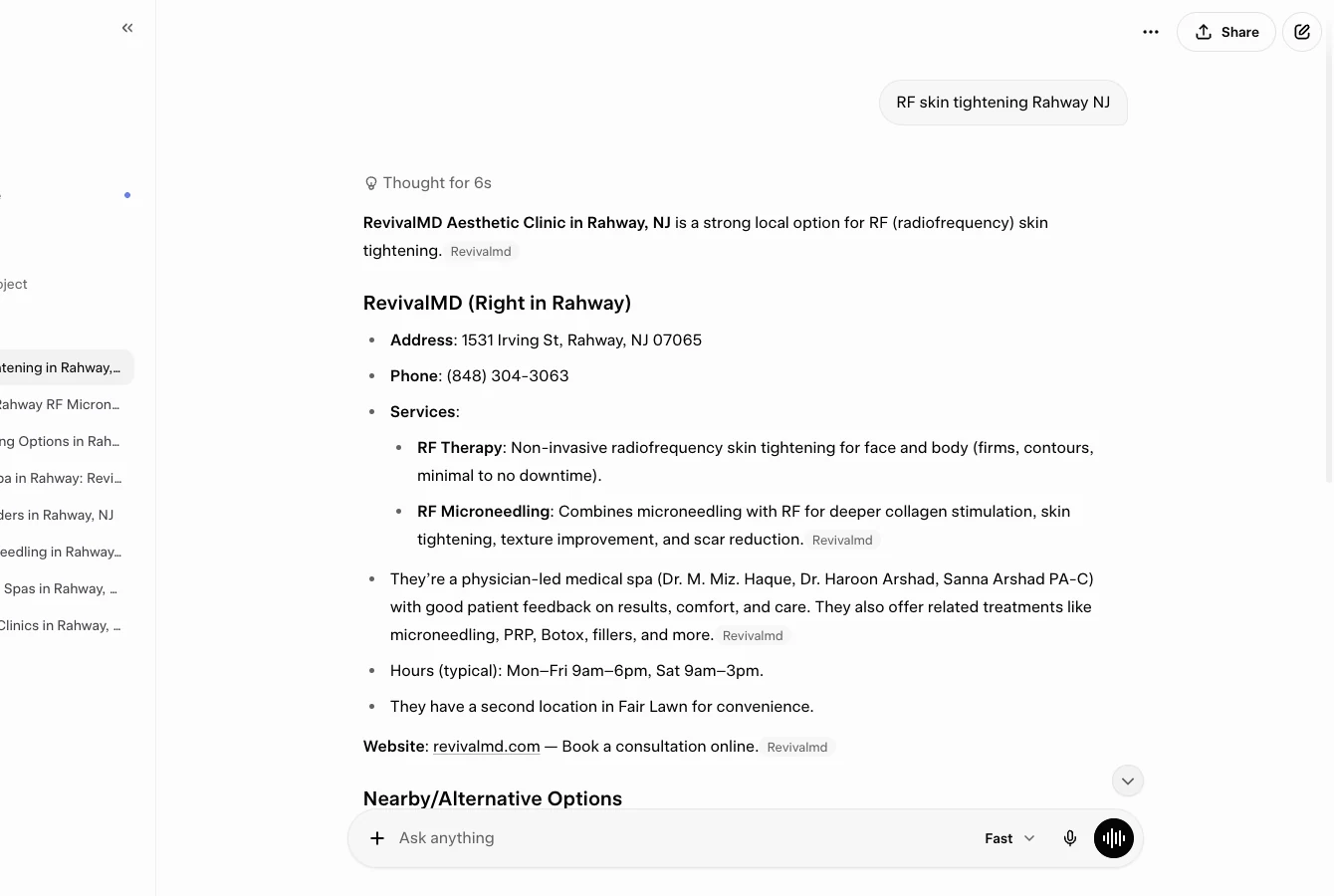
"PRP facial Rahway NJ"
"microneedling for acne scars rahway nj"
"medical spa Rahway NJ"
"best med spa near me rahway"
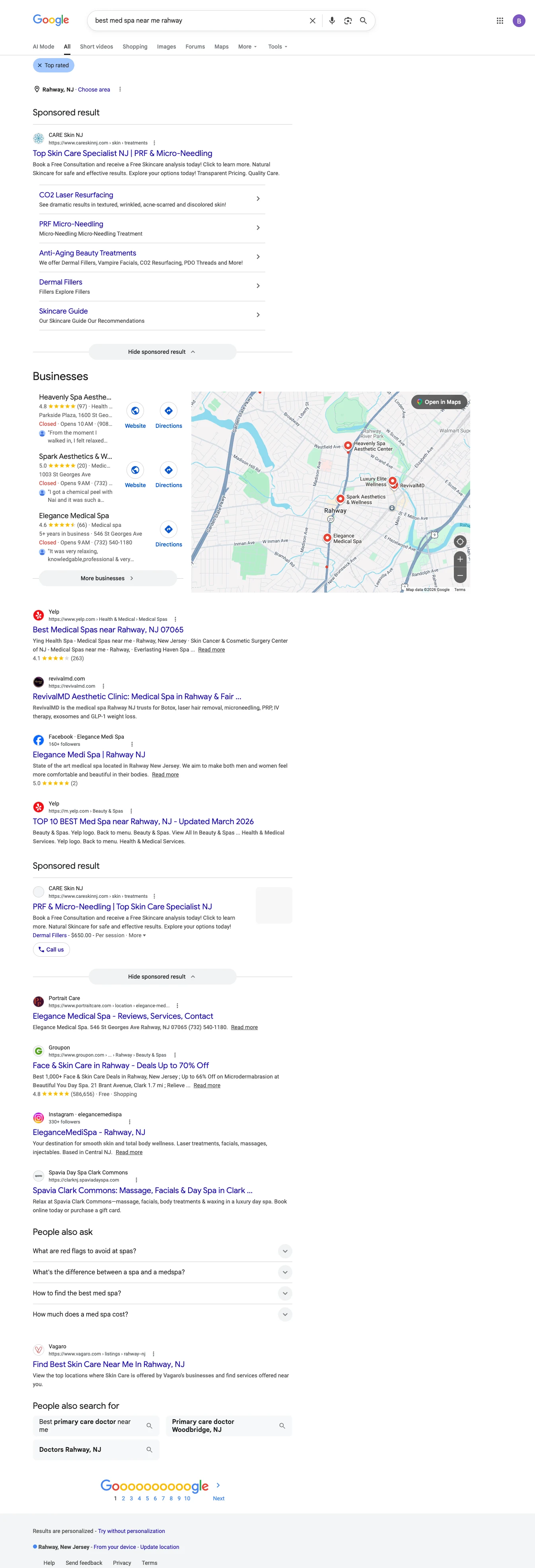
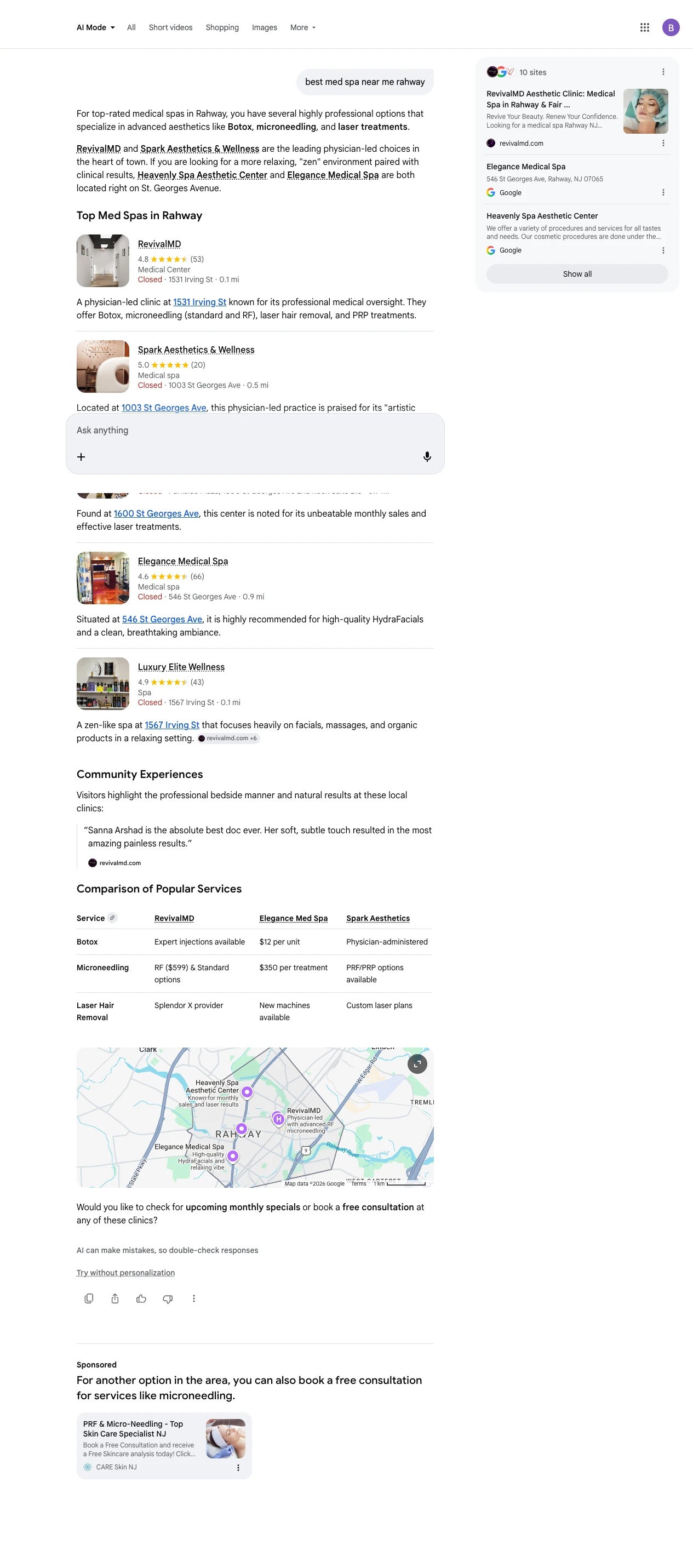
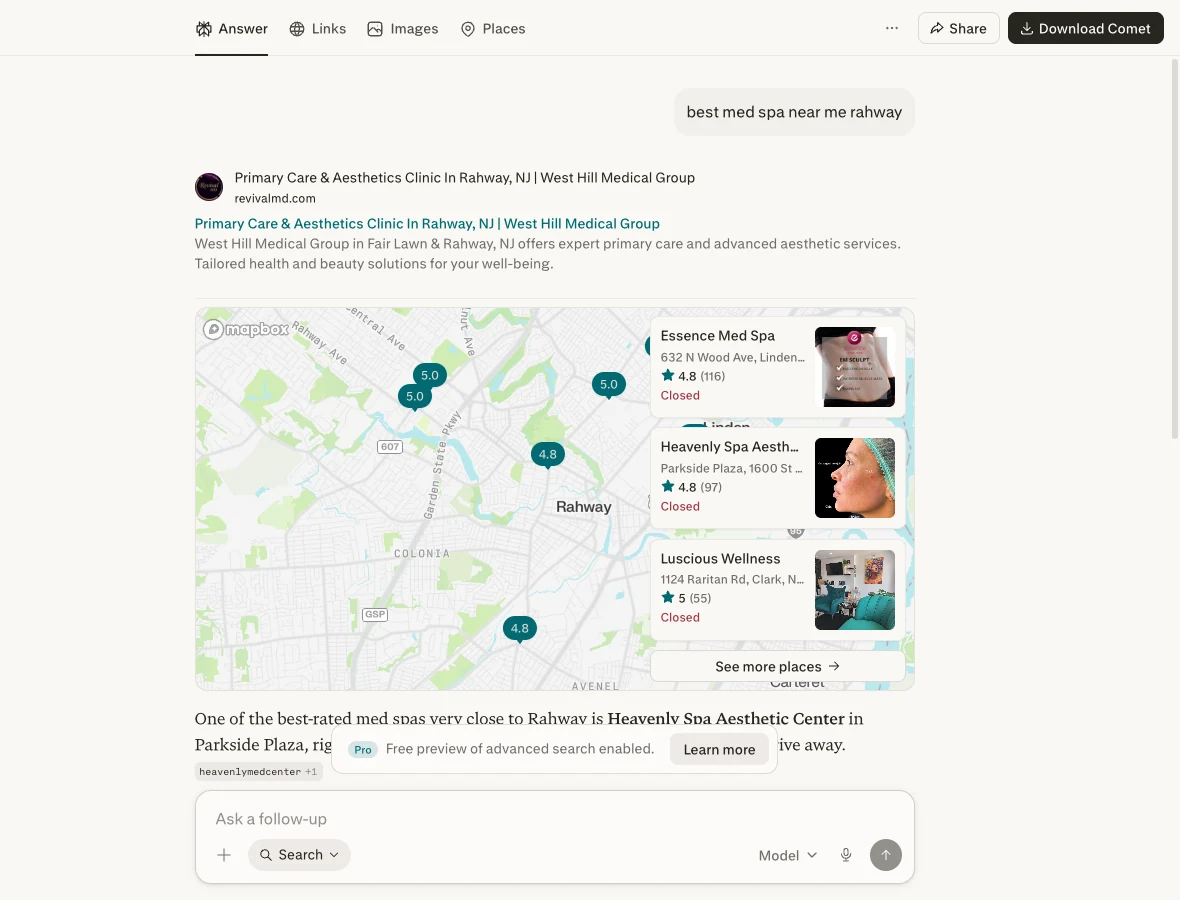
All screenshots captured live on May 6, 2026 from a US-locale incognito Chrome session. AI search results vary by location, account, and timestamp - these are point-in-time evidence, not guarantees of current state.
Why This Matters for AI SEO
Three things changed for RevivalMD in the first month after the pipeline went live (and they reframe how to think about AEO vs SEO).
First, AI engines became a meaningful patient acquisition channel. Patients arriving from “RevivalMD” branded searches (people who heard the name from an AI engine and Googled it directly) increased measurably in our analytics. AI is rarely a destination in itself. It’s a recommendation surface that funnels into branded organic and direct visits.
Second, the content held up across model differences. Google AI Mode, Perplexity, ChatGPT, and Grok run on different models, different web indexes, and different citation logic. Getting cited in all four at once means the content isn’t gaming any single model. It’s structurally clear enough that all of them can use it.
Third (and this was the surprise), AI ranking decoupled from organic ranking. Two of the strongest queries in this test (best botox in rahway and where to get botox rahway nj) had RevivalMD at #4 organically. AI engines cited them as a top option anyway. That’s the proof that AI search rewards content quality and structure, not backlink legacy.
What’s Next: Continuous AI Citation Monitoring
The capture system runs on a schedule now. We re-run it weekly across client accounts to track whether AI citations hold up over time, whether new queries pick up citations, and whether any of them drop. AI search is moving fast. What works in May 2026 might not work in May 2027. The pipeline assumes continuous adjustment.
For RevivalMD specifically, the next phase is expanding outward. From Rahway-area treatment queries into broader NJ statewide ones (where they rank lower today). And into question-format queries like “is morpheus8 better than microneedling” where AI surfaces dominate the SERP and classic ranking matters less.
Frequently Asked Questions
Why only 10 queries in this test?
Ten was a focused representative sample of high-intent local queries that drive actual aesthetic patient bookings (procedure + Rahway location combinations). The capture system itself is designed to scale, and we run hundreds of queries weekly across client accounts. For this case study we wanted a tight, defensible set rather than a noisy long list. The full keyword strategy includes 50+ active queries we monitor on a rolling basis.
What is AI SEO?
AI SEO is the practice of structuring web content so that AI search engines (Google AI Mode, Perplexity, ChatGPT, Grok, and others) cite it when answering user queries. It overlaps with classic SEO but emphasises clear question-and-answer structure, schema markup, and machine-readable formatting over backlinks and keyword density.
How long does it take to get cited by AI search engines?
In our experience, content that’s structured well for LLM consumption can start picking up AI citations within 2-4 weeks of publication, assuming the site has reasonable authority signals. RevivalMD’s content was cited across all four major AI engines within 30 days of the pipeline launch. Sites with weaker authority can take longer.
What’s the difference between Google AI Mode and Google AI Overview?
Google AI Overview is the AI-generated summary box that appears at the top of regular Google search results for some queries. It’s seen by mainstream search users by default. Google AI Mode is a separate dedicated AI search surface that delivers a fully conversational AI response. Both pull from web sources and cite them. Hyperlocal queries often skip AI Overview in favour of the local map pack but still trigger citations in AI Mode.
Can a small local business get cited by ChatGPT?
Yes. RevivalMD is a single physician-led clinic, not a national brand, and it’s cited in 9 of 10 tested aesthetic queries by ChatGPT. What matters is whether your content is structured clearly enough for the model to extract a useful answer, plus enough authority signals (consistent NAP, schema markup, third-party reviews) for the model to trust the source. For a deeper dive on the patterns that work for ChatGPT specifically, see how to get featured in ChatGPT.